“The Horror Show revolves around a simple question: Why do horror films mean so much to so many people?” said Jessica Niebel, Senior Exhibitions Curator of the Academy Museum of Motion Pictures and Academy Collection, during a press day presentation. “Horror reflects the anxieties of its time, but it also gives us a safe space to confront those anxieties, to look at the things that frighten us and that we desire.”
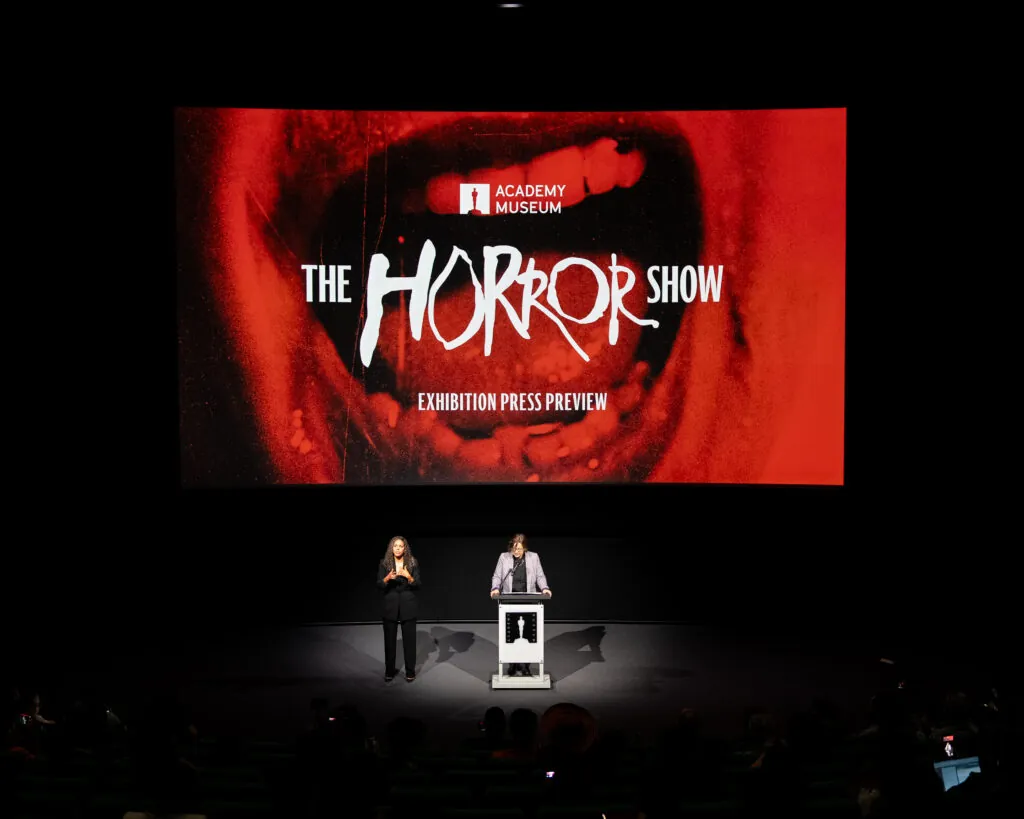
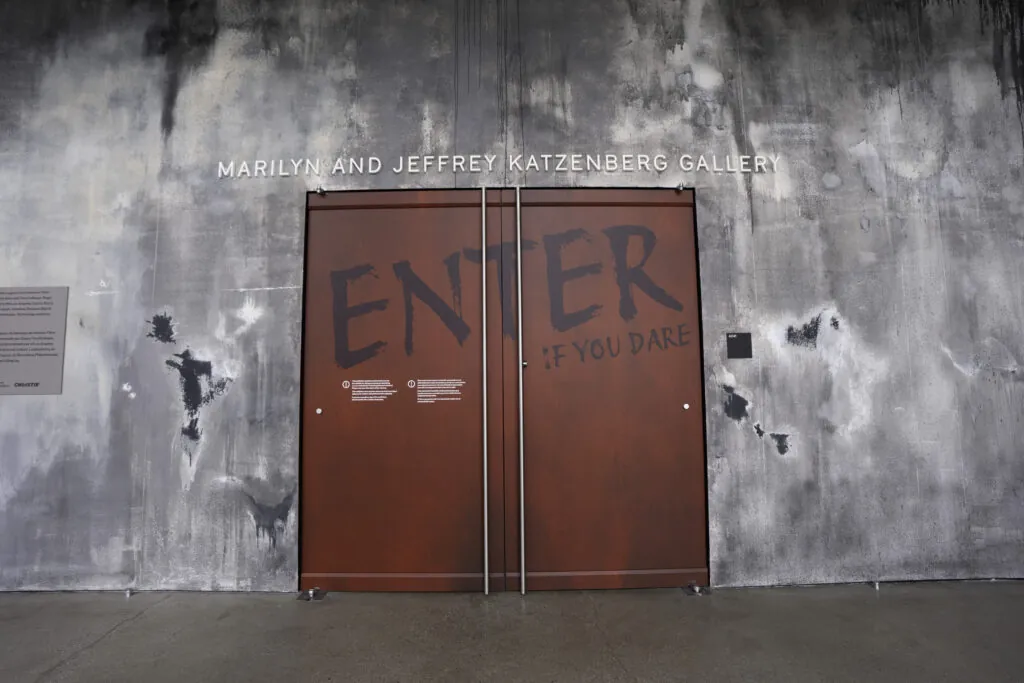
Now open through July 25, 2027, The Horror Show is the Academy Museum’s newest exhibition in Los Angeles, honoring horror’s history across literature, culture, art, and cinema. On the museum’s fourth floor, the exhibition offers an in-depth look at some of horror’s greatest and most influential achievements. For die-hard horror fans, though, walking through the doors feels a little like stepping onto hallowed ground.
Entering the exhibition immerses guests in a soundscape of horror’s most recognizable auditory nightmares: scores, screams, and sound effects. As I entered, Harry Manfredini’s “Ki-Ki-Ki…Ma-Ma-Ma…” from Friday the 13th greeted me, the haunting chant circling the room as the words flickered across the screen.
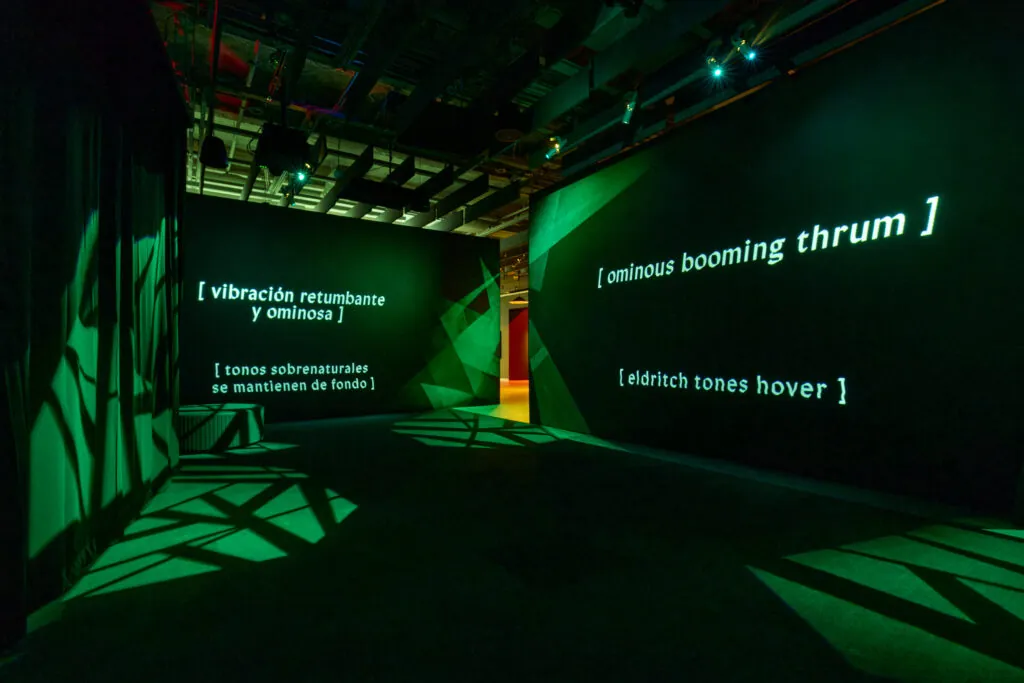
Then came the screeching, winding “camera flash” sound effect Wayne Bell created for The Texas Chain Saw Massacre by scraping a tuning fork along piano wire. It grew louder…and faster…until I could feel my heart rate quicken. You’d think I’d be desensitized to this sound after all these years, but surrounded by it from every direction, it was just as effective as hearing it for the first time.
Filmmaker, disability advocate, and FANGORIA contributor Ariel Baska advised on creating the room to make it as accessible as possible, including for deaf or hard-of-hearing visitors. The on-screen words draw on horror’s contributions to silent film and incorporate accessible captioning and animations by expert Cheryl Green.
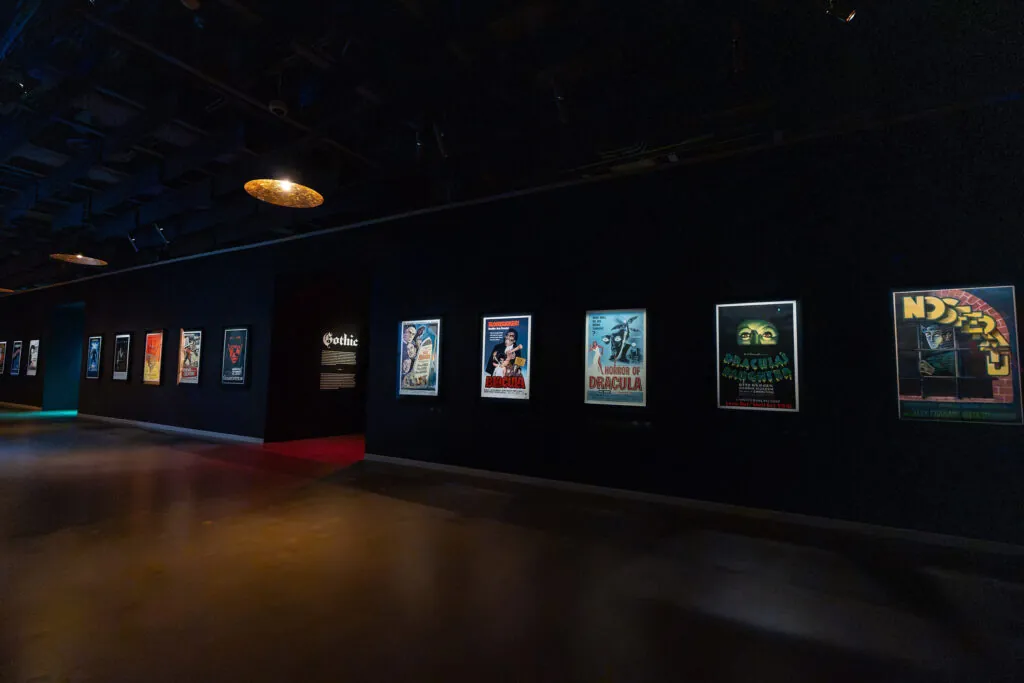
From there, the exhibition is organized into six groups: Gothic, Psychological, Science, Slashers, Religion, and Ghosts. A hallway of vintage movie posters connects the chambers, creating a visual timeline of horror’s evolution. As arguably the world’s foremost Dracula’s Daughter devotee, seeing an original poster on display with my own eyes meant I was fighting back tears within five minutes of entering the space.
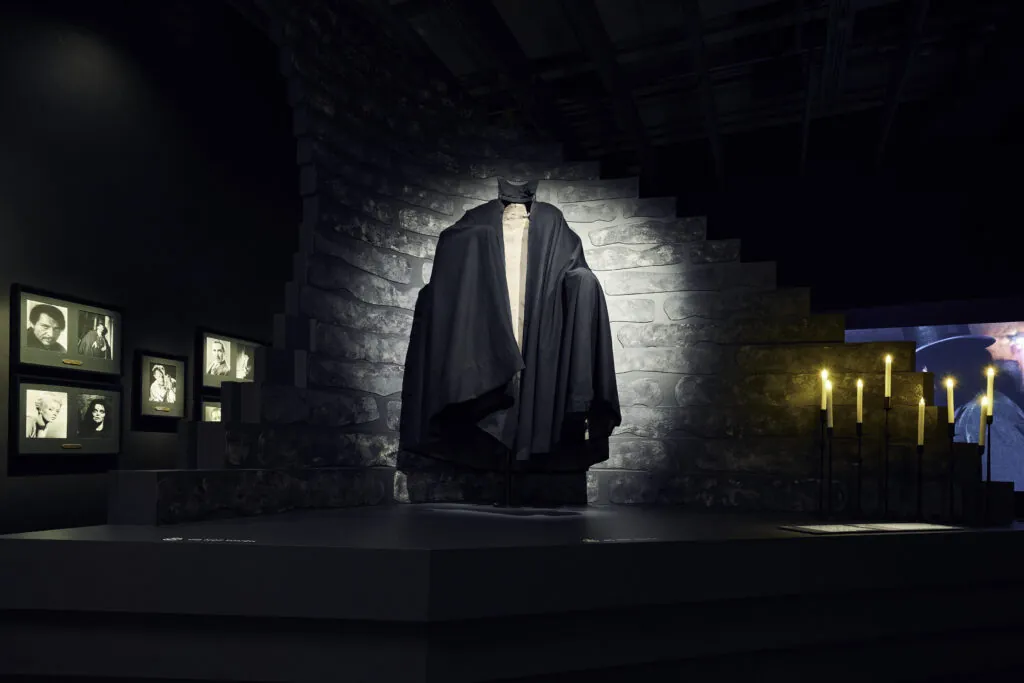
The Gothic room doubles as a vampire showcase, covering everything from Sheridan Le Fanu’s Carmilla to the screen-worn costume — and skateboard — from Ana Lily Amirpour’s A Girl Walks Home Alone at Night. I could have spent hours here alone, surrounded by artifacts like Bela Lugosi’s Count Dracula cape, the corpse of Catherine Deneuve’s Miriam Blaylock from The Hunger, Jack Pierce’s makeup kit, and original sketches for classics like The Phantom of the Opera and Murders in the Rue Morgue.
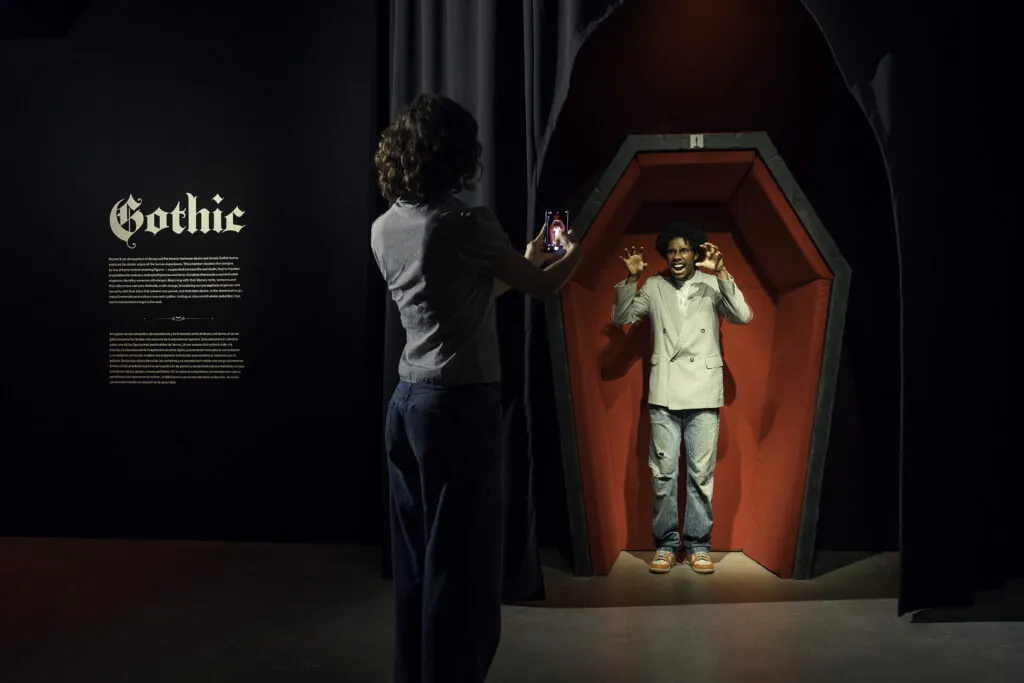
There are also sketches from Dracula’s Daughter. Seeing them in person broke me. I finally did cry. And yes, there’s a standing coffin you can pose in. So when you notice every horror writer changing their profile picture to themselves in a red-lined coffin, you'll know why.

The Psychological room boasts some of the most instantly recognizable costumes and props in the exhibition: Annie Wilkes’ coverall dress from Misery, Patrick Bateman’s suit from American Psycho, Jack Torrance’s axe-wielding outfit from The Shining, Hannibal Lecter’s straitjacket and mask from The Silence of the Lambs, the chair and teacup from Get Out, and the moving shadow erupting from Mr. Babadook’s pop-up book.
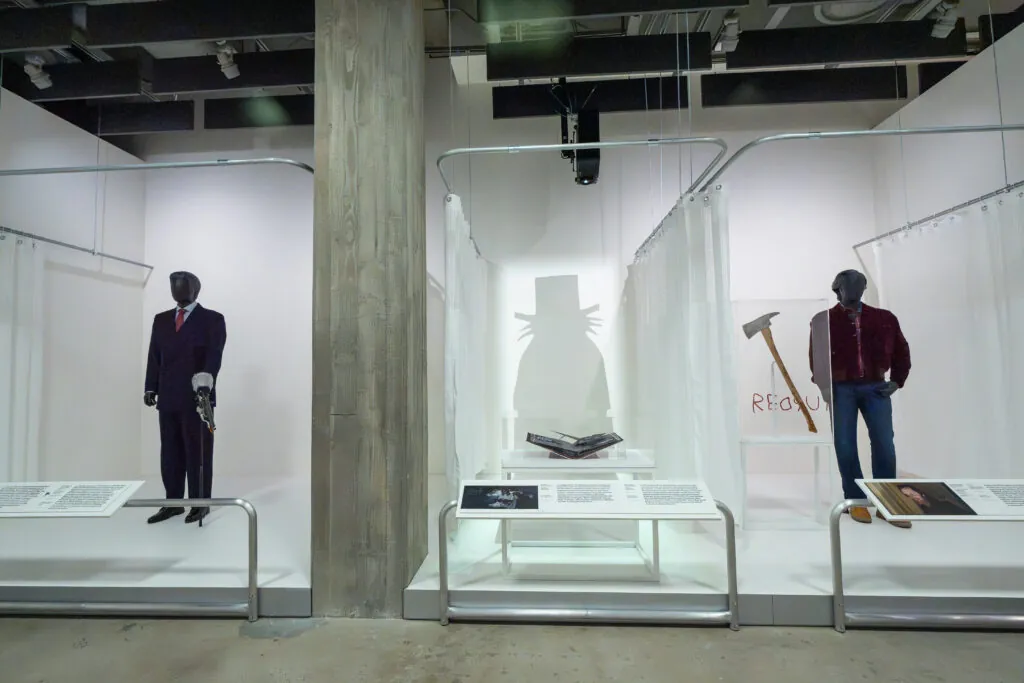
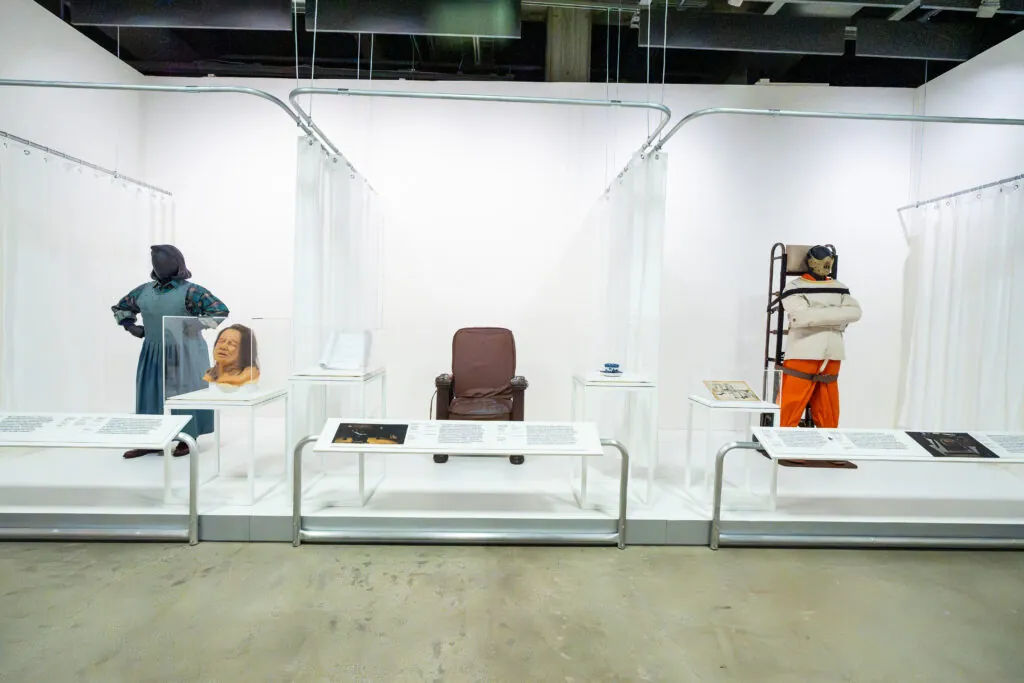
The room housing this display (which includes original sketches from Dr. Jekyll & Mr. Hyde) is bright white and clinical compared to the rest of the chambers. The jarring shift from Gothic to Psychological immediately puts you in a state of unease, and perfectly encapsulates the feeling of watching a movie from this theme.
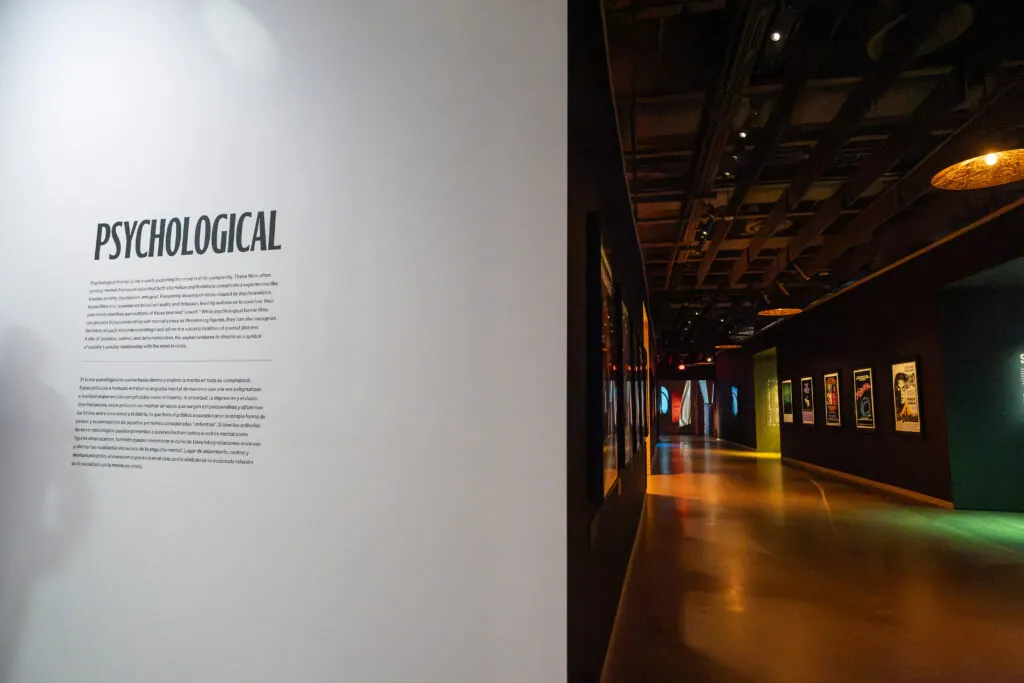
What impressed me most was the Academy’s commentary alongside the artifacts, which adds cultural and historical context to the films on display. In particular, the acknowledgment of Buffalo Bill’s controversial place in LGBTQIA+ cinema history alongside storyboards from the “Goodbye Horses” dance adds important context to The Silence of the Lambs.
You can also pose alongside the corpse of Norma Bates in Psycho in this room if you’d like. Just don’t touch her! She’s precious cargo.
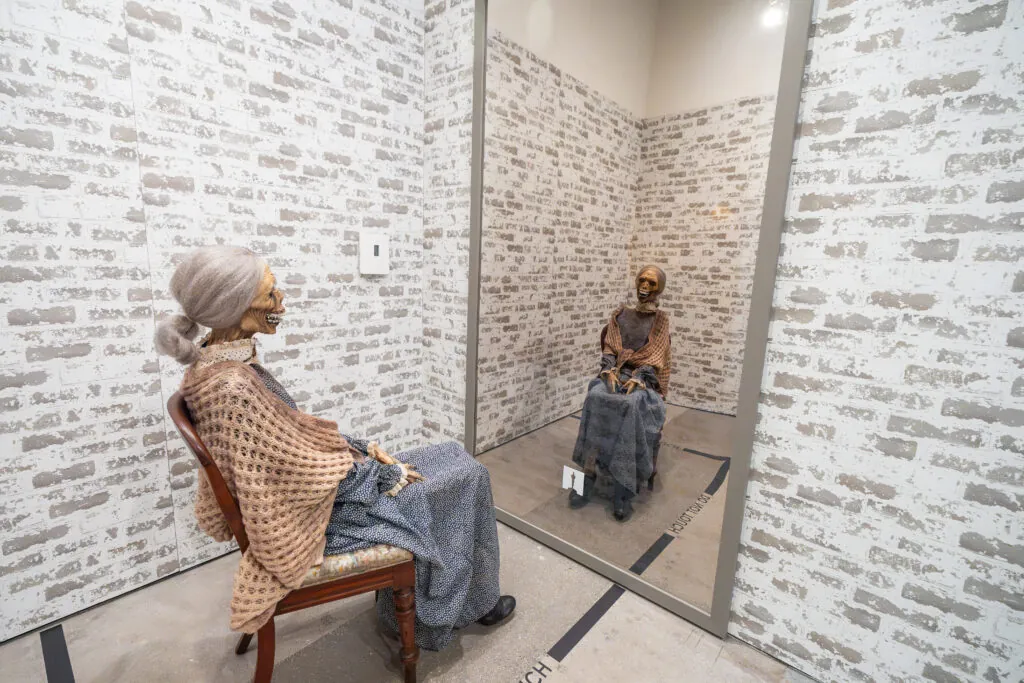
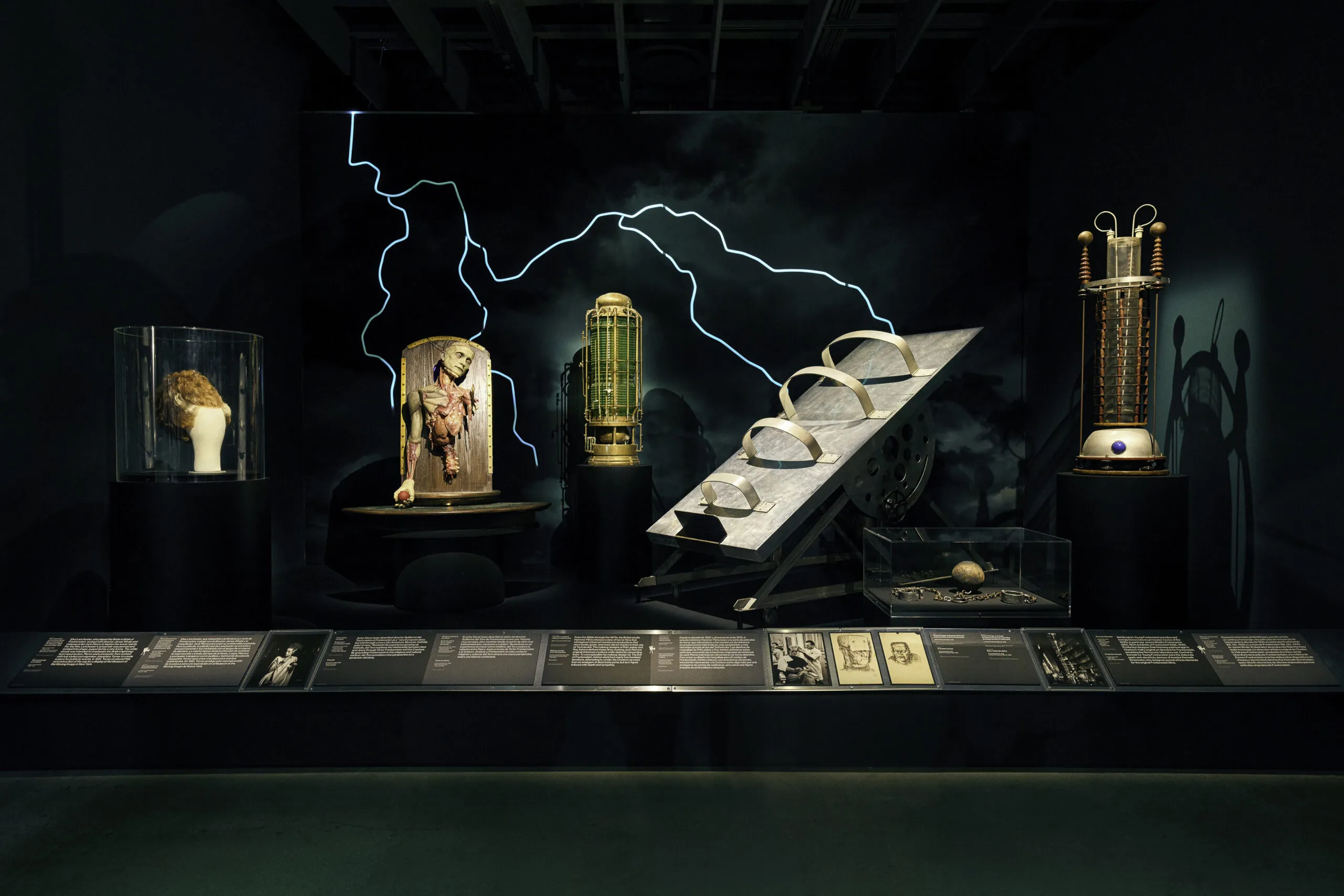
Fans of sci-fi horror will utterly lose their minds in the Science room, which features a section dedicated to all manner of Frankenstein films, a life-size, dripping Xenomorph, an original pair of They Live glasses, the head of Monstro Elisasue in The Substance, and a prop head showcasing the facial result of consuming The Stuff.
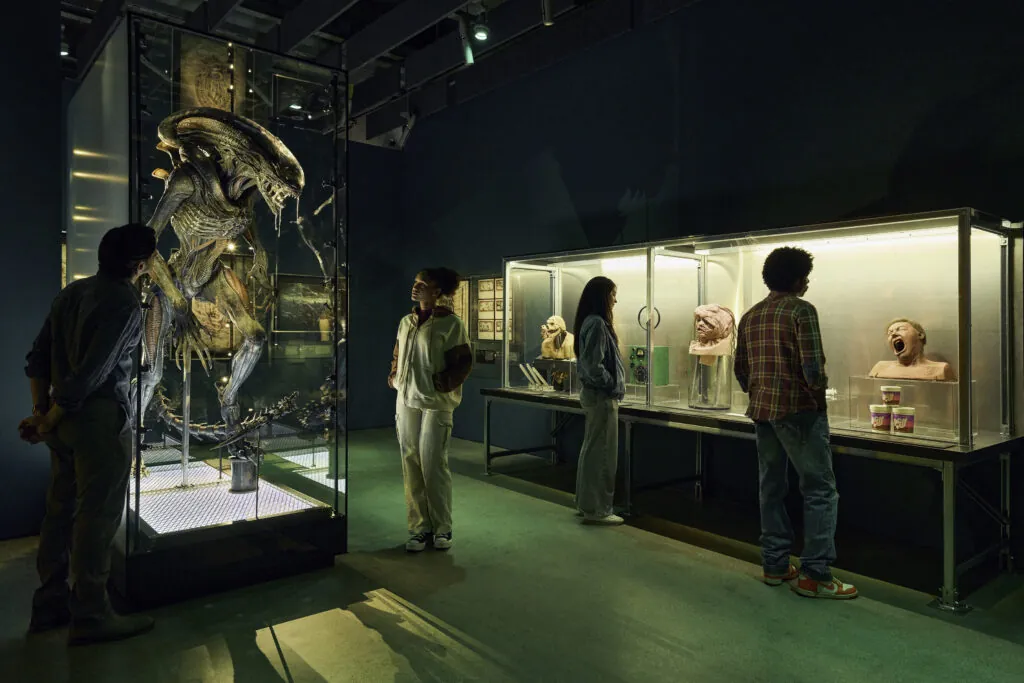
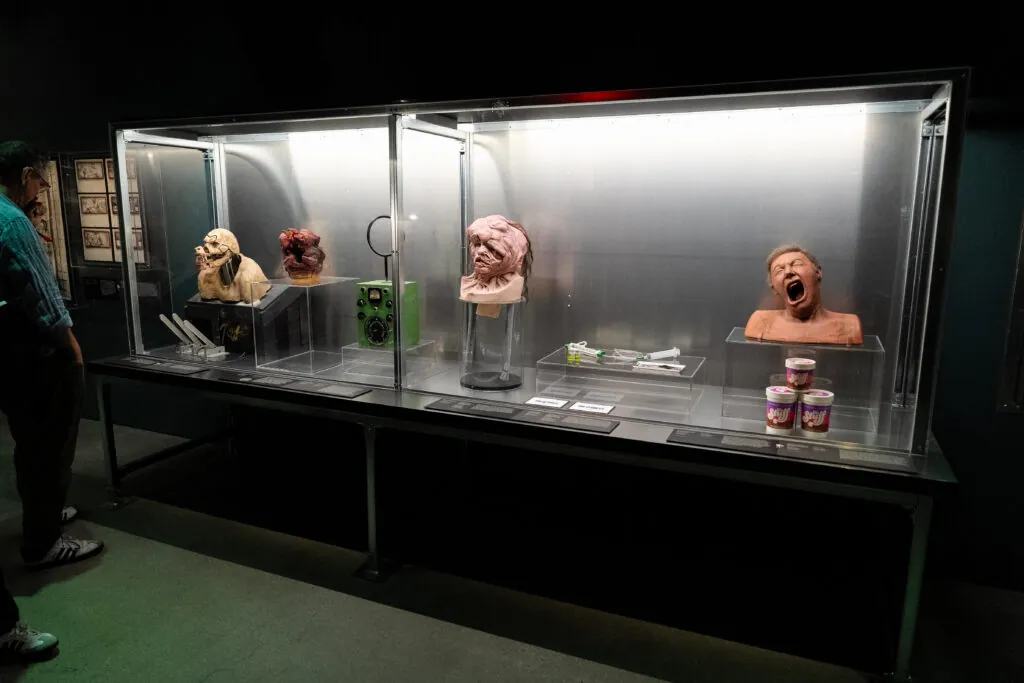
The fact that The Academy Museum recognizes that a low-budget cult film from Larry Cohen deserves to be celebrated alongside a film as culturally significant as Frankenstein speaks volumes to the range of what’s on display. A personal highlight of this room was seeing the de-skinned animatronic used for the transformation scene in An American Werewolf in London.
Sure, it’s a little bit of nightmare fuel for me — someone who is TERRIFIED of robots with real teeth — but it was wonderful witnessing so many people geek out about the genius of Rick Baker’s innovative work. Equally exciting was watching people learn about Millicent Patrick’s pioneering work while looking at the Gill-man’s mask.
 (© Academy Museum Foundation, Photo by Presley Anne)
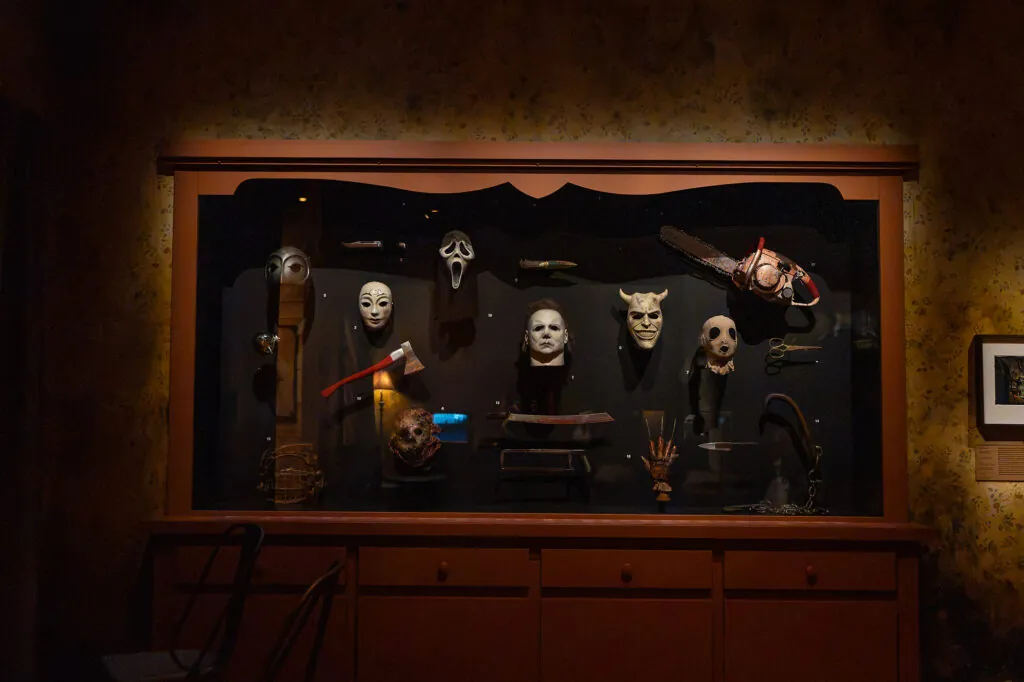
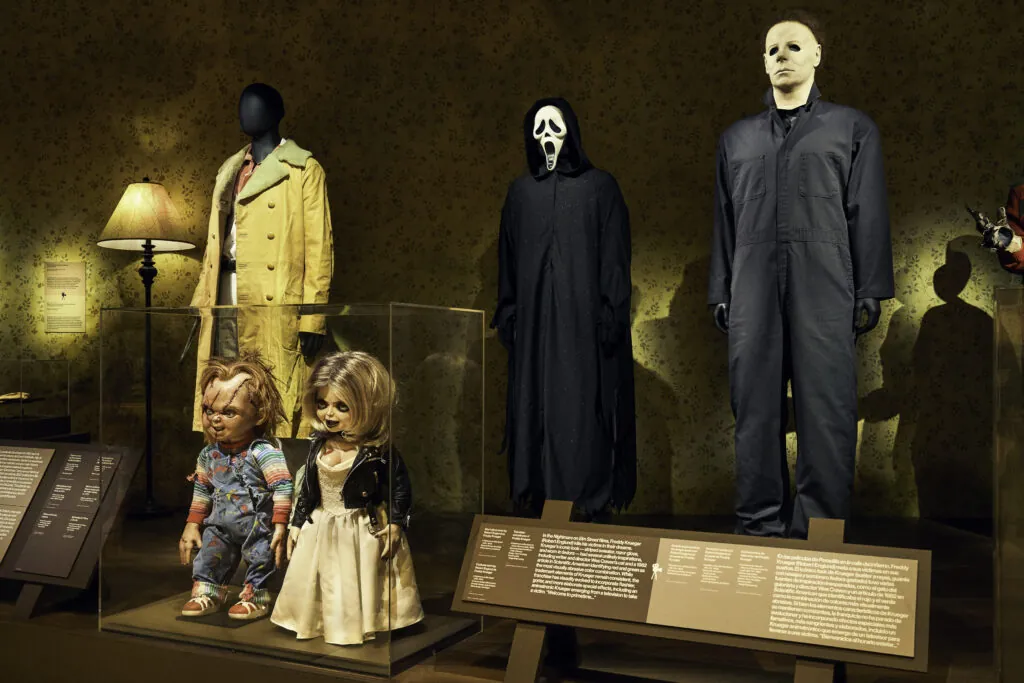
Arguably the most popular room was the Slashers chamber, designed to look a bit like a dilapidated house and stuffed with costumes, prop weapons, and puppets of horror’s most beloved figures. Did I completely freak out when I saw the original mask from Phantom of the Paradise? Yes. Did I feel like I was meeting up with an old friend when I saw Chucky and Tiffany staring back at me? Also yes.
 (© Academy Museum Foundation, Photo by Emily Shur)
But it genuinely blew me away to see a David Howard Thornton-sized Art the Clown on display. To think that an indie horror movie made completely outside the studio system would have a place in the Academy Museum is awe-inspiring. Whether the Terrifier films are your taste or not, seeing him here is a testament to horror’s history of microbudget glory.
The Religion room is one that is unsettling in its beauty, drawing from all manner of beliefs and how they’ve been incorporated into horror. Books on witches, props from Candyman, storyboards from The Exorcist, Richard Donner’s clapperboard slate from The Omen, and even the BFF necklace from Jennifer’s Body have been expertly curated.
Perhaps most striking were the costumes. Tilda Swinton's red Madame Blanc gown from Suspiria (2018), Annie’s dress worn by Wunmi Mosaku in Sinners, Florence Pugh’s floral May Queen celebration outfit as Dani in Midsommar, Oscar winner Amy Madigan’s Aunt Gladys tracksuit from Weapons, Bonnie Aarons’ titular cloak and habit as The Nun, and a replica of Jame Clayton’s Hell Priest from Hellraiser (2022) are all gorgeously on display.
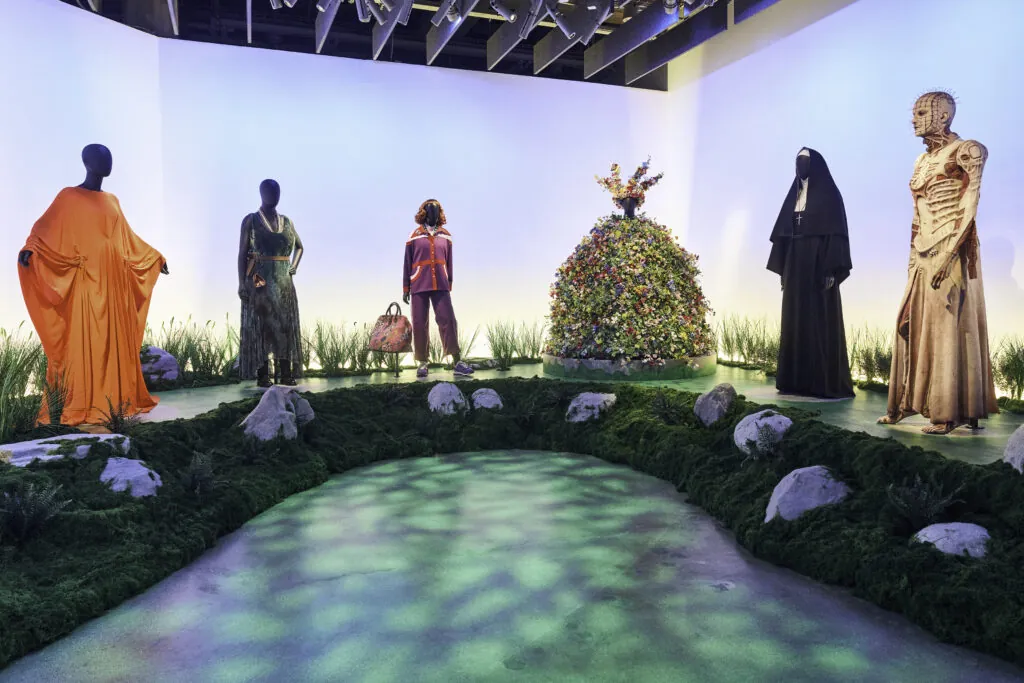
As omnipresent as these films are to horror fans, seeing the outfits up close still felt like a religious experience. I sense that was the Academy's hope, and if so, mission accomplished. The Horror Show might as well be a holy land for horror fans, and I have no qualms about evangelizing.
The final chamber is Ghosts, filled with haunted objects (The Monkey! The Conjuring series!), supernatural entities, and nightmarish specters. Newer fare like the titular prop from The Black Phone and the hand from Talk to Me are featured, alongside a section dedicated to the history of Japanese ghost stories, a recreation of the original website used to promote The Blair Witch Project, plenty of goodies from Poltergeist, and the body of Amber Tamblyn as Katie Embry in The Ring, still sitting at the bottom of a closet to scare the ever-loving crap out of us all.
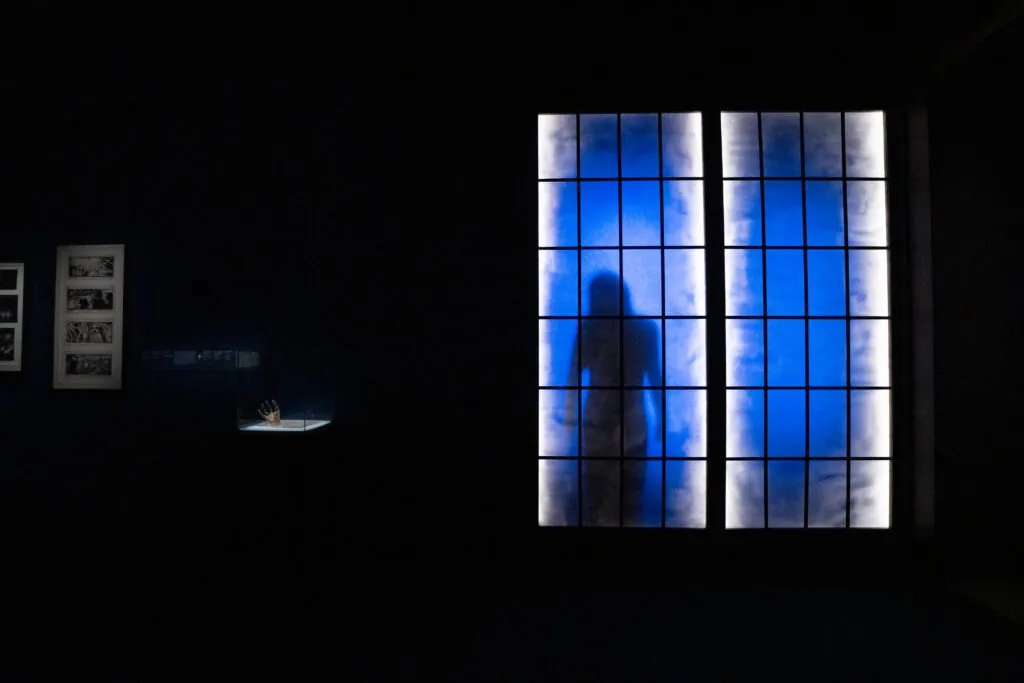
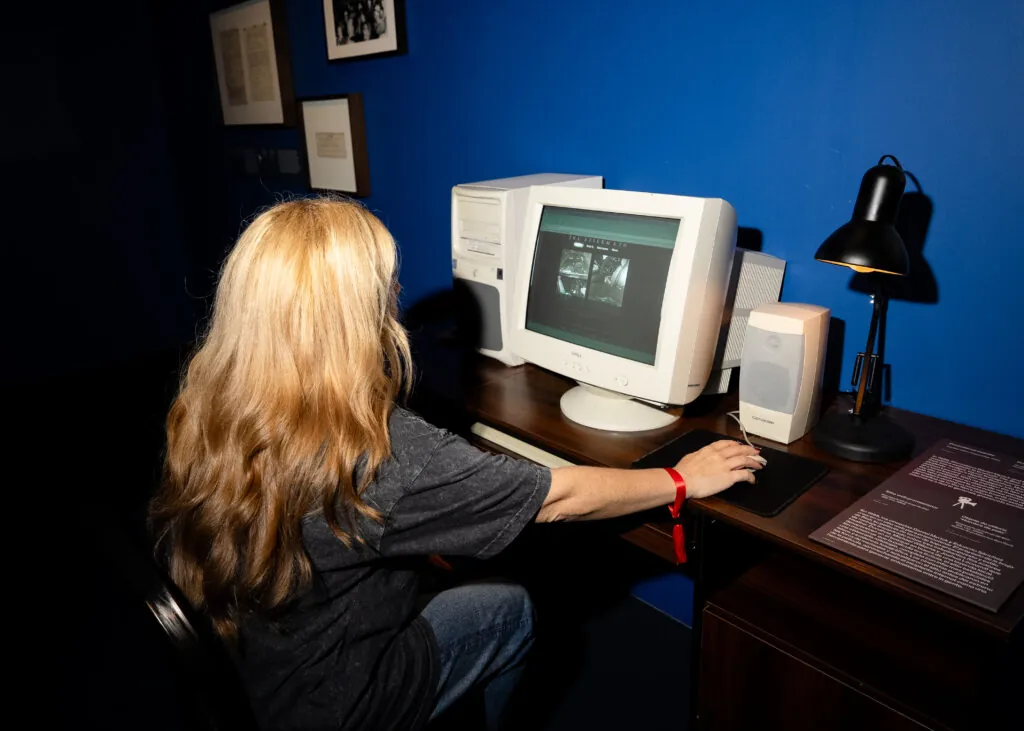
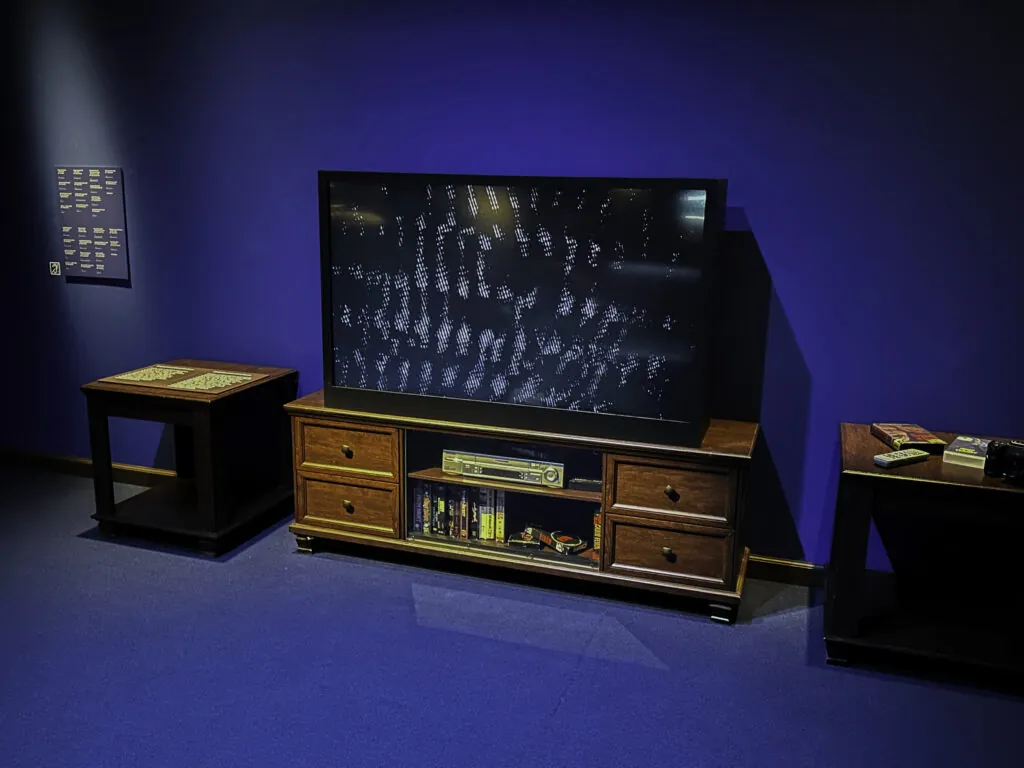
At the center of the room is a haunted living room, with footage from famous ghost movies looping on a television. It's been a few years since I’ve actually sat down and watched the first Paranormal Activity, but seeing the film for the first time on a CRT TV only made it more effective. Do I need to finally bite the bullet and invest in an old-school set-up specifically for found footage films? Probably!
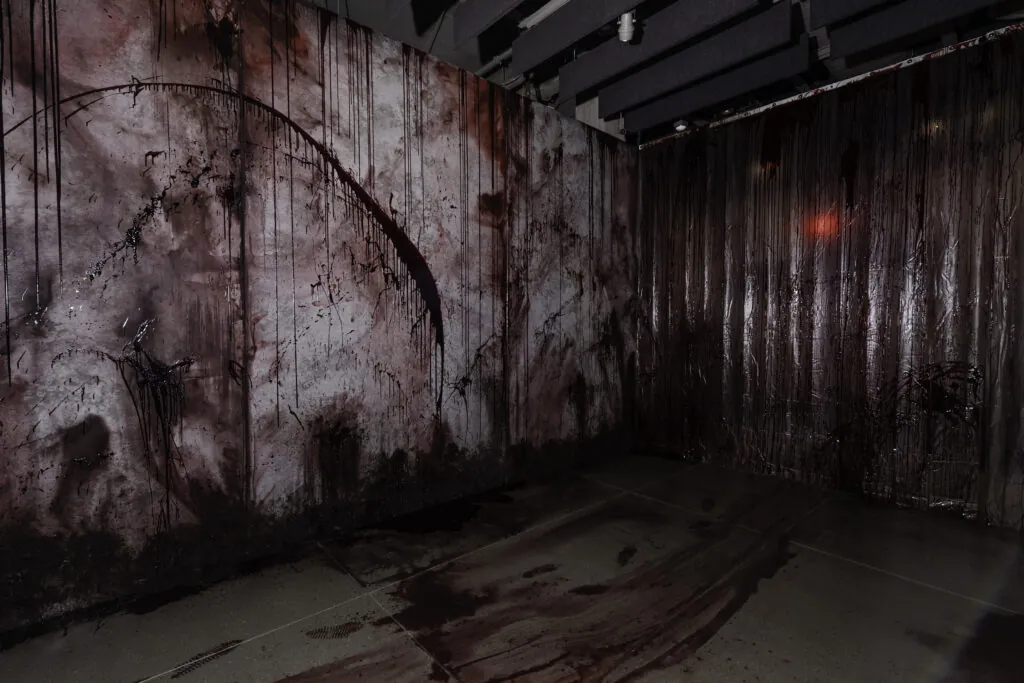
To leave the exhibition, visitors pass through “The Blood Room,” a visceral finale that explores the countless forms, colors, and textures of blood as portrayed on screen. Emerging from the corridor of horrors, guests encounter one final unsettling sensory experience: walls coated in layers of cinematic gore, underscored by an oversized screen playing scenes from some of horror’s bloodiest moments (the elevator scene from The Shining, anyone?). It’s a gloriously gruesome final image, and the perfect way to say goodbye to The Horror Show — forever changed, but having survived the carnage.
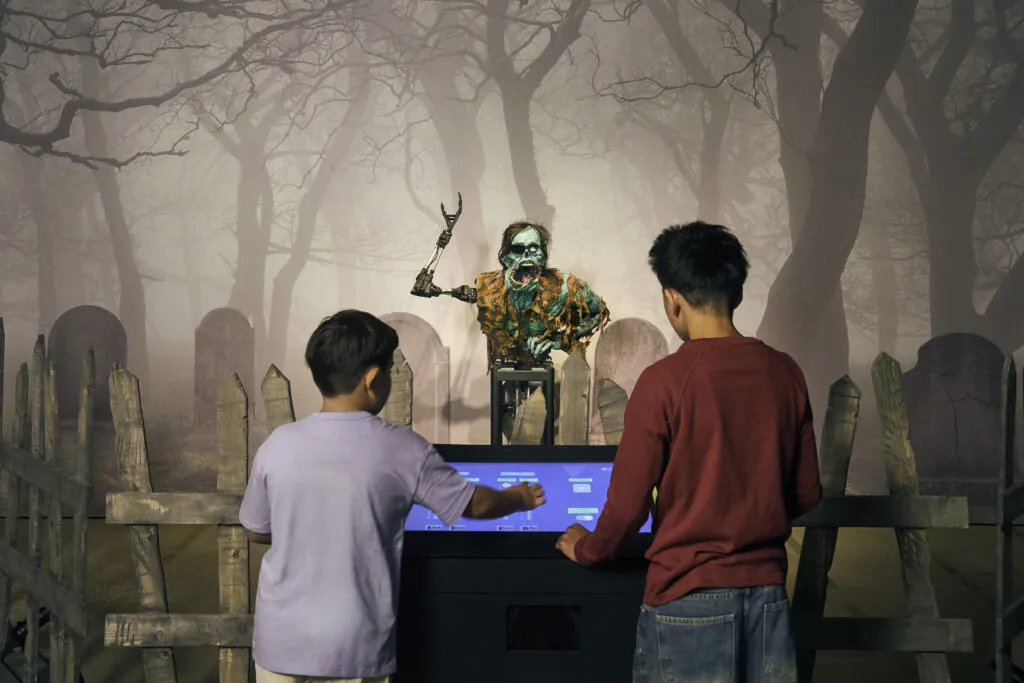
If this all sounds a little too scary, never fear — there’s a smaller exhibition dedicated to Zombies just off to the side of The Horror Show that’s tame (and interactive) enough for children. Well, children who won’t mind learning how zombies are made in movies, so they won’t have to be afraid of them.
For years, horror fans have lamented the Academy of Motion Picture Arts and Sciences' lack of recognition for horror at the Oscars, but recent years suggest the tide is turning. Weapons, Sinners, Frankenstein, The Shape of Water, Godzilla Minus One, The Substance, and Get Out have all brought home statues, and horror's continued box office success proves mainstream audiences are seeking out these films in a big way.
The Academy Museum was wise to spotlight horror to capture the moment, and fans would be doing themselves a favor by visiting and seeing how much love and respect have been paid to the art form we’ve dedicated our lives to championing.