Heather Donahue will always be known for a singularly stark image in The Blair Witch Project.
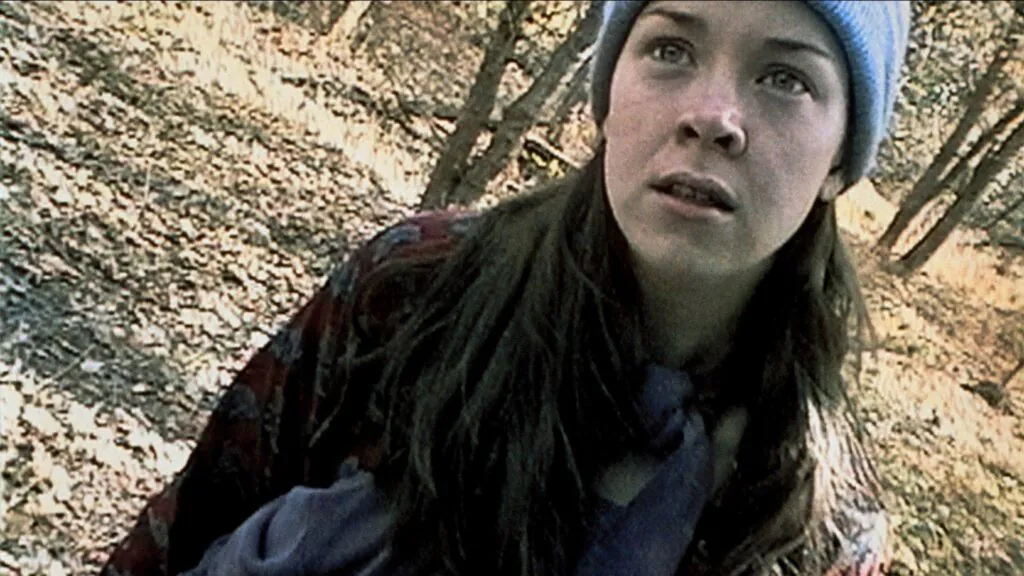
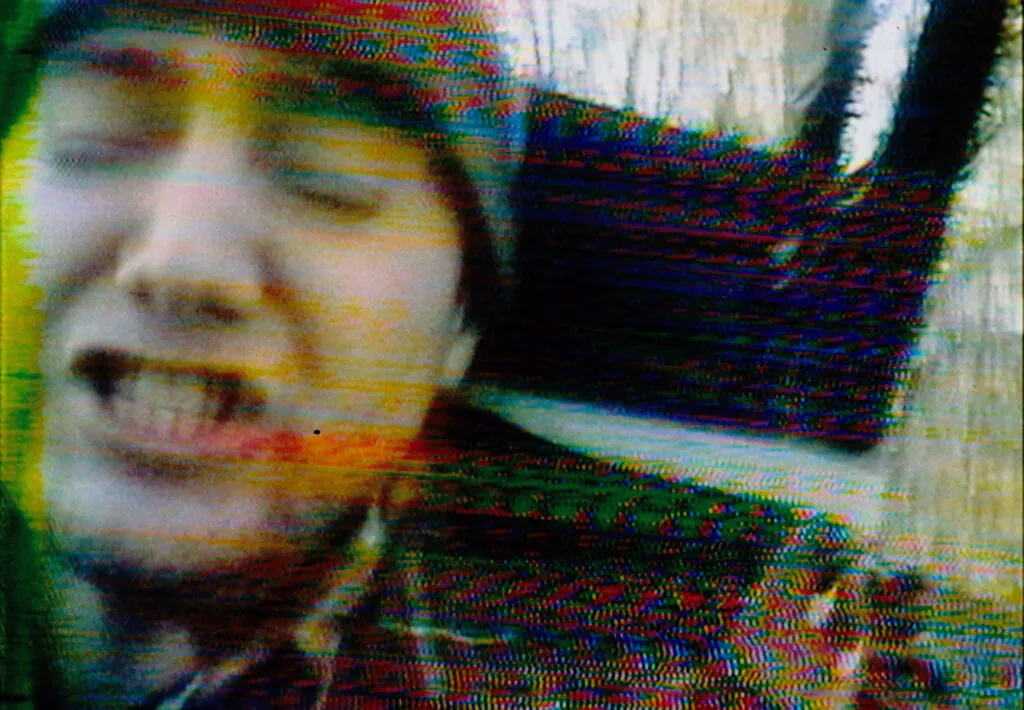
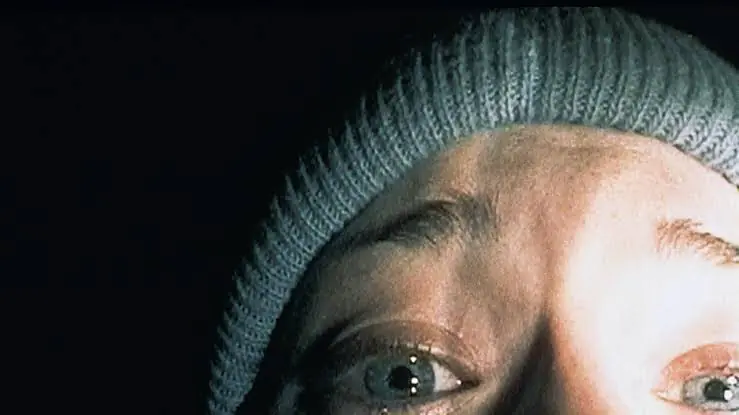
Her head, illuminated by flashlight, floating in the darkness. Her eyes, awash in fear. Her face, moist with tears under a blue beanie. Her nostrils, flaring with quickening breaths, and her voice, delivering apologies — to her mother and to her companions’ mothers for setting out on the journey that would deliver them to their deaths.
“It’s all because of me that we’re here now, hungry and cold and hunted,” she said in her famous close-up confessional as she cried. “I love you, Mom and Dad. I am so sorry.” Her eyes darted to the right upon hearing something in the forest. “What is that?” Donahue asked. “I’m scared to close my eyes; I’m scared to open them.” Snot dripped from her nose. “Oh God, I’m gonna die out here.”
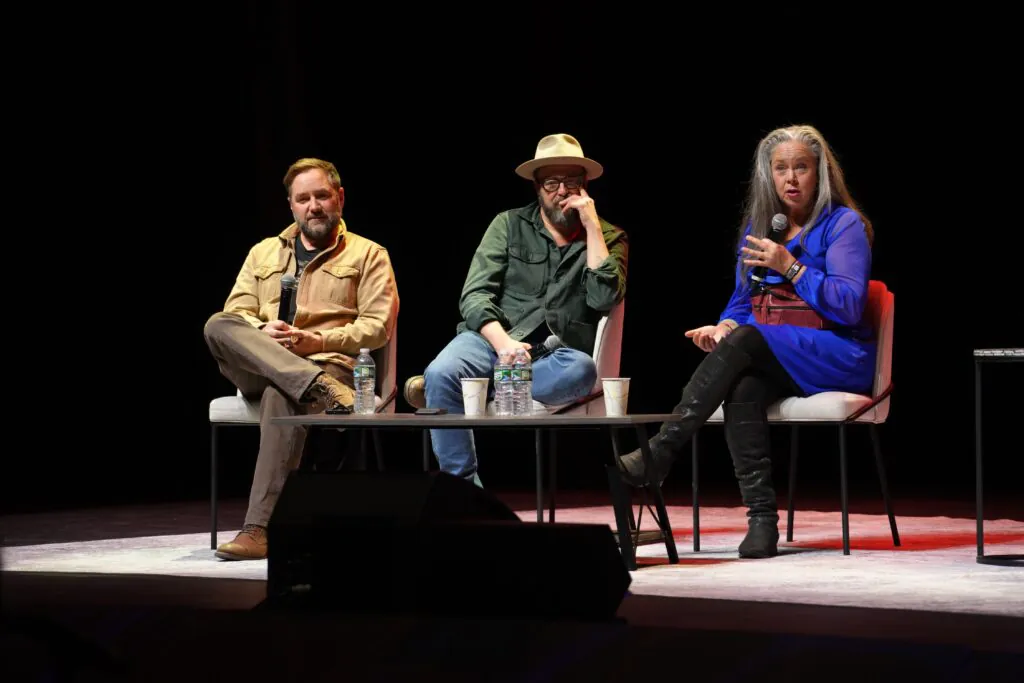
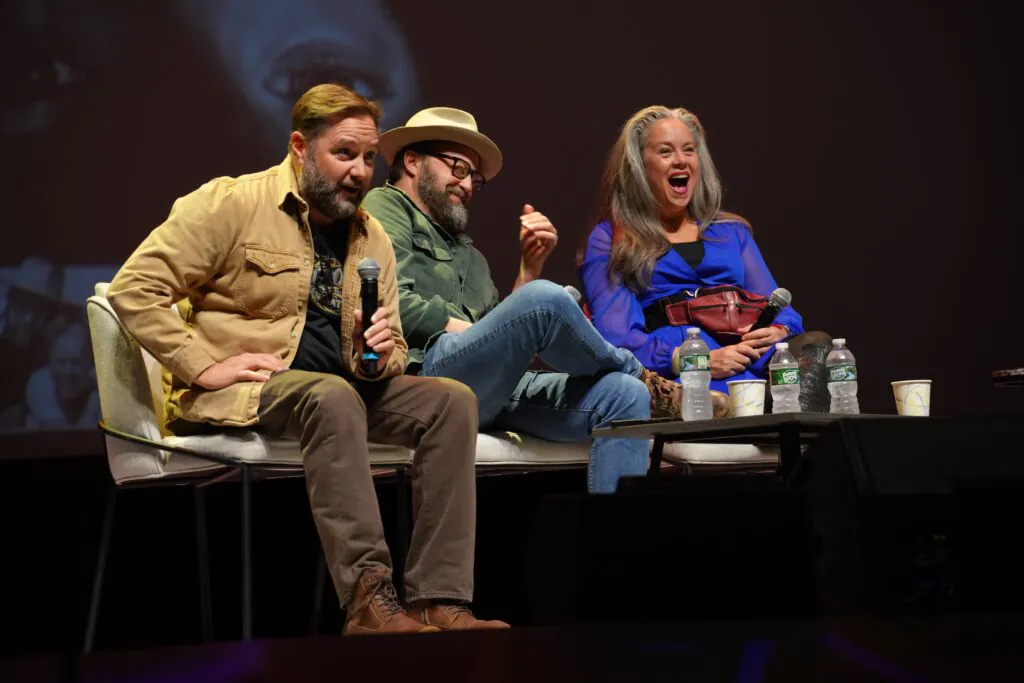
More than 27 years later, the star of The Blair Witch Project appraised the legacy of the landmark found-footage horror film with castmates Joshua Leonard and Michael C. Williams. “You’re really seeing through my eyes,” said Donahue, 51. “You’re so up close, you’re in my character’s head … And so I think that’s what some of the found-footage movies miss — sincerity and intimacy … That’s what makes it effective long-term, not pretending we were dead or using our real names. It’s that which endures.”
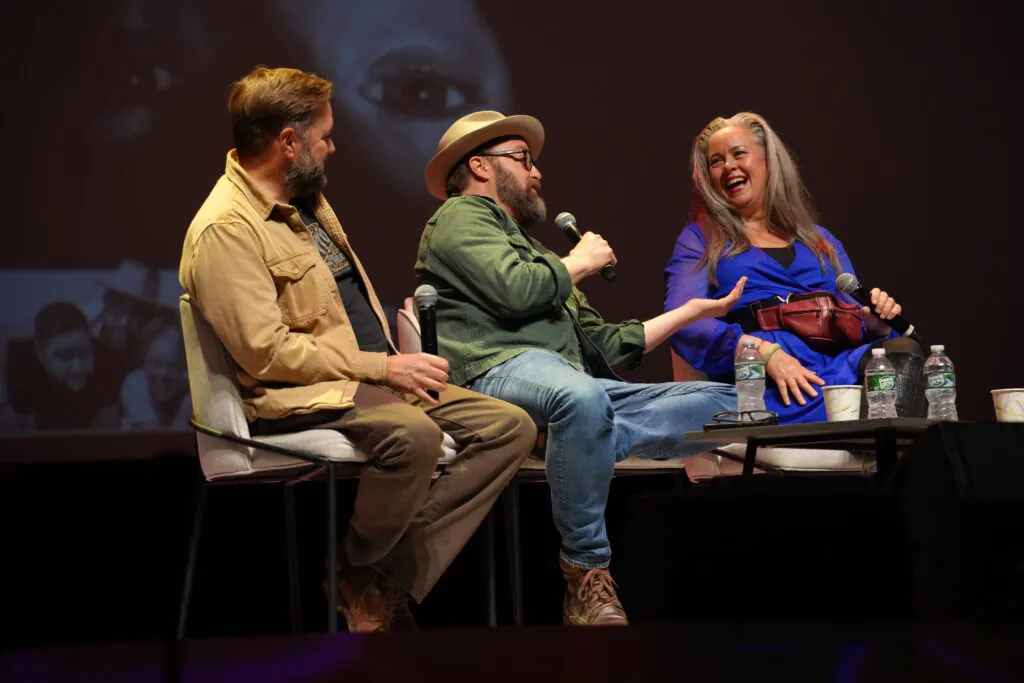
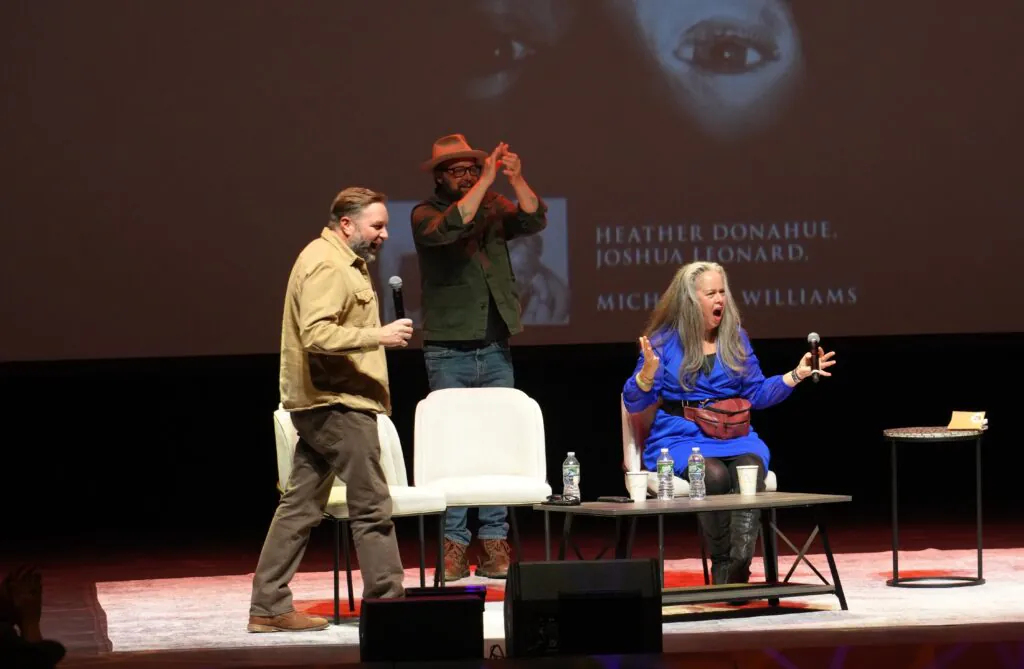
The Blair Witch actors communed with fans at Bergen Performing Arts Center in Englewood, New Jersey, on Halloween Eve as part of a series of screenings and talks. “There is something very intimate and innocent about the movie itself and what you see on the screen,” Donahue said of the 1999 film. “It was certainly part of a moment in time that we will never get back.”
The Blair Witch Project, from writer-directors Eduardo Sánchez and Daniel Myrick, has drawn a new wave of interest in recent years. The movie not only helped inspire other 2000s found-footage franchises like Paranormal Activity, but also laid the groundwork for a Blair Witch franchise that has received a mixed reception. First came the sequel Book of Shadows: Blair Witch 2 (2000), which dispensed with the found-footage style. A 2016 entry, Blair Witch, sought to revisit the legend of the Maryland witch.
And the story’s not over: Blumhouse and Lionsgate are reviving the franchise with a new Dylan Clark-directed movie slated for September 2027. Original Blair Witch star Mike Williams, now a school guidance counselor in New York State, joins co-star Josh Leonard as an executive producer on the upcoming film alongside Sánchez and Myrick.
-
Condolence cards and ‘two VHS copies.’

The Twanas in THE BLAIR WITCH PROJECT. (Credit: Artisan Entertainment) When Heather, Josh, and Mike opened a new dimension of horror in the Maryland woods, they were 22- and 24-year-old actors living in New York.
Donahue auditioned for the movie after seeing an open call in Backstage magazine. Williams, 53, said they were among 300 people contending for parts in multiple rounds of tryouts that involved improvising various scenarios, like “‘OK, you’ve been lost for three days, go!’” Donahue impressed everyone with her ear-shredding screams. After the second weekend of auditions, the trio won the roles of characters originally labeled Bill, John, and Jane.
Using their real names in the movie caused some pretty consequential complications. People who bought into the film’s events as being real thought Donahue, Leonard, and Williams were dead at the end of the movie.
“It's hard to be an ambitious young actor who's dead on IMDB,” said Donahue, who eventually filed to legally change her name to Rei Hance. “For a long time, it felt like a very ornate punishment for a job well done … It was hard. Like, my mom received condolence cards. People really thought that we were dead … Using our real names and then that whole scheme was tough. And it's always interesting to me when people are like ‘oh, the marketing!’ … Not to pat us on the back, but I don't think we would still be sitting here almost 30 years later just for an effective marketing campaign.”

Michael C. Williams, Joshua Leonard, and Heather Donahue. (Credit: Armand Fasano) When The Blair Witch Project debuted in July 1999, the movie was marketed as actual found footage. An accompanying mockumentary titled Curse of the Blair Witch, composed of additional material from the film’s production, aired on Syfy (then called the Sci-Fi Channel) in the run-up to the theatrical release.
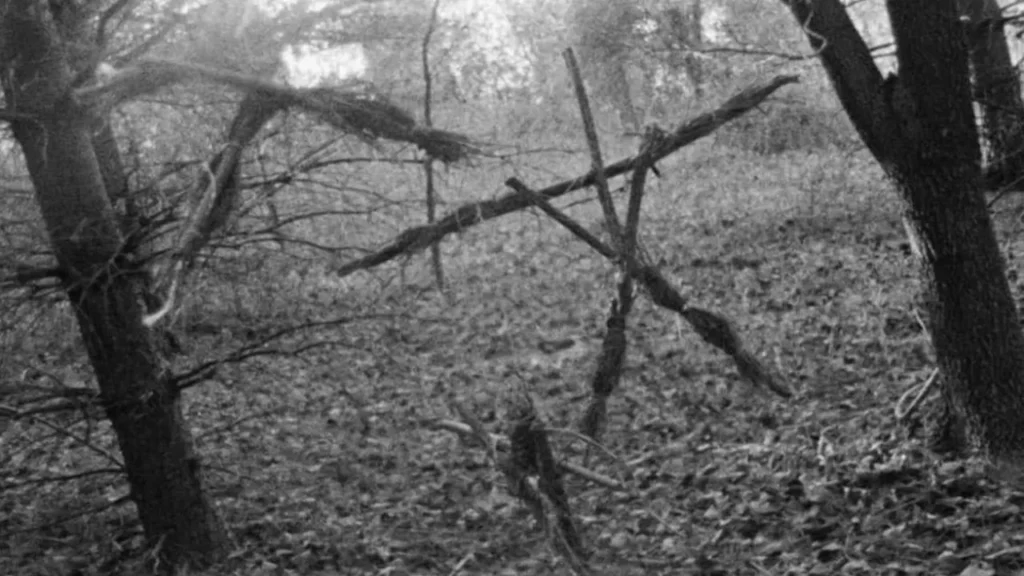
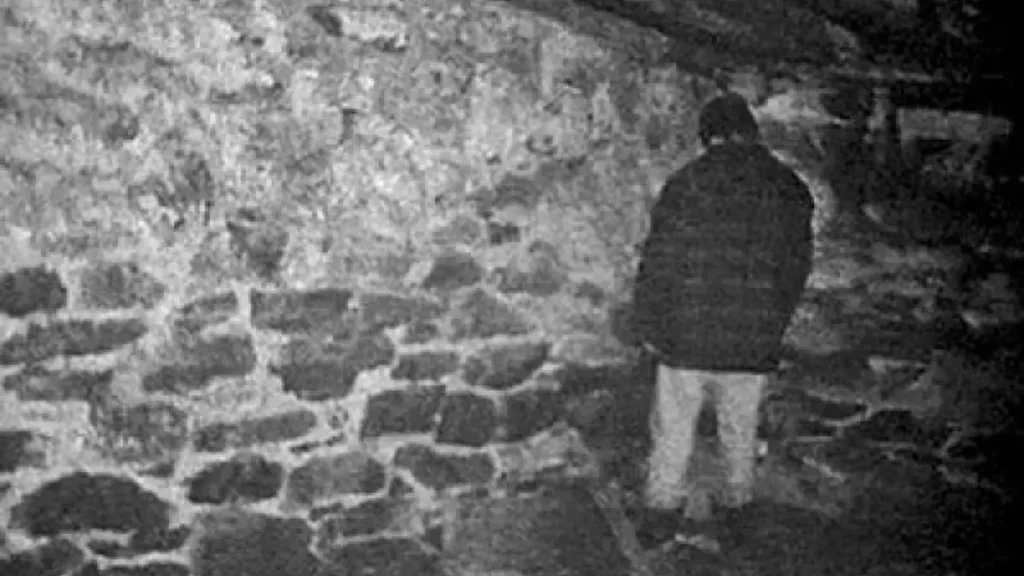
Heather, Mike, and Josh head into the Black Hills forest near Burkittsville, Maryland, to film a documentary about the legend of the Blair Witch in the 1994-set movie. When The Blair Witch Project came out, audiences sat rapt as the student filmmakers were terrorized by something that went bump in the night. The entity — presumably the Blair Witch — pierced the dark of the forest with screeching sounds, left stick figures hanging from trees, and planted bundles of wood containing hair and bloody teeth.
What intensified it was the fact that the characters were utterly lost in the wilderness. Rising tensions between Heather, Josh, and Mike added their own terror with a barrage of angry, panicked shouting in each shaky, handheld frame.
“This was really this experimental art project, and we were a bunch of young people not thinking about how it would be received,” Leonard said at the Oct. 30 cast event. “At that juncture when we were like, ‘Yeah, we’ll use our real names’” … there was a clause in our contract that was like, ‘at the completion of filming, we promise that we will give you two VHS copies of the completed version of the film,’ and so there was part of us that was like, ‘maybe that's all we get’ — 1,000 bucks (they were paid $500 a week) and two VHS copies — and it was really all we expected at the time.”
Heather Donahue in THE BLAIR WITCH PROJECT. (Credit: Artisan Entertainment) Along with the enormous attention the movie generated, Leonard, 51, hadn’t expected the kind of vitriol that followed the film’s release. “This film is definitely not for everybody, and we didn't think it was going to be,” he said. “But because of what happened with it, and the point in time when it came out, and kind of like this lightning-in-a-bottle moment, a lot of people saw it and just absolutely hated it, which is fine. But for many years there was like, ‘Josh Leonard, I f—ing hate your movie, and I want my money back.’ I can't take personal responsibility for that, and what has been really beautiful to me … is people who want to talk about the movie at this point; it's much more of a self-selecting audience. You guys are so much nicer than people were to us in 1999 as a whole, and I genuinely mean that, getting to talk to OG fans and their kids and younger people.”
Donahue said the film created what she called “a very unpopular feminine archetype.” In the movie, Heather is driven to film the documentary even as everything is collapsing around the group.
“If people were yelling at you guys, let me tell you, it got violent a lot,” said Donahue, who was sitting next to Williams and Leonard. “Because we didn’t get money, there was no way for me to protect myself, so it was genuinely scary a lot of the time. And so navigating the name, the usage of the name, and then navigating the continuous use of my image for almost 30 years now … I think there's just been so much more nuance to it over the years, and so that's really been beautiful for me to see, because it was definitely hard.”
Making the woods their playground.

Michael C. Williams, Joshua Leonard, and Heather Donahue. (Credit: Armand Fasano) The Blair Witch Project emerged in the early internet era, which helped keep the film somewhat cloaked in mystery. In 1998, the Blair Witch website went live before the movie’s 1999 premiere at the Sundance Film Festival, where Artisan Entertainment picked the film up for distribution. An ensuing marketing campaign portrayed the grim fates of Heather, Josh, and Mike as real.
Some people were so taken with the performances, story, and delivery that they became Blair Witch diehards. “I got got by that marketing campaign,” said one fan at the cast event who first watched the film on VHS when she was 12. Another fan went so far as to call the movie a way of life.
“We certainly can't take credit for the moment in time and what this film became,” Leonard said. “But it is really an extraordinary experience, as somebody who was kind of part of the process of building this thing, to hear stories of what it meant and what it means to people. There were so many years where I wouldn't even talk about this … because I had so much ego and didn't want to be thought of as, like, a one-hit wonder, and then you hit a point, you grow older, and you have a kid.”
The actor said he’s now glad to have done “something that resonates, and that you’re still talking about years later.” Donahue, who filmed her Blair Witch confessional scene in one take, currently lives in what she called “an off-grid cabin in the woods” of Maine (where she’s been active in local government).

Michael C. Williams in THE BLAIR WITCH PROJECT. (Credit: Artisan Entertainment) To prepare for the movie, the actor braced herself for living in the wild. “I thought it was going to be so much worse than it was,” she said. “I thought we were going to have to, like, kill and skin squirrels and maybe eat them. I thought it was going to be more of, like, survivalist-level stuff, like Naked and Afraid or something like that. So I was reading How to Stay Alive in the Woods.”
The vibe ended up being significantly less extreme. “We were working 24/7, so we could decide to shoot a scene whenever we felt like it, and there was just so much freedom and play in that,” Donahue said. (The cast had a safe word — “taco” — in case they were in trouble and needed to stop filming.)
Donahue pinpointed several resounding themes from the movie’s story and legacy, both as a contribution to horror and as a case study in filmmaking. “The power of nature,” she said, listing them off. “The fact that most fear is actually within you. The fact that anybody can make anything they want without gatekeepers, which has been proven true by the culture over time, and that you, as an artist, should give 100% when you’re performing, when you're creating, and when you're protecting your own creations.”
Reappraising The Blair Witch Project.
Michael C. Williams, Joshua Leonard, and Heather Donahue. (Credit: Armand Fasano) Williams talked about what it was like to pop up for Blair Witch anniversaries over the years, noting that people seemed to always fixate on the film's marketing strategy, not the actors who had to improvise their scenes.
“There was always an undertone on every press piece that was, like, really undercutting — still the narrative of ‘the marketing was genius,’ and no real mention of what we tried to accomplish out there and why people believed this film is because of the performances,” he said. Blair Witch was Williams’ first paid acting gig. After making the film, he returned to his old job in Westchester County, New York.
“We just weren't making any money at the time,” he said. “Everybody was telling you you're a movie star, but I literally went back to move furniture because I couldn't put two nickels together.” But as the film propelled him to fame and he appeared with his castmates on the covers of Time and Newsweek magazines, he decided to quit that job in a highly public fashion — as a guest on Late Night with Conan O’Brien. He told his co-workers to watch the show that night, but the plan partially backfired. O’Brien’s sidekick, Andy Richter, announced his own departure from that show in the same episode before Williams’ appearance.
Michael C. Williams in THE BLAIR WITCH PROJECT. (Credit: Artisan Entertainment) The Blair Witch star later moved to Los Angeles and began supporting himself by working at his friend’s hot dog spot. One night when the actor was in uniform behind the counter, Richter walked in. “I’m like, oh geez, I don't know, this is a weird conversation to have,” Williams said. “I’ll never forget it. He just looks up, and he goes, ‘What happened?’”
Williams, a frequent subject of “Where are they now?” stories, said he’s noticed a change in how people talk about The Blair Witch Project. “It really wasn't until social media — which is very evil at times — became pretty prevalent lately, over the last five years, and people are showing up when there are articles and going, ‘I love that movie’ and ‘You guys are great,'” he said.
“The 25th anniversary was, like, this resurgence of positivity. Like, we go to these different cities for these cons, and people are just coming up like, ‘ You are here tonight … I just want you to know it doesn't go unnoticed, because the real people have spoken, and it's amazing to me. It’s like Sally Field — ‘They like me!’”