
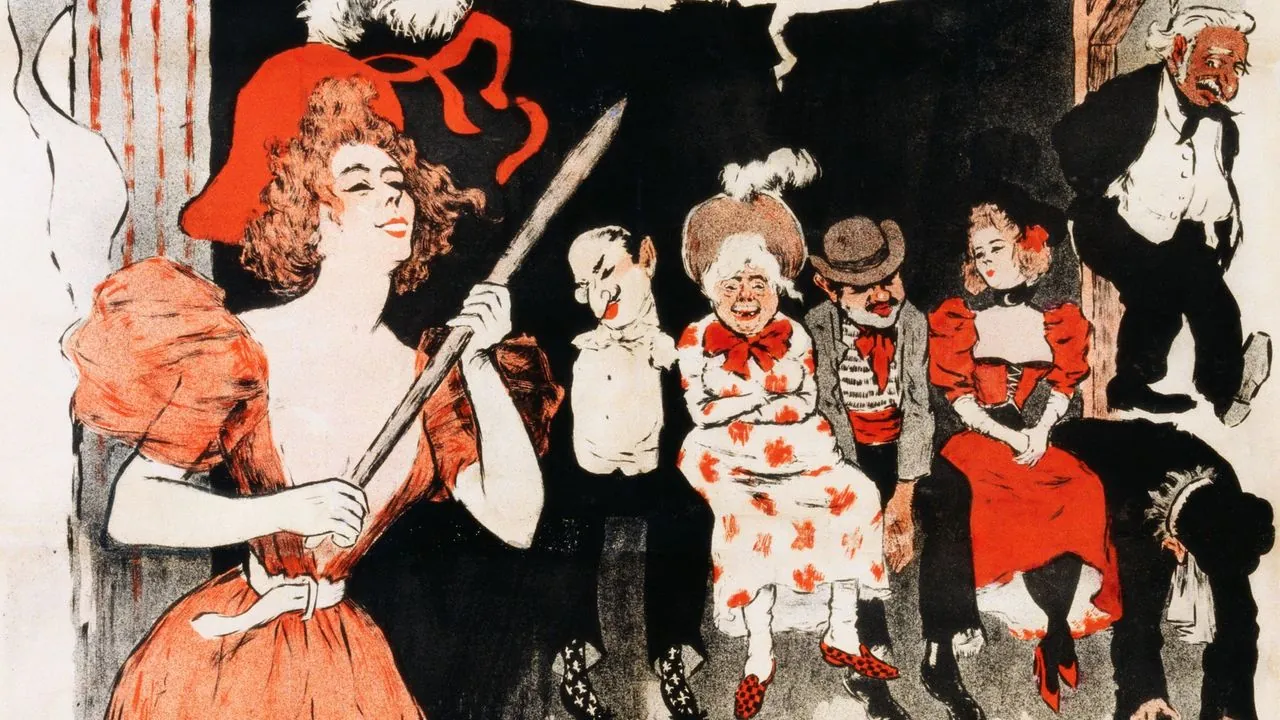
“Yow Sum Gay made a gesture to the two men. They picked Buckner up bodily, each one taking an end of the pole. A third shoved a charcoal brazier toward the center of the room. Buckner noticed two ropes suspended from the ceiling. Each terminated in a loop. Two men each grasped a loop, packed it over an end of the bamboo pole, and left Buckner dangling. The third centered the brazier directly under him. Buckner started swinging back and forth.”
This diabolically clever torture scene is from Erle Stanley Gardner’s The Crimson Jade, a cover item beautifully painted by Walter Baumhoffer. It’s from the September 1935 issue of Dime Detective, one of the era's most vivid Weird Menace illustrations and stories, and a precursor to what we now know as body horror, primarily from the movies.
You don’t have to be a fan of Terror Tales, Horror Stories, or Dime Mystery to appreciate how Weird Menace lives on, bigger and bloodier than ever, on America's movie screens. Director Ridley Scott pioneered the game-changing scream scene in 1979, the chest-bursting creature exploding out of John Hurt’s body in Alien. James Cameron doubled the horror seven years later in Aliens with just the top half of actor Lance Hendrikson’s body heroically saving a child from being hurled into outer space, after the two-story-tall alien queen monster had ripped Lance’s lower half away.
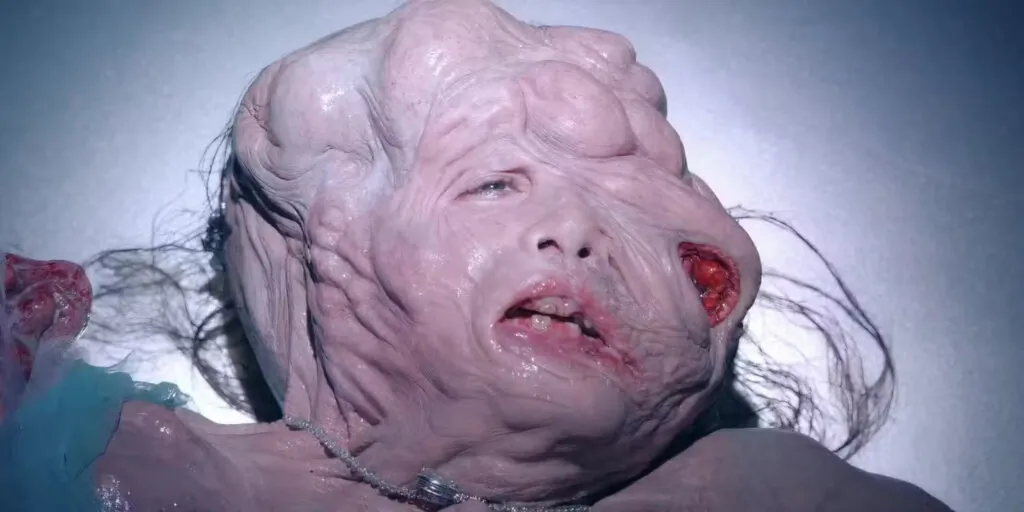
These days we get to watch Demi Moore dying for her art, little by little, prosthetic layer by prosthetic layer, in The Substance. Top International directors like France’s Julia Ducournau have added to the body horror count with Titane and Alpha. Then there’s the finger-lickin’-good cannibalism of Bones And All, not to mention 2026’s vampire-biting, Oscar-winning Sinners. Are you sure you want to go on reading this article?
As every true pulpster knows, extreme theatrical mayhem began in 1897 at the Parisian Théâtre du Grand-Guignol. It ran, more or less continuously, until 1962. It ran for one of the longest runs in theatrical history. The New York Times defined the theater well in an admiring 1957 article, calling its 250-seat venue “more than a theatre; it is a tradition, an institution, like the Eiffel Tower, the Folies Bergère, and Maxim’s.”
Let’s explore your author’s brushes with this live-on-stage novelty that raised the curtain on a one-act horror play, then took a much-needed intermission tended by nurses with smelling salts, then opened with a one-act comedy using the same miraculously restored cast. The Guignol company called it their “cold and hot showers,” a truly original concept and positioning that audiences took to heart for more than the first half of the 20th century.
The company’s leading actress was Paula Maxa, known to the world as just “Maxa,” who was raped, stabbed, immolated, decapitated, and disemboweled over thousands of nights. The Guignol played to all classes, with opening nights bringing out dressy, upscale patrons in Parisian finery. Patrons often fainted.

This viewer’s initial encounter came in late 1940s childhood, browsing through a grandparent’s issue of the Police Gazette, a lurid tabloid, and being utterly transfixed by behind-the-scenes reveals of Guignol torture scenes using fake limbs, second latex skins, and assorted makeup transformations. These were new forms of illusion, hinted at only in Harry Blackstone’s post-war theatrical magic shows and Midwestern carnival acts that exploited deformed people of all ages, sizes, shapes, colors, and ethnicities.
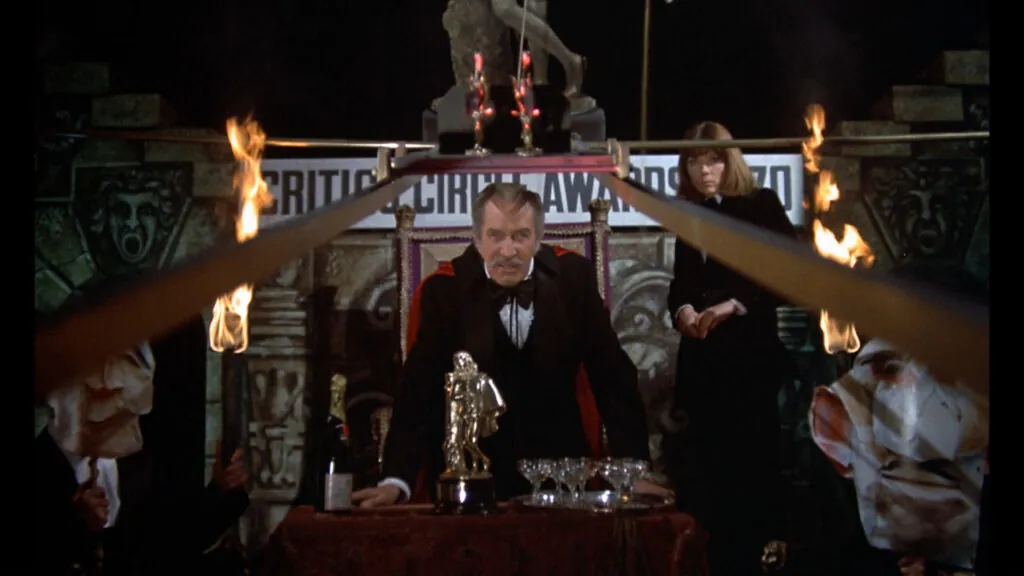
Thirty years later, the movie that triggered those coming-of-age memories was Theatre of Blood. Vincent Price played a Shakespearean actor panned by a slew of newspaper critics (played by marquee names like Robert Morley and Jack Hawkins), each of whom he murders in artful, gleeful ways that earned a mild PG-13 rating. Keep in mind 1973 was only a year after the first PulpCon, and hardly anyone connected the dots with the Guignol.
Few knew that in 1931, New York’s major pulp publishers flew to Paris and watched Guignol productions by authors ranging from the little-known Gaston LeRoud (The Werewolf of Paris) and James Hadley Chase (No Orchids for Miss Blandish) to literary mainstreamers like Jack London and Noel Coward. The publishers saw the potential of creating a new line of extreme titles on Manhattan newsstands that quickly became known as shudder pulps.
In 1977, your reporter contributed to the horror fanzine The MonsterTimes and wrote a Grosset & Dunlap book on Dracula (A Night in Transylvania, The Dracula Scrapbook). At the Washington Square Park penthouse apartment of Count Dracula Society president Jeanne Youngson, he’d met vampire fans who filed down their teeth into points and drank blood socially.
One name that turned up at these gatherings was Barry Alan Richmond, a theatrical designer who allegedly owned the rights to Paris's Théâtre du Grand Guignol. Richmond cheerfully opened his Manhattan apartment in the East ‘70s, which held enough Guignol memorabilia to fill a museum, to this visitor.
Barry was determined not to repeat the mistakes of his Theater Project, a Columbia University program from 1961-64 that unsuccessfully tried to push Grand Guignol revivals into the 1964-65 World’s Fair. Richmond’s revised dream was turning Variety Photoplays, a falling-apart art cinema south of 14th Street, into a New York Grand Guignol theater. Richmond envisioned building a marquee waterfall that would gush and recirculate red-dyed water 24/7.
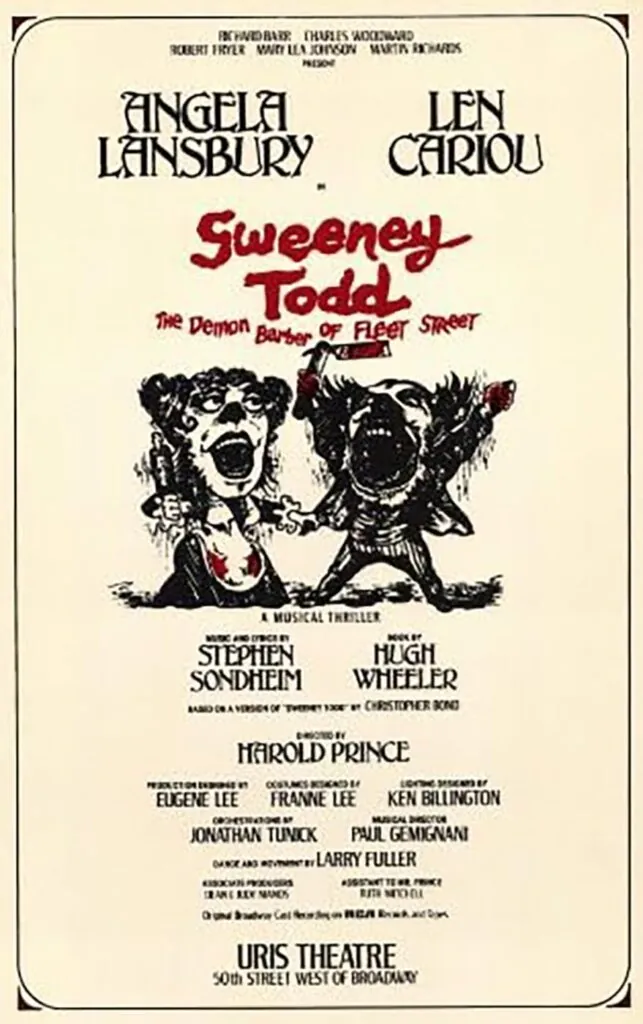
His hopes were probably bolstered by the 1979 Broadway popularity of Sweeney Todd, in which Len Cariou played the demon barber of Fleet Street, slitting the throats of customers and dropping them down a chute to a kitchen where Angela Lansbury baked corpses into pies. (The Times called it “Grand Guignol with a Brechtian style of social commentary.”) Alas, Richmond never brought his grand plans to fruition.
But a more enterprising chap, Russell Blackwood, did. After test-driving Guignol productions in New York and Boston, Blackwood sensed a less competitive and more gender-fluid home base in San Francisco. He launched Thrillpeddlers in 1991 in a 50-seat theater, The Hypnodrome, and started a part-time 20-year run. One of his in-house writer/adapter/directors was none other than Eddie Muller, the preeminent film noir preservationist, novelist, scholarly author, and TCM host.
Known affectionately as the “czar of noir,” Muller wrote originals and adapted a 1927 Guignol play for Thrillpeddlers. For an evening themed “Fear Over Frisco.” Eddie knew “desperate characters exercising their worst instincts” (a template of film noir) would fit a Guignol format updated to contemporary San Francisco.
“My job was finding society’s hot buttons right now, and pushing them in the most entertaining way.” Eddie even inserted songs (including one he wrote), like the “specialty numbers” Ida Lupino, Lizabeth Scott, and Dorothy Lamour would interrupt some sinister ‘40s drama to sing on the big screen.
Muller also adapted a lost one-act play, The Better Half, Noel Coward wrote for the Guignol in 1921, in his salad days. The premise is how a jealous husband deals with an unfaithful wife. Perhaps better than any fear-based, multimedia creator of his day, Eddie Muller always remembered that movie audiences enjoy being so scared they often burst into laughter (maybe because real life is so much worse than anything happening on a stage or motion-picture screen).
Blame it all on the Grand Guignol, which invented those uncanny “cold and hot showers” and delivered both in one evening.
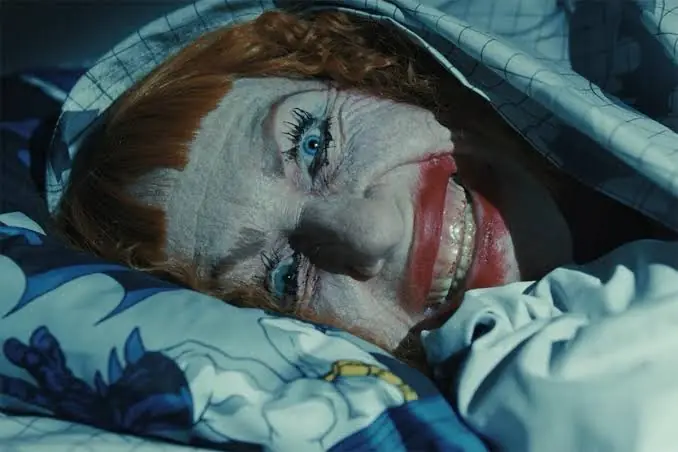
Which brings us to the latest extension of the Guignol, a more audience-friendly kind of mayhem we might call Kid Guignol. It’s turned up on screen as Stephen King's character Pennywise, the killer clown, in It, and as the Australian horror film about a children’s book character, The Babadook, goes off the rails. This year, it was Weapons, in which Oscar-winning Amy Madigan plays a witch who menaces 17 schoolchildren until they exact revenge and tear her to bits.
The stage equivalent of all this child-oriented distress, the gold standard without question, has been Julian Crouch’s Shockheaded Peter, which invaded Broadway in 1999 and again in 2005. Their graphic logo was a tiptoeing, scissors-wielding goblin next to the legend “No children were harmed in the making of this show. Yet.” The stage burst with extravagant costuming, giant puppetry, and a chillingly morose trio of musicians, the Tiger Lilies, led by a marvelous accordion player, Martyn Jacques, who sings in a paralyzing falsetto. The critics loved it, starting with The New York Times:
“A spiky, subversive riff on Heinrich Hoffmann's Struwwelpeter, a droll collection of grisly bedtime stories from the mid-19th century, Shockheaded Peter is both the silliest and the most sinister show in town. It is also one of the smartest.” And Variety chimed in with “This is definitely not for the under-10 set, but less impressionable older kids and adults with a taste for flamboyant Grand Guignol should fall under the grotesque spell of this unique show.”
Shudder, pulp publishers knew they would. At peak popularity in the late 1930s, Weird Menace titles sold lickety-split, over 1,500,000 copies a month. This was long before New York’s Mayor LaGuardia swept them all off city newsstands. Today they live on in the not-so-innocent verses of a Tiger Lilies ditty, “Fidgetity Phil”l:
“Where is Phillip, where is he
“Oh there he is, and he bleeds,
There’s a bloodstained tablecloth lying on him
Knives and forks they’re all stuck in him.“There’s a knife, and there’s a fork
Oh, Phillip, this is cruel work
What a terrible thing to do
Phillip bleeds to death and turns blue.”
###
Kurt Brokaw is Senior Film Critic of The Independent and author of The Paperback Guy.
