
Last Updated on August 24, 2026 by Amber T
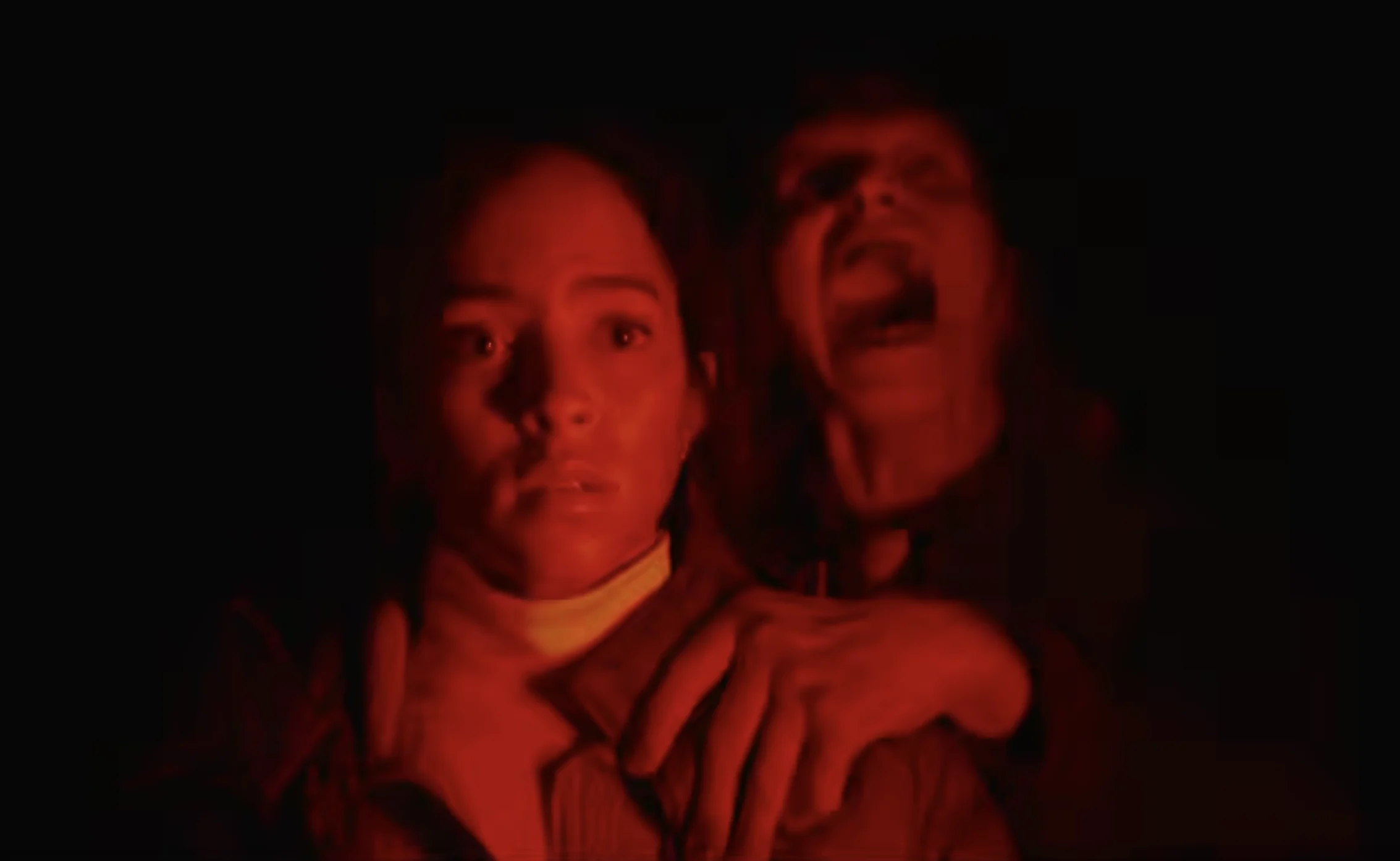
For anyone who has seen André Øvredal’s latest horror movie, Passenger, there is an incredible 360-degree shot that I couldn’t quite wrap my head around. The main character, Lou (played by Maddie Brecker) becomes increasingly disoriented in the moment, and so does the audience. (If you missed this one in theaters, you can catch it streaming on Paramount+ August 20.)
It’s hard to invisibly pull off a trick these days. Audiences are increasingly savvy and can often break down how something was done. Even when I can tell how a trick was executed, it doesn’t take away from how impressed I am. But this time, I simply could not tell how the trick was done. I had theories, of course. They were wrong. And after chatting with Øvredal, it turns out the real answer was actually simultaneously simpler and more complicated than what I was envisioning.
The scene takes place in a sprawling strip mall parking lot. Lou is walking out of a building toward the presumed safety of her van. After a heart-racing jump scare, the van seems to move increasingly further from Lou as the camera moves around her.
The assumption was that there’s an invisible cut somewhere in the 360. Wrong. The entire thing was done as one continuous take, and the cast and crew worked together with seamlessly executed choreography to orchestrate the van physically moving further away from the actor when the camera was turned away from it. Like the best magic tricks, the concept is simple, but the execution is genius. Øvredal breaks the whole thing down in full detail for us.

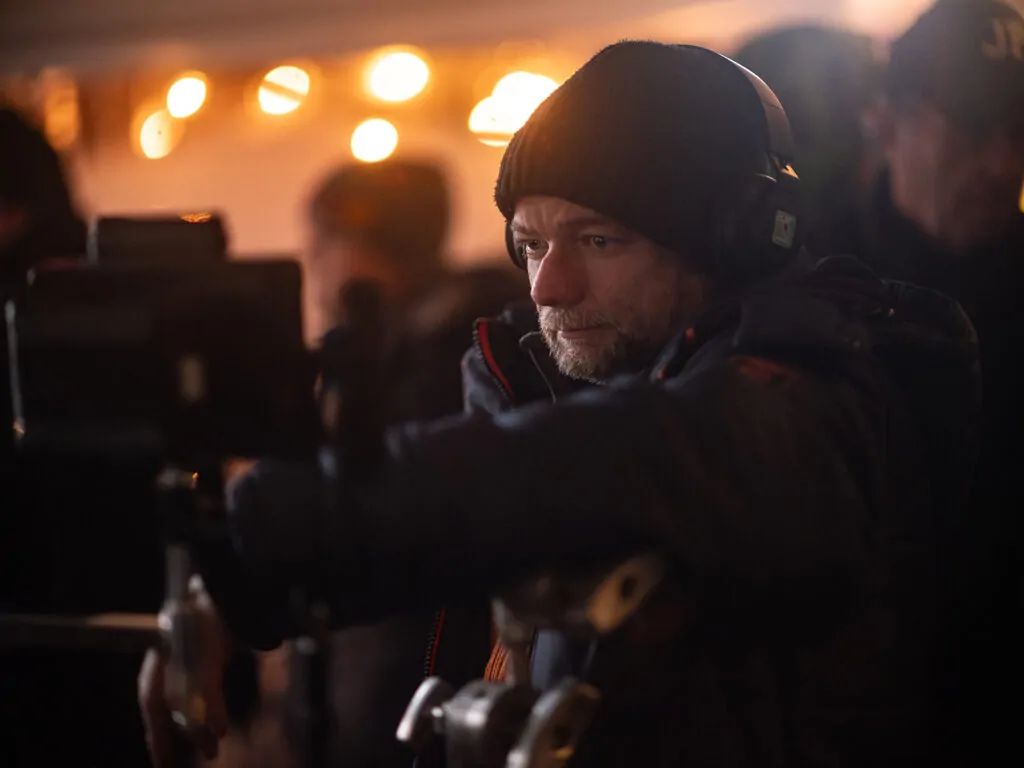
There is a very specific shot that you do in this movie. It's in a parking lot. It's this incredibly disorienting 360-degree shot, and I couldn't figure out exactly how you did it. Will you explain it to me a little bit? Is there an invisible cut in there? What was that blocking like? Because it was really trippy to watch.
André Øvredal: It was all one shot. We did 17 takes, I think, somebody told me. I think that's true. That sounds true. We basically rehearsed it in the morning, which is from 6:00 PM to midnight. After lunch at 1 am, we shot the rest of the night. But really, as soon as I read that scene in the script, I really wanted to shoot that scene as a oner [one continuous take]. It took a long time to figure out the right parking lot and the right distance. We did rehearsals first with a stand-in for Lou, and then after a while she would join and become part of the rehearsals, just after we kind of ironed out the most obvious technical issues.
As soon as she walks out of the gym, the most important thing for me is to give the audience the information they need to understand the scene, to understand what's at stake, and to appreciate the suspense building. So you immediately establish where the van is.
Fortunately, it has pretty bright colors. It's easy to see in the distance, so you know where she's going. Then the camera starts to pan off her and really shows that she's kind of in her own world, listening to music. As we're tracking backward with her, we pan over from her looking at these two guys sitting in that car who are kind of creepy looking, and then using that demotion of that pan, we pan back to her, and then this huge truck comes in as kind of a jump scare essentially.

Then we follow her, bewildered by the immediacy of that. The tension increases as we're coming around again to show the car behind her with these two guys. Then we follow that around, and we let that lead the camera back to her again. It was constantly like a dance between the Steadicam and her. I was very obsessed with something has to happen every two seconds.
These shots, these kinds of oners tend to get a bit boring sometimes, even though they're amazing and I'm in awe of what's going on. It's so hard to sustain it, but this had all these elements throughout the entire walk and scene. It was just a perfect scene to do it. So as soon as we come back again, then to see her van, her goal, now she's getting closer and closer, she hears these footsteps.
The camera turns around to show basically what she is looking at as she turns. Then we slowly whip off the van, we pan off the van. At that point, I'm on the radio right behind the camera saying, “Go,” to the driver. As soon as I see on my monitor that we are not seeing the car as the camera's panning away, he drives forward, and then as soon as we come back, he's settling in a new position, he just barely made it.
And then the same gag again. It was a fantastic, fun thing to do. It was kind of my favorite moment in shooting this movie. I had such a blast that whole day because it's like trying to figure it out and then rehearsing and then, okay, here's a kink we need to fix, and here… Okay, next one, here's another problem. It's just problem solving. Then we started working with Lou and the emotions of the scene and how she feels throughout. But first we had to work out all the technical stuff.
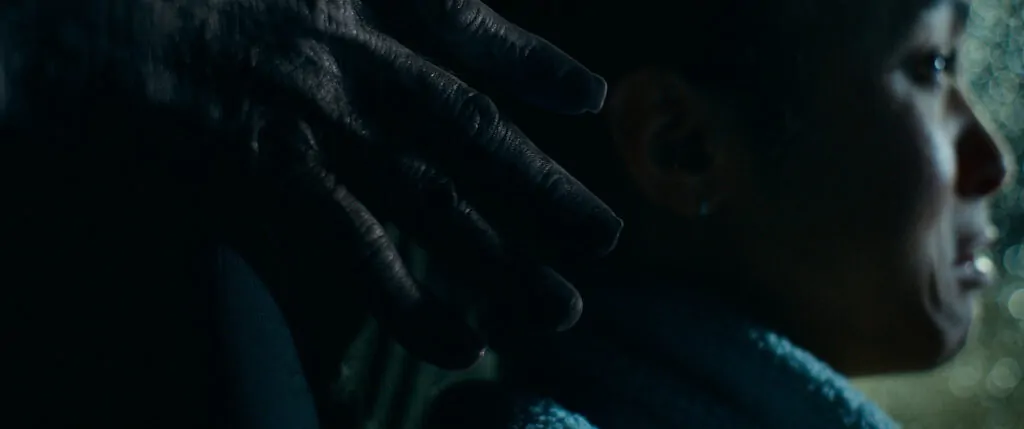
You do a lot of that actually in this because you're dealing with the open road, but you're also dealing with a very confined space, the van. It's like a haunted house on wheels, but you don't have the benefit of a giant haunted house. How did you take that and scale it down to achieve it in such a small space?
We kind of divided the van into three parts, the front section, and then the middle section, and then the bed back section. That's kind of how you divide a van like that when you're making it. But also geographically and storytelling wise, it became different atmospheres in a way. I wanted a curtain to just be a little bit present in front of the bed section just so we could play with that.
We put in a cabinet, we've seen some vans that have that kind of shower cabinet, but only to give it an extra edge to be able to create something to hide behind. It's that simple. You had to break up this very linear little alley that it is. And choosing the chairs, how big and how high, everything is done very specifically. Also the colors, especially the colors, because I needed a color that is dark enough to, when you turn off the light, there isn't reflection bouncing around because you’ve got to have a little bit of light.
It sucks up the light in a way when you have darker hues. We also wanted a friendly color, so we chose green, so that in the beginning when there is light on it, you feel like it's a good warm color, if you will. All these things are to transition from a nice home feeling to something sinister eventually.
Aside from design and color and all those things that you have to think about, and providing hiding spaces for where things could be lurking, did it affect the kind of equipment that you could use in there? Do you need to use smaller gear because you're working in a small space?
Yeah, I really liked the Sony VENICE for that. We used the Sony VENICE 2, which is one where you can take off the whole big build and put it basically on the ground or next to it. It becomes this so called Rialto mode. Basically all you have is just the section that the lens connects to and the rest is through cables to something. So when we are running around with that camera, when we're shooting that scene in a parking lot, there is a person running around with a big heavy backpack, right behind the camera with a long 15-foot cable to the camera that always has to be there to record. They’re carrying the recorder, which is just a hard disk, obviously.
So we use that. That helps. But also when we were shooting driving scenes, I wanted to shoot as many of the driving scenes for real as possible. We did the “poor man's process”, where we're just pretending to drive. There isn't a single scene in this movie that's shot in a studio. Everything is out on the road. But sometimes we would need to shoot some moments with this poor man's process. Then we would put two Sony FX3s, which are basically still cameras, in the windshield. They would be right in front of the actor, so we can get nice close-ups while they're driving. It really feels old-fashioned. You're connected with big cables.
Is this the most problem-solving on that level you've had to do on a movie because of confined spaces?
No, we had similar elements involved on The Last Voyage of the Demeter. We used basically the same camera, just the VENICE 1 at the time, and also in the Rialto mode because there were a lot of confined spaces there as well, or it was just more practical to have a smaller camera.
Are you afraid that this movie will make people afraid to help people in need? Because I for one, now I'm not stopping for anyone, but typically I like to think that I would be a Good Samaritan type.
It's a good question! Does it accentuate the problem that people don't stop to help people on the road with an actual accident? But would you dare do it today? I don't know. I've seen so many horror movies, serial killer movies, or whatever it is. It's a dangerous place to be on the road, even without this movie, without Passenger.
Passenger is streaming on Paramount+ August 20.
