
The found-footage horror genre has evolved over the years. From its infancy in the VHS era with classics such as The Blair Witch Project to its modern update in screenlife films like Unfriended and Host, the subgenre has always employed a unique POV to put audiences in the driver’s seat of horrific situations. But has a film ever dared to hold up a mirror to what audiences see every day on social media and news apps while they doomscroll by tapping into the horrors of the surveillance state that the United States is becoming day after day? What about a reflection of our nation’s fears of mass shootings, corporate espionage, and human trafficking?
This is what the film Compliance sets out to do. It provides a grim reflection of the powder keg of animosity and aggression that our political landscape has become. Directed by queer filmmaker Kyle Mangione-Smith, the film uses a unique found-footage perspective, with home surveillance and phone cameras that feel far too close to our reality for comfort. I saw the film earlier this year at Fantastic Fest, and it left a chilling impact and a feel-bad atmosphere about what our modern world has become. In short, it’s the first found-footage film to leave such a profound effect on me in some time.

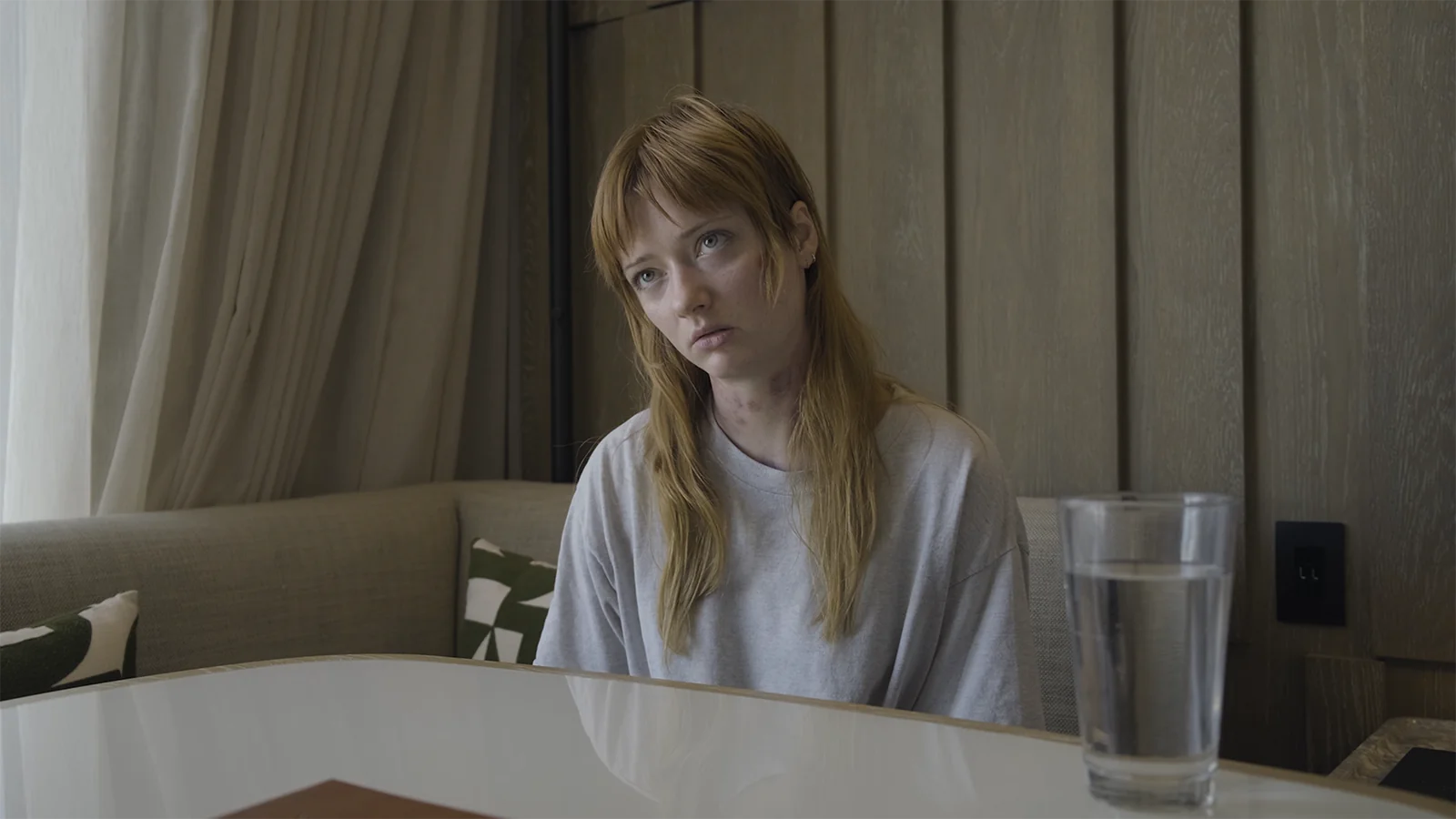
“I’ve talked about this a lot, but I want to deconstruct the found footage genre. That was the big piece. I feel like there’s just so much you can do with that as a format that never really gets tapped into, so I was trying to approach the genre from the baseline,” says Mangione-Smith when we sat down to discuss some of the boundaries that Compliance pushes. The film put viewers in the shoes of Sam (Megan Wilcox), a crisis representative for a tech startup company looking to cover up a sexual assault tied to their company. It’s an all-too-real situation we hear about in daily news stories, but making her the main character turns the audience into an active participant in these disgusting business practices.

Over the course of the film, Sam gets involved with a shadowy organization that looks to take down the company she works for by staging heinous crimes as a means to put an end to their evil practices, and this is where Compliance goes into full gonzo mode, involving a violent sequence that switches POVs to an active shooter running loose in the corporate building. I asked Mangione-Smith his thought process behind this sequence and the use of found footage for it:
“I was trying to comment specifically on the way that information being disseminated and shown to you through the internet shapes your understanding and relationship with these sorts of events. How it makes it harder to navigate what the truth is. I felt like you can only get to that point if you're actively involved in that same way.”

Truth be told, he has a point. We’ve reached a moment in American society where we have almost become numb to daily tragedies because we have a portal in our pocket that feeds us this information. Compliance takes the bold swing of showing its audience a horrifying POV of a daily situation and reminding us that tragedies like these still have meaning.
“As a filmmaker, I’m really interested in the idea of films that create an experience where it feels like this very embodied thing. You’re not just watching a narrative unfold by the nature of how it’s structured. You feel it in your core. I was definitely trying to lean really hard into that. That's mostly where my head was at with that,” he adds.

Towards the end of the film, a sequence happens that I can only describe as a “digital mosh.” A series of extremely uncomfortable flashing images and sounds. It’s one of the most harrowing sequences I’ve seen in a horror film this year and also prompted a handful of festival walkouts. The interesting aspect of the sequence is that it feels vital to what the film is trying to say about corporate takedowns, civilian surveillance, human trafficking, and brainwashing.
“The thought of that scene is you’re basically watching someone get MK Ultra. I was just trying to think, how can I represent this cinematically in a way that makes you, as an audience member, experience it? That little two-minute bit took me over a month to create. I made basically what was a flicker film out of like 250 or 300 images that I sourced online and altered them slightly with the coloring and had them pulsating. I have a lot of analog video glitcher synths, and I spent three or four hours just running that, and the footage from on set through those continuously in every different configuration and just really obliterated the footage. Then slowly scanned through all of that and found the bits that looked the most compelling,” he says.

I also asked Mangione-Smith about the challenges of depicting the very real and scary side of American culture authentically. He had this to say:
“Over the two years that I was making it, some of the research I had to do, I’m fairly certain I ended up on some sort of a list. It was a very cathartic thing for me because it’s all of these things that I feel like I’m subjected to 24/7 that are really horrifying and upsetting and make you feel like you have no agency. Being able to take that subject matter and creating something out of it and channeling the feelings that I have around it was a very cathartic experience in a lot of ways.”
Compliance is a found footage movie with bite; a rarity in the ever-evolving horror landscape. It’s also one of the most authentic portrayals of American fears. On the surface, one may call it one of the most shocking pieces of edgelord cinema designed to make you uncomfortable, but beneath the surface is a deep, dark reflection of what we let this world become.
The film is currently in its festival run and is set to play at the Soho Horror Film Festival next, but Mangione-Smith says he and his team are figuring out distribution and digital releases. In a world where we can pull our phone out and see assassination videos or the latest American tragedy, Compliance is the hard look in the mirror this country needs.
