
Horror films allow us to witness some of our deepest, darkest thoughts without having to handle the consequences. To make this chilling theatrical experience even more immersive, filmmakers utilize point-of-view (POV) shots to put us in the shoes of the film's victims during their most fraught moments – or even the killer's.
Some go as far as using POV shots throughout the narrative, the latest being Steven Soderbergh's highly anticipated haunted house flick Presence. Starring Lucy Liu and Julia Fox, it follows the story of a family who believes their new suburban home is haunted as they experience increasing paranormal phenomena. But it's told with a twist – the whole film is from the POV of the spirit itself. (Read our full Presence review here.)
It takes not being able to see the film's antagonist to a whole new level, placing the audience behind their ghostly eyeballs so they quite literally have a front-row seat for the terror that ensues. From slasher films to creature features, the POV shot is a staple in the horror genre when it comes to creating new and innovative scares that shake audiences even when they leave theaters. As we gear up for Presence, FANGORIA has rounded up 11 of the most effective POV horror movie sequences that paved the way for this spectral fright-fest.
-
Peeping Tom

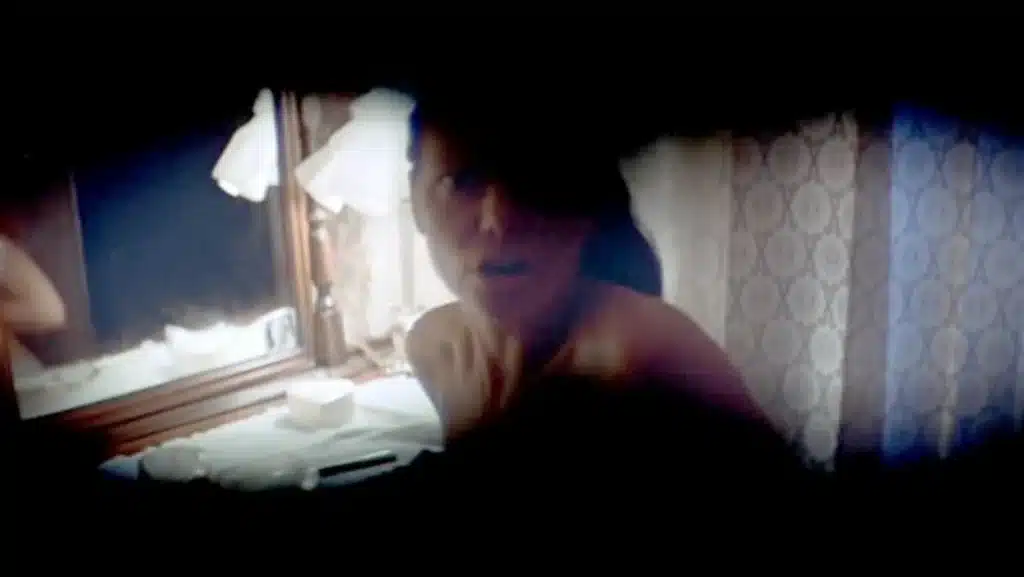
Michael Powell horrified cinemagoers in 1960 with the release of Peeping Tom, telling the tale of serial killer Mark Lewis (Carl Boehm) who slaughters women while filming their final moments. Audiences are aligned with Lewis throughout the film, a technique that is commonplace in the slasher genre now but was radical and terrifying at the time of its release.
This is heightened through Peeping Tom's various POV shots from behind Lewis' camera, in which we slowly descend on his screaming victims desperately backing away and pleading with their wide eyes for mercy. Along with giving audiences a front-row seat to Lewis' crimes, it darkly makes us aware of the voyeurism that goes hand-in-hand with cinema, uncomfortably so when we witness the most gruesome acts humankind can commit.
Psycho

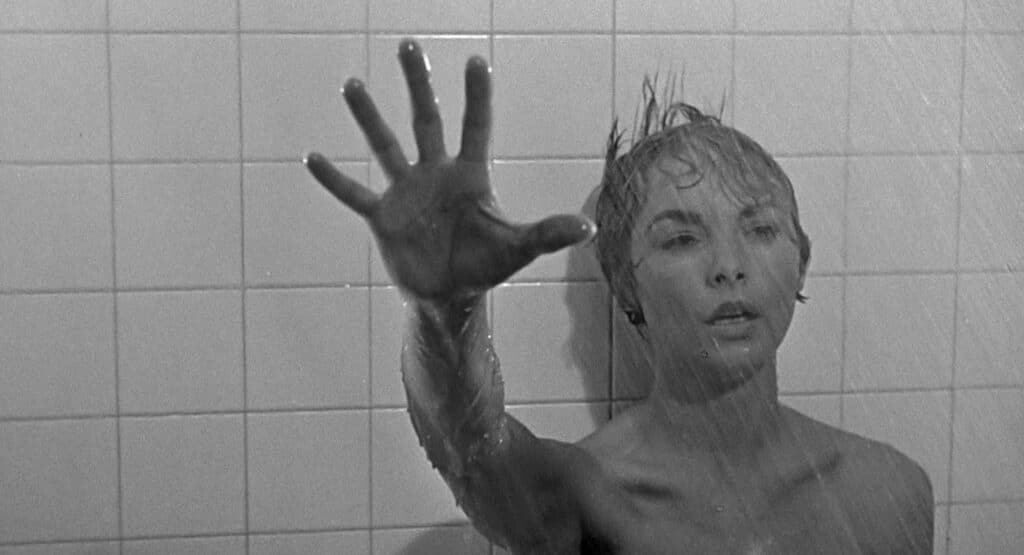
In the same year as Peeping Tom, Alfred Hitchcock released Psycho, introducing horror fans to the Bates Motel and the chilling events that occurred behind closed doors. Starring Anthony Perkins, Janet Leigh, Vera Miles, John Gavin, and Martin Balsam, Psycho follows on-the-lam embezzler Marion Crane (Leigh) as she seeks refuge at the Bates Motel, meeting the shy proprietor Norman Bates (Perkins).
She goes missing, prompting her lover Sam Loomis (Gavin), her sister Lila (Miles), and private investigator Milton Arbogast (Balsam) to investigate her disappearance. POV shots are used to align audiences with Bates, most iconically in Psycho‘s shower scene, which has been replicated many times across popular culture.
The frenzied cuts, blood-curdling screams, and the final shot of blood and water circling the drain are burned into the brains of those who haven't even seen the film thanks to their legacy.
Rear Window

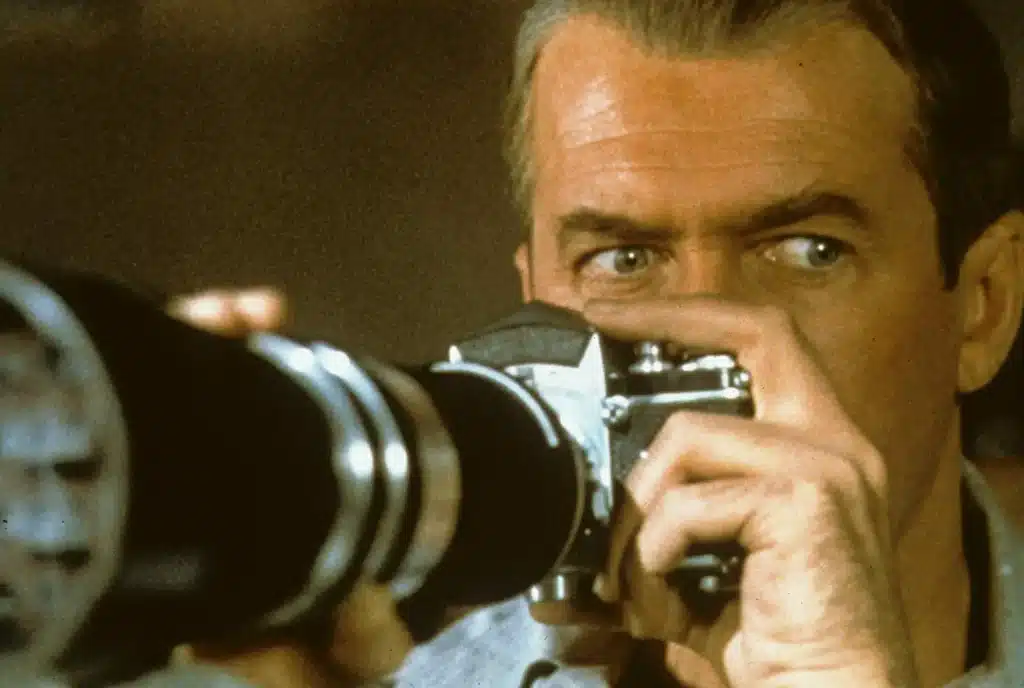
Hitchcock utilized POV shots six years prior in the nail-biting thriller Rear Window. Based on Cornell Woolrich's 1942 short story It Had to Be Murder, the film centers on photographer L.B. “Jeff” Jefferies who, while recovering from a serious injury that has put him in a plaster cast from the waist down, witnesses what he believes to be a murder.
Multiple shots in the film help the audience sympathize with Jeff's helpless position, watching the events unfold in his neighbor's home but not being able to intervene. One of the most famous shots of Rear Window is from one camera position in which Lisa Fremont (Grace Kelly) is snooping in Lars Thorwald's (Raymond Burr) apartment, ratcheting up the tension as the lack of cuts forces you to focus on the slightest movements and mistakes that could see Lisa killed.
Predator

PREDATOR (Credit: IMDB) Alongside Alien, Predator is one of the most terrifying sci-fi horror films ever made. Heart-pumping action sequences, impossibly powerful extraterrestrials with bloodthirsty tendencies, and mere mortals trying to fight for their lives – what more could you want?
The 1987 film follows an elite paramilitary team attempting to rescue a group of hostages in a Central American rainforest, but unbeknownst to them, the territory is also inhabited by a technologically advanced alien hunting humans for sport. As well as POV shots from the eyes of the soldier as the Predator closes in, we also see some unique scenes from the alien's perspective. It distances the creatures and humans even further, with colorful shots based on thermal imaging similar to a snake hunting their prey.
Wolfen

With Wolf Man hitting the big screen, there's a renewed interest in werewolf movies. Released in 1981, the crime horror film Wolfen focuses on NYPD Captain Dewey Wilson (Albert Finney) who is assigned a bizarre string of murders that have plagued the city. They are believed to be victims of animal attacks, but as Captain Wilson investigates further, he discovers an ancient indigenous legend about wolf spirits.
Like Predator, Wolfen features POV shots from the wolves' perspectives, centering the audience with the creatures as they stalk the residents of New York and giving the audience information about the vicious case that our protagonist doesn't have, a unique position for viewers.
Maniac

Released in 1980 and followed by a remake in 2012, Maniac puts audiences in the shoes of a killer like no other. The original film focused on Frank Zito, a man who endured a horrifically abusive upbringing and goes on to become a serial killer who preys on women, taking their scalps as trophies and attaching them to mannequins.
The 2012 remake stars Elijah Wood as Zito, a schizophrenic man who takes over his family's mannequin business after his mother's death, and who also murders and scalps women. Both films are told primarily through the POV of the killers, following them in their day-to-day, mundane lives as well as during their grotesque, bloody killings. The near-constant use of a first-person view, even through the most everyday actions of the protagonist, humanizes the killer and adds another layer of terror to the tale – a vicious killer can hide in plain sight.
Silence Of The Lambs

Often credited as one of the greatest films of all time, Jonathan Demme's Silence Of The Lambs also has one of the most effective and spine-chilling uses of a POV shot in cinema history. The 1991 crime thriller stars Jodie Foster as Clarice Starling, an FBI trainee who is tasked with hunting down the serial killer Buffalo Bill (Ted Levine), who skins his victims.
To catch him, she seeks the advice of Hannibal Lecter (Anthony Hopkins), an imprisoned cannibalistic serial killer and gifted psychologist. As the net closes on Buffalo Bill, a tense showdown occurs between Clarice and the murderer as she finds his lair. Bill gets the upper hand as he kills the lights in his home and, armed with night vision goggles, taunts a blinded Clarice.
The audience watches the chaos from behind Bill's glasses, sitting beside him as he prods and pokes a bewildered Clarice who has no idea how close she is to certain death.
Opera

Cristina Marsillach in OPERA (1987) Giallo maestro Dario Argento utilizes POV shots in numerous works, but none more innovative than the 1987 hit Opera. When Mara Cecova, star of an avant-garde production of Verdi's Macbeth, is injured in a car accident, her understudy Betty (Cristina Marsillach) takes on her role of Lady Macbeth. Shortly after, a masked assailant forces her to watch the brutal murder of her boyfriend Stefano (William McNamara), marking the start of a grizzly set of murders tied to the actress.
POV shots litter Opera, from its opening scene with Mara leaving the theatre in a huff, to Betty's, the killer, and even a murder of ravens. The constant switching of perspectives and often the backward movement of the camera during the POV shots never allow the audience to feel comfortable, and bring to life the sense of confusion and danger Betty feels while stalked by the killer.
In A Violent Nature
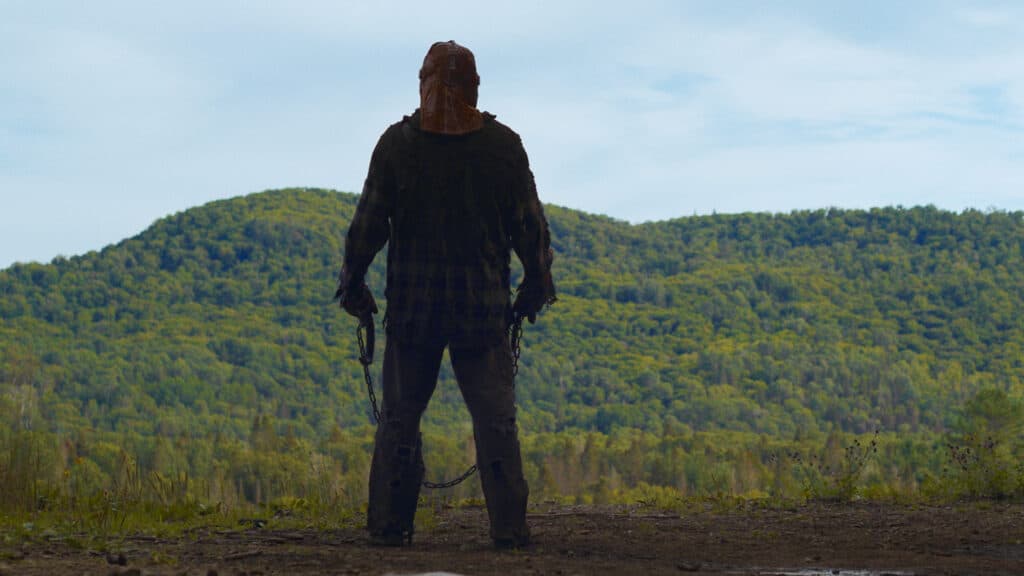
One of the most significant modern examples of a horror film utilizing POV shots is Chris Nash's “ambient slasher” In A Violent Nature. When a group of teens finds a locket in a collapsed fire tower deep in the woods, they accidentally resurrect the corpse of Johnny (Ry Barrett), a vengeful spirit killed in the same fire tower 60 years ago. He will stop at nothing to return the locket to its rightful home, hacking and slashing through those who stand in his way.
Unlike many slasher films where we follow the protagonist while they're pursued by a hulking killer, In A Violent Nature is told entirely from Johnny's POV. Much of the film is shot over the shoulder of Johnny, giving the audience a tense third-person perspective as he silently walks through the woods on an unwavering quest to find his victims, brutally slaying those who get in his way.
Coupled with the lack of soundtrack and very little dialogue in parts, it's an eerily effective way to create tension and ground the brutal flick in realism.
Will the In A Violent Nature sequel follow the same POV formula? Hopefully we won't have to wait too long to find out.
Black Christmas
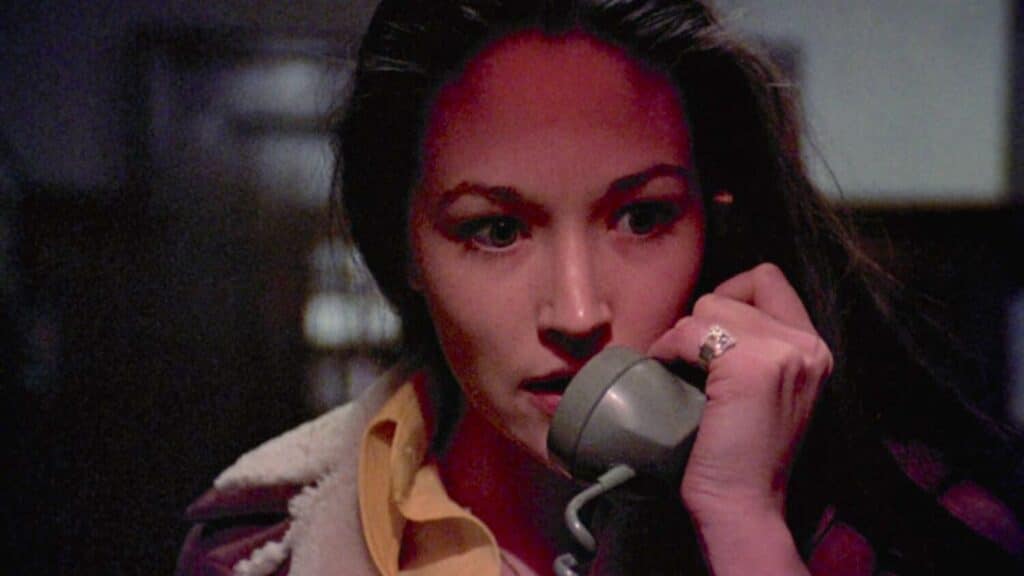
Olivia Hussey in BLACK CHRISTMAS (Credit: Cineplex Entertainment) The horror of being watched is explored in the classic 1974 slasher Black Christmas. (There is an excellent piece on the iconic slasher in the current issue of FANGORIA on newsstands now.) It follows a group of sorority sisters who begin to be picked off one by one after receiving increasingly threatening calls from an unknown assailant, all while a serial killer terrorizes their small college town over the Christmas period.
It was ahead of its time in terms of how it addressed attitudes of law enforcement when it comes to violence against women and girls, as well as the general attitude society has towards women's issues and autonomy. The tracking POV shots put us in the killer's shoes and keep him obscured from the camera, making him a mystery not only to his victims but to the audience themselves, heightening the overall paranoia.
Halloween

As far as POV shots go, Halloween has one of the most revered sequences in horror that kicks off the entire legendary franchise. John Carpenter's 1978 masterpiece begins with Judith Myers (Sandy Johnson) being brutally stabbed to death by her six-year-old brother, Michael while their parents are out for the evening.
Fifteen years later, Michael escapes the secure facility he lives in while being transported to the courthouse and encounters teenage babysitter Laurie Strode (Jamie Lee Curtis). The film's entire first scene is told from the POV of Michael as he wanders through his childhood home before plunging a knife into his sibling. The reveal that there was a child behind the destruction is shocking and sets the tone for the film that changed the face of horror as we know it.