
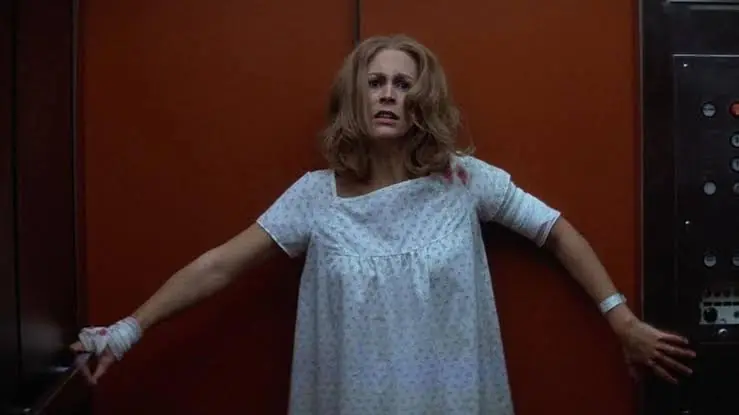
John Carpenter has freely admitted that he was basically forced to write Halloween II and, as the legend goes, can co-credit a six-pack of beer for the resulting screenplay. But after director Rick Rosenthal's early cut proved subpar, Carpenter ended up directing a few scenes and re-editing the film to make it more worthy of being a successor to its landmark original. Fans are divided on the results; some swear it’s the only good sequel, while others (raises hand) find it a big step down and outdone by later entries.
That said, it’s still a fun watch, and I find I enjoy putting it on at the end of the night on Halloween itself, as the movie’s somewhat dour tone matches my mood as I say goodbye to my favorite season. And thanks to the Blu-rays, I even have a television version that more closely matches Rosenthal’s cut — included on most releases — giving me a “Jimmy lives!” option if I feel so inclined. But those variations intrigued me about the 1981 novelization by Jack Martin (actually horror author Dennis Etchison using a pseudonym), because I wasn’t sure whether the book would match the original screenplay or Carpenter's revised version.
Surprisingly, it follows the theatrical version! While most novelizations of yore built off older scripts, it seems Etchison was given the new pages to work from. The two major elements Carpenter added (the girl who lives next door to the Elrods being killed, and the scene of Michael walking through a busy Haddonfield town center on his way to the hospital) are included here. And poor Jimmy stays dead; while the TV cut (and presumably Rosenthal’s original version) has him in the ambulance with Laurie, this one ends just as the theatrical one does, with her alone.
However, there is a bit of an extension to the scene; not only is the conversation about how many dead bodies they found expanded to specify both Myers and Dr. Loomis were blown to bits, but when the paramedic asks Laurie where she lives, she replies that she doesn’t know.
This serves as a bit of a button on an ongoing plot point in the novel that is largely absent from either version of the movie. As fans know (and often lament), this is the entry where we learn Laurie is Michael Myers’ sister, which comes out of nowhere and is never revealed to Laurie in the narrative. In the finished version, she has a vague dream/memory of being younger and visiting a mute boy in the hospital, with her mother saying not to talk about it — it’s never explained fully, but we get the impression that at some point she was allowed to visit her big brother at Smith’s Grove (WHY they’d do this is anyone’s guess).
Etchison's novel expands on this scene quite a bit, giving us several pages inside of Laurie’s head as she recalls these fragmented childhood memories, including the odd detail that Mr. Myers was physically abusive. Given that the storyline dictates that Laurie was only about 4 years old when her birth parents were killed (in an automobile accident, apparently — the movie just says they were killed, providing no other details*), this is a very dark bit of information. Her inner thoughts also reveal that the Strodes were family friends and were watching Laurie the night the Myers’ had their accident, with Laurie now wondering if Michael was somehow to blame, controlling events from the confines of his sanitarium cell.

*A standard Halloween franchise move, as Laurie’s offscreen death between 2 and 4 was also attributed to a car crash, but that information was ALSO only given in the novelization, not the film itself.
These lengthy sequences (there are two) are pretty much the only ones that the author offers that aren’t present in either version of the movie. While he was given access to Carpenter’s revisions, he retains a lot of the conversations that were trimmed or excised entirely from the final cut; there’s more with Bud being a jerk in the break room, more of Jimmy trying to sneak around Mrs. Alves to visit Laurie, etc.
The only other major element he includes that we haven't seen yet is a few scenes with the reporters, including the unnamed assistant played by Dana Carvey in his first role. Before he goes to the hospital, Myers tracks the blond reporter (“If you can’t find the parents, get a statement anyway”) and kills her after she stops to repair a flat tire. Robert Mundy and the Carvey character (named Barry) also show up at the hospital to talk to Laurie, but Mrs. Alves stops them.
This version smooths over some of the minor plot holes in the movie that arose from Carpenter’s reshuffling of scenes and removing others (like a power outage that explains why the hospital becomes so dark in the third act), but amusingly, the author also took it upon himself to fix a silly moment from the original. While the feature version starts with a recap of the original movie’s last few minutes, Etchison goes back even further and picks up with Loomis staking out the Myers house, when he scares off Lonnie and his pals.
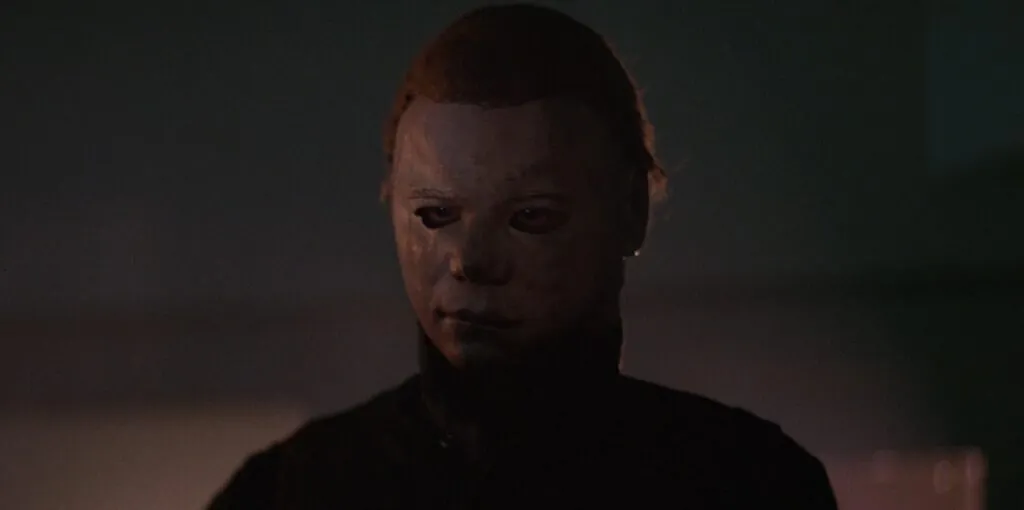
At first I assumed he was just padding the page count, but then he used the opportunity to fix something that’s always annoyed me: when Loomis looks across the street and sees his car parked there. The man has been there all night and certainly had been looking around, so how did he not notice it? In Etchison's version, he sees the car *driving* past and does his best to follow it on foot before losing it, and then finds it with Myers already gone. This makes a lot more sense, and it gave me a chuckle that the author clearly found it annoying, too.
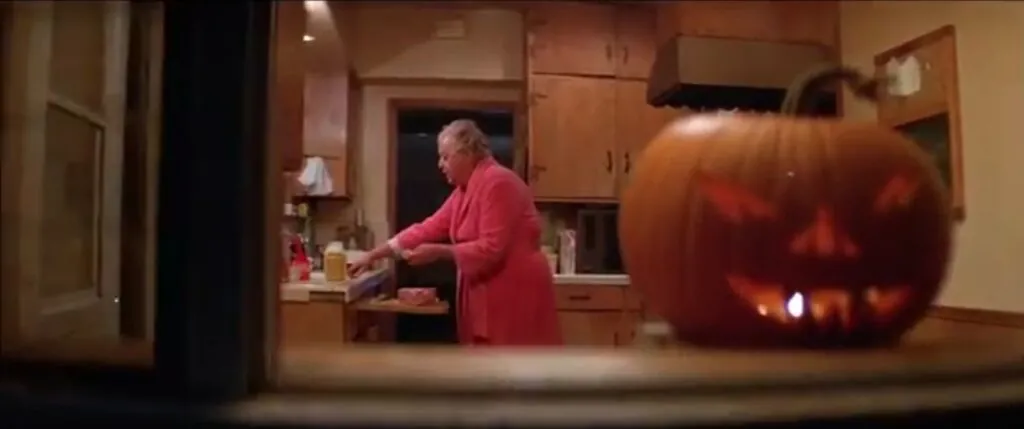
He also adds a brief scene of Mrs. Elrod handing out treats to some trick-or-treaters, before the scene where we know she makes sandwiches, hears about the murders, and discovers she is suddenly short one (1) kitchen knife. Unlike most writers who have penned Halloween novelizations, he doesn’t depict anything from Michael’s point of view in this scene or several others, leaving his participation in these moments a complete mystery.
So if you haven’t seen the movie before and are experiencing the story through this book for the first time, some of these moments will either seem more frightening or more plodding, depending on how easily you scare. We know “The Shape” is watching, but everything is from Mrs. Elrod’s perspective, so we don’t know her knife is missing until she does.
Most of the other differences are minor. Loomis actually smokes the cigarette Hunt offers him outside the Myers house (and offers to return the lighter later), Janet and the security guard actually do manage to have some brief conversation on the walkie-talkie prior to his death, and we even briefly see one of the nurses tending to an elderly man, unlike the finished film where it appears Laurie is the only patient in the building besides the babies.
Considering the simplistic story, it’s not too surprising that it lacks much extra meat on its bones, but I was surprised to see that Martin/Etchison didn’t bother with too much inner monologue for the other characters besides Loomis and Laurie, or filling in biographical detail for the supporting cast as most novelizations do. Anyone hoping to know more about Budd or Mrs. Alves will be disappointed.
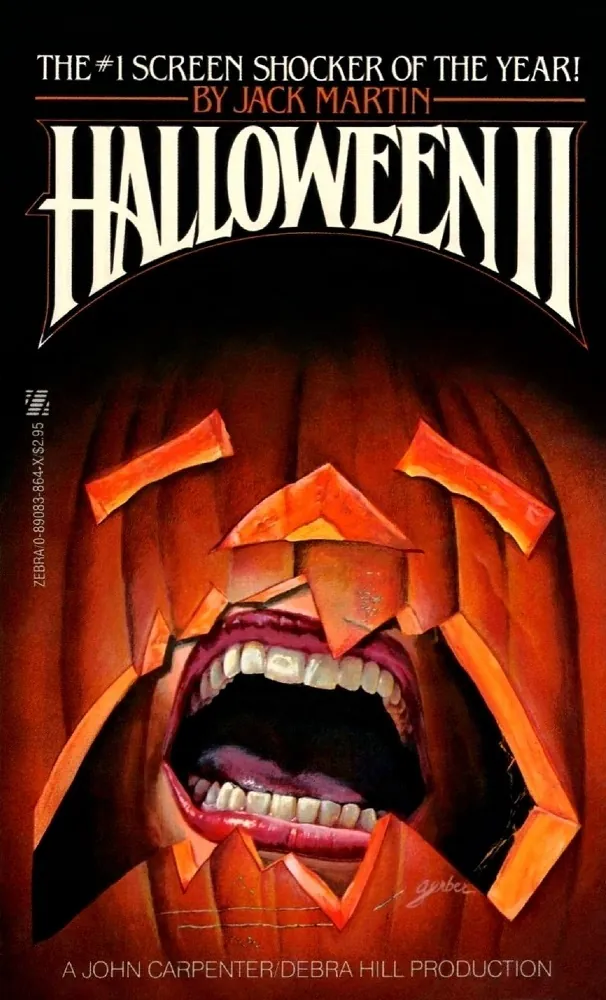
Copies tend to run high on eBay and the like, so be prepared to fork over some coin if you’re interested. I can’t really say whether or not it’s worth it; it differs from the film enough to make it worth reading for sure, but it’s also just not that interesting of a story, which becomes even more apparent on the page — at least when you’re watching the movie you can hear the score and Donald Pleasence’s manic line deliveries.
On the flip side, you’re not being subjected to Rosenthal’s flat direction and Curtis’ bad wig. Your call!