Last Updated on August 7, 2026 by Angel Melanson
If there was any doubt that the producers of the Fright Night Blu-ray wanted to make sure they left no stone unturned, it’s worth noting it even has a bonus feature about the novelization. Splatterpunk legends Craig Spector and John Skipp (interviewed, along with writer/director Tom Holland and Mark Alan Miller, whose Encyclopocalypse label put the book back in print) were given the assignment when Holland was already in post-production and racing to meet a summer release date.
The pair only had a few weeks to work on it to ensure it would be printed and available alongside the movie. So as you might expect given the circumstances, the book doesn't veer too far from the finished version, and if you've only seen it once or twice you might think it doesn't change anything at all. But hardcore fans will catch a number of little deviations that are interesting enough to make it worth tracking down.
Naturally, the plot description is identical. Given the movie's popularity, I probably don't need to rehash it here, but just in case: a high school teen named Charley Brewster (William Ragsdale) is trying to finally sleep with his girlfriend Amy (Amanda Bearse) when he notices new neighbors moving into the house next door in the middle of the night.
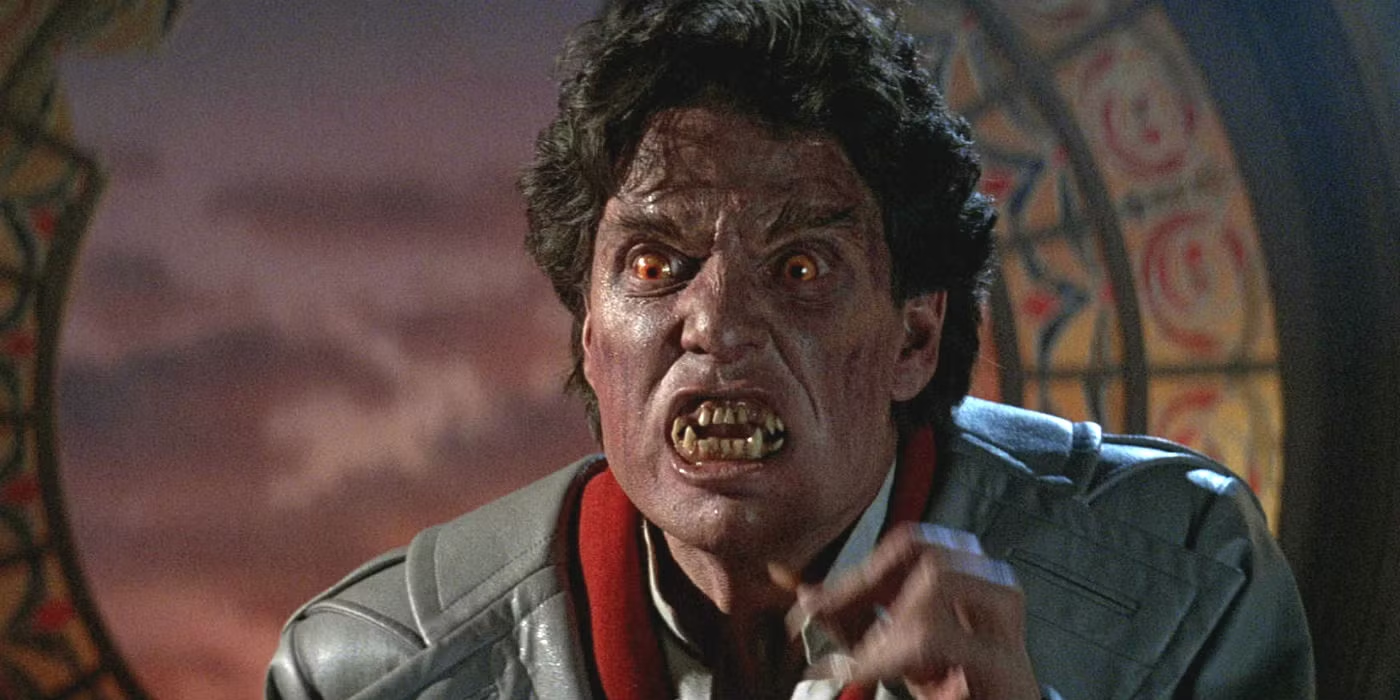
After a couple of strange encounters, Charley becomes convinced that the men, Jerry Dandridge (Chris Sarandon) and Billy Cole (Jonathan Stark), are vampires. But since neither Amy, his best bud Ed (Stephen Geoffreys), nor the police believe him, he seeks help from horror actor Peter Vincent (Roddy McDowall), who starred as a Van Helsing-type in some very Hammer-y horror movies from the ‘50s and ‘60s and now slums it as a local TV horror host.
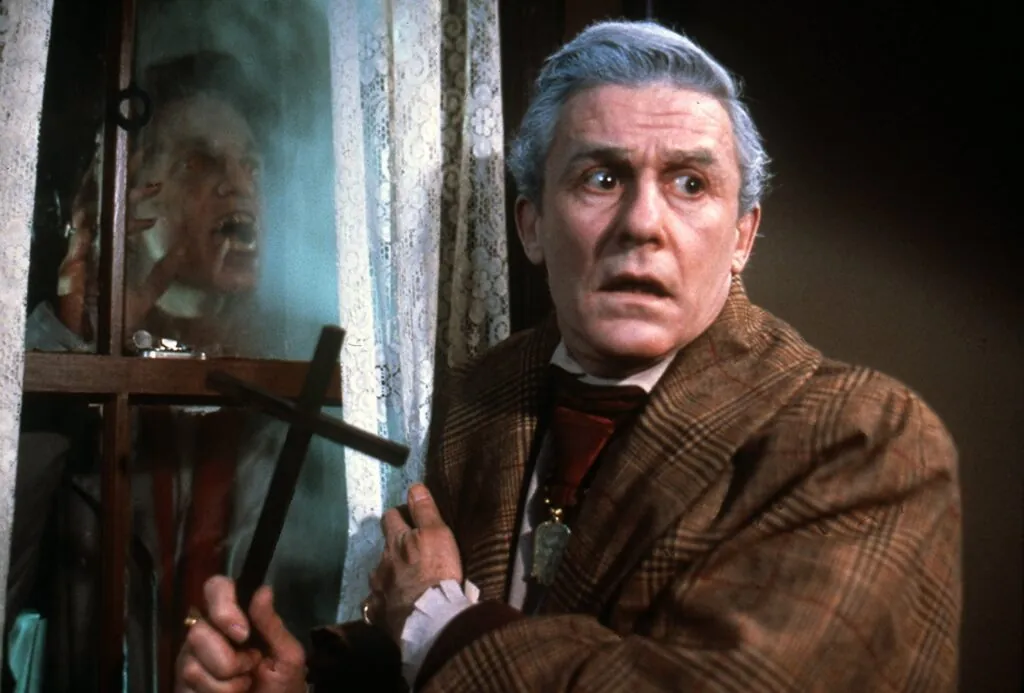
The skeptical Peter agrees to help after Amy and Ed pay him to prove Jerry isn't a vampire (believing it will finally make Charley stop sounding crazy), only for the plan to fall apart when Peter inadvertently proves that Charley is right, and Jerry becomes infatuated with Amy and sets out to make her his bride. Now the two men have to team up to take Jerry down and save Amy's life.
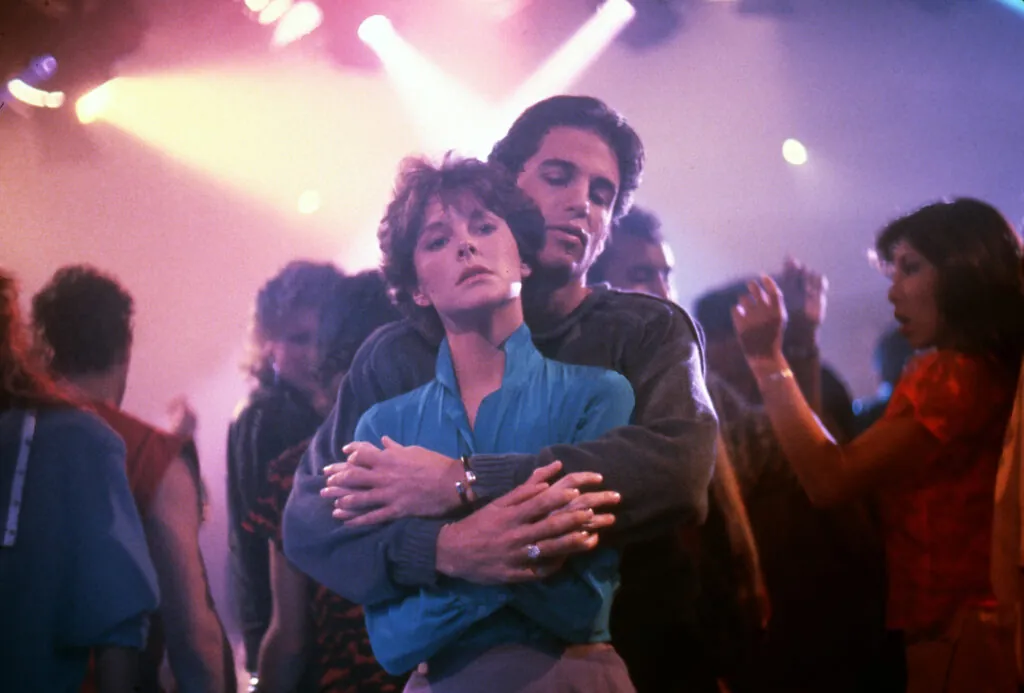
It's a fun homage to the Hammer/Vincent Price type films of yore, expertly cast and a fine debut for Tom Holland, who had written a few well received movies (including Psycho II) but pushed to direct this one himself after seeing a previous screenplay ruined by its director.
Again, there aren't a lot of major changes, but there are a few that even a casual fan might catch. An early one occurs when Charley goes to see Evil Ed for vampire advice. In the movie, Ed cracks a few jokes at his friend's expense, but ultimately does give him some tips about garlic and holy water, and informs him of the rule that vampires cannot enter a home unless they are invited.
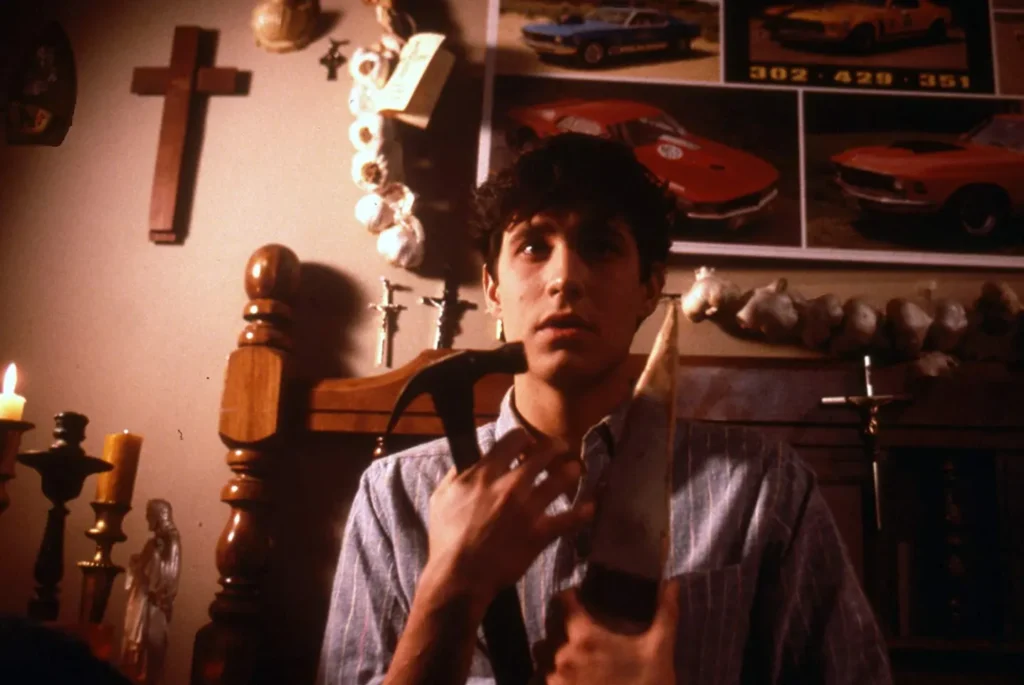
In the novel, Ed refuses to help at all, and the two just fight the entire time, with Ed lamenting that ever since Charley started seeing Amy, he hasn't even really talked to him all that much.
It's an interesting switch because the 2011 remake possibly used this alternate version as inspiration for their own incarnations of the two characters, who are estranged for similar reasons and never really do anything as friends in the entire movie. Ed's other scenes play out more or less the same, though there is an extra bit where Amy calls him to ask for his help in trying to convince Charley to stop being delusional.

In the movie, they just show up at Charley's house at the same time, as a seeming coincidence, but here it's set up that they both care enough about him to join forces, hoping it will help. There's also a scene with Ed and Billy Cole that I wish had been left in (assuming it was a scripted scene that was dropped, not something of Skipp and Spector's design), as the two characters never actually interact in the final cut.
Another major scene also plays out differently here. In the film, when Charley goes to Peter's house for help, Peter eventually lets him in and at least hears him out, even offering to call the police. But in the novelization, Charley is never allowed in at all, as Peter is convinced he's also been turned into a vampire just like Ed was (he also informs Charley about his now undead friend, information Charley is never actually given onscreen).
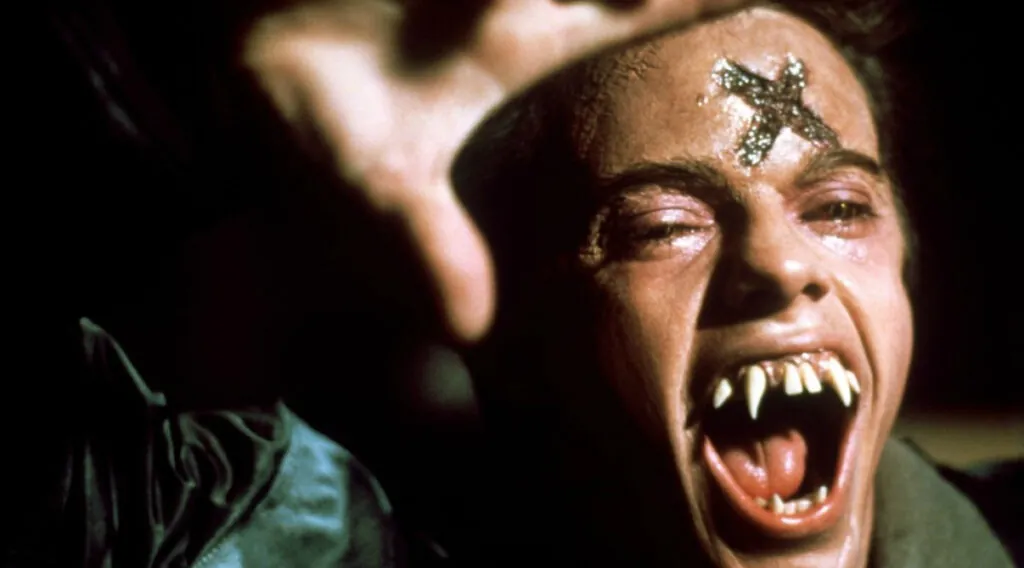
An exasperated Charley even swears that if he gets turned into a vampire when confronting Jerry alone, he will come back and kill Peter himself in retaliation for refusing to help him. Given Peter's encounter with Ed just minutes earlier, it makes sense that he'd be hesitant to let Charley (or anyone else) into his home, but given the two actors' enjoyable chemistry, it's a good thing the movie version took a different approach.
There's also a fun bit where Jerry drinks the holy water to prove he isn't a vampire. Since it's just some normal bottled tap water, Peter (and Amy and Ed) know nothing will happen, but Jerry decides to give everyone a little scare by screaming in agony after swallowing it, only to start laughing, a gag everyone except Charley finds pretty funny.
Curiously, after this bit, when Peter realizes Jerry isn't casting a reflection, he runs out and drives away just as he does in the movie, except here he refuses to admit to Charley and the others that the mirror can't be tricked, and Charley has been right all along. Again, the onscreen version is better, because while we still come away with the realization that Peter is (at this point) a coward, it at least retains some sympathy for the man, whereas in the book he just comes off as a jerk for not telling (read: warning) Charley that he really is dealing with a vampire.
There are also a handful of minor scenes that aren't present in the film. Most notable are a few nightmare scenes Charley has, including one where he dreams about one of Jerry's victims prior to seeing her in his house. And while the film does offer a quick shot of Jerry and Billy pouring soil into a coffin as they hear Charley and Peter scuffling with Amy upstairs, the book offers more of a setup to this moment: they're actually preparing a coffin for Amy, and Jerry wonders aloud if Amy is actually a native of the town they're living in (because that's the only soil that will work for a vampire).
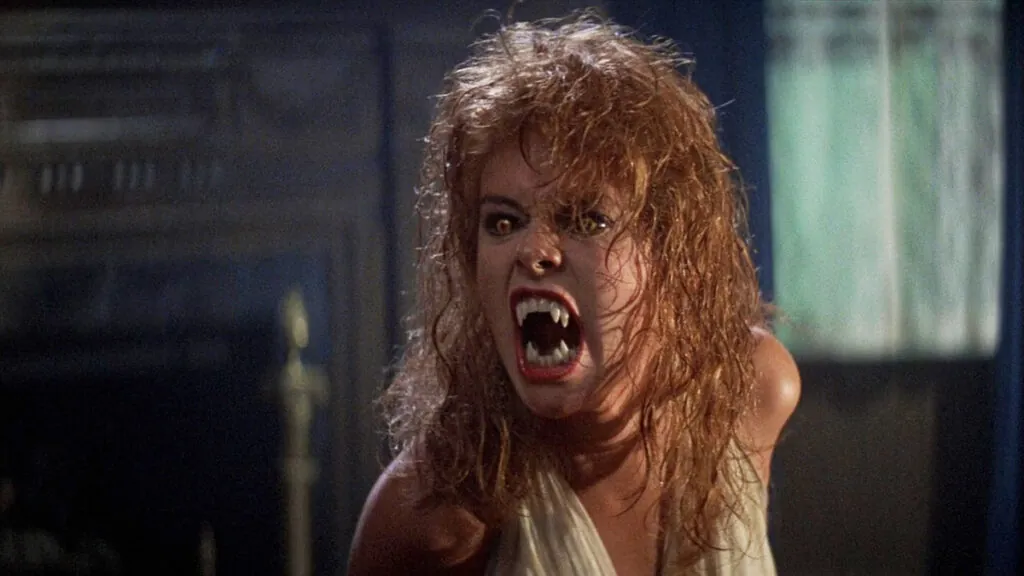
The final scene is also extended here and explains the “red eyes” that Charley sees in his window: they're the taillights of a moving van backing up into the driveway, as if the realtors have somehow managed to sell this house AGAIN, but presumably to normal people. Both of these scenes were likely in the edit at one point only to be trimmed for time, as it would otherwise be odd that these two unexplained moments in the movie always existed without any setup or payoff.
Similarly, the detective played by Art Evans pops up two more times in the novel, and it's easy to assume these scenes were in the script at one point, giving the veteran character actor a more substantial role to play rather than just disappearing after one appearance. The scene with the power outage is also extended, as Charley and Amy make their way through various streets, only for Jerry to keep turning the power off there as well; the movie offers only a single example, and it's plenty.
Speaking of excess, this scene features street names that are all horror-movie references: Cameron Mitchell Drive, Wickerman Road, Romero Drive, etc. This sort of gag gained prominence in the mid '80s (the following year's Night of the Creeps and Jason Lives both make extensive use of the concept), and to me it gets a little corny in repeat viewings, so I'm glad this was something that the authors seemingly came up with on their own as opposed to being from the script.
There's also one line that stuck out to me, when Charley is complaining about Amy's hesitation to sleep with him. When he says “We've been going together for almost a year!” in the movie, she doesn't argue. Here she notes that they've only been dating for three months (to which Charley can't even concede, and incorrectly says “Fine, almost half a year.”
It ironically further demonstrates how bad he is with math, but also makes him out to be an even whinier jerk than we’ve seen onscreen, as he's not only being pushy but making it seem like she's been making him wait forever. Three months is nothing, my man. Stop pressuring the future Marcy D’Arcy!
So basically, there are a bunch of minor changes here and there, but only a few that will stick out to casual fans. Honestly, if any of them were shot or even just scripted, Tom Holland and his team made the right call to cut them, as the novel's versions of these characters are much less likable than their onscreen incarnations.
The extended ending might have been nice to see for our characters' sakes, instead of the weird ambiguous one we got. And it would have been good to see Art Evans a little more, but as the movie is hardly brief (at 106 minutes, it ran roughly 15 minutes longer than the average horror movie of the era), it makes sense that they'd want to speed things up wherever possible.
These bits and other minor changes here and there (like at the end; instead of smashing things through the windows to let the sunlight in, Peter and Charley just pull some drapes down) keep it from being a bland recreation of the story we know and love, but nearly every change was for the better. At least now that it's back in print, it won't set you back too much to see for yourself.