This guest post was authored by RS Benedict and Karlo Yeager-Rodríguez.
Death. Madness. Unexplained disappearances. Malign, soul-polluting power. Blood-sucking aristocrats from distant lands. A rotting past surviving beyond its natural limits by devouring the living. These motifs are common in horror cinema. They also reflect fascism as it has manifested in Latin America.
Latin American cinema, with its embrace of magical realism and gothic melodrama, is uniquely poised to speak to the trauma of a land invaded and bled by one ruthless empire after another, a land used as a testing ground for totalitarian experiments. What better word is there for Pinochet than monster? To commemorate the end of National Hispanic American Heritage Month 2026, we're exploring the connections between the atrocities presented in Latin American horror cinema and its political parallels.
-
No Son Dioses
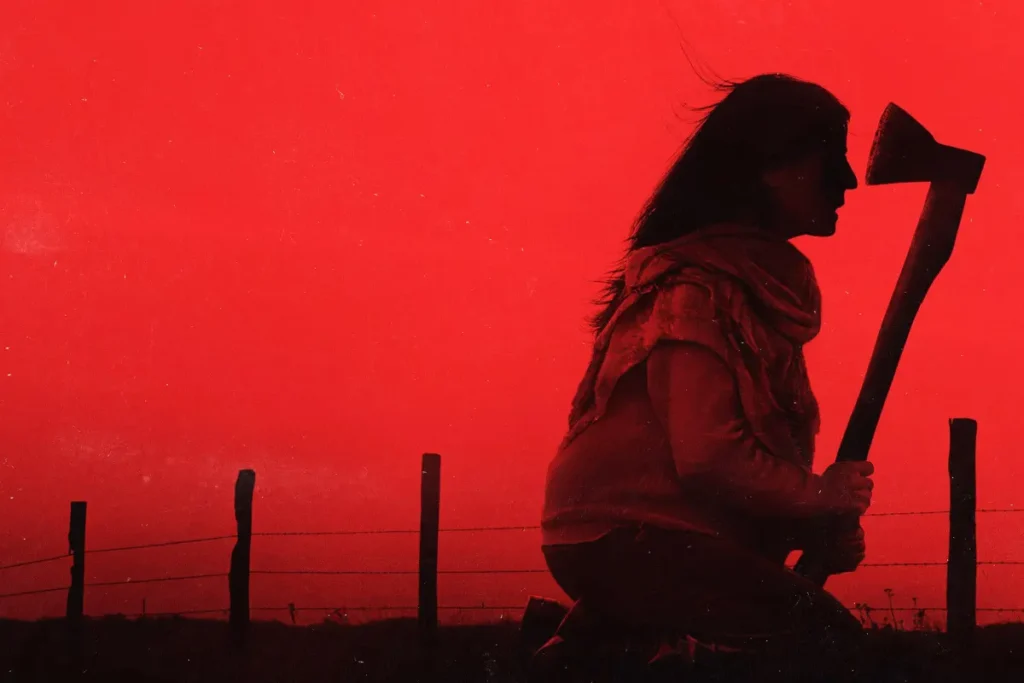
WHEN EVIL LURKS. (Credit: Shudder) Nothing captures the grim feeling of watching an ancient evil — whether it's a demon, a Cthulhu, or fascism — ooze through the sores of a rotting world quite like horror. In these movies, the enemy has unnatural power, and the underdog heroes are outmatched, alone, vulnerable, driven by near-suicidal virtue and the dream of a better world that they will not live to see on Earth.
In Demián Rugna’s Terrified (Aterrados), our dubious hero Juan asks a paranormal investigator if there is any way to stop the escalating supernatural invasion. Watching unholy entities crawl and twitch through a crack in reality, she wearily answers, “No.” It's hard for any left-leaning intellectual not to point and sigh, “It's me.”
The titular evil in Rugna's 2023 When Evil Lurks (Cuando acheda la maldad) festers and grows much like an extremist movement. It starts as an infestation in a rural tyrant’s commercial property and spreads because no one has the will or resources to nip it in the bud. The “Cleaner” (a sort of exorcist) sent to fix the problem is killed; the government responds with a shrug, the way police forces dismiss (or even enable) violence against anti-fascist activists.
The evil grows further, infecting children through electricity the way far-right movements groom impressionable youths via internet algorithms, brutally discarding these underage carriers once their utility expires. Unlike in Terrified, there are people who know what to do to stop the horrors. But they are few, have very little power, and hardly anyone listens to them.
The Open Veins of Latin America

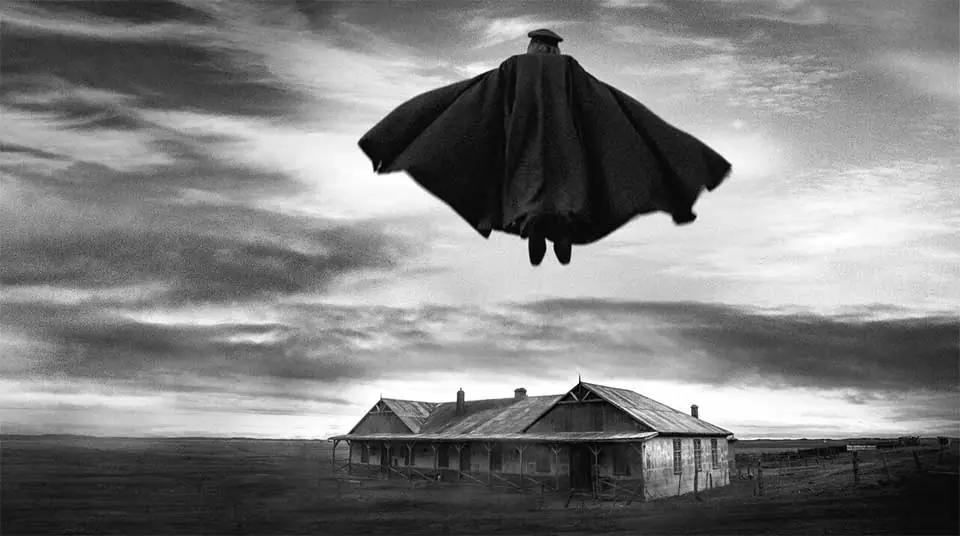
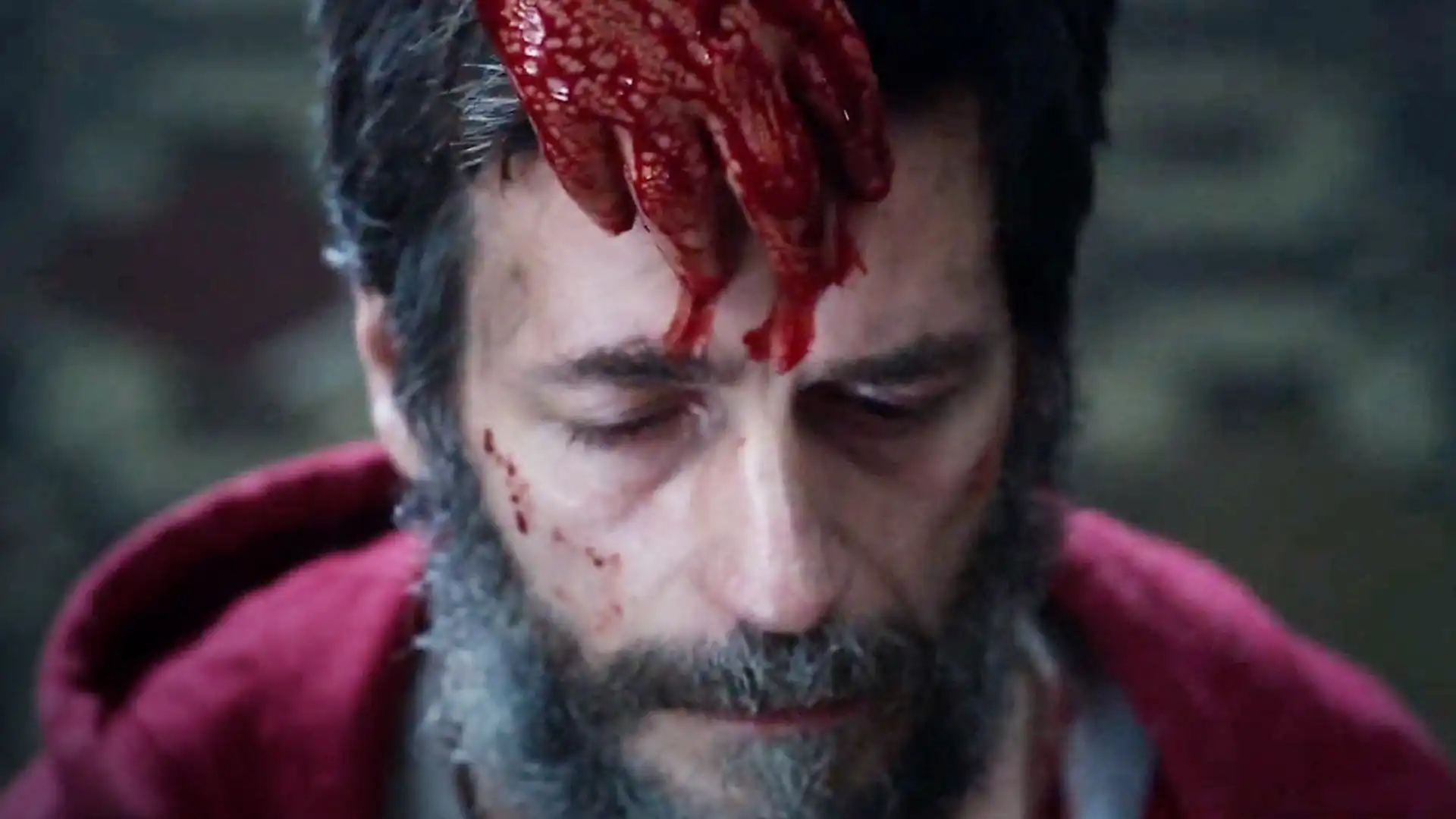
Jaime Vadell in EL CONDE. (Credit Netflix) In his 1971 book Open Veins of Latin America: Five Centuries of the Pillage of a Continent, Uruguayan journalist Eduardo Galeano described Europe’s relationship with the New World as vampiric, sucking out all the gold and food, and leaving scrap metal and poison. Judging by his 2023 horror comedy El Conde, Pablo Larraín agrees.
Larraín, who also directed the 2012 historical drama NO about the anti-Pinochet political ad campaign in the ‘80s, reimagines the late Chilean dictator as a decrepit vampire shuffling around in a tracksuit, chugging smoothies made from frozen human hearts. Without giving too much away, the film depicts Latin-American fascism as the blue-blooded bastard child of European imperialist capitalism in an astonishing reveal.
At night, the old bloodsucker dons his cape — a military dictator’s cape, complete with jacket, medals, and hat, rather than Dracula’s opera costume — and prowls around chomping on factory workers. As Karl Marx wrote, “Capital is dead labour, that, vampire-like, only lives by sucking living labour, and lives the more, the more labour it sucks.”
But El Conde isn’t just feeding himself. He’s trying to keep the past alive, too. He swaps his military garb for a pre-revolutionary French outfit like a sad old nerd in cosplay. He lugs around the severed, be-wigged head of a French aristocrat. He even keeps a guillotine around, for old time’s sake. But his nostalgic fantasy land needs more than a couple of peasants to keep it alive. It needs the finest blood and hearts, and most of the contents of the national treasury as well. “This is what the Count achieved, beyond the killing,” says the film’s crisp narrator. “His life’s worth was to turn us into heroes of greed.”
The Colony

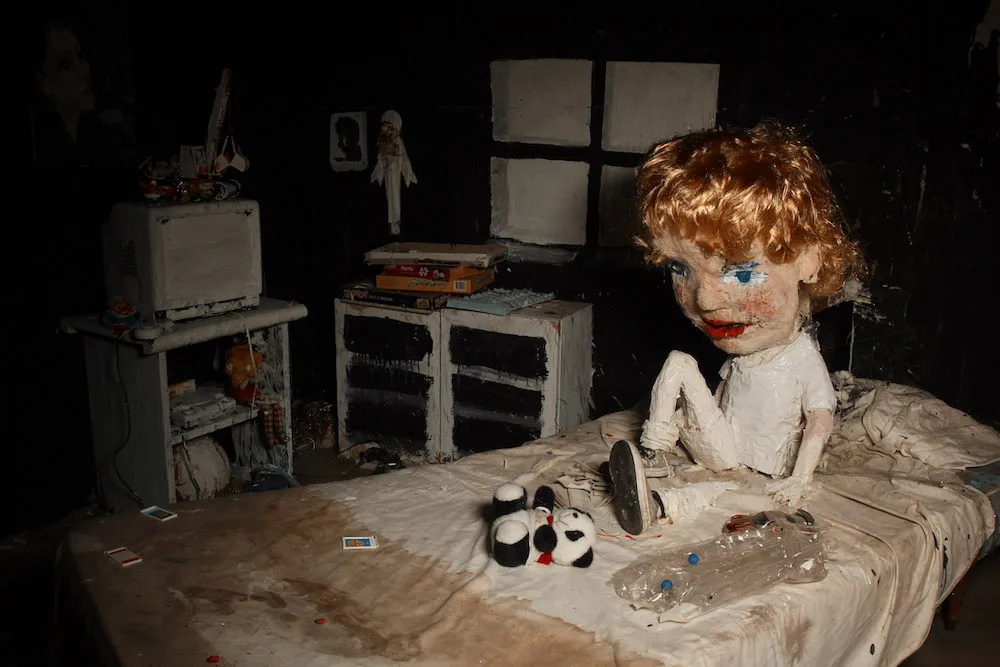
THE WOLF HOUSE. (Credit Interior13 Cine) The Wolf House (La casa lobo) presents itself as a propaganda film produced by an organization referred to as “The Colony” in order to dispel supposed rumors about crimes they've committed against Chileans in a neighboring village. The retro production logo looks like it’s from the 1970s or 1980s–Pinochet’s time, in other words. The story, narrated by an invisible but omniscient wolf who taunts and cajoles its child protagonist in Spanish and German, is a warped take on the Three Little Pigs: a little girl named Maria flees the Colony with a couple of “pigs” and takes shelter in a little shack. But the pigs are hungry. And maybe they're not really pigs.
In The Wolf House, the spectre of Naziism haunts its trapped heroine like an evil spirit, appearing in swastikas that draw themselves across the walls before quickly vanishing. The Wolf appears for a moment as a German shepherd, Hitler’s favorite dog breed. After Maria feeds the “pigs” magic honey to make them more civilized and beautiful, they develop distinctively Aryan features: blond hair and blue eyes.
This unusual animated film is inspired by the grim true story of Colonia Dignidad, a cult founded in Chile in the 1960s by a Nazi who was chased out of Germany for molesting children. Augusto Pinochet's secret police occasionally brought the people they kidnapped to the compound to be tortured and killed by cultists. Josef Mengele, nicknamed “The Angel of Death” for his actions in Auschwitz, is rumored to have stayed there as well.
Los Desaparecidos

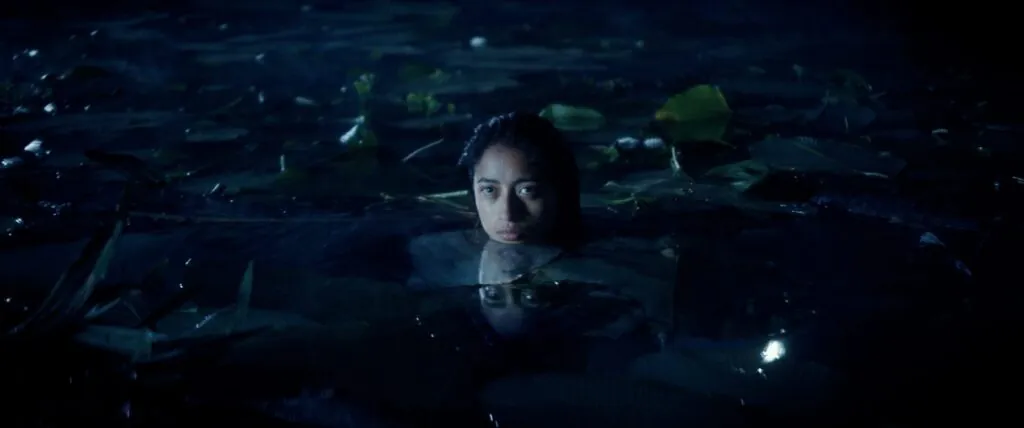
Maria Mercedes Coroy in LA LLORONA. (Credit Criterion) Under totalitarianism, people disappear. After the 1954 Guatemalan coup (engineered by the CIA at the behest of United Fruit Company) overthrew the progressive, democratically elected president Jacobo Árbenz, the right-wing regimes that followed carried out a genocide against the Maya. About 200,000 people were killed between 1960 and 1996. About 40,000 of those were disappearances–abductions by the secret police and government-backed death squads.
Jayro Bustamante's La Llorona draws on an old Latin American folktale about a ghostly weeping woman to comment on the real-life crimes committed by Guatemala's José Efraín Ríos Montt during the 1980s. Bustamante's film portrays the ghost as a vengeful victim of genocide, one of the many people killed in the Río Negro massacres as part of the country's so-called Silent Holocaust.
But the real monster of the story is human: a dusty ex-dictator spending his final days under siege in his mansion as his past returns to haunt him. Outside his home, protesters hold up pictures of the names and faces of those who vanished during the dictator's reign.
The film captures the banality of evil in the way the dictator’s family quietly tolerates his atrocities. His daughter suspects he had her husband killed, but does not confront him about it. His wife shrugs when she catches him creeping on the pretty new maid, muttering that he always had a thing for Indigenous women (though that thing was probably not consensual). When the courts of men fail to bring justice, the ghost must stand in, using supernatural means to force the dictator’s loved ones to truly understand the horror of what he has done.
Propaganda

PAN'S LABYRINTH. (Credit: Warner Bros.) Fascists keep a death grip on information, suppressing art and journalism in order to maintain a false reality in which the leader is endlessly beloved, competent, and inevitable. (There's a reason our society's biggest authoritarians want to force AI on us right now.)
In Pan's Labyrinth (which takes place in Francoist Spain, but Guillermo del Toro is Mexican so we're counting it, fight me), Ofelia descends into an internal subjective reality to escape the one imposed upon her by her fascist stepfather. As dark and frightening as Ofelia’s subterranean fantasy realm is, it gives her space to confront the atrocities happening in the world above.
This is a feature of Latin American magical realism. Art offers a way to approach difficult subjects, be they social taboos, political controversies, or complicated emotions. In this case, magical realism offers a way to express the strange, sensual, tragic, joyful, horrifying, and beautiful contradictions of being Latino. How could a rational narrative grapple with the absurdity of a genocide created to lower the price of bananas?
The Future Is Over

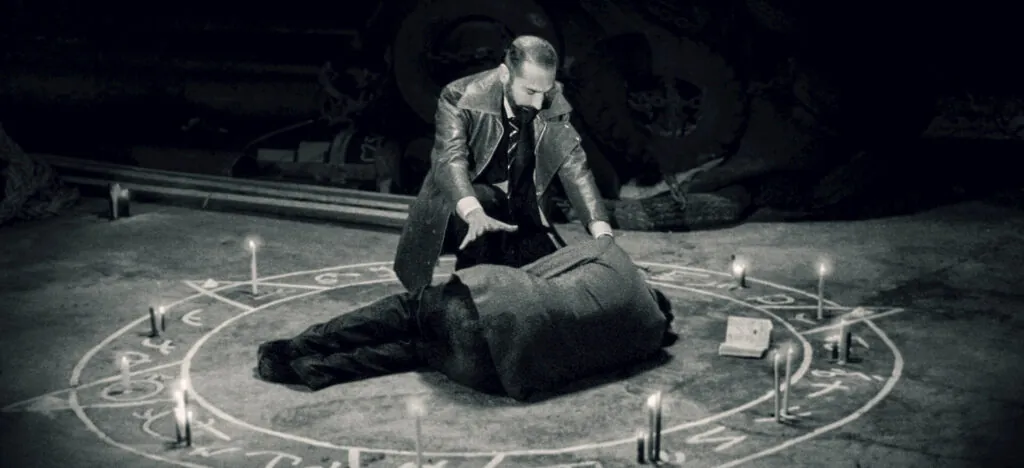
HISTORIO de lo OCULTO. (Credit: Netflix) During Argentina's Dirty War, the right-wing government's death squads kidnapped and killed between 22,000 and 30,000 people, mostly political dissidents and leftist activists. Cristian Ponce's History of the Occult (Historia de lo oculto) is set in an alternate universe version of 1987 Buenos Aires, in which the Dirty War never ended, and the country (which, it must be noted, was a popular destination for Nazis to flee to after World War II) is held in the grip of a sinister corporation that is, itself, a smokescreen for a coven of witches. The coven goes a step beyond what the real-life Argentine Anticommunist Alliance did: when they kill someone, they permanently erase the victim from memory.
Notably, the evil warlock corporation is named Kingdom, an English word, not the Spanish equivalent reino. It’s likely a nod to the way that US business interests financially supported Latin American fascist regimes during the Cold War.
The title History of the Occult carries a double meaning: “occult” refers not only to magic, but to secret, hidden things. The characters in this film struggle to unearth the truth buried beneath the fascist fever dream they're trapped in. A ragtag group of journalists under siege, they battle network censorship, the state's goons, some suspiciously timed technical difficulties, and killer cultists. They take notes to keep track of how many children they really have as the corporate coven feeds kids to the Beast that generates this false existence.
As in When Evil Lurks, The Wolf House, and El Conde, the past eats the future.