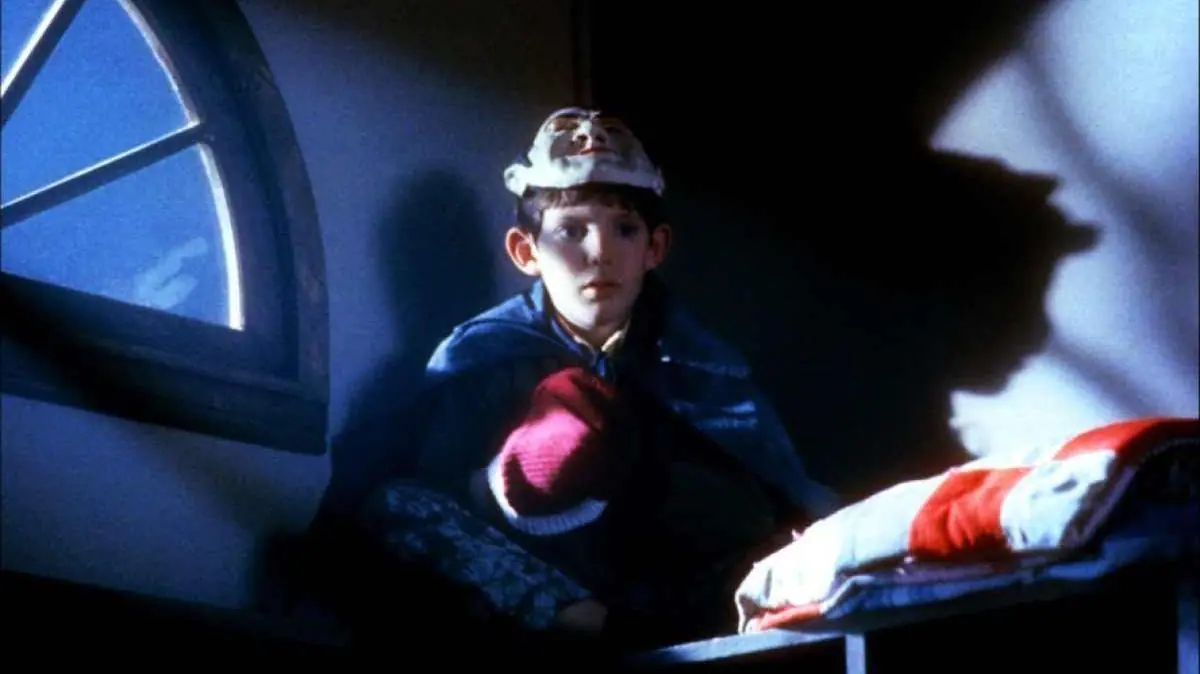
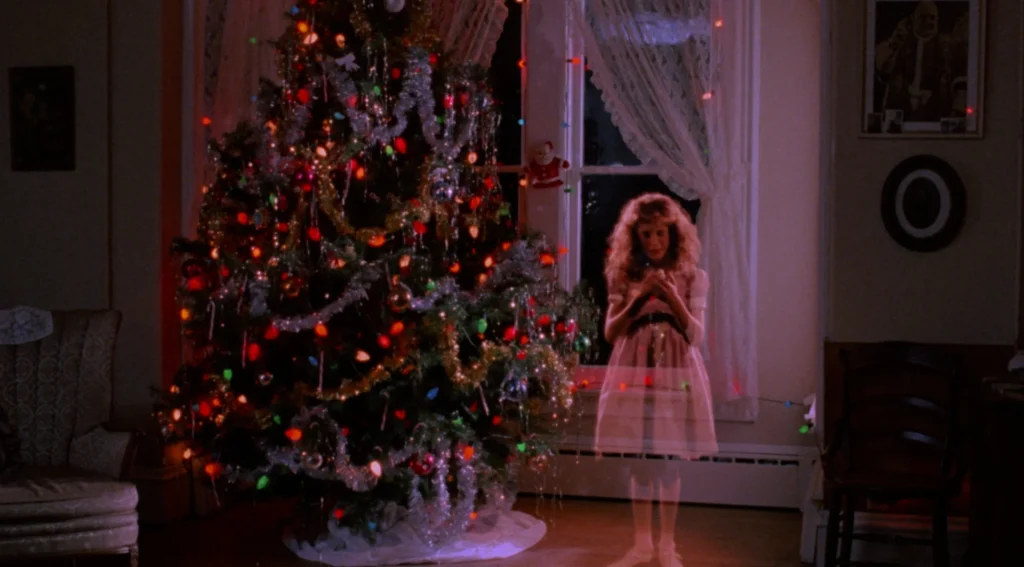
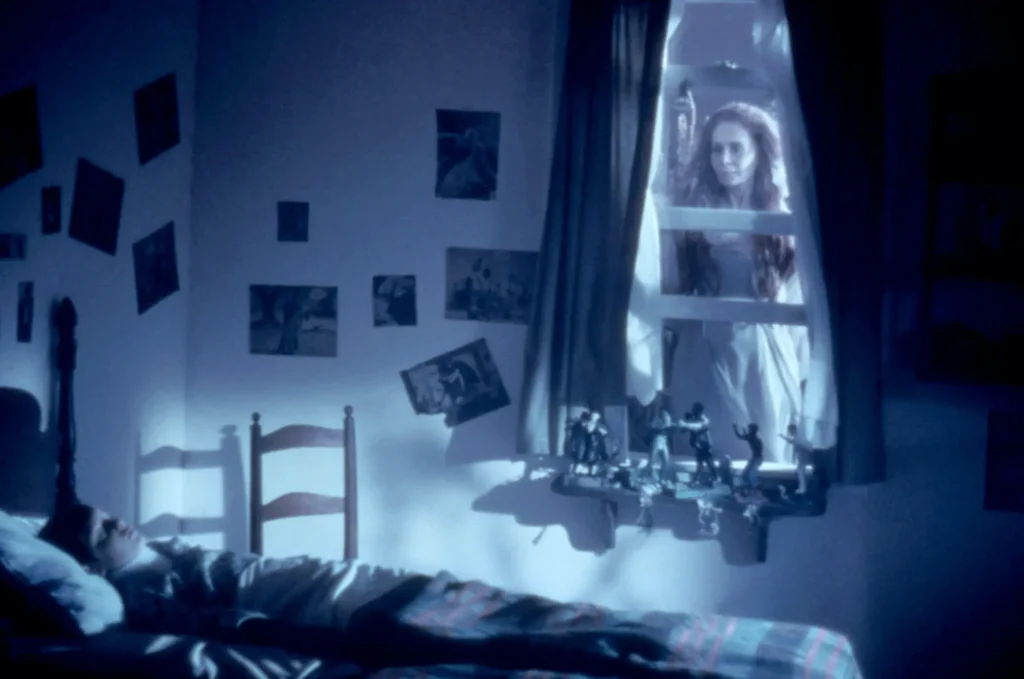
Released in 1988, Lady in White took Amblin-esque adventure and threw it off a cliff. Written and directed by Frank LaLoggia, the film married a ghost story, murder mystery, and coming-of-age journey into a mesmerizing visual odyssey that manages to be chilling, heartbreaking, and life-affirming all at once. Among the many questionably kid-friendly 1980s genre movies that have become cultural fixtures, LaLoggia’s sophomore effort stands out for its depth, humanity, and sophistication. For at least one future horror fan who saw it at 12, it was also scary as hell.
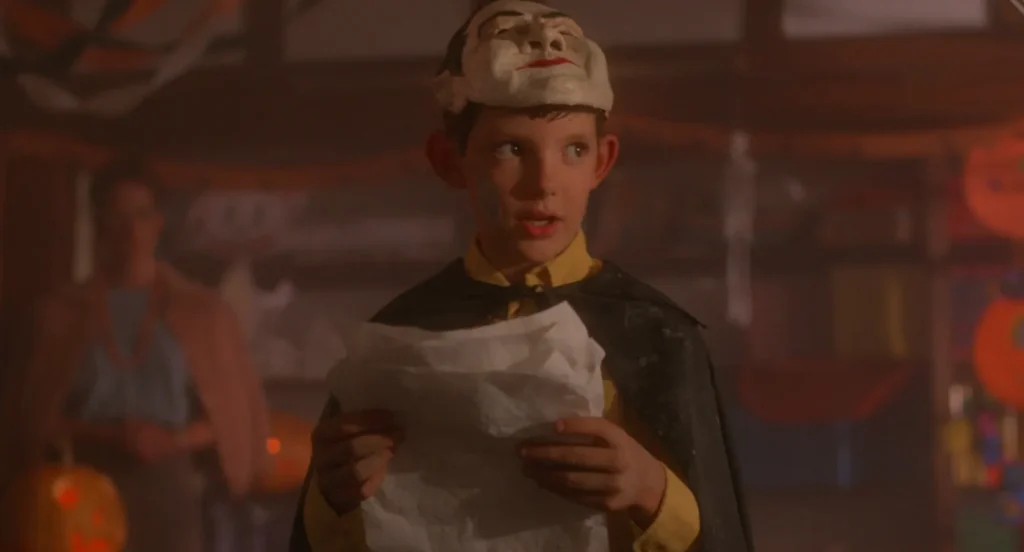
Set in 1962, the film follows nine-year-old Frankie Scarlatti (Witness breakout Lukas Haas), a horror aficionado and aspiring writer who witnesses the apparition of a young girl being murdered in his school coatroom. After he survives an attack by the masked, still-living killer, Frankie becomes obsessed with solving a string of child murders that have paralyzed his hometown in fear. In the meantime, local authorities indict the school’s Black janitor for the string of violent crimes, despite ample evidence he is innocent. As Frankie’s ghost sighting, the murders, and the janitor’s criminal trial intersect, LaLoggia ratchets up the story's tension to an operatic pitch, using unforgettable images to deliver moments of both powerful emotion and visceral intensity.
Yet like many independent projects, the film faced major challenges on its way to the big screen. Vinegar Syndrome’s recent limited-edition 4-disc set for Lady in White chronicles that arduous journey with three cuts of the film—LaLoggia’s pre-release cut, the extended home video version, and the theatrical version—along with four commentary tracks, several featurettes, and over an hour of deleted scenes. To contextualize all of that work (and calm that former 12-year-old), LaLoggia recently spoke at length with FANGORIA about the process of making the film — from the lessons gleaned from his debut feature, Fear No Evil, to its narrative alchemy of childhood nostalgia and 1960s social realism, to the skillful guidance of then 10-year-old Haas and his costar Len Cariou (1408, Prisoners) through scenes of extraordinary complexity.
This interview has been edited and condensed for clarity.
Prior to Lady in White, you had already directed Fear No Evil.
Well, Fear No Evil, I was 25 years old when I made it after my cousin Charlie came to me with an idea. He had an investment newsletter in Rochester that was very well known. I had made short films up to then, and I wanted to make a feature that was kind of a Capraesque fantasy that took place in Venice, California, but we couldn't raise any money. So we created a limited partnership, and we were going to private investors, doctors, lawyers, people in the area that we knew didn't know that might be interested. So I wrote Fear No Evil.
What lessons did you learn making that you were able to apply when you started developing Lady in White?
I learned everything. What is the adage, “there's no better way to learn about what not to do than to fail in the process of what you've done before?” I wrote the screenplay for Fear No Evil as to how it should ultimately play in its completed form, but Charlie had raised $540,000 — which took me all the way through the work print phase. We didn't have money for post-production. So he said, “I want to screen the work print as-is.” I knew who he wanted to screen it for to see if they're interested, and that was AVCO Embassy [producers of The Fog and Escape from New York]. Since he was insistent upon not raising the money, he says, “If they say no, then I'll raise the rest of the money. We need about 300,000 to finish it.” Well, they said yes. They saw it, and they wanted it… and that was the beginning of the end as to what my vision was for the picture.
With Lady, I made sure we set up a public company and sold penny stock to raise $4.7 million. I made sure that I had a deal with my cousin wherein he would not be involved ultimately with making any distribution deals, because the distribution deal he made with AVCO was so bad, I knew we'd never see a dime. They gave us $300 grand to finish the picture, and they made theatrically about eight and a half million, and we saw nothing. So, with Lady, I was running the show from beginning to end, and thankfully it worked out just fine because I had a great friend of mine, Chris Murray, who was the top entertainment attorney at O'Melveny & Myers.
He and I worked those deals for a year after the picture was completed. I got $4.7 million before Lady even opened, because I got a $2 million advance from Virgin Vision for theatrical rights in Britain and video rights worldwide. And then I got a $1 million advance from New Century Vista, the theatrical distributor, and 70% of all foreign sales from Goldwyn before the picture even opened. The picture's budget was $4.7 million; we had about $6 million in the U.S. — it didn't do well theatrically. After that, we raked in about another $5 million, so the picture was a success financially, and most importantly for me, it turned out to be what I wanted. It was successful creatively, and I'm proud of it to this day.
The behind-the-scenes materials on the new Vinegar Syndrome set reiterate several times that much of this was inspired by your own experiences. What were the most personal aspects of this story and which ones were the most fun just to make up?
Well, the ghost story was complete fabrication, but I needed to build the screenplay on that because I needed to come up with something that was commercial. We were making the picture independently upfront, and I wanted the picture to get seen. I liked the idea of the ghost story because the idea I had in mind turned out to be a coming-of-age story that had to do with my youth in the early '60s. I was Frankie's age when he was in 1962. The familial aspects of the film — Angelo, Mama, and Papa, Gino — those people were all real. I had lived that existence. I wanted to create an homage to these people that I loved dearly that were no longer with me. Creating the ghost story and fleshing it out with all these personal things that I had lived is what gives the film, I think, its unique sense of style and personality. The scenes that I most enjoy and I love and I still smile and giggle at, because I think back warmly and fondly on the actual life experiences that they inspired, are the scenes with Mama and Papa and Gino and Angelo and all the familial scenes. And they were the most fun recreating too.
The '70s were so heavy with stories set in the '50s, while the '80s tended to focus on more ones from the '60s. Was it simply an alignment of the zeitgeist that you happened to focus on that?
I was 34 or 35 when we shot Lady. I lived that period. The reason why, in that era, there were a lot of movies that went back to the '60s in their timeframe is that the guys that were making the movies were reflecting back on that time period in their youth, and I was no different. The way Hollywood reflects on any era has nothing to do with reality 90% of the time. It's all such bullshit. And Spielberg is the big guilty party behind that horrible stereotype in the recreation of the era as to what kids really acted like and were like. I respect some of his work very, very much, but the vast majority of it makes me want to vomit because I don't feel it's genuine. I don't feel it comes from a place that's genuine or that's real, from the heart.
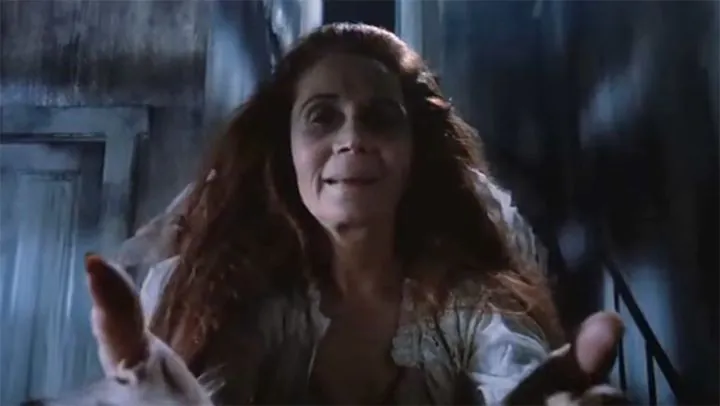
Notwithstanding your aversion to Spielberg, the grieving mom in this movie looks more than a little bit like Mrs. Kintner in Jaws, and the way the killer is eventually discovered is that he's whistling, like in M. Are you a cinephile filmmaker in the sense that you were pulling ideas from old films you loved?
Of course. I'm familiar with all the great German expressionist films, and their influence on the Universal horror films that were my Bible when I was a kid. I still respect them. I was an aficionado. But of [Roger] Corman, no. Corman's a hack. There's not a single fucking film he's made that I've seen that I remotely respect. Even the Edgar Allan Poe series with Vincent Price, just awful stuff. I got a story about Corman, another jack-ass.
Before Fear No Evil, shortly after I arrived in LA in 1974 or '75, Go Tell the Spartans director Ted Post took a look at Gabriel, my third short film, and he wanted to lend a hand. So, he said, “You should be with Corman.” I had a print, so I gave it to him to send to Corman. Corman's office called and set up a meeting. So I went into this jerk's office and sat down. He pointed me to a chair opposite his desk, and he was sitting there, just looking at me, and he said, “So, here you are. What do you want to do?” I said, “Well, obviously I'd like to write and direct.” He just sat there, nothing more.
And so I got up, and I said, “Mr. Corman, I don't know why you asked me to come in here, but obviously you're not inclined to speak with me or have anything to do with me, so I'm going, thanks a lot.” That's what I got from that prick. Why did he call me in? Just to fucking try to cut off my balls and make me feel like shit? I was 21 years old. How many other people did he pull that kind of crap on? If he hated the film, he should have told me if he saw the short film, or he shouldn't have called me in at all.
The only reason he called me in, I absolutely believe this, is that he saw something in the film that he admired and that he was envious of. So, what it was all about was just trying to destroy me early, get me out of the way. That sort of thing happened repeatedly prior to my actually getting Fear No Evil up and Lady in White.
Lady in White strikes this really delicate balance in its tone in the sense that you do get that idyllic sense of childhood around Frankie, but the scares are really intense. How tough was that to fine-tune throughout the movie?
The rhythm and flow of what you see on the screen was all scripted. It was all there. But also, [cinematographer] Russell Carpenter and I storyboarded every setup for Lady, and we spent a lot of time discussing the look and the feel of the film. My favorite films up to that point in that era were films like Women in Love, The Devils, The Music Lovers. I was a big Ken Russell fan back then, and I still am. Roman Polanski’s Rosemary's Baby. Nic Roeg’s Don’t Look Now. Genre movies, no, because I wasn't in that era, meaning horror films, because they were also fucking infantile and they didn't interest me. Once again, I've never poo-pooed great horror. I've told you how I felt about Universal classics of the '30s and '40s, but there was nothing happening in contemporary horror that impressed me, except for Rosemary's Baby. I think I was still in high school or just younger when it came out.
But I went to LA, and they were screening [Vittorio] De Sica's Bicycle Thieves, and I was so blown away, I could not believe it. That film, I think more than any other at an early stage in my life, became seminal. There are a lot of films that I admire and that I love, but Bicycle Thieves has got it all. So, if you're familiar with that film, there's so much going on in it that has to do with the human condition. I think Lady reflects all of that, and the emotional power, everything that Bicycle Thieves has: the suspense, the drama, the humor, all of that.
I'm not saying that I was thinking that this has to be my version of Bicycle Thieves, but the fact that the film had become so deeply embedded inside of me had to come out in this first opportunity and real shot I had at creating something from the heart that I could control. So, why wouldn't I do that? Everything I had inside of me that had inspired me from all the films that I'd watched and loved over the years, everything I'd learned up to that point, was minimal, but when I made Lady, it was significant.
You talk about the influence of social realism, and there's obviously this heartbreaking subplot about the poor Black janitor who becomes a scapegoat for the town's anger and anxiety. Was that a direct outcropping of that inspiration?
In 1962, I was Frankie's age. We lived in the inner city. My father's welding shop was a cinder block shop right next to a big factory called Metal Arts, and next to Metal Arts, there was a Black family. I used to play with the kids until the race riots broke out. In 1962, I can remember explicitly sitting on the porch of my parents' home, and there were firebombs going off, and the city was on fire two miles down the road, and there were flares in the night sky, and you could hear all this going on, and there were race riots. The Black kids that I played with, I remember that we got along just fine. But during this period, I remember they started to throw rocks at me, and they started to taunt me, and they really meant to harm me.
They were around my age, and I had to take off running from my friends because the tensions had become so great between the races at that point. Now, I'm making a picture about growing up in that era. Much of it is autobiographical, but that's what I experienced as well on a sociopolitical level. So this film is as much about an era as it is about anything else. It's not a subplot; it's integral. So it was about being honest about what it was like for a kid of Frankie's age in that environment. He experiences that racism in a dramatic way that's different from what I experienced on a very personal level that integrates with the story, but I got it too.
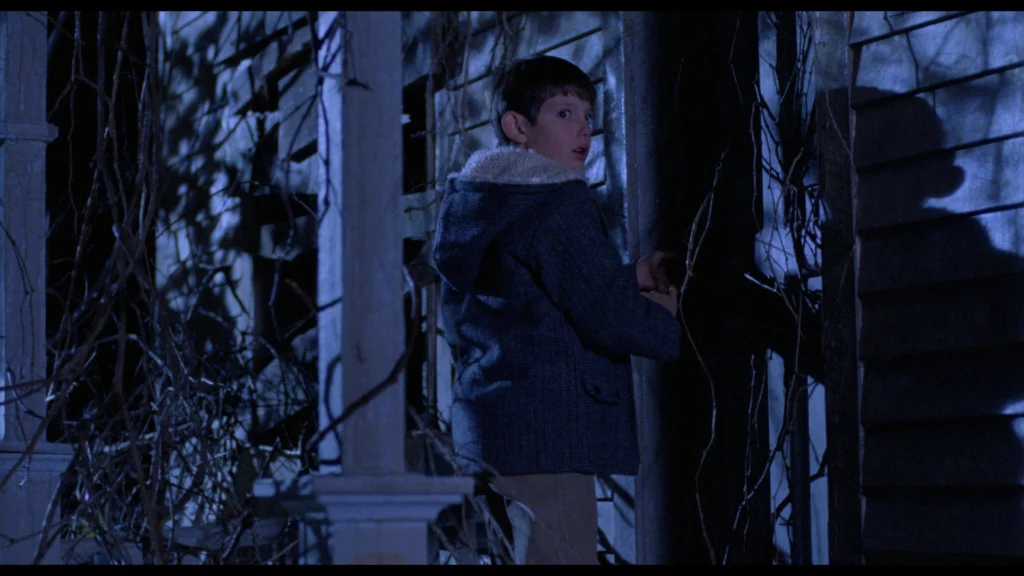
The scene in which Frankie discovers that Uncle Phil is the killer is, to me, as scary as any of the ghost stuff in the movie. You have this incredible close-up where you're watching Uncle Phil be, for lack of a better way to describe it, seduced in the moment that he's teaching Frankie how to shoot the arrow. And then you have the resignation and realization that he's doing that, and then there's the realization that Frankie knows, and then there's the way that the movie flips on a dime as Len Cariou gets so angry. Can you walk me through how you directed Lukas Haas and Len Cariou to inject all those incredible notes into the movie, even as the movie's shifting into this very operatic finale?
Well, I can tell you what I told Len. Lukas, by the way, just got everything — even at that age. But when I wrote it, I knew exactly that the bow and arrow scene precedes Len’s reveal in the car, and what it needed to convey about his character. And what I told Len was this: “What you're doing here, the way you speak to him, this is his prep. This is everything that he's feeling, thinking inside that gets him to the point where he can abuse and kill these children.” So Uncle Phil says, “It's easy. All you got to do is keep your eye on the target. Now, let's take another shot at that bullseye. Now pull back [your arm], that's it. Keep your eye on the target.” That's him speaking to himself. “Keep your eye on the fucking kid.” And Len got it. And that subtext, all of his prep, everything that's happening inside this monster that brings him to that point.
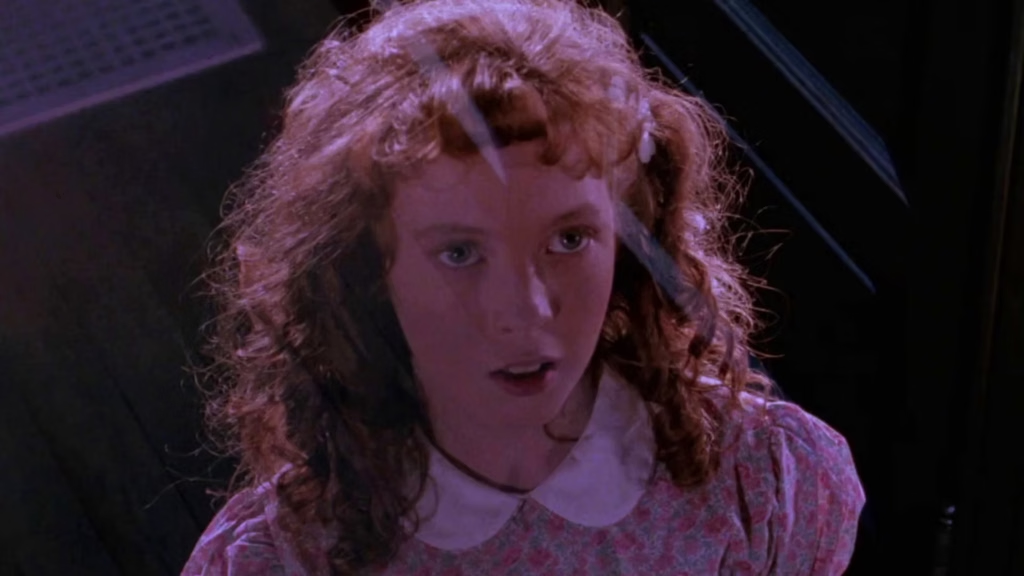
That incredible moment is immediately followed by Frankie's discovery, and he knows that Frankie knows, and it's this moment of real sadness that you almost empathize with the fact that he realized he's been found out, but also the terror of this little kid. How tough was that to orchestrate?
It was a piece of cake with those actors. As I said, Lukas knew exactly where his character was going. I mean, I don't know where it came from at that age, but he had a muse that was definitely sitting on his shoulder at that age. He's really brilliant as a kid. I think it ranks among the best child performances ever put on film. And Len's a pro. I'll let you know a little secret, though. The reveal outside the window when he shakes, and he turns into this monster right before our eyes- well, I stole that. There was a film called The Ninth Configuration that William Peter Blatty wrote and directed. There's a scene in that film where Stacy Keach, who plays this officer, comes through this insane asylum where a bunch of soldiers are interred, and he thinks he's running the facility, but his brother is the doctor at the facility, and he brings Stacy Keach's character in because he's trying to save his brother because he's going insane.
You don't find this out until the end of the film, but in one scene, he just does this thing where everything that he did during the war is destroying him, but he's trying to be as compassionate and embracing as possible with all of these soldier patients. And one of the other corporals who's a gruff sort comes in and says, “These guys are crazy and they're faking it.” And he just explodes. And in one shot you see this transformation — you can see the power of this guy, how he managed to fucking cut off people's heads one after the other with a wire during the war. So I didn't tell him where it came from, but I told Len, “Here's what I want you to do. I want you to turn from man, Uncle Phil to Monster, and it's one shot.” And he did it.
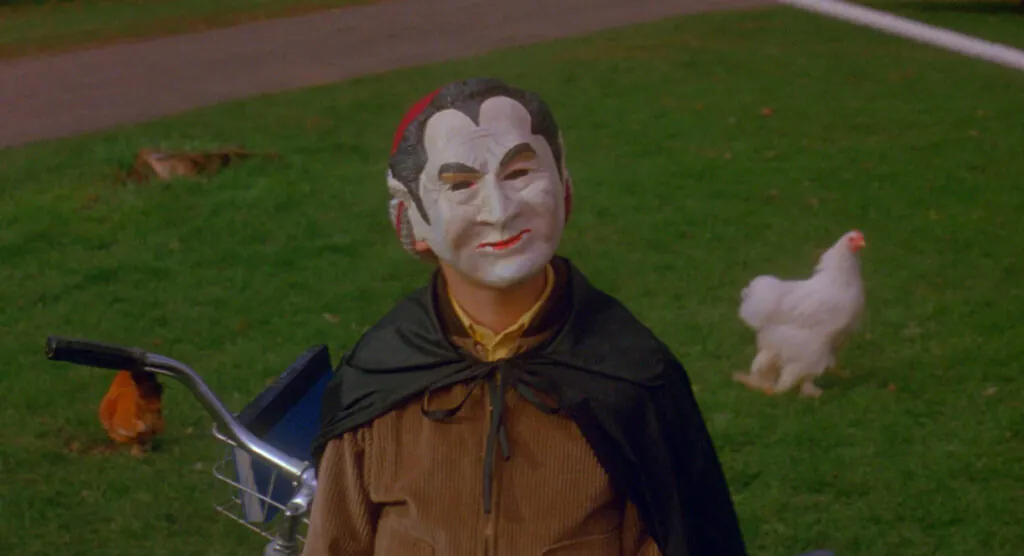
There's a lot of discussion in the commentary on the Vinegar Syndrome set about the testing process, which led to your cut, and then it got changed a bit. When this finally received distribution, you obviously didn't get to bring that pre-release director's cut to theaters. But was it even 90% of the film that you hoped it would be?
When I made the deal with New Century Vista, it was in the contract that I didn't have to change anything. There was no way I was going to make the deal if they insisted upon making any cuts. They wanted the Black janitor, Harold Williams, to be let go and freed. We set up two test screenings in two separate theaters at a multiplex, and I was sure that my version, wherein he was killed, would get the better reaction. Norman Levy was the guy running New Century Vista, and he said, “If the cards are better with your version, we go with your version.”
And we went with my version because the cards were better. The ultimate release version that came out, I was happy with the film. I still felt it was lovely. I loved the extra material that we cut for the sake of time and pacing, or at least I was convinced that it paced better, but now I'm not. Actually, not just now, but that pre-release cut should have been the cut that was released to theaters. The film got great reviews, but a lot of exceptions that people and critics had had to do with the fact that I had made additional cuts to seemingly keep the pace going.
Those cuts actually devolved the race issues that were happening at the time, and so, it made it feel incomplete. I'm thrilled that it's finally back [with the pre-release cut]. I lost a scene with [One Flew Over the Cuckoo’s Nest actor] Sydney Lassick that I should never have cut. It was a beautiful scene, but you get so much pressure, both from people you respect and people you don't know, but you really need that scene. It stops the picture. So you're doing battle constantly within yourself, and you're trying to balance it all, because most of all you want to make sure the picture gets seen.
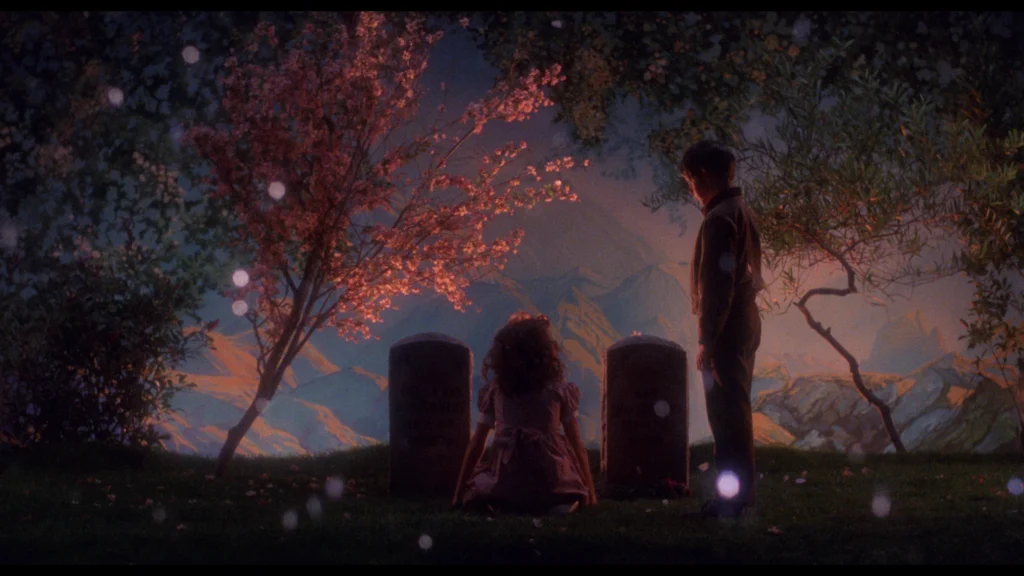
Now that you have been vindicated by this new release that gives audiences an opportunity to not only see it in its most intact form, but also to chart the path of this film and its various iterations, what is, to you, the legacy of this film in terms of your sense of accomplishment with it and your career as a filmmaker?
Look, there's no reason, in my opinion, for an artist to create and to make art unless he could create something that will lastingly make people feel, look into themselves, recognize the humanity and inhumanity within themselves that exists in the world around them, and more than anything else, reinforce them for their capacity to be compassionate, empathetic, and giving. When you can give an audience that, it's a tough fucking thing to do. When they walk away from the experience, they are so touched that they want to go back and they see it. They take it to their heart, and many, many, many, many, many people have done that with Lady. It's not just a movie to them. I'm very proud of it because of how it affects people deeply and warmly, and that's always what I wanted to do, and I did it.
Lady In White is now available to order in 4K Ultra HD through Vinegar Syndrome.