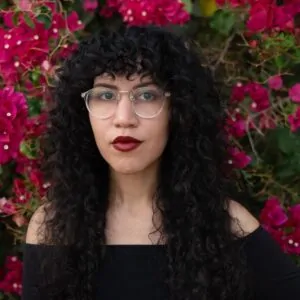
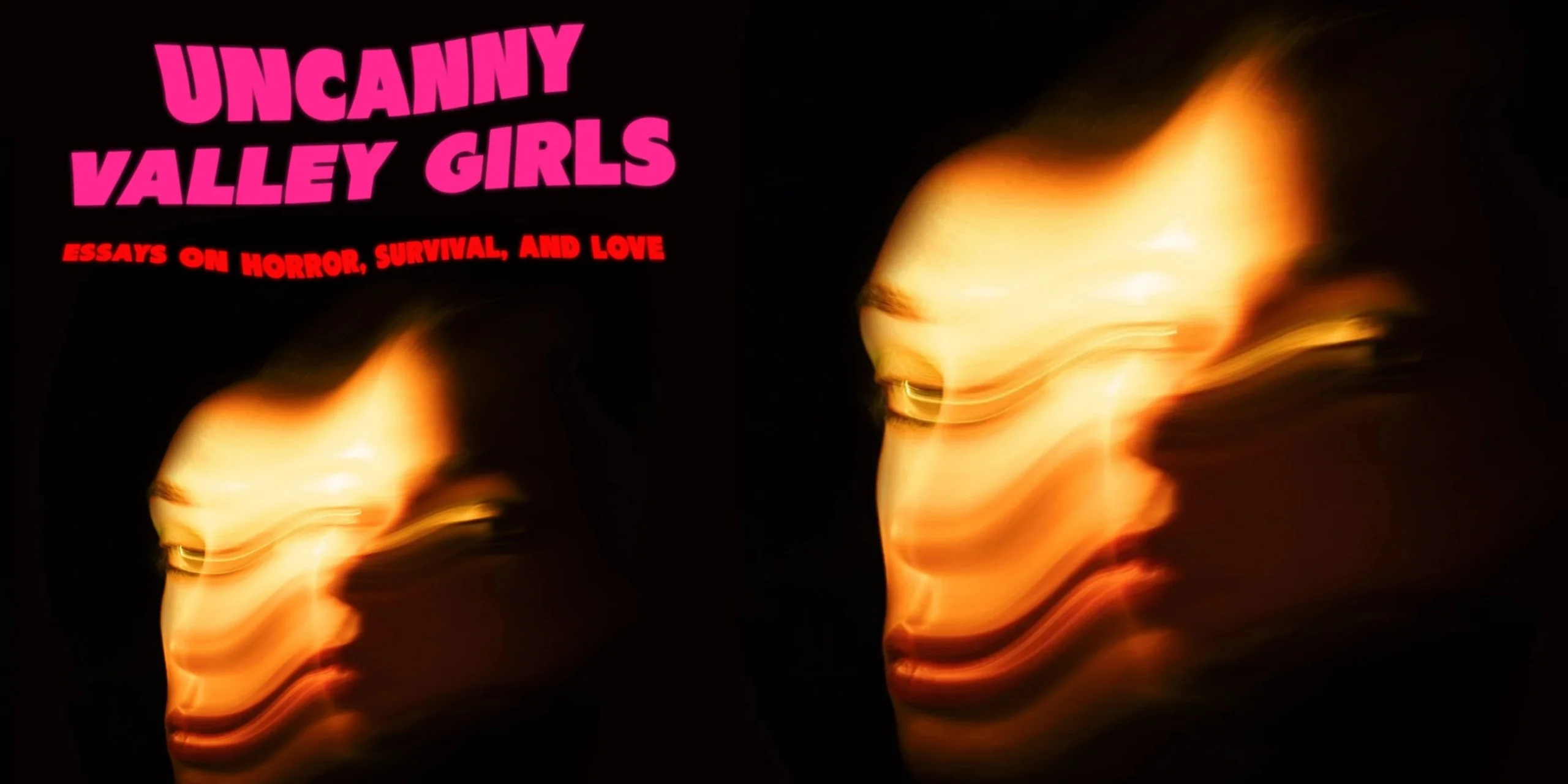
“Preparing to enter the psych ward, my nerves swelled, and all I could think about was you–” Zefyr Lisowski writes in the preface of her essay collection, Uncanny Valley Girls: Essays on Horror, Survival, and Love (Harper Perennial).
She invokes a scene that generally gets panned over quickly in horror movies: the moment when the final girl is revealed to have survived, but awakens in a ghostly white gown, restrained and screaming from behind the locked doors of a mental institution. Sometimes these stints aren’t shown at all, merely alluded to somewhere down the franchise pike. In either case, the asylum, the psych ward, appears as a site of the horror’s continuance.
Laurie, Sally, Nancy—they all survived, but who they were before didn’t. They are fundamentally changed by their experiences of terror. Their character arcs across their respective franchises concern the problem of having to learn to live with the ever-present presence of a monster, the way you would a loved one.
Such is the heartmeat Lisowski tenderizes in Uncanny Valley Girls. “This is a book about horror, real and filmic, which means it must also be a book about love,” she declares. And it is. In some aspects, Uncanny Valley Girls is a deeply considered exploration of what it means to love something that seems to hate you, be it a movie, place, or person.
“The Girl, The Well, The Ring” plunges horror’s tormented relationship with disability and trans identity. “Ghost Face” and “Southern Fried” meditate on Scream, The Texas Chain Saw Massacre, the author’s relationship to/with the haunted South, and the escapist dream of California in the Y2K imaginary.
“Preliminary Materials For A Theory of the Werewolf Girl”–an absolute triumph of an essay—draws on 1941's The Wolf Man and contemporary cult classic, Ginger Snaps, to delicately tend to the matted mess of tensions between werewolves and trans becoming. “Uncanny Valley of the Dolls” functions as a love letter to trans artist and doll-maker, Greer Lankton, whose creations are known for their strange, somewhat terrifying beauty.
Threading the film and cultural analysis are Lisowski’s reflections on the intimacies in her own life: the absent presence of her older sister, who passed before she was born; her father, also passed; lovers, flings, friends and abusers in past and present tenses; her mother, whose love beams through the text. Lisowski knows life is mostly made of emotional and embodied gore. She also knows that’s where the love is.
FANGORIA sat down with Zefyr Lisowski to discuss the ideal first date movie, horror films as poems, and how being trans is sort of like being a werewolf.
What we find sincerely scary says a lot about us. What would you consider the ideal horror movie (or subgenre) for a first date, or if you’re trying to get to know someone?
A couple come to mind. I love starting off in a kind of more intense sphere, just because it opens up the space for discussion. Part of what I love so much about horror movies is the way they can really dig deep and get to this place of often profound connection. I had a first date, as I write about in the book, where we watched Lars Von Trier’s Antichrist, which was kind of going out on a limb but wound up connective and productive in a number of ways.
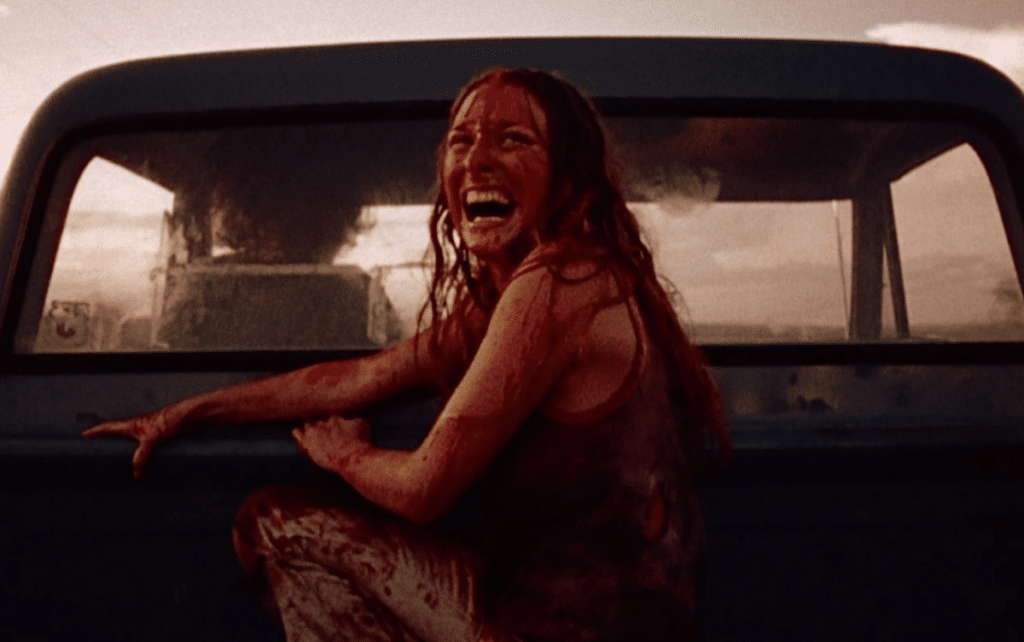
I’ve watched this movie in various relationships, as I have with The Texas Chain Saw Massacre, another very intense movie that I talked about in the book. I think there’s also just something to be said for a high thrill kind of campy fun movie that isn’t too boundary pushing as well, and to that end, the first Scream. I think it’s kind of a perfect date movie. It’s a little silly, it’s fun, but there’s some meat underneath it, too.
Uncanny Valley Girls is a memoir narrated through the horror films that have shaped your sense of self and the world at large. How easy or difficult was it to excavate these stories and make meaning from them? What was your process like toward marrying the personal narrative/film criticism dichotomy?
So much of what I respect about horror as a genre and as a mode of thinking and being is the way it runs toward fear, and that was a really strong motivator in writing this book. I spent a lot of time thinking about, what am I afraid of? in my writing. What am I afraid of in my life? What does it mean to try and prioritize those things on the page?
Because of that, part of the reason the book is so vulnerable and discusses these questions of psychiatric confinement, self-harm, sexual violence, hurting others and the legacy of hurting others, and what that sort of does to the psyche as well—I think those were all things that felt kind of like a third rail and were frightening to touch.
And because of that, writing the book was kind of a two-channel experience where, on one hand, I was really leaning into just pushing myself, but I also had to build an apparatus to keep myself relatively safe as I was writing. Part of that was doing a lot of the composition in a residency space where I wasn’t in my home, and I didn’t have to worry about bringing those proverbial ghosts into the place. Although I have also been in haunted residencies as well. I think they’re kind of a famously spectral place.
But throughout all of this, I was kind of toggling between those two things: thinking about what scares me and finding a way to cushion that as I was writing. In some ways, I feel the film criticism aspects of the book were a way to give myself and the reader a little bit of a release from the personal tension.
Were there films you wanted to write about but didn’t?
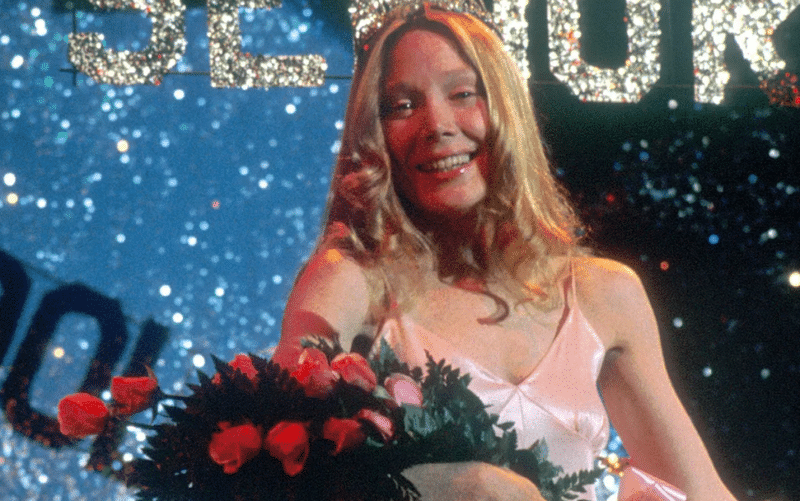
There’s a long list of films that I was considering talking about. A lot of them are movies that I really deeply love, but I thought I couldn’t say anything new or contribute any criticism that didn’t feel trite or obvious. I love Brian De Palma’s Carrie. I think The Shining is one of the best movies I’ve ever seen about growing up with an alcoholic parent. But that’s like the text of the film. So a lot of classics of the genre–although I carved out an exception for Texas Chain Saw because I think that’s just such an exceptional, perfect little movie– I had thoughts, but I wasn’t convinced of the non-redundancy of those insights.
There are some movies I discovered afterward that I would have loved to talk about. I think the Philippou brothers make really phenomenal movies. I love both Talk To Me and Bring Her Back. There’s something really singular about both of those movies. They’re both deeply embodied, fucked up little films but also have this really interesting set of underpinning ideas, a really fascinating metaphor that I think is really well executed in both movies.
There’s also this movie that I’ve been talking about for all of my book tour called In My Skin, that I’m obsessed with. It’s this French movie that is essentially an autoerotic cannibal film and I think it does really interesting things around disaffected labor under capitalism and self-loathing, self-consumption, and kink and all these other aspects that I would love to explore. But that was a movie that I came to after I finished writing the book.
A sequel. Uncanny Valley Girls Part Two.
Back to The Valley.
You’re also an award-winning poet. How does your background in poetry inform your approach to both nonfiction and fiction writing?
I think the thing that I love the most about poetry is that it deals a lot with received and subverted form. There’s such a long lineage of poetic tradition. Take the sonnet, right. They’ve been around for hundreds of years and are still being innovated on. Like Wanda Coleman was writing American Sonnets in the ‘70s, ‘80s, ‘90s, and 2000s, and that’s a profound innovation on the form that happened really recently, that’s since been adopted by a lot of other poets as well.
There are all these examples in poetry of people taking existing material and bending it and working within traditions, and I think that actually sets one up really well to jump between other forms of writing.
Then, of course, there’s also just an attention to the rhythm of a sentence, the rhythm of words placed together. I try not to lose myself in a kind of miasma of ungrounded verbiage, but there is a sort of word-first orientation. I love language. I’m really lucky to be working with language, I feel, and that’s a lineage of poetry as well. And horror films work like poems, right?
There are subversions, there are voltas, there are twists, there are rhymes. I think horror is one of the most poetic film genres, and it’s also the genre that’s historically been most open to surrealist techniques and experimentalism in the mainstream movie industry. I think you can also draw an analogy to the fact that one of the reasons that poetry is so exciting is because of the relatively low cost of it.
You can write a poem anywhere. You don’t really need that much time or money to write poems. And horror, famously, is one of the cheapest genres to produce. That’s why there’s so much weird experimentalism in the genre as well.
Which is why horror saves the movie industry at large every time.
Absolutely.
The thesis of “Preliminary Materials for a Theory of the Werewolf Girl” boldly equates trans experience with being a werewolf. This is a high-risk assertion obviously, for all the many ways being trans has been pathologized and equated with monstrosity in order to create the conditions for socioeconomic marginalization and premature death.
Can you speak to the necessity of exploring this relationship despite the sneaking sense you may, as you put it, be “fashioning a weapon against [yourself]”?
That’s something that I’ve thought about a lot through the writing, the production, the editing, and promotion of this book. When we were talking about publishing essays beforehand or previewing parts of the book in various magazines, I was pretty adamant that I didn’t want the werewolf essay to be published outside the book because I think it has a high chance of being decontextualized.
So I was going back and forth asking, am I inscribing this trope? Am I sort of “fashioning a weapon,” as I say? Ultimately, I feel that bids for respectability, bids for shared humanity, bids for compassion have kind of blatantly and apparently failed. We’re in a state of increasing scapegoating, increasing fascistic tension and opposition towards trans life writ large. Because of that, appeals to a shared humanity are kind of intrinsically a failed operation. So what do we do in the wake of that?
I think part of it is to assert the complexity of our humanity, assert the ways in which we hurt each other. That evades the trap of always being virtuous. It evades the kind of Marvel-ization, the fiction of identity politics, which is something that I have a lot of feelings about, especially as someone who likes more extreme movies and hates the militaristic propaganda of the Marvel films. Which is a sidebar, but one I think is kind of shaping a lot of discourse around what it means to be good and what it means to be likable.
Because of all that, it was really important for me to look at the ways in which I have been hurt by people like me, and the ways I have hurt other people like me, as a way of thinking about us more broadly, compassionately, and complicatedly as well.
In the same essay, you refer to “the thrall of incompletion,” tying this to experiences of puberty, shape-shifting, and the writing process itself. As a writer and artist who works in multiple mediums and modalities–dollhouses and doll-making being the subject of another essay– what does completion of a work feel like for you?
Completion, I guess, is a sense of pushing something to the point of clarity, sharpening the edge of a thing until it can cut. I think that a lot of what I’m drawn to in other art, other writing, other films, is something that has the “punctum,” as Roland Barthes calls it. The thing that punctures you.
When I start to feel that thing, when that thing starts to be apparent to me, then I usually push a little bit further into that until it’s sort of fashioned almost into a weapon. But I’m also interested in compassion, I’m interested in collective care.
I’m not just interested in sort of stabbing as it were, but there is still an aspect of that that really drives my approach to editing. Like slivering away until something is sharp enough to use to either keep yourself safe or point out something that hasn’t really been heretofore revealed.
It has teeth but isn’t chomping down.
Exactly, exactly.
We’ve talked before about the tensions between literary and genre categories in publishing; how, despite horror’s popularity, there’s still a sense amongst gatekeepers that genre can’t be “literary.”
At the same time, it’s become increasingly difficult for horror filmmakers to develop projects without “big ideas” which are often just literary ideas already intrinsic to the genre. What are your thoughts on this phenomenon?
Firstly, I would say there have been some novels in the past couple of years that have not been marketed as horror per se that I think are staggering works of horror. Hurricane Season by Fernanda Melchor is deeply chilling. Mónica Ojeda’s first two books, Jawbone and Nefando are both really chilling works of horror.
I’ve always been interested in stuff that blends the literary or the highbrow or the arthouse with horror. You probably noticed that from the movies that I talk about in the essay collection: St. Maude, Antichrist are horror movies but they’re also character studies, which horror so frequently is, but they’re received as part of this different tradition than Pet Semetery, for instance, even though it’s all kind of doing the same thing.
The challenge in the literary world right now, and something that I’m interested to see how it further develops, is this way in which horror needs to be concealed to really advance its aims. Horror as a mode of discovery and a mode of intellect actually doesn’t really exist in literary publishing, as you said.
There are really incredible books that I can name by Haley Piper and Gretchen Felker-Martin and a couple other writers who are doing really interesting stuff with publishers like Saga Press and Tor Nightfire–Grace Byron’s novel Herculine also does really interesting things with the genre–but a lot of that is not received within the trades or not really reviewed as literary work.
A lot of what’s held up as “literary horror” is 50 or 60 years old. I love Shirley Jackson so much. I love Angela Carter so much. Those are two foundational writers to me. But they are writers who produced work over half a century ago, if not longer. That is also a way of conferring respectability. Like age legitimizes something.
I think strategies of concealment and expanding the boundaries of the genre, both for what’s considered “horror” and also what’s considered “literary” is something that I am trying to do and was invested in in Uncanny Valley Girls, even though it’s a book about film and not a book about books.
What does “finding companionship in the strangeness”of the uncanny mean to you?
What I really love about the uncanny, the weird, the horrific is that it is always grappling to some degree with loneliness. It’s always grappling with the desire for connection and the kind of disjointed parts of disconnect and tension that intrinsically arise in relationships.
It does that through catastrophizing. It does that through blowing things up to the worst possible outcome or the most uncomfortable embodiment in the case of the uncanny.
But it feels like art that reckons with questions of pain and responsibility and what we owe each other in a way that not all art does. Because of that, it’s a mode a lot more suited to discussing the need and desire for connection, to thinking through how we show up for each other, how we fail to show up for each other.
I was really drawn to the uncanny as a mode for this book because it’s so relational. Even in Freud’s essay that coined the term “the uncanny” is a close reading of E.T.A Hoffmann’s “The Sandman” which is about a man who becomes convinced his lover is a mechanical automaton.
We see that the uncanny, from its inception point, is always related to this bond between people and this inability to fully connect how the lover and beloved want to be connected, which is one of the themes of the book. How we show up for each other, how we don’t, and what connections linger after the failure anyway.
This interview has been edited for length and clarity.