
I’m standing in an abandoned shack deep in the woods of West Milford, NJ. Unstable floorboards threaten to collapse under my weight, thick spiderwebs cling to my cheeks, and a living veil of fog creeps through the doorway, coiling around my ankles. Yet, I couldn’t be happier, for just beyond the doorway stands a digital camera and the bustling cast and crew of the Crystal Lake television series.
The Friday the 13th films served as a thrilling rite of passage for young people growing up in the 1980s. Their low-supervision camp settings spoke to a generation craving independence, and the perils faced by their young casts let viewers confront terrifying situations without real danger. For a whole generation of movie-goers, Jason Voorhees’s inventive kills and Harry Manfredini’s chilling ki-ki-ma riff became ubiquitous topics of discussion in school hallways and lunchrooms.
When the franchise fell into a long-drawn copyright dispute after the 2009 reboot, fans were left dismayed. A world without Jason felt tragically incorrect. Fortunately, though the feature film rights remain tied up, A24 was able to negotiate an agreement among the rights holders to bring the franchise back to life as a TV series.
When I arrive at basecamp, I am quickly escorted into the MUFX trailer and into David Presto's aesthetic domain. A seasoned industry vet with credits including A Complete Unknown, The Penguin, and Dexter: Resurrection, Presto’s wealth of experience shows in his artistically stained hands. The quarters are tight (I feel like I’m in the way no matter where I move), but the effects crew's passion is boundless. A million questions race through my head, but before I can ask one, Presto pulls me deeper into the room and closer to his makeup chair. Years of absence evaporate the moment my eyes lock onto that familiar face. Though I’d seen it played across the big and small screen more times than I can count, Jason’s stare completely hypnotizes me.
Horror fans have been speculating about the look of Crystal Lake’s Jason since the project was announced in 2022. A glimpse of the iconic slasher is enough to get me geeking out, but when Presto reveals the cast and crew are about to see Jason’s updated makeup for the first time, my inner fanboy goes into overdrive.
Buried under layers of latex and spirit gum, Actor Zachary Branch needs an assist finding the restroom before joining the effects crew and me in a production van and shuttling over to set. My breath hitches as we move down a winding trail and stop at the edge of the wooded movie location. I crack my door and am met by the smell of damp earth and artificial fog. Silence hangs in the air as I slide out of my seat and make way for the legendary slayer who has haunted screens for decades. The cast and crew's eyes widen in unison with recognition before erupting into a collective gasp of amazement.
A24 has asked us not to disclose any plot points, makeup designs, or behind-the-scenes details before the show officially makes its way to TV (though I’d be remiss not to mention Linda Cardellini is every bit the sweetheart she’s rumored to be). I did, however, have the chance to reconnect with Dave Presto months after production wrapped to discuss his time on set and how he worked alongside cast and crew to create a chillingly believable experience for fans.
For more Crystal Lake coverage, check out our interviews in FANGORIA Vol. 2 Issue #33.
This interview has been edited for clarity and brevity.
Looking at your filmography, you've worked on everything from The Penguin to A Complete Unknown. As an FX artist, how does horror challenge you more than a dramatic production?
It's usually the schedule that is the most challenging. It's more stuff in a shorter amount of time. Usually, horror movies don't shoot for like six months, or three or four months. It's sometimes 30 days, sometimes it's 90 days. They’re not long shoots usually. Usually, they want to make it on a tight budget, on a tight schedule, and you really have to make everything pretty quickly because prep is short. So, shorter prep, rougher schedule, rougher elements. That's the challenge. I mean, that was definitely the challenge of Crystal Lake.
How did you land the Crystal Lake gig, and when did you see the full story outline?
When I learned they were shooting this thing in New York, New Jersey, I had to find out who was doing the show. I literally called all my producer friends, everyone I knew who might have an idea who was doing the show. Then I found out who was doing it, and luckily, I worked with him several times before, and I just worked with him the previous year. I shot him a text.
I said, “Tyson, how do I get on this? What do I have to do to get on this? Let's talk.” And he wrote that he’d love to have me on it. I literally hounded him to get on the show and to speak with the showrunner.
So, that's when I met Brad [Caleb Kane, showrunner], and we just hit it off. We were like brothers from another mother. We were like two trains meeting together. We would text ideas back and forth. Because I’m not just a makeup effects guy; I’m a fan, and I want to do this show justice and do right by Brad. And I want it to be memorable. In 10 or 20 years, I want people to say, “Oh yeah, that was cool.” Because there’s an eight-year-old me growing up right now that might see this and want to do the same things. You always want to leave a legacy. Like Savini. He inspired so many makeup artists with Friday the 13th and all those slashers he did. You read Grand Illusions, and you see there are so many talented makeup artists that are doing this because of him. That’s the kind of thing I want to leave behind. When your time is up, and you’ve retired, you want to leave a legacy behind.
What excited you most about joining the crew of Crystal Lake?
Recreating something from my childhood. Things come full circle. This is pretty much why I got into it. I loved horror movies as a kid. And then to get to work on something… When I read FANGORIA back in the day, and I looked at all the behind-the-scenes stuff, and I read Tom Savini’s Grand Illusions, I was like, “Oh, my God, I want to do that one day.” And then you finally get your chance, and it’s like, “Oh my God, I can't believe I’m doing this.”
I remember the day I met Brad, and I told him my story, and he had a similar one about seeing Part III in the theater as a kid. We had this instant connection, and we spoke for over an hour. It was supposed to be just a quick meet. But we kept talking. And we got into everything we could do. This is like a dream. It’s a dream job. Friday the 13th is so iconic. Jason is so iconic. Everybody knows Jason and Friday the 13th. Even the twenty-year-old kids I had working in the shop, they knew Jason and thought this was so cool.
So you were a big Friday the 13th fan growing up?
Oh, yeah. Absolutely. I remember seeing Part III as a kid in a theater. That really stuck. Back then there were these tiny movie theaters. And they were literally right up the street. I would ride my bike up to it. And you could sneak in. You’d buy a ticket for one movie and sneak into another one. And no one cared. It was kids being kids. So, that’s how I watched the first one.
Do you have a favorite Jason design from the series?
The Final Chapter is one of my favorites. At the end of that film, he gets his mask knocked off, and he gets the machete to the head and slowly slides down the machete, and we see things moving and everything.
Is there a kill from the original series that impresses you as a makeup artist?
I like when he bends the guy in half. I believe that’s in Part VI. That was one of the funny ones. When he bends the sheriff in half. As a kid, when I watched that, I was just dying laughing. There’s a lot of comedy in VI. I also like in Part III, which was 3D, I liked the spear in the eyeball. A lot of the 3D in part three was so gratuitous. Like toward the beginning, the bat going close to camera, or the broom handle. There was so much stuff that was funny, especially when watching in the theater. But the spear shooting was one of my favorites. That was the first kill in the series with the hockey mask on. He shoots her; you see the spear coming into the camera, and then it goes right through her eye, and she falls into the water. Then the wallet floats by.
How far in advance are you involved with the project before day one of production?
Depends on the show, but for Crystal Lake we were in like a month before. Almost five weeks before we started shooting. You have to wait for them to cast the actors. Once they cast the actors, then we can do life casts and start designs. Like with Jason, we pretty much had an idea of what his makeup may look like. We submitted some concept art to give them an idea of what we were thinking. Once they cast, everything changes a little because now the person's anatomy may or may not fit what we designed.
So, once they cast him, we started to do renderings. We sent them over, and then we did a life cast. While we're doing that, we’re still getting renderings approved. Then we started to break down the sculpt. Pretty much after we do a life cast, we pour it up in plaster and then start sculpting on that. We pretty much had his head and shoulders. Then we started sculpting on top of that according to our designs. We didn’t have a lot of time. I think from the time we life-cast him until the moment we shot it was 12 to 15 days. Which is very fast.
Especially because this was a multi-piece mold. We had the head, facial pieces, the neck, all of which had to tie together. So, this was a complicated makeup. The good thing with working with a younger actor is they can only work for eight hours. From the moment he comes to set till when he leaves, it can only be eight hours. Sometimes they can stretch it to maybe ten, but for the most part, he's in there for eight hours. So, a good chunk of the day is the application, the makeup. And then you have probably five hours of shooting with him. Another thing we were up against is that we only had a certain amount of time he could be in the chair.
Because, if he could only be there for eight hours, we couldn’t do a makeup that took four. So, we were trying to get it down to under three hours. Those eight hours included application, shooting, and removal. Removal took 45 minutes. So, it was quite the undertaking every day to get this thing on camera really fast, shot, and then cleaned up.
I did see a cool makeup during my visit and got to witness the crew’s reaction in real time, which was awesome. If you do one day get to design an adult Jason, what would inspire his look?
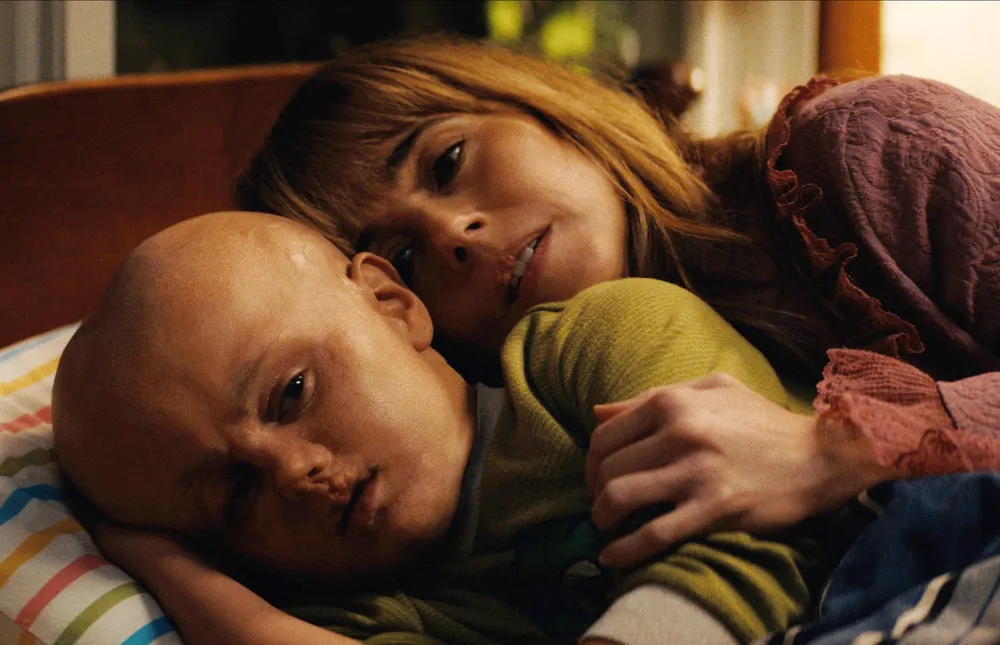
We had to figure out how to go from the younger Jason to the middle Jason to the adult Jason and make it make sense. We wanted the makeup to grow and evolve. It's an evolution. We were thinking about how to get him into the monstrous stages. He eventually has to get there. So how do we build that bridge and make it make sense while still being creative and having fun?
So, we started to build the essential pieces of Jason, which is like, the deformity on the side of the head, the hump on the back going into his spine. The ear that’s a little lower. We were able to do some of that, but we wanted to stop at some point because we wanted to be able to build other stages that possibly take the deformities further than what we saw in the movies. The biggest challenge was his right eye because we had budget constraints and time constraints. It's hard to move an actor's eyes without making a whole other prosthetic that would have to be animatronic.
We weren’t able to do that, but maybe we can get to that. When we did the makeup on Callum, we did a lot of tricks to move his eye with makeup and tape and contacts and stuff. There were a lot of tricks we did to help make the one side look a little bit off from the other side.
What kind of talks did you all have in those meetings about the visual style of the show?
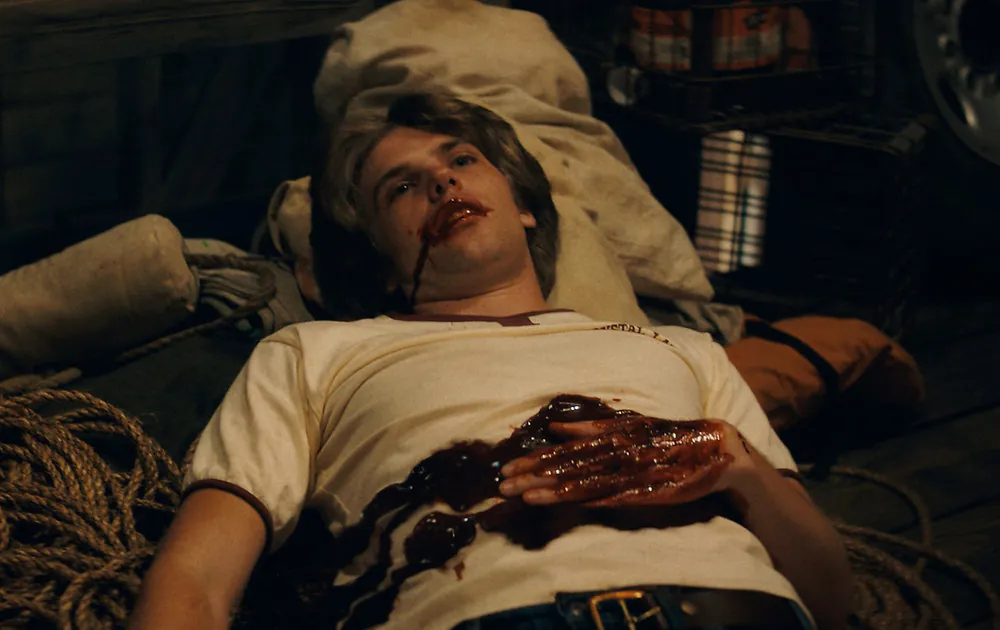
They wanted everything to be very visceral, very dirty, very raw. Lots of blood. When kills happen, they wanted to see blood. They wanted to see gore. They didn’t want to shy away from any of that. It’s nice to have that freedom of really going for it and not worrying about ratings or things like that.
Without giving away spoilers, is there an effect you’re super excited about fans seeing?
Oh yeah. The last 15 minutes of the first episode is just crazy. There’s a lot of blood. A lot of fighting. It's like nothing I've seen before in a TV show or in any of the movies. This is all new stuff. We shot that whole sequence in just two days, which is insane. Literally every kill is done practically. There's going to be some enhancements here and there just because there are certain things you can't do on camera without a cut. Some of the stuff they wanted to do without cutting. So, we do almost everything practically, and then they have to edit stuff in to make it make sense.
There is so much going on in the last 15 minutes of that show. I remember when I first read it, I was like, “Holy shit, am I reading this right?” I called Brad to confirm we were doing it all practically. I thought, “If we do this and do it right, fans are going to be talking about it the next day.” It’s crazy what goes on. There are a bunch of kills later that are cool too. There is a lot of fan service. I’m not going to say there are copies of kills, but they are definitely inspired by previous Friday the 13ths for sure.
Did you revisit Savini or any of the sequels, and are there homages going on?
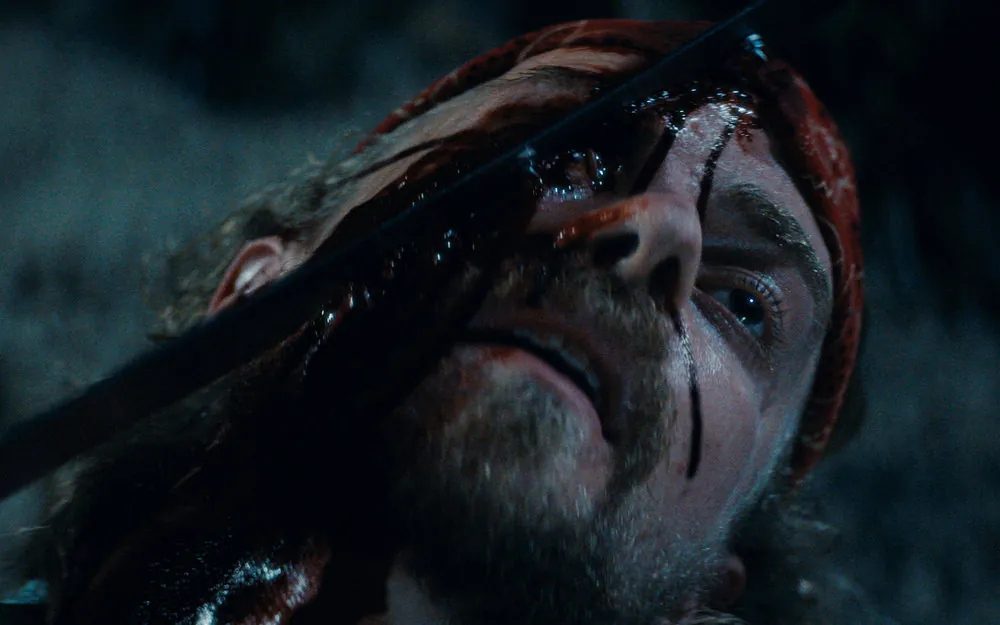
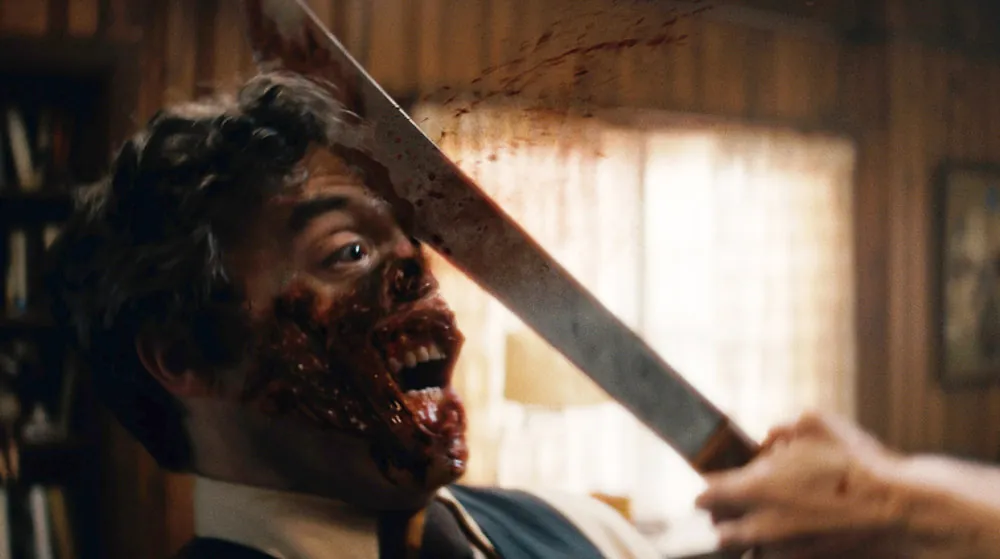
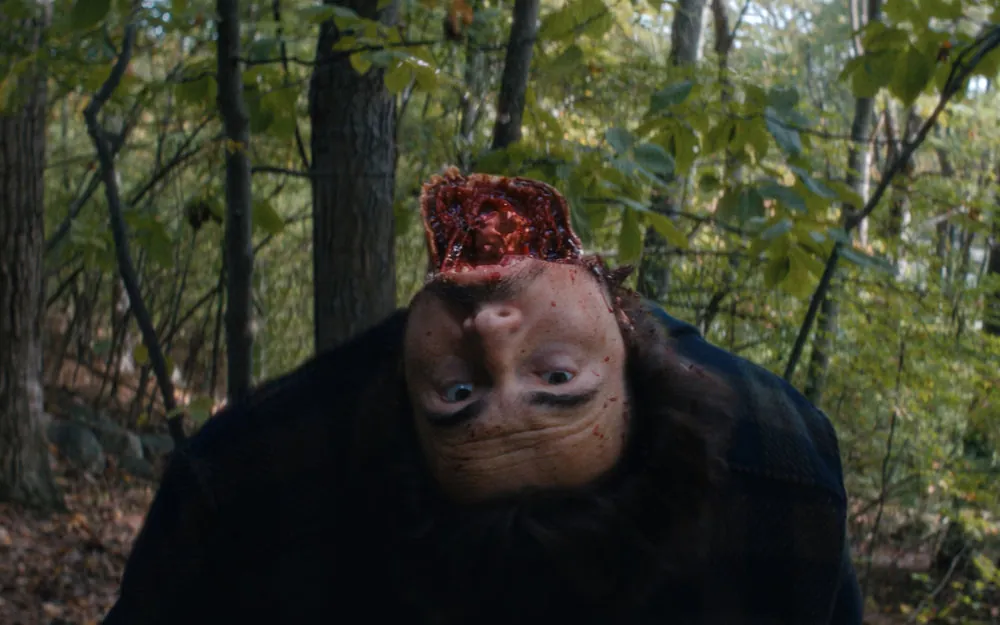
In the first episode, I got to do a few Savini bits. What was great about Savini is he would use as much of the actor as he could. Like, he would have a machete go through a guy’s face. It’d be a real machete but it would be cut and placed into a prosthetic on the actor’s face and the real actor could move with it. In the first sequence, we did some of that. There are a lot of individual cuts, and you don’t know what’s an actor and what’s a dummy.
I’ve been a huge fan of Savini since I was a kid. I remember going to a FANGORIA convention in New York when I was a kid and meeting him and getting my book signed by him. That was a great thing, getting to meet one of your heroes as a kid. And I knew I had to do something like he did. Even though it was low tech, it completely worked because you had an actor with a real prop on his body. It cut together really well. Later in the show we did other Savini-inspired things. The budget on the show was not as great as we needed it to be, and the time we had was not as much as we needed. Everything was go, go, go. And we were falling behind very quickly, so we had to figure out how to do the kills economically and fast.
A lot of that was inspired by Savini because he was able to do stuff rather quickly and within the budget. Another thing that was difficult on the show was the locations. We’d be shooting in the middle of the woods in NJ and working out of a tent. Without giving away too much, there’s a scene where a girl is killed in the middle of nowhere. The trucks were so far away. We planned it out the day before. I asked to bring one of trailers up to a certain point so we could do the makeup there. It was like a ten-minute walk to the location in the summer, when it was hot. That was the plan. But plans change. Halfway through the day they wanted to do it closer to set.
We were shooting in a wide and it was hard to hide stuff. We set up a tent about a minute away. It was set on a side of a hill. There was really no other place to put it. We had a light and a table and a chair. It was a giant blood bag effect. We had to put a prosthetic on, we had to put this blood tubing on, while working with wardrobe and hair in this little tiny tent. It was like working on SNL or a Broadway show. She was getting makeup and hair in this little space. We had so little time. It was the last shot of the night. Everyone was dead tired and beat. There were mosquitoes flying around. There were spiders. It was insane. We got it done. We brought her to set. We shot and it worked. I think we got two takes on it and it was great. But it was nerve-wracking. We were working in tight quarters in the dark and trying to make it look good. That was the challenge of Crystal Lake. It was not very forgiving. The environments, the sets, they were challenging.
Savini always talked a lot about his time in the military and how the looks he created were inspired by the horrific sights he saw in real life. Were you going for a heightened sense of realism in Crystal Lake or spectacle? Maybe somewhere in between?
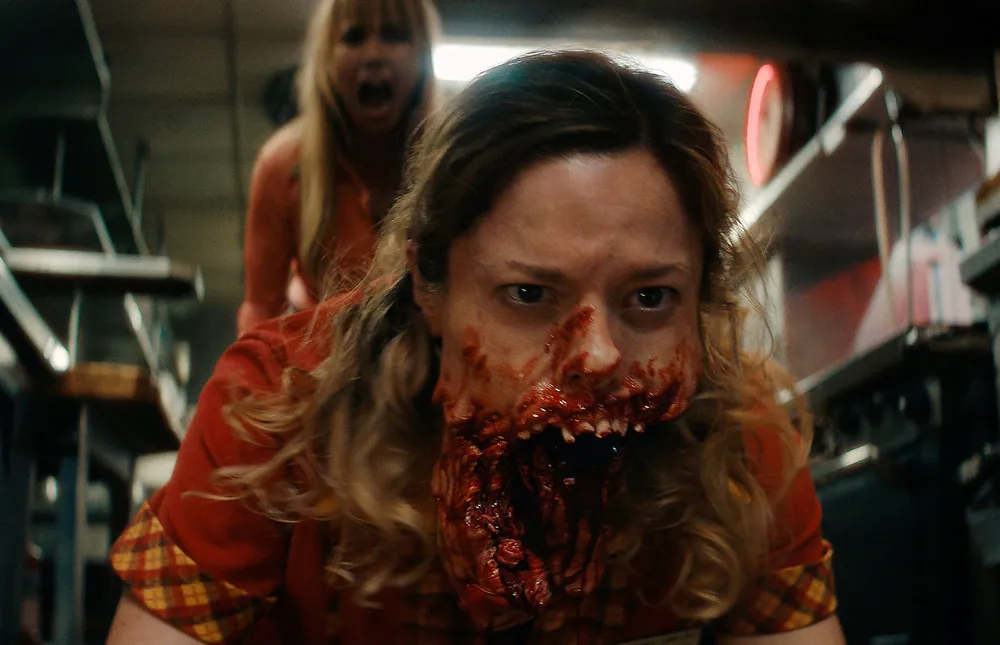
We're skating the line somewhere in between. We want it to look as gory as possible. A little theatrical so it plays into the Friday the 13th trope. We still want it to be fun. Bloody as hell. Gorier than what you would normally have. Not quite over-the-top but skating the line between over-the-top and hyper realistic. It’s almost tongue-in-cheek. We’re creating something that will be memorable. It’s like what RoboCop did. Like when the guy is getting shot up 30, 40 times on that table, at some point you start feeling bad. You start to laugh a little because it’s so crazy over-the-top.
Are audiences becoming harder to impress after years of watching horror?
I would say yeah. Back in the 80s and 90s, it was a lot easier. I think visual effects somewhere along the way took away a lot of the magic that used to happen, and the shock. A lot of audiences remember older movies when it comes to practical effects and not the newer ones so much. That’s why Obsession is so effective. There are a few effects in there that work really well. Like when she's banging her face against that steering wheel, it's all practical. They didn’t have enough money to fix it in post. They had to get it all in camera. They had to figure out how to make it happen. Most of the time today people just figure they’ll fix things in post. The problem with that is you many times can’t fix it without making it look fake. Because you don’t have realism anymore, you’re making something completely fake and putting it in there. You know. Something that doesn’t exist in the world.
Something that doesn’t have the limitations that a body has. Sometimes when you have limitations, that’s the realism. There are certain things a body can’t do. That’s what’s good about horror. You can do it practically. Do as much as you can in camera. And enhance a bit in post. You can’t be heavy-handed with it because at some point you start to erase the original and the realism. That’s what they did with the prequel to The Thing. They made all these great effects and they pretty much photoshopped over everything and that’s what made everything look not so great. That’s where you have to toe the line. You have to have a little restraint. Maybe you don’t need to fix everything. Those little mistakes here and there are good sometimes. Messy is good sometimes. People like that still. That’s why Obsession works because people feel like it’s real.
Since everybody knows it, and it's got such a great legacy and it's so well known for its kills, is there any pressure when you take the job knowing that fans are going to scrutinize everything?
Yes! When I talked to Brad, I said, “Everything we do is going to be so scrutinized. People are going to hate it, love it, have all these kinds of emotions going on. We have to make sure we do it right.” Sometimes with TV, there are things you can fudge. This, these kills, they had to be done in the spirit of Friday the 13th. Even in early production meetings, I remember saying “They are going to destroy us on social media if we don’t do this justice.” These fans are relentless. The fans have to love it or we’re never going to get a second season. That’s why we had to maximize the kills the best we could.
What do you hope long-time fans of Friday the 13th take away from Crystal Lake?
I hope they’re not so brutal with us. (laughs) It opens with the lore of what happened before Jason became Jason. How do I word it without giving too much away? There’s a lot of history around how he became Jason. There’s more with Pam Voorhees and why she is who she is. There’s a lot of mystery. Even when the season is over, there’s still so much mystery, which fans will like. I think what brings fans back is not just the killings, they’re great, but they’re like the toppings on the sundae. The story is the flavor of the ice cream. This story is really well written. It leads us to other areas of Pam’s past and her future, and the town’s past. There’s a lot of mystery involved. When the season ends, there will still be more to tell. That’s what people want. They like wanting to know what the heck is going on.
And you’re the man moving forward? You’re in this thing for the long haul?
Oh yeah. Hopefully there'll be four seasons at least. Before we wrapped, I asked Brad where we go from here. That way I could start thinking about what I could bring to the table to make the thing a reality. Brad said they’ll have multiple storylines, and I said I was down. I did say that when it comes to the point of making the mask, I want to be the one who makes it. That’s the one thing I said I have to do. So, if and when that ever happens, I’ll make the mask.
Check out our interview with Crystal Lake costume designer, Cristina Spiridakis.
