
Very few filmmakers in the history of cinema know exactly what kind of filmmaker they want to be from day one. Even fewer come out fully formed with masterpieces the way Orson Welles did with Citizen Kane or Terrence Davies with Distant Voices, Still Lives. Christopher Nolan’s first films follow the trend of most first-time directors in being among his roughest.
They’re clear indicators of a director with interesting ideas but not yet the clarity in form or artistry in composition to flesh them out. It might surprise even the most avid watchers of Christopher Nolan’s cinema however, to know that one of his earliest projects is actually a horror film.
Check out What Horrors Lie In The Odyssey?
A horror short to be exact, filmed in 1989 along with his early collaborator Roko Belic (who would go on to direct supplemental material for Nolan’s releases of Inception and The Dark Knight Rises). The film, titled Tarantella, is elliptical and elusive in nature, more experimental and mood-based than narrative. But there are many elements of its design, soundscape, and aesthetic that hint at and even form origin points of what would eventually become clear characteristics of Christopher Nolan’s narrative style.
Watching his latest two films, Oppenheimer and The Odyssey, it’s rather clear that Nolan is unabashedly forward-thinking in his imagery and composition and aims to bend any genre or time period to his whims and hang-ups.
In Oppenheimer, the film’s real weight only comes forth in the central figure's considerations for what the future of his invention holds, the effect it has decades, perhaps centuries down the line.
For The Odyssey, film critic Richard Brody aptly describes the ways that Nolan adapted Homer’s visceral epic for a modern audience where deities and old mythos become secondary considerations. Yet these movies, as different as they are in subject and theme, are not dissimilar to Tarantella. The character and word associations Nolan constructs through editing and multiple timelines all find origin in Tarantella’s surreal dreamlike structure.
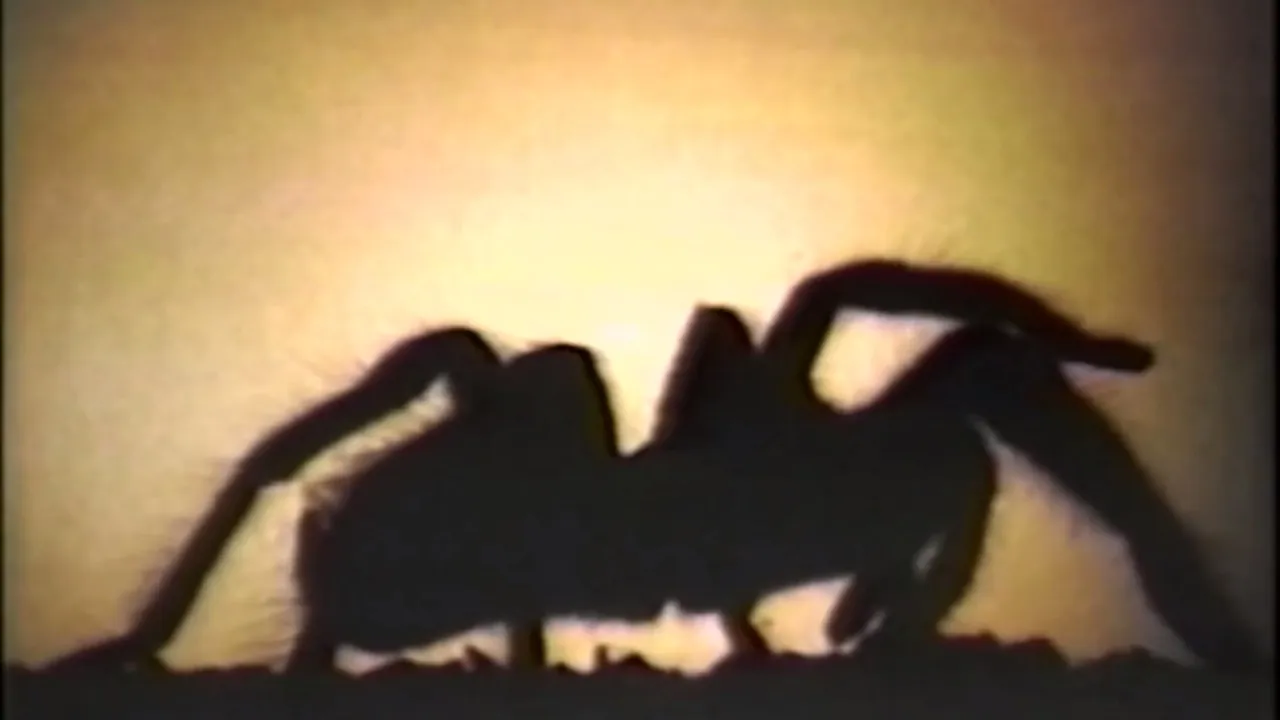
Among the first images we see in Tarantella is a man lying on his bed and having what seems like a bad dream. Various images run through his mind, from a typewriter to shadows from curtains, a mysterious man across a table, and a tarantula in a cage.
Perhaps the most distinct moment early in the film occurs when the mysterious man enters the frame – played by Nolan himself – and holds his hand out and has a glass rise up from the floor into his palm.
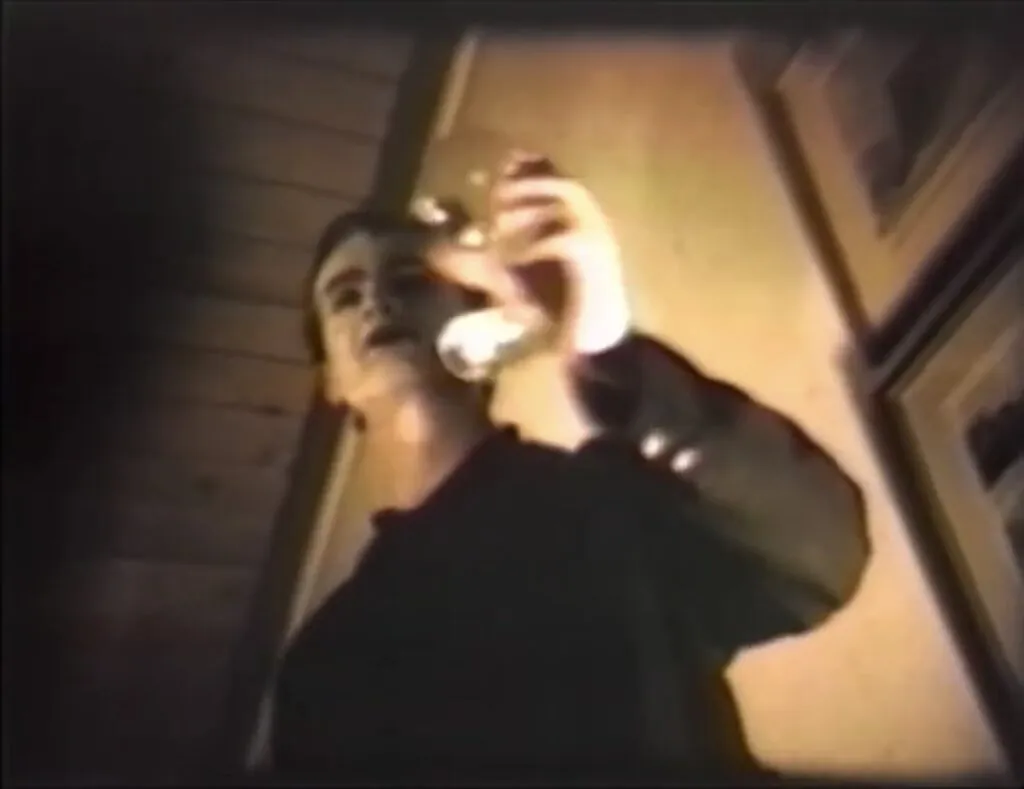
The reversal of movements immediately makes one think of Tenet’s various ‘pincer movements’ as well as the beginning of Memento, where the photo reverses from being burnt, but once the glass hits the palm, the scene cuts to the original main character putting the same glass down onto a table.
This association between characters and movements is something explored to its ultimate extent in The Prestige, where Angier and Borden’s rivalry forces the audience to doubt the identity of both. It’s clear that elements of temporal shifting, backward and forward, as well as character identity, were early curiosities for Nolan.
Word association also played a major role from early on. The title of the film, Tarantella, is a type of Italian dance named after a species of spider (now more commonly known as the wolf spider) whose venom was supposed to make people exhibit erratic, possessed movements.
Several of Nolan’s films hold their secrets within words and the films’ titles. Films like The Prestige, Inception, and Tenet all feature titles that serve as conceptual mechanisms whereby the base premise kicks off and also serve as the punchlines to the films’ twists. Tenet is perhaps the most amusing of all, being a palindrome in and of itself, mimicking the movie’s parallel forward and backward timelines.
Throughout Tarantella, we see a sense of erraticism in its construction, something that follows Nolan through his entire filmography. His editing techniques cross-cut in both effective and awkward ways, repeating sequences and jumping between two scenes, obsessively creating an urgent pace that consciously hides information for later reveals.
Is it cheap parlor tricks or effective ‘cinema magic’? The debate will rage on forever about this, but it’s clear this style is something Nolan conceived of from day one and has worked to perfect it with each new film.
Modernity, not only in objects and landscape but in the formal construction of film itself, is manifest in Tarantella. The film’s concept of horror imagery is less concerned with the traditional elements of phantoms, zombies, and demons, but more with the feeling of being lost, of being in space and seeing things as never-ending or time not working the way we expect it to.
Everything down to the panning of the camera from left to right, cutting between The Man in Black and the tarantula in the cage, is less horror by image and more horror by image association. The creepiest shots in the film (for those who aren’t arachnophobic) are probably the sequences in the tunnel, where the pillars have a menacing tomb-like nature to them, detached in the darkness.
Nolan’s films have always been characterized by industrial landscapes, the use of concrete, dark shadows contrasted with bright white lighting. The sort of grey and steely blue hues annoy many who dismay at its lack of ‘color’ but for others, such as myself, it is strangely comforting, tantalized by its coldness and rigidity.
We see thick stone pillars in a tunnel sequence where our main character is running away from… something, we don’t know what. We also see various tracking shots of lights on a bridge. These images, though disparate, are tied back to the central character having a recurring nightmare.
What’s interesting is that these associations within a dream reflect how Nolan conceives of his narrative consciously. Think of the totem in Inception or the bookcase in Interstellar or the “Algorithm” in Tenet. Also think of the conversation by the pond in Oppenheimer.
All of these elements form bookends to Nolan’s narratives first as disparate events amid a jumble, but by the end we start to see how they unlock key pieces of information. Tarantella, in this sense, is recognizable as the early work of a filmmaker and storyteller trying to find the ways in which his disparate curiosities can work together.
In this short horror film, they remain as experiments that never coalesce, but would ultimately lead to a career filled with richly layered narratives that dazzle us with their sleight-of-hand and clever revelations.
