
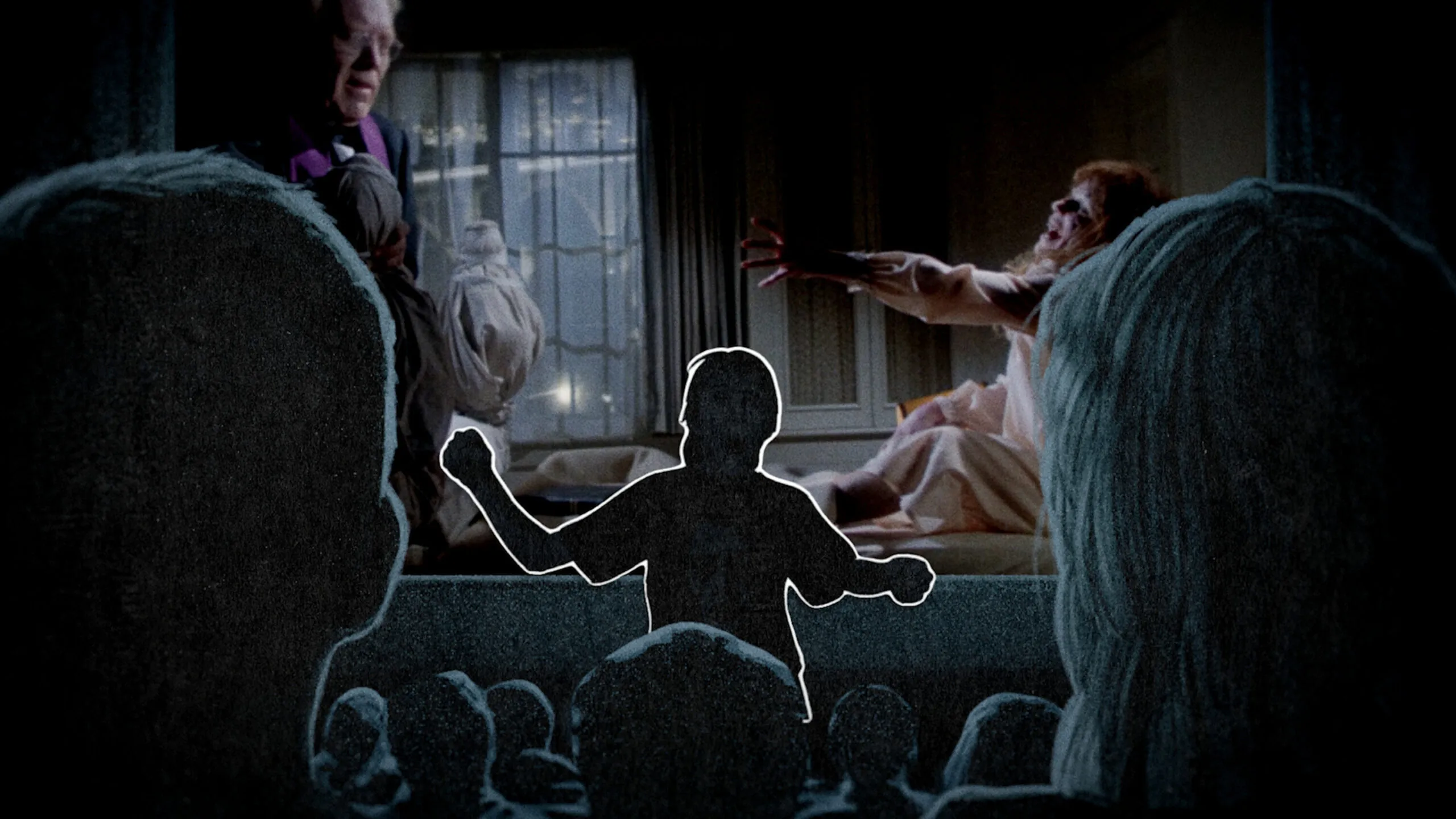
Famously considered one of the worst sequels ever made, Exorcist II: The Heretic is rare even among the many horror films in history that went on to achieve cult status or critical reappraisal after initially disappointing audiences.
In the new documentary Boorman and the Devil, which chronicles its troubled production, neither the critics interviewed nor the filmmakers themselves can agree on whether Exorcist II is simply a catastrophic failure, or in the forgiving timeline of cinema history, some kind of misunderstood masterpiece. Instead, director David Kittredge provides often gobsmacking circumstances of both the film’s obvious failures and its idiosyncratic successes, delivering a riveting story about best intentions, bottom lines and the unpredictable alchemy of the filmmaking process, and shrewdly lets the viewer decide for themselves on the results.
As the title suggests, Kittredge frames his history lesson with a portrait of director John Boorman, a British wunderkind whose early work showcased a unique and fearless filmmaking perspective — one that didn’t deliver a great film every time, but was distinctive and always took big swings. In his early career, the Richard Stark adaptation Point Blank, and the survivalist thriller Deliverance were both regarded as masterpieces; the singularly odd Zardoz, which featured Sean Connery in a mankini, was not. Exorcist II was not a film that he — or quite frankly, anybody — initially wanted to make, but The Exorcist was the most successful film of 1973, and at the time, Warner Bros.’ highest-grossing film of all time. So when writer William Peter Blatty, director William Friedkin and star Ellen Burstyn all declined to return, the studio opened its checkbook to convince Linda Blair to reprise her role as Regan MacNeil and started searching for a new filmmaking team to try and recreate the same record-breaking magic as before.

Boorman was enticed by the film’s $11 million budget, the biggest he’d ever worked with, and encouraged by a screenplay by playwright William Goodhart, The Heretic, which rather than simply retracing the events of the first film approached the clash between God and the Devil from a metaphysical perspective. Despite the film’s globe-trotting story, a variety of circumstances forced Boorman to stage most of the production on soundstages, including the MacNeil house and the famous steps next door. Though everyone was initially confident, numerous woes subsequently befell the production, including Boorman suffering a respiratory infection that shut production down for more than a month, requiring a substantial rewrite with the director’s frequent but eventually unwelcome collaborator, Rospo Pallenberg. Meanwhile, the studio pre-sold two-month exhibition blocks to theaters, promising to deliver a film for the summer of 1977, as Boorman and company scrambled to finish the film in time.
Kittredge’s incisive interviews with Boorman, Pallenberg, Blair, costar Louise Fletcher and numerous other members of the production suggest that the saying popularized by John F. Kennedy, “success has a thousand fathers, but failure is an orphan,” isn’t true — at least regarding Exorcist II. Boorman fully owns the film even today, and when asked if he regrets making it, the director admirably doesn’t offer a full-throated “no.” But a portrait quickly emerges of a production that aspired to something that was grandiose but almost from the start not what any fan of The Exorcist was wanting. Boorman says he spoke with Stanley Kubrick, who was at one point considered as director, and the filmmaker told him “just do the same thing again, but with more blood.” He says Kubrick was right, but that’s not what he did.
Pallenberg in particular emerges as a free-wheeling agent of chaos in the storytelling process, tearing down ideas established in Goodhart’s original script and injecting others that were seemingly designed to suit only Boorman and himself, under the guise of condensing a production schedule that threatened to run away from everyone involved. There’s an old refrain that “no one sets out to make a bad movie,” but this documentary makes a convincing argument that good or bad, at the very least everyone involved should be trying to make the same movie. It also underscores an issue that seems to be especially prevalent in certain corners of modern-day blockbuster moviemaking: when you start making a film without the ending written, you run a great risk of losing your sense of direction during the production. Boorman and Pallenberg revamped the ending so many times that the director had to recut the film after it was released in order to try and salvage it. (It didn’t work.)
Because of the almost 50 years that have elapsed since the film’s release, many of its key cast and crew members have died, including Richard Burton, Max von Sydow, Paul Henreid, James Earl Jones, Ned Beatty, producer Roger Lederer and cinematographer William Fraker. As a consequence, the variety of perspectives is not quite as broad as one might hope for, but Kittredge manages to offer a complete picture of the film’s history nonetheless, augmented by a chorus of critical voices, including Bilge Ebiri, Simon Abrams and Stephanie Zacharek, who further examine its merits and its legacy. That they do not agree on whether or not it’s good is one of many virtues of Kittredge’s even-handed approach.
The filmmaker further showcases the reverberations the film caused in the industry after its release, like its role in legislation to cease the industry practice of “blind-buying,” which again forced theater owners to commit to onerous exhibition windows, often without seeing the films they were paying for. But more importantly, Kittredge pays tribute to the aspirations of Boorman and offers a thumbnail image of a body of work that often goes underappreciated among the many great filmmakers who were his contemporaries. One of the questions I found myself asking when the documentary first started was, will I need — or even just want — to revisit Exorcist II: The Heretic after watching Boorman and the Devil. Remarkably, the film is as measured with that answer as every other one it provides. But whether you’re a defender of the film or, like the interviewed moviegoers who saw it during its original run, think it’s a disaster, at least now there’s a context to its virtues and its shortcomings to help decide which is which.