Twists, turns, and rug-pulls are a quintessential element of many a great horror, suspense, and thriller film. They're the best genres to utilize weapons of deception and revel in giving the audience false information, casting doubt on whether what they’re seeing and experiencing is really there. These are the base elements of the magic of cinema. Not just to thrill but to cast doubt and surprise audiences.
If there’s anything that movie lovers love more than a good story, it’s a good story that f**ks with your mind. Taking advantage of this year's 30th anniversary of Primal Fear, the film that shocked audiences with its uncompromising ending and turned Edward Norton into a star, I figured it was most appropriate to talk about my picks for 10 of the best twists in horror/thriller cinema history.
Disclaimer 1: As always, I must add this is a personal list. I’m not trying to be objective, I’m trying to give my opinion and my taste to the world. If you disagree, you can always make your own!
Disclaimer 2: It should go without saying, but naturally since we’re talking about plot twists, this list has plenty of ***SPOILERS***.
Disclaimer 3: This list is presented chronologically by film release date, with Primal Fear first because that movie inspired this list’s creation.
-
Primal Fear (Gregory Hoblit, 1996)
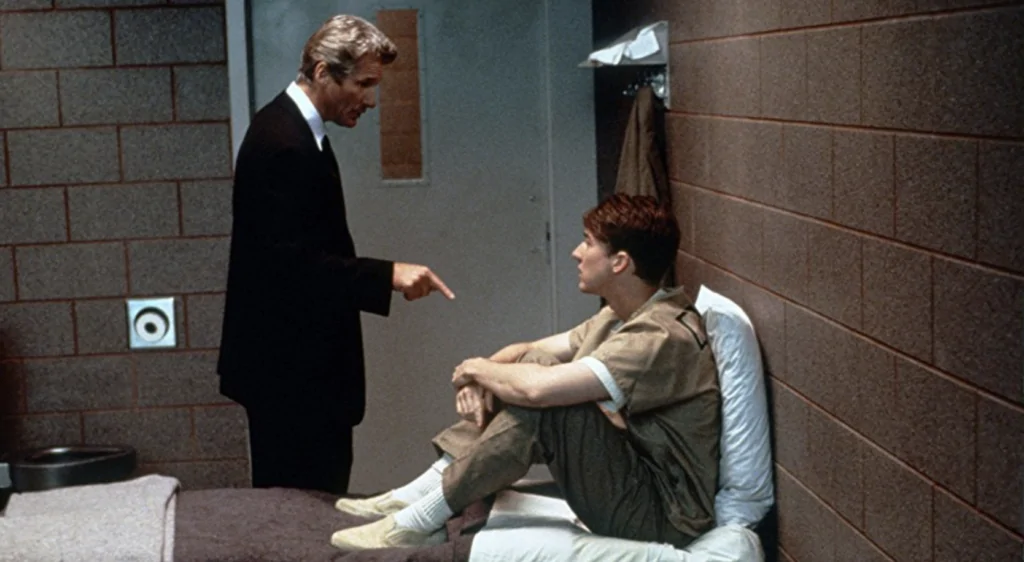
PRIMAL FEAR (Credit: Paramount Pictures) Primal Fear was released 30 years ago and featured one of the best taglines ever written for a movie: “Sooner or later, a man who wears two faces starts to forget which one is real.”
The premise is a devious one, Richard Gere plays an arrogant Chicago lawyer named Martin Veil tasked with helping a young murder suspect named Aaron Stampler (Edward Norton in an Oscar-nominated performance) who suffers from amnesia.
As the film goes on, we cast doubt on ourselves about Aaron’s true nature. At every turn, the taught and clever writing forces us to make assumptions we later come to regret. It puts us in Veil’s shoes, making us follow his own ambivalence towards his subject.
It’s the kind of film that deceives you with conventionality, playing its crime-procedural notes with a straight face and then taking its mask off at the very end, making you doubt everything you’ve just seen.
Diabolique (Henri-Georges Clouzot, 1955)

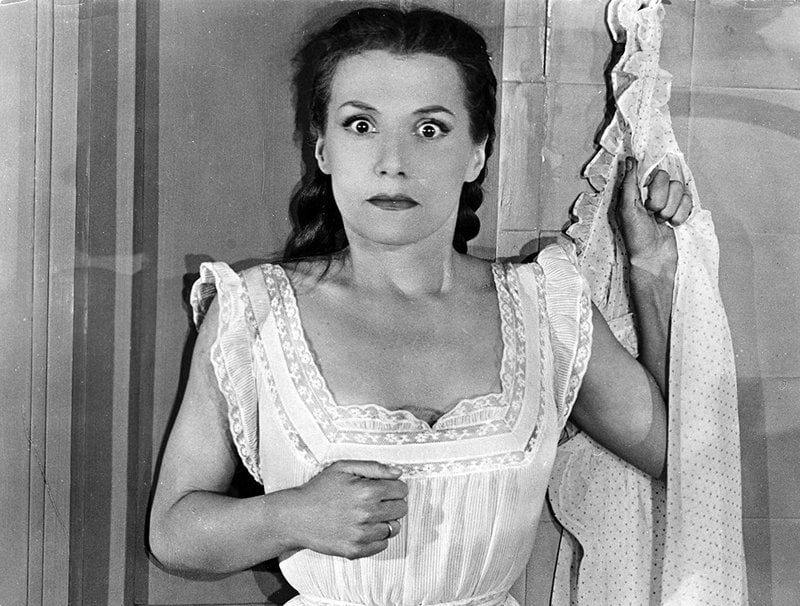
DIABOLIQUE (Credit: Criterion) The penultimate scene of Henri-Georges Clouzot’s Diabolique, which features Christina’s (Véra Clouzot – the director’s wife) incredibly tense and intensely atmospheric trek around the castle and down a dark hallway, is one of the most influential scenes in horror-thriller cinema. Every shot and movement has been replicated or paid homage to.
The final reveal of the ghost of Michel (Paul Meurisse) in the bathtub with the fake corneas is one of the earliest “shocking twists” to delight audiences. The filmmakers definitely knew the kind of twisty magic they had because at the end of the movie, a disclaimer pops up telling the audience in French, “Don’t destroy the interest your friends might take in this film. Don’t tell them what you’ve seen!”
The Wicker Man (Robin Hardy, 1973)

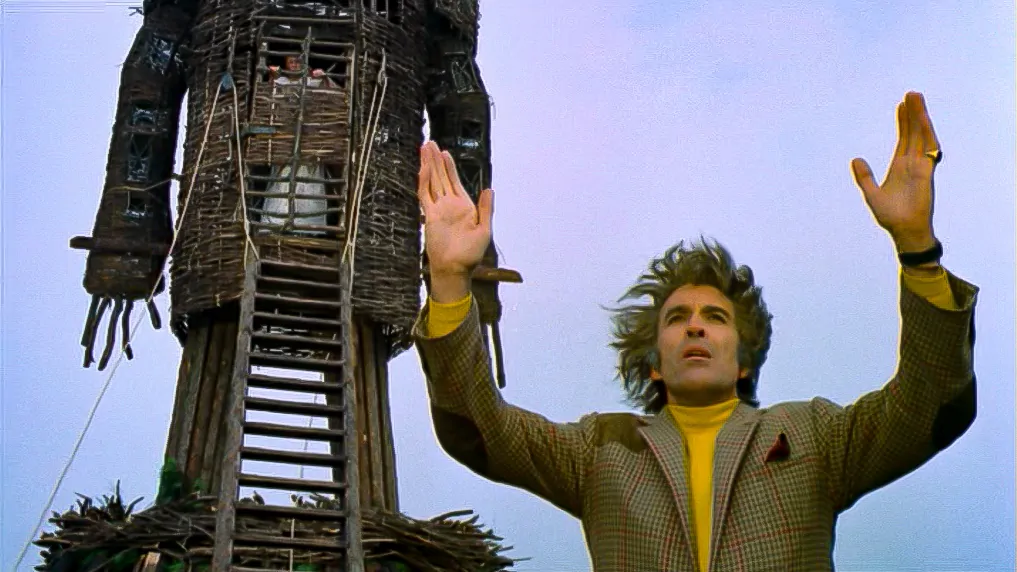
THE WICKER MAN (Credit: British Lion Films) Fish out of water stories offer fertile ground for creating creepy, unnerving sensations. Ted Kotcheff’s Wake in Fright, Nicholas Roeg’s Don’t Look Now, and Ari Aster’s Midsommar all fit the bill. The latter feels like a direct descendant of Robin Hardy’s The Wicker Man.
A tale of sinister folkloric fright, this film stars Edward Woodward as a devoutly Christian police officer, Sergeant Howie, investigating a murder. He witnesses an island of happy-go-lucky folk who, despite their merriment, give off slightly off-putting glances. He eventually meets the island’s enigmatic figure, Lord Summerisle (Christopher Lee in the most iconic role of his career), and the film begins to take a nefarious turn.
The Wicker Man’s creepiest and most fascinating aspect is how its horror unfolds amid smiling faces, flowers, trees, daylight, and singing. Things that are usually associated with joy and peace are turned on their head into folkloric, cultist weaponry that descends upon Howie. The secrets of the island and the truth about the murder are revealed, and they drive him to near insanity and certain danger.
Sleepaway Camp (Robert Hiltzik, 1983)

SLEEPAWAY CAMP (Credit: United Films) The ending of Sleepaway Camp may be considered problematic when viewed through a contemporary lens (though it’s since been reclaimed). This is likely the singular movie on this list where your take on the twist ending will almost completely paint how you feel about the movie as a whole.
The premise is a classic and cliché teen horror sex recipe – a girl named Angela goes to a sleepaway camp and is bullied because of her nerdy and introverted nature. At the camp, hormones are flying, and soon the murders are too.
Structured in a rather slipshod manner with film techniques that mimic other much better horror films and feel wooden at times, what makes Sleepaway Camp controversial is the ending shot of Angela, naked and covered in blood, revealed to be born as a male, mouth gaping wide open in a way that suggests both shock, awe, and confusion.
For more, read In Defense Of Sleepaway Camp
The Vanishing (George Sluizer, 1988)

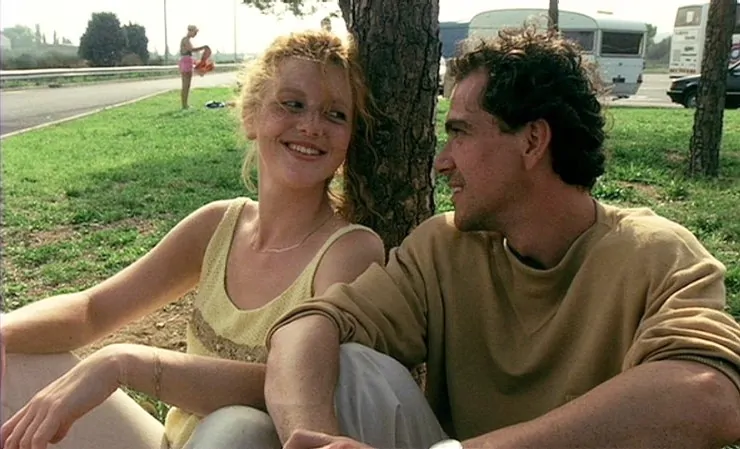
THE VANISHING (Credit: Janus Films) Perhaps the most upsetting of all the grand twist endings, George Sluizer’s murky and rotten to the core psychological thriller ends on such a dour and horrifying note, you may not think about anything else for at least a week. I know I didn’t.
This Dutch film took the world by storm, featuring a man named Rex (Gene Bervoets) who embarks on an obsessive search for his missing wife, Saskia (Johanna ter Steege). He ends up meeting an enigmatic figure named Raymond Lemorne (Bernard-Pierre Donnadieu), who says that he can reveal to Rex exactly what happened to his wife if he trusts him and follows his instructions.
The ultimate dilemma comes haunting and crashing into Rex’s psyche – risk the truth to be more horrifying than he can bear, or live the rest of his life in the dark about the fate of his wife. This film has the kind of ending that makes you question everything about humanity. One can’t help but appreciate and respect Sluizer’s unforgiving classic The Vanishing.
Cure (Kiyoshi Kurosawa, 1997)

Kiyoshi Kurosawa's CURE (1997) Once in a blue moon, a film’s ending can’t even really be called a twist, but something much more elusive and staggering. Twists are often playful or revealing. Cure’s ending just sends a blood-curdling sensation throughout your body. The premise of the film itself sends chills down one’s spine.
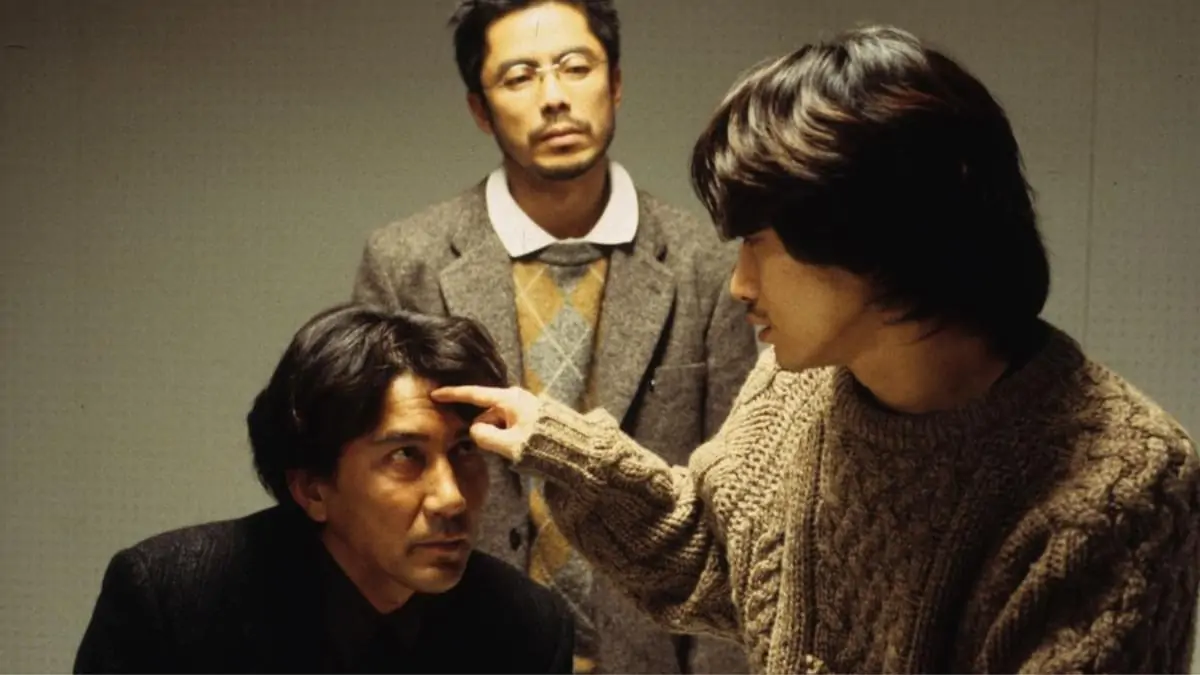
Tokyo Detective Kenichi Takabe is on the case to find the connection between a series of murders that feel disparate because they were all committed by different people who all had no prior record of violent behavior. He finds a young man who walks and talks almost like he’s in a trance. Every murderer has met this man at least once.
Kiyoshi Kurosawa is a master of weaponizing silence and slow pivots of the camera. Here, he keeps the last shot of the film still and lets you catch only a brief glimpse of the waitress holding a kitchen knife that glistens ever-so-slightly. It’s a blink-and-you-miss-it moment in a film that deliberately obfuscates the nature of its evil.
Perfect Blue (Satoshi Kon, 1997)

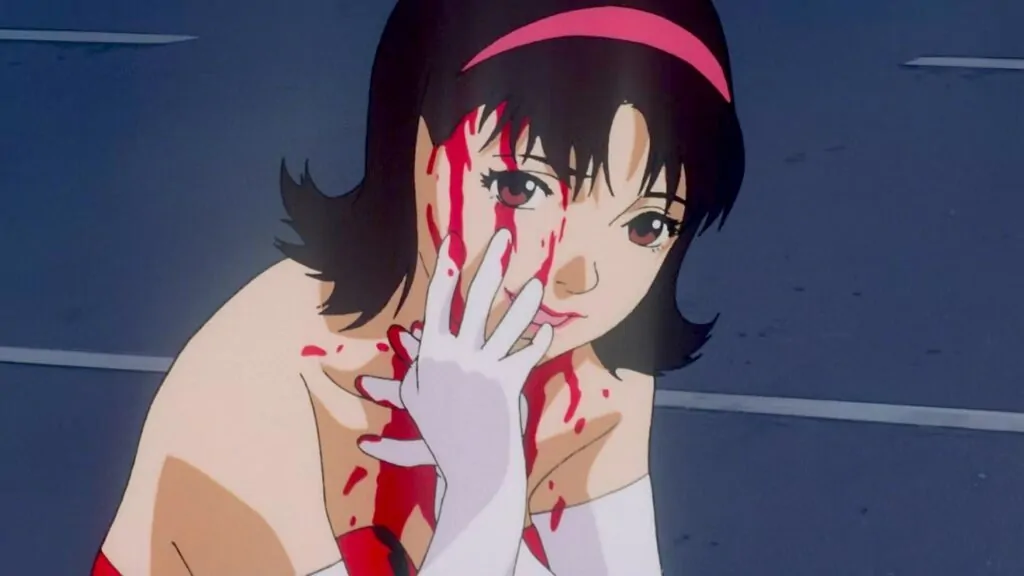
PERFECT BLUE (Credit: GKIDS) To say that the “twist” of Perfect Blue is beside the point is an understatement. This is one movie on the list where the twist, despite being unpredictable, brilliantly staged, genuinely surprising, terrifying, and also influential in the way it plays with multiple identities and personalities, is not what’s generally discussed in Satoshi Kon’s animated masterpiece.
Instead, it’s the dazzling, bleak imagery, the vibrant use of shades of blue, red, and purple that meld on the screen. The way that the movement of the characters feels balletic in their running, jumping, and… uh… stabbing. But the twist is key, because it reveals the nature of people’s relationship to celebrity and media.
Throughout the movie, Satoshi Kon layers multiple dimensions of the main character's personality, superstar singer and actress Mima Kirigoe. The use of mirrors, reflections in water, juxtaposed perspectives, and dream sequences constantly leaves us in doubt about Mima’s elusive stalker and the real danger to her life.
Is Mima really two people? Is she imagining herself in her dreams? Kon’s film is influential in the way it toys with the line between reality and dream, past, and present, and its twist is brilliantly buried in these layers.
The Sixth Sense (M. Night Shyamalan, 1999)

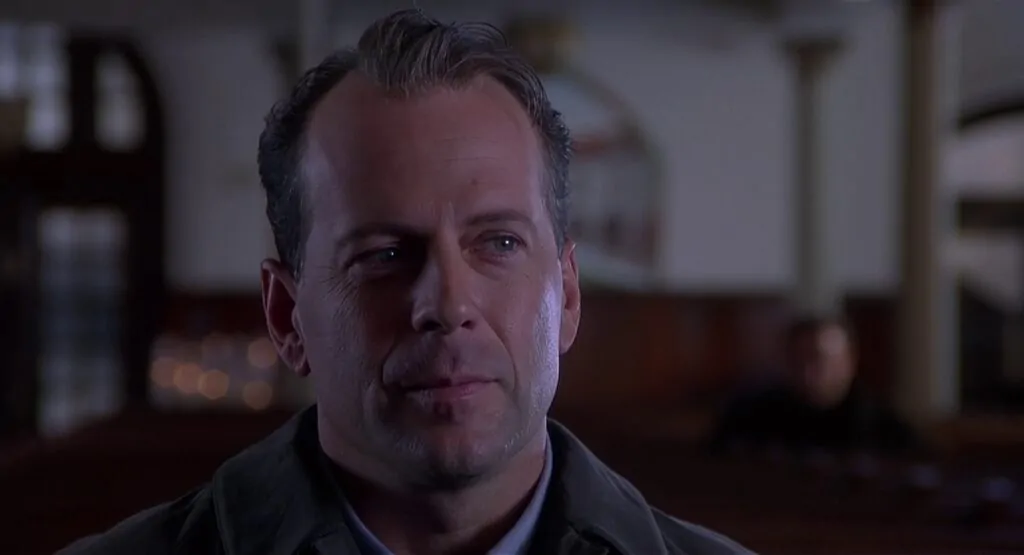
Bruce Willis in M. Night Shyamalan's THE SIXTH SENSE (Credit: Spyglass Entertainment) As always, dear reader, while I aim to avoid actively ranking the lists that I do, I will admit when an entry is indeed my favorite of the bunch. When I first saw The Sixth Sense as a kid, I was absolutely blown away by the twist, and I told everyone I knew they had to see this movie. I’d spend countless hours enticing friends to watch it and observe their facial expressions intently in the final minutes. Dr. Malcolm Crowe (Bruce Willis) sees the cold breath escape his wife’s lips as she’s napping on the couch. He takes off his coat to reveal a large bleeding wound in the back of his dress shirt, and I would get a thrill watching my friends’ jaws drop to the floor.
Shyamalan concocted such a taut, perfectly structured script with direction that expertly played coy with character dynamics, revealed information piecemeal about his characters without ever allowing the audience to make the full connection.
When I got older, however, I also appreciated how great a drama The Sixth Sense is. I started to appreciate the tragedy and hurt of Cole Sear’s (Haley Joel Osment) loneliness, his mother Lynn’s (Toni Colette) restlessness and feelings of abandonment, and Malcolm Crowe’s desperate attempts at redeeming his own failure as a psychiatrist. This is a movie with much more going on in its DNA than a mere thrilling reveal. The twist at the end is just a cherry on top.
Audition (Takashi Miike, 1999)

AUDITION (Credit: Arrow Video) More diabolical than even the most clever and shocking ending to a movie is when a film turns into something completely different and thoroughly uncompromising right in the middle. It feels like you’re trapped for something you are absolutely not prepared for, and that is exactly the sensation Takashi Miike evokes in his horror masterpiece Audition.
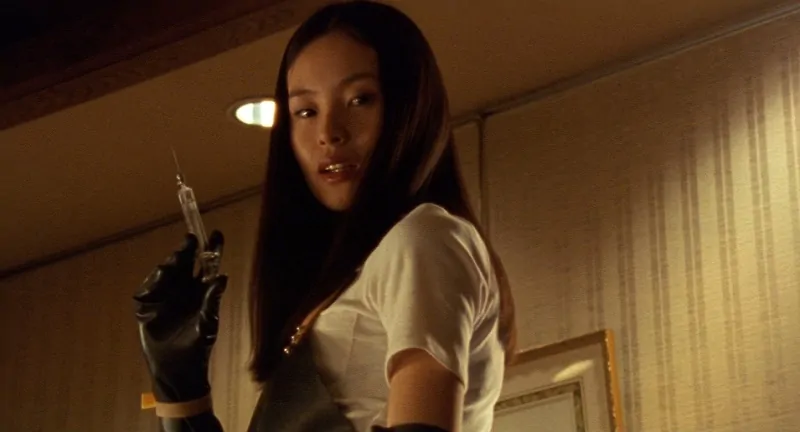
The film starts innocently enough, with rich widower Shigeharu Aoyama (Ryo Ishibashi) looking for a new life partner. He hosts an audition for the ideal woman for him, and his eyes and attention are caught by the sensible and elegant Asami Yamazaki (Ehi Shiina). Our introduction to this character makes her seem a little too perfect.
Miike preys on this, and he soon pulls the rug from under all of us. In perhaps the film’s most startling scene, Asami sits solemnly by a lone telephone in the middle of the floor in a nearly empty apartment. As it rings, we anticipate her picking it up. A black bag at the very back of the apartment starts moving, and suddenly the movie morphs and twists into something utterly demonic.
The tonal shift is unforgettable, and for the rest of the movie, it leaves the audience on pins and needles. Lots of squirm-inducing needles.
The Others (Alejandro Amenábar, 2001)

THE OTHERS (Credit: Dimension Films) Here’s a movie I find very much in line with Shyamalan’s style of suspense and horror in The Sixth Sense. Alejandro Amenabar’s The Others is a ghost story, much like The Sixth Sense, in that it links the living and the dead not only to Catholic iconography but also to an immersive story of loss, redemption, and longing for reconciliation with the past.
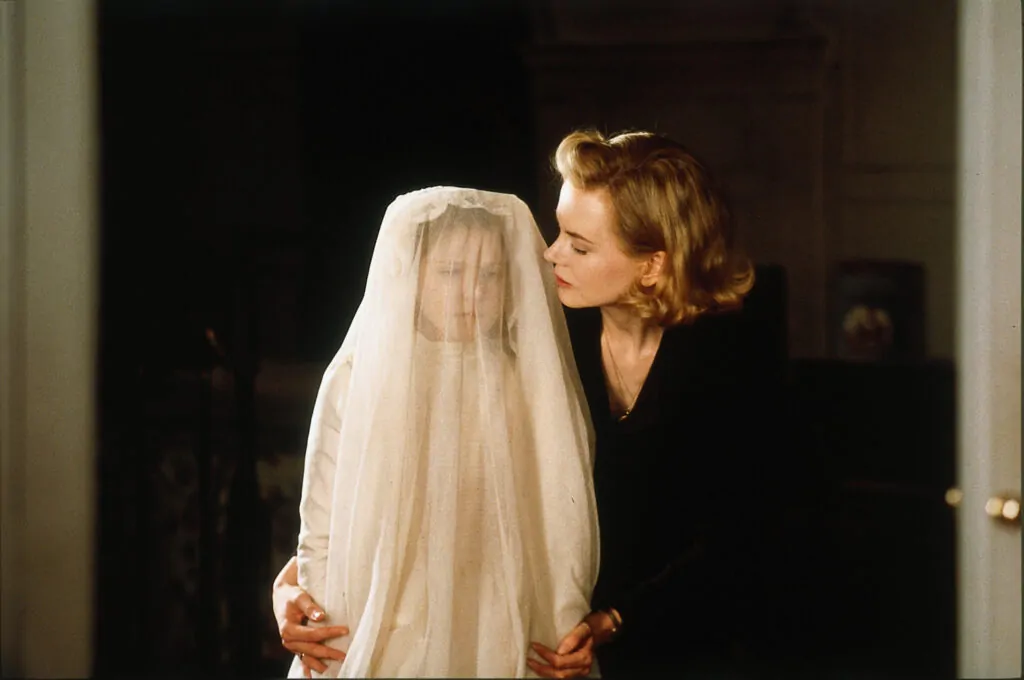
This is Nicole Kidman’s most underrated performance, in my opinion. Kidman stars as Grace Stewart, a widow taking care of two children, Anne and Nicholas, who have severe photosensitivity (another Shyamalan-esque trait – disability as a narrative device).
The kids start to gradually hear noises across the house, things moving or where they aren’t supposed to be, and photographs of people they don’t know. The line between the living and the dead begins to blur, and we begin to doubt what the noises and apparitions really are. The idea of ghosts haunting people is a common horror movie trope, but The Others asks… can people haunt ghosts?