

Maika Monroe has been the very model of a modern horror heroine over the last decade, and she enthusiastically switches to the other side in Victorian Psycho. The collective experience of having watched her confront various forms of evil in the likes of It Follows, Watcher, and Longlegs makes it quite a treat to see her slip into a psychopathically and gleefully dangerous skin here.
That delight takes the curse off the fact that the movie (which played in Cannes’ Un Certain Regard section and Fantastic Fest) lays her character’s psychological cards on the table early on. Monroe’s Winifred Notty may introduce herself in voiceover as “the sanest person I ever met,” but her arch delivery makes it clear we’re not to take that declaration at all seriously. And knowing she’s unbalanced from the start makes it fun to anticipate what will transpire after Winifred goes to work as a governess for the Pounds family in their Gothic mansion, Ensor House, circa 1858. She puts on the right face as she meets Mr. and Mrs. Pounds (Jason Isaacs and Ruth Wilson) and is put in charge of educating their children: teenage Drissila (Wednesday’s Evie Templeton) and younger Andrew (Jacobi Jupe, soon to be seen in Mike Flanagan’s Exorcist: Martyrs).
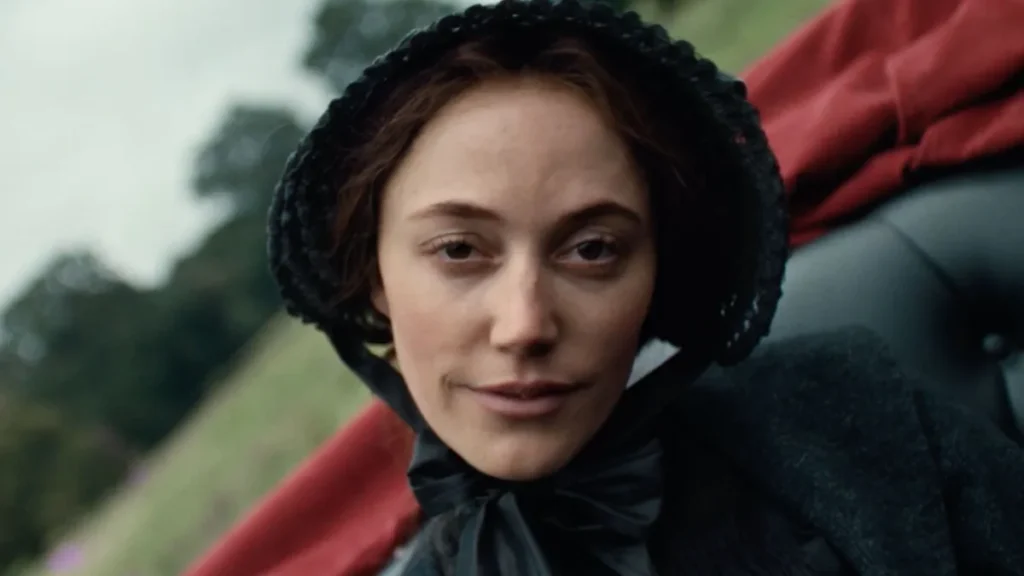
Although there’s a reference to some unpleasantness involving the babies at Winifred’s previous place of employment, the Poundses harbor no suspicions about their new hire. But then, they don’t witness Winifred’s first lesson to their kids about distinguishing right from wrong becoming a weirdly insinuating discussion about “What is evil?” Or when she takes Drissila and Andrew into the woods, and… well, suffice it to say that one of the onscreen chapter headings, which put a cheekily morbid spin on this literary-cinema standard, reads, “Concerning Deer and Children, Alive and Dead.” This is one of many ways in which Victorian Psycho tweaks the period-movie form, with director Zachary Wigon and scripter Virginia Feito successfully incorporating a contemporary-feeling black-comic tone without sacrificing the historical veneer.
This includes cinematographer Nico Aguilar (who handled a similar horrific/humorous vibe in The Monkey) balancing subdued, candle-lit visuals with aggressive, eccentric camera moves. The picture swings back and forth with a clock’s pendulum, follows a key into a keyhole, etc., as if following the whims of an unbalanced, curious mind. It echoes the instability of Winifred’s psyche, conveyed by Monroe as if to the manner born.
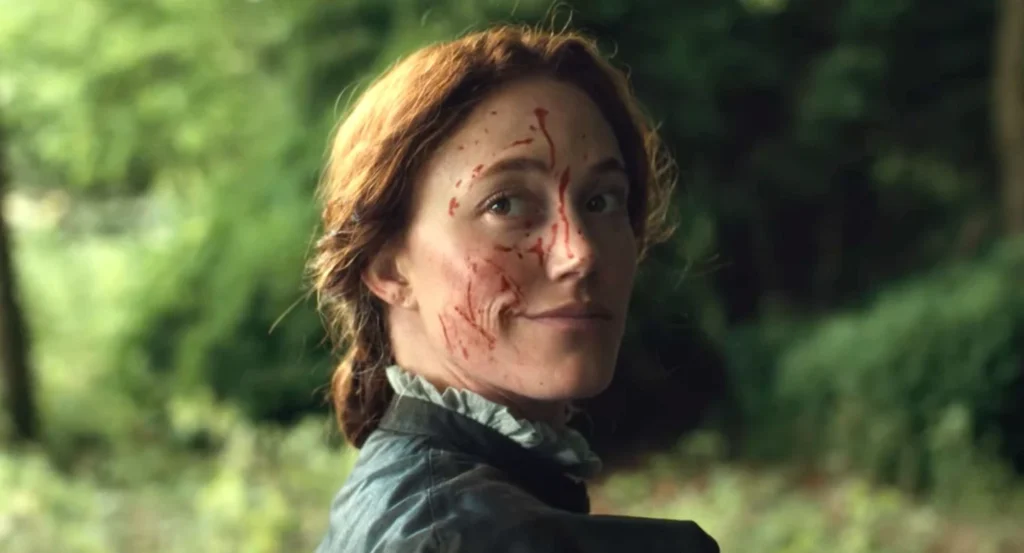
This is the biggest performance she’s given to date, rife with amusingly bizarre behaviors, and yet it’s not one of unbridled mania; there’s a control and calculation behind it as well, as Winifred tries to keep her demons at bay. There’s a sense that her narration, with lines like “Most fear their darkness, but I feel tenderness towards mine,” isn’t just exposition of her mental state but Winifred’s way of talking through dangerous emotions rather than expressing them in violent action.
There will, of course, be violence, and in the world created by Wigon and Feito, it’s more than just the byproduct of Winifred’s madness. This Victorian era is one in which women are stifled and must know their place and behave accordingly. Mrs. Pounds is unfailingly prim and proper, while her husband is more relaxed and casual. Andrew’s misbehavior has no serious consequences, while Drissila’s punishment for an infraction is violent humiliation in front of assembled houseguests. This culture is just waiting for someone to lash out against it, and Winifred is just the woman for the job. Members of the house’s staff begin to go missing, and Winifred tells the house’s naive and trusting nurse, Miss Lamb (the always appealing Thomasin McKenzie), who sees Winifred as a much-needed friend and confidant, that a “ghoul” roaming the property by night is responsible. But we know better.
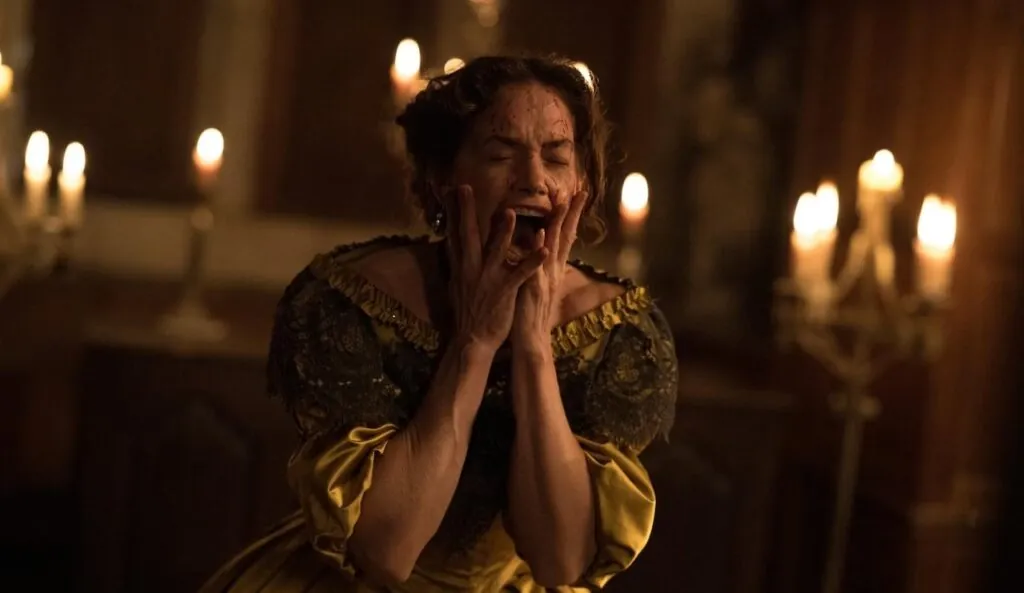
Victorian Psycho has a lot of fun laying bloody waste to the standards of propriety familiar from various media about 19th-century domestic life, and that enjoyment is infectious. It also stems from the energetic performances, the inclusion of odd story elements that nonetheless feel appropriate in context (an unearthed mummy is unveiled at one point), and impish minutiae, like a baby bestowed with the name William Ebenezer Poncey-Fancey. If the narrative doesn’t hold too many surprises—including a climactic revelation that isn’t overly startling under these generally over-the-top circumstances—the devil is in the movie’s details, and it showcases one of the genre’s MVPs taking a walk on the wilder side.
