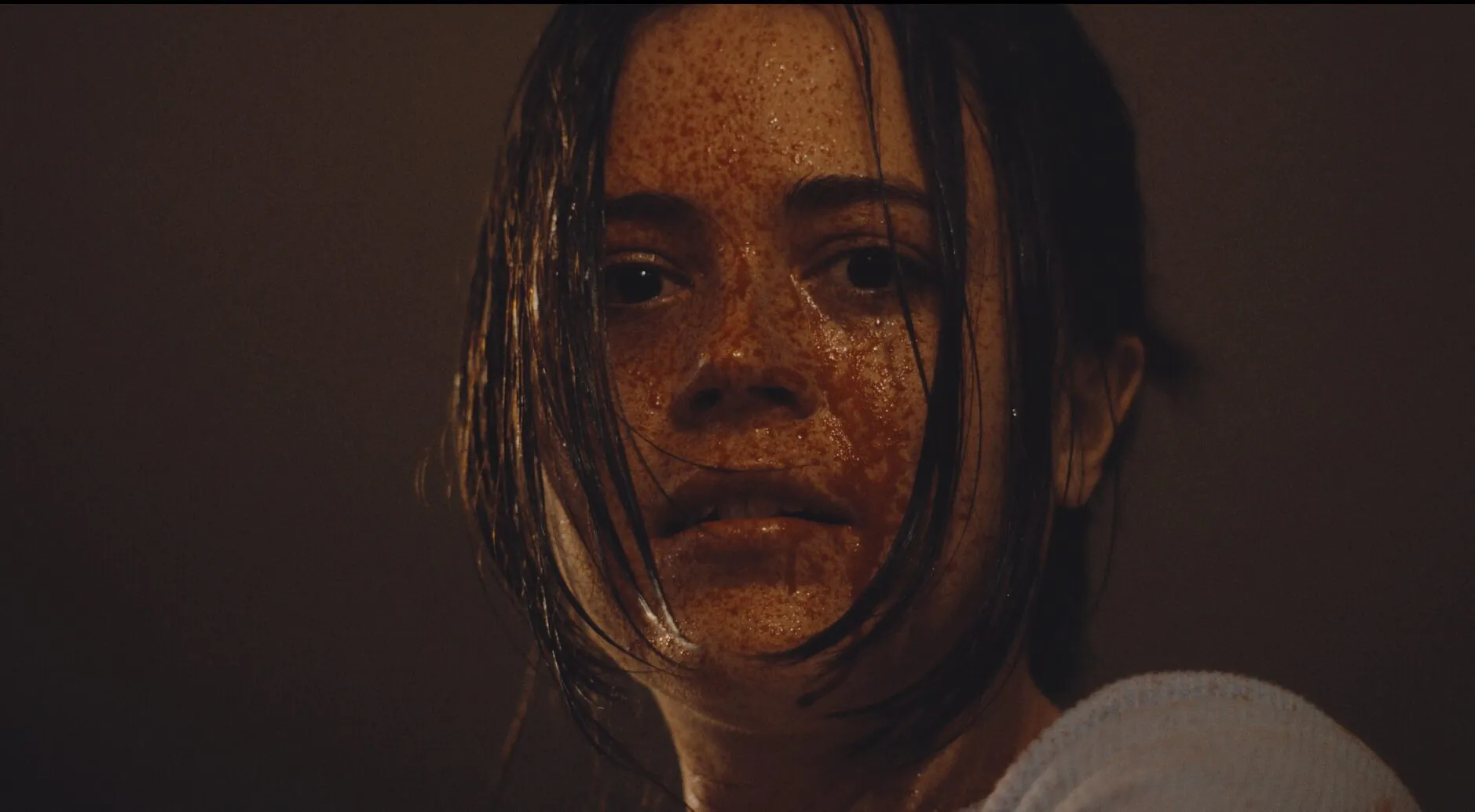
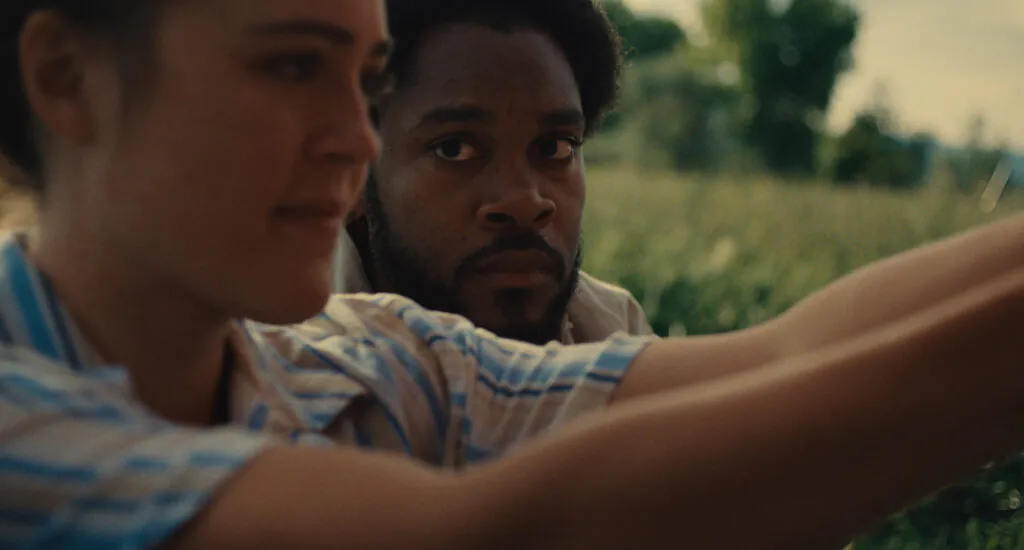
There’s a version of The Threshing that could have looked more like The Strangers, says writer/director Sean Mannion of his feature directorial debut. “But I’m never going to make that movie; that’s just not me.” Visually pulling more from the works of Terrence Malick and Agnès Varda than the usual horror staples, The Threshing centers on a young idealistic couple named Franklin (Jean-Louis Droulers) and Gwyn (Simone Grossman).
Drawn to the back-to-the-land philosophy and promises of a more sustainable way of living, the two leave their former lives behind to join a regenerative farming community in the Colorado mountains. Unfortunately, this peaceful collective operates more like a cult, headed by a charismatic but domineering leader named Robert (Jared Kemp), whose community rituals escalate into extreme acts of loyalty.
Mannion’s tells me he admires the control of unrelenting tone found in movies like Raw and Titane from Julia Ducourna, and having seen The Threshing twice now, I’d say his work certainly shares a kinship in the approach to crafting scares. “I wouldn't come to The Threshing looking for kill after kill jump scares, but one of our producers watched one of our later cuts, and she was just like, ‘I felt really bad watching this,’ and I was like, ‘Okay, we did our job.’”
The Threshing was conceived in 2020 after Mannion and his wife moved from Chicago to a regenerative farm just outside of Boulder, Colorado, so she could fulfill a dream of working in this type of agricultural environment. For the uninitiated, regenerative farming is a holistic approach that focuses on restoring degraded soil, enhancing biodiversity, and working in harmony with natural ecosystems. For example, instead of utilizing heavy machinery, farms incorporate adaptive rotational grazing so animals naturally trample organic matter, cycle nutrients, and stimulate pasture growth.

“That environment to me was so interesting and, for lack of a better word, fertile for different kinds of ideas, ideologies about the most basic ways of living,” Mannion tells me. For many of these farmers, living in harmony with nature isn't abstract. “It's very powerful, and I admire these people so much, and they're still very much my close friends, but my just weirdo brain just sort of went towards, ‘Okay, this is a very intense environment. What if it got into the wrong hands and somebody who had really, really extreme ideas about how to live the correct way was in this environment and how could it go wrong?’”
In the case of The Threshing, it goes very, very wrong. It’s a very interesting approach, because so many folk horror movies are based in religion, but this is a secular ideology taken to the extreme. But as Mannion tells me, there were initial instincts to lean toward a non-specific religion, including scenes of Robert praying. But during post-production with editor Troy Lewis, Mannion realized he didn't need to assign a spiritual component to the horror. “I do think for these people and these characters, it is spiritual to them, but the essence of it is more interesting to me,” he explains. “It doesn't need the spiritual text because it's all there — It's like the dirt, the food, the sun — once I assigned the words to it, it felt like it was cheapening it a little bit.”
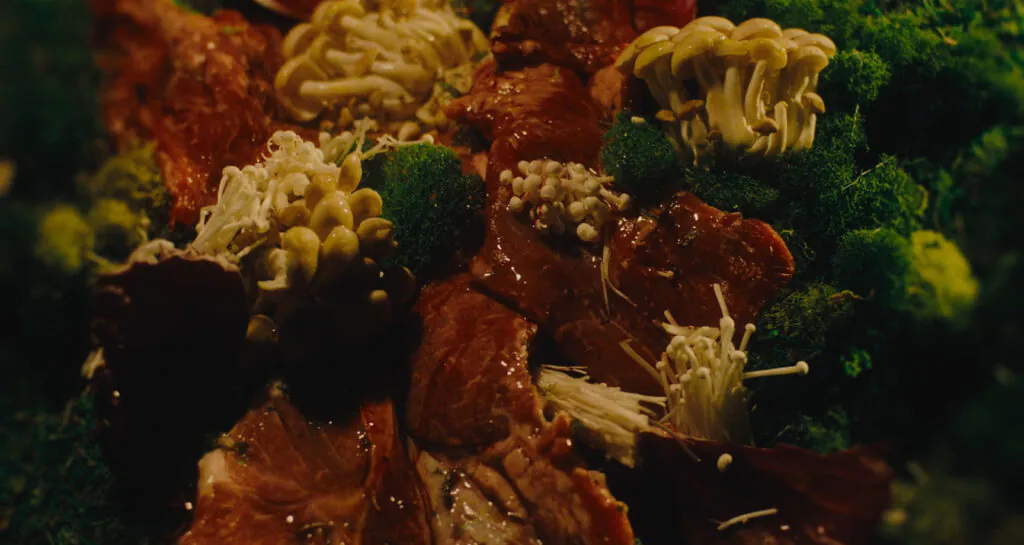
Speaking of “cheapening,” The Threshing was made on a ridiculously low budget. The film was shot on a working farm, and Mannion utilized the raw beauty of Colorado’s lush nature to his advantage. “I wanted it to look beautiful, and I wanted it to look like a nice place because it was for these characters, the fulfillment of a dream to go to this beautiful place,” Mannion explains. “They were leaving the gray city and moving off to connect with nature. I wanted the audience to feel that even when things got bad, they were still in this beautiful environment.”
This motivation draws on many films Mannion loves, which he describes as “bad things happening in beautiful places.” He immediately named Terrence Malick’s Days of Heaven, with its sweeping, backlit shots at dusk of people in a farm environment as their relationship falls apart. He also channeled Agnès Varda’s Le Bonheur, emphasizing how Varda used greens and yellows to showcase the French countryside. “The look of it does change a little bit as the movie goes on and it gets a little bit less saturated, but I wanted it to still be beautiful but intense,” he explains.
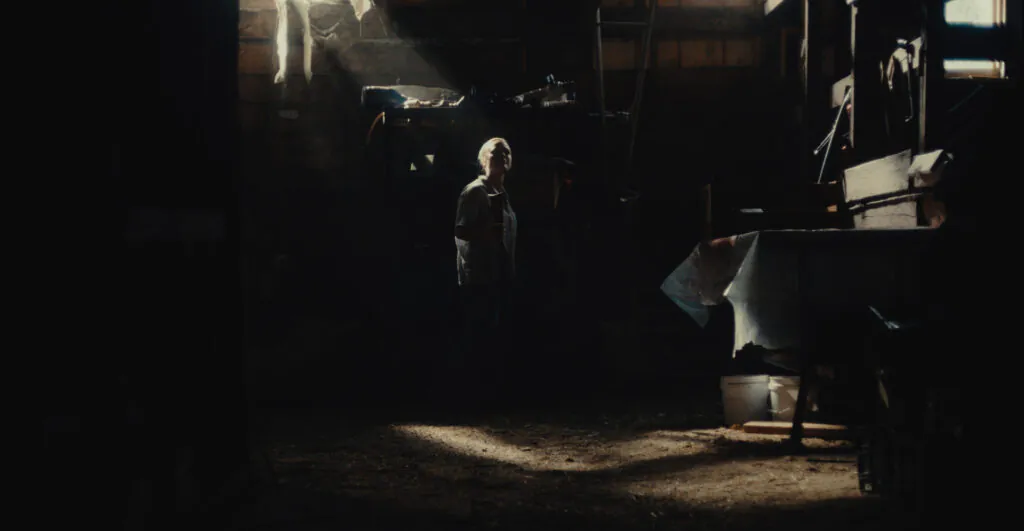
“Everyone has a different relationship with the natural world and your ability or willingness to embrace it or what it does to you,” Mannion says. And for as much as The Threshing embraces nature, shooting a movie in the unpredictable elements is a massive challenge. As he explains:
When you're in any remote place, there isn't infrastructure for the things you need. We ran a generator constantly and pushed a generator on wheels with four people to random locations around the farm, but I will say it's one of the greatest assets the movie has […] our biggest asset was just being able to point the camera at something beautiful. And it's such an asset that I want to make my next movie here too, because I think it's unique, and now I know how to do it.”
Mannion shot during the rainiest June on record in Colorado, and because the film was operational during the day, most of it was shot in the late afternoon and into overnights. It gives the setting a breathing, lived-in feel and only adds to the film's unsettling atmosphere. Things grow there, but they also die there, and the feeling is palpable.
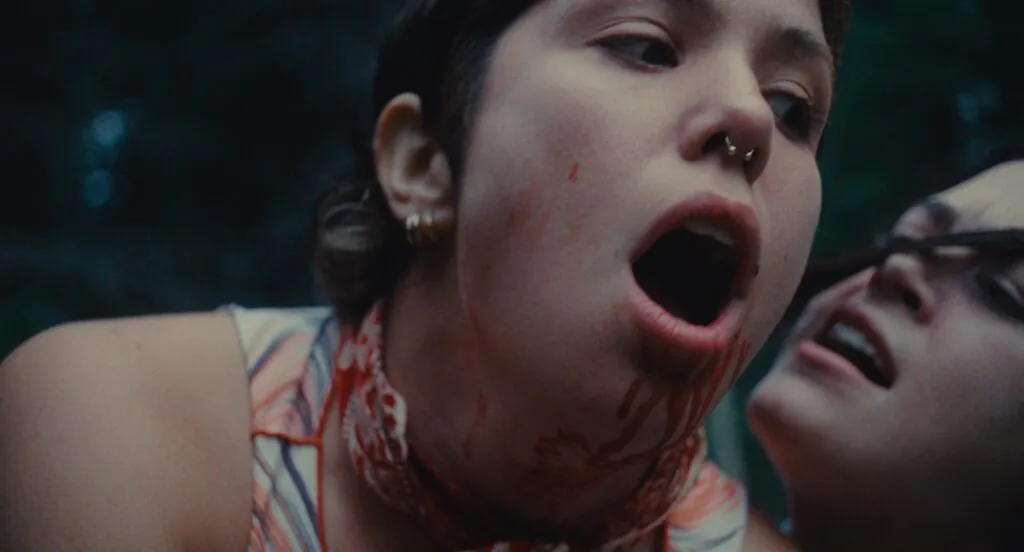
Seeing The Threshing at The Telluride Horror Show in Colorado was the perfect environment because I was constantly surrounded by beauty so impossible to process that it often felt like I was stepping into a postcard. At the same time, the magnificence shrouded the inherent danger of being in the mountains, or a town that needs special garbage can covers to keep out bears. The most unsettling horrors are often cloaked in beauty.
The Threshing was recently acquired by Yellow Veil Pictures, with plans for a North American release coming soon. Keep your eyes on FANGORIA for updates.