Fresh from New York Comic-Con, the trailer for The Exorcist: Martyrs has been unveiled, and horror fans surely have a lot of questions. Fortunately, FANGORIA got to ask director Mike Flanagan a few of our own questions ahead of the trailer's release, and you can read our full interview below, after you watch the trailer, of course. But in case you need a refresher, here's the film's official plot synopsis:
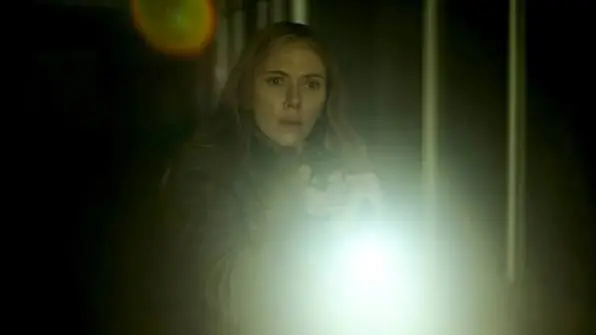
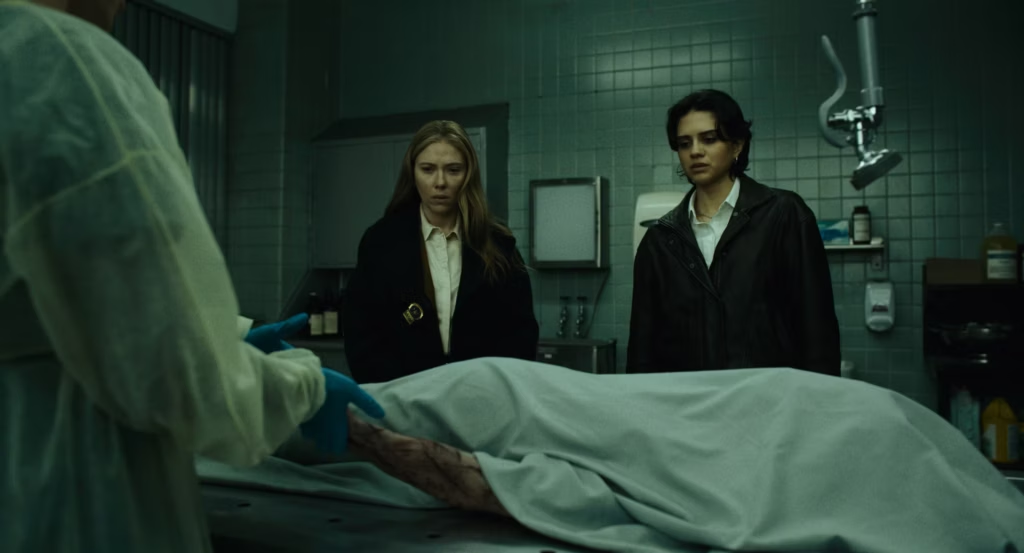
Thirteen years ago, New York City detective Julie Miller (Scarlett Johansson) ended the terror reign of satanic serial killer Father Sunday. The case made her a hero, and she has thrown herself into her work ever since. Now a new killer scrawls her name in an altar boy’s blood on the walls of a church crypt, dragging her back into the darkness she believed she had buried with him. Aided by former prison chaplain Father William (Academy Award ® nominee Chiwetel Ejiofor), who heard Father Sunday’s final confession, and sharp rookie detective Gina Restrepo (Sasha Calle), Detective Miller will discover a filament linking a lineage of serial killers, from H.H. Holmes to the Zodiac, that could corrupt everything, and everyone, she loves with an evil that goes well beyond the mortal.

“I think we were always interested in making a movie about evil more than we were interested in making a movie about religion,” he tells me. “Part of how the world has moved on from so much of this, I think, is kind of woven into the approach here because the religious iconography — the most horrific elements of it — are very intentionally dragged very much into the foreground of the story in a way that is shocking and is impossible to ignore.”
As anyone familiar with Flanagan’s work can attest, he is famously not a religious person. But that doesn’t mean he isn’t interested in what many people use religion to try and stomp out. “I am fascinated by evil, and by the problem of evil, and by the evil humans do,” he says. “I think the thing about religion is that while religious faith has certainly changed as the world changes, our need to try to understand evil outside of humanity with stories of demons, of possession, of spirits, things like that, I don't think that's diminished at all. I think our fascination with that, separated from belief, I think is always going to be really interesting to play with.”
The Exorcist: Martyrs is very much inspired by 1990s crime-thriller horror hybrids like The Silence of the Lambs and Seven, but just as society’s relationship with religion has changed dramatically since William Friedkin unleashed The Exorcist over 50 years ago, so too has culture’s relationship with true crime. Many people have traded the morality stories of religious texts for their favorite true-crime podcast, treating new episodes each week like a church service. Flanagan tells me this cultural shift certainly affected his story.
“There's a kind of inherent need for escalation in that; when our entertainment intermingles with real-life horror, it makes for something very interesting to talk about,” he tells me. “When you talk about the problem of evil, and what a crime scene in a fictional serial killer thriller is meant to do — the spectacle it's meant to create … how does that change what that killer's mission is in a world where that spectacle exists on Netflix?”
The key is to merge this human fascination with the spectacle of killers, procedurals, and investigations with one of our oldest interests: spiritual evil. In doing so, Flanagan hopes that combining the subgenres allows for a propulsive story and the chance to take this franchise in a direction it hasn’t taken in quite some time.
At the same time, Flanagan has said in previous interviews that he is looking to make the scariest film of his career with The Exorcist: Martyrs. I mentioned that my fascination with horror movies stems from the fact that fear is a universal emotion but what scares us is not, and asked him to explain to me what makes this film scarier than the projects he’s done in the past.
“You make an amazing point in that the things that I find scary about the things I make and the things other people say that they find scary about them are frequently out of sync with each other, which is really interesting to me to see what people find scary,” he explains. “What I found scary about this was that we were existing and telling a story in a world that seems to have absolutely no safety in it at all, that there was no safe place.”
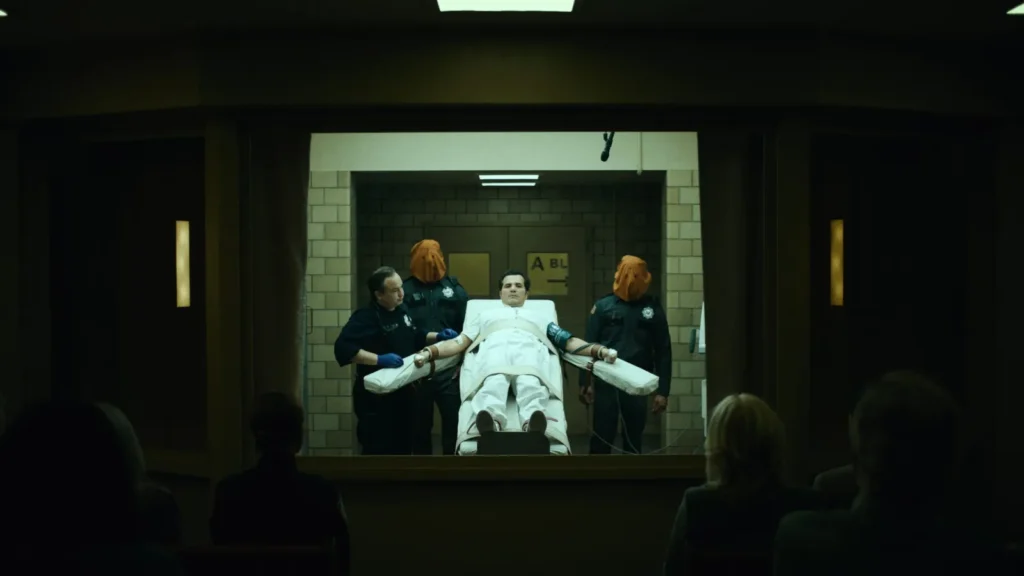
The evil at the core of The Exorcist: Martyrs is homicidal. “We're talking about the evil of serial killers whose sole purpose is simply to sow despair and to demonstrate how unsafe the world is for even our most vulnerable, for children, for the kind of characters I typically would think of as safe in a lot of the stories that I tell, that they wouldn't be in material, mortal danger,” he explains. “And this movie leaves that way behind. It's vicious.”
Diving into this world of viciousness feels like the opposite of his recent series adaptation of Stephen King’s Carrie, where he injects optimism and hope into our bleak reality. “It's interesting, I spent so long on Carrie where we lived in a world where I was like, ‘The thing we have to cling to in this story and in making this show is kindness,’ but with The Exorcist, it was like the thing that we are clinging to, and surrounded by, and diving into is cruelty.”
Understandably, Flanagan said going from one project to the next felt like whiplash in many ways, and that’s what scared him. “I love hope, and I love feeling like there's light in the dark, and this was a story where there was so often just dark, and hope is dangled only to be ripped away,” he says. “That scares me.” But beyond emotional fear, he promises that The Exorcist: Martyrs is viscerally scary. “It's a relentlessly dark movie, and it's very frightening, and kind of existentially frightening. I don't get to do that very often at all, so it was a really interesting muscle to flex.”
No stranger to planting his flag on horror’s sacred grounds, Flanagan is also aware of the undertaking of making a sequel to The Exorcist, but he rightfully acknowledges that this franchise is enormously versatile and remembered for the audacious swings it took as the series went on.
“There are what, seven official Exorcist movies in The Exorcist franchise? There are 300 unofficial Exorcist movies and half of them star Russell Crowe,” he jokes. “I mean, there's a new one every 10 minutes.” The constant conveyor belt of exorcism movies has only inspired him to raise the bar. “This is a franchise that needs to be taking chances because you can't go back again,” he explains. “Back again has been done so many more times than even the franchise can admit because it's been done unofficially to death.”
If anything, he wants to pull inspiration from The Exorcist sequels that don’t always get the time to shine. “Exorcist III still contains what I think is maybe the greatest jump scare in the history of cinema,” he rightfully acknowledges. “It rocks. Unironically.”
“I'm more interested in looking at that movie than I am in going back to Friedkin's masterpiece. Let's all agree that's untouchable. It's been made 400 times now. Let's step beyond that. We don't talk about Exorcist III nearly enough, so let's look at that for a minute. Then in the meantime, let's take a big swing of our own […] The more you try to be like, ‘Well, let me just approach the original from a different road,’ it just doesn't seem to work in this franchise the way it does in others. You got to take a big swing.”
The Exorcist: Martyrs is unlike anything Flanagan has ever made, and he says it’s “certainly unlike any other Exorcist movie that’s ever existed.”
“The people we're going to disappoint are the people who want the Friedkin movie again,” he says. “I don't know what to say to that other than it's still there. We're not destroying all the copies of Friedkin's movie. You can still get it. It hasn't changed a frame, but we're off doing something pretty crazy, and I hope people like it.”