
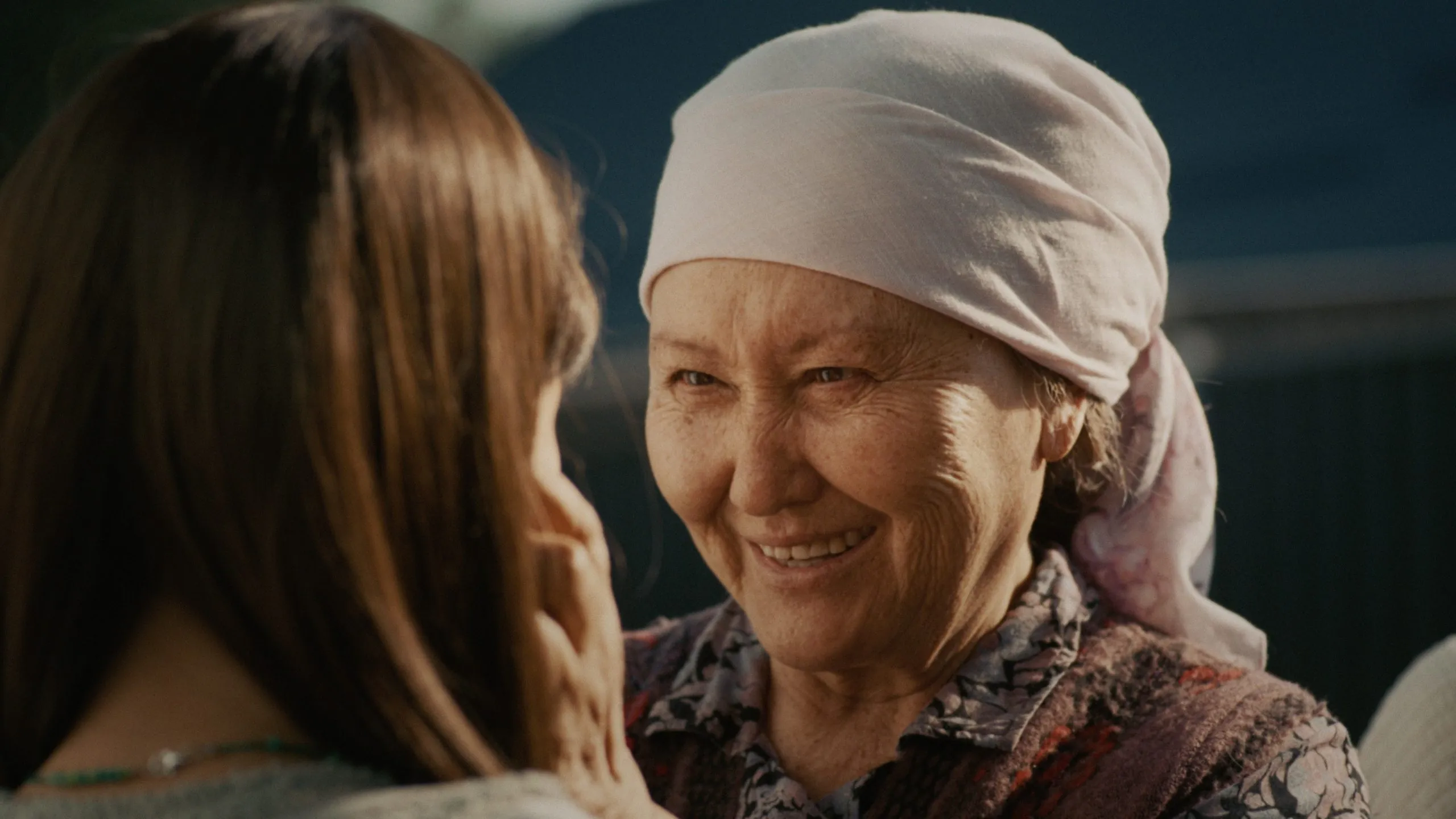
Yerkezhan Baizhan’s Ürei is deeply upsetting. Full stop. Her six-minute 2024 short made waves on the festival circuit, allowing her the chance to expand the story into a feature. Where the original film centered on a toddler being babysat by their grandmother, the feature-length version explores a different type of generational divide.
Baizhan takes the familiar setup of “A rebellious teen girl sent to spend the summer with her grandmother as punishment” and turns it into a slow-burning nightmare about aging, guilt, and dark family secrets that intrude on family bonding time in rural Kazakhstan.
Although she's positioned as a problem child, her parents sending Kalima (Akerke Kozaiyr) away immediately signals something is rotting within the family tree. Her grandmother, Amina (Tynyshgul Sultanberdieva), welcomes her with kindness, offering an escape from the hostility of her home life and consistently defending her. Things initially seem like the biggest conflict will be garden-variety “generational differences mean the rascally youth thinks grandma is a little odd,” but nightfall reveals the terrifying truth.
Kalima starts hearing impossible-to-place cries from her grandmother’s bedroom, Amina starts calling her granddaughter by a different name, and, like The Taking of Deborah Logan, each moment of Ürei reveals something far more sinister beneath the confusion of old age. Is Grandma Amina slipping into dementia, or is it something much worse? The friendly family home quickly becomes a psychological hellscape, trapping Kalima in a storm where reality starts to fold in on itself, wrapped in her grandmother's memories, imagination, and soured hopes.

It’s one thing to be trapped in a malignant dreamscape like A Nightmare on Elm Street, but something much sadder and more emotionally devastating is being thrust into a world of unfulfilled dreams. I don’t know how Baizhan did it, but watching Ürei felt like willingly letting regret suck the air out of my lungs and sit on my chest until it caved in. Even when predictability crept in, the uncomfortably familiar sensation of “what if?” dread kept the film tense and terrifying.
Unlike many of the “getting old is scary and being old is the worst thing that can happen to you” horror movies we’ve seen as of late, Ürei is the one that has terrified me the most because my existential fear of dying with a life unrealized makes me susceptible to becoming Amina. Guilt and shame are powerful feelings that can drive a person mad, and I do not want to grow into someone who plagues future generations of my family with unhealed regrets and festering resentment toward those with their lives still ahead of them.
Comparing Baizhan’s bleak fairytale to the work of Guillermo del Toro feels obvious (and maybe a bit hack), but I couldn’t shake the sense of spiritual kinship between their work. The production design of Amina’s home is warm and richly textured, with saturated colors and patterned fabrics that contrast with the strangely cold, desolate rural countryside surrounding it. When the wrongness of the situation reveals itself, that juxtaposition makes it harder for us to trust whether what we’re seeing is true.
Grandma Amina has lived a long and difficult life, turning her home into a time capsule of suffering in the process. Rather than leave or even reach out to the family now pawning off their daughter into her care, there’s a lingering sense that the “I don’t want to be a burden” mindset tormenting older generations has set her up for failure and signed up Kalima to inherit her generational trauma whether she wants it or not.

To keep the most grueling moments of Ürei close to the chest, the psychological twists only scratch the surface, and Baizhan uses truly unsettling visuals during the harrowing climax. Yerkezhan Baizhan is only 23, and her debut feature film shows an understanding of the complexity of human existence with emotional competency far beyond her years. Ürei may feel like a pit of darkness, but Baizhan's future is bright.