
How do you reinvigorate a film franchise that has always been derided by both critics and fans as, at best guilty, pleasure viewing, or, at worst, a poor simulacrum of everything that makes its source material so beloved? Hand the IP over to the hottest filmmaker working in horror right now and trust in his proven track record to deliver smart, crowd-pleasing scares, obviously.
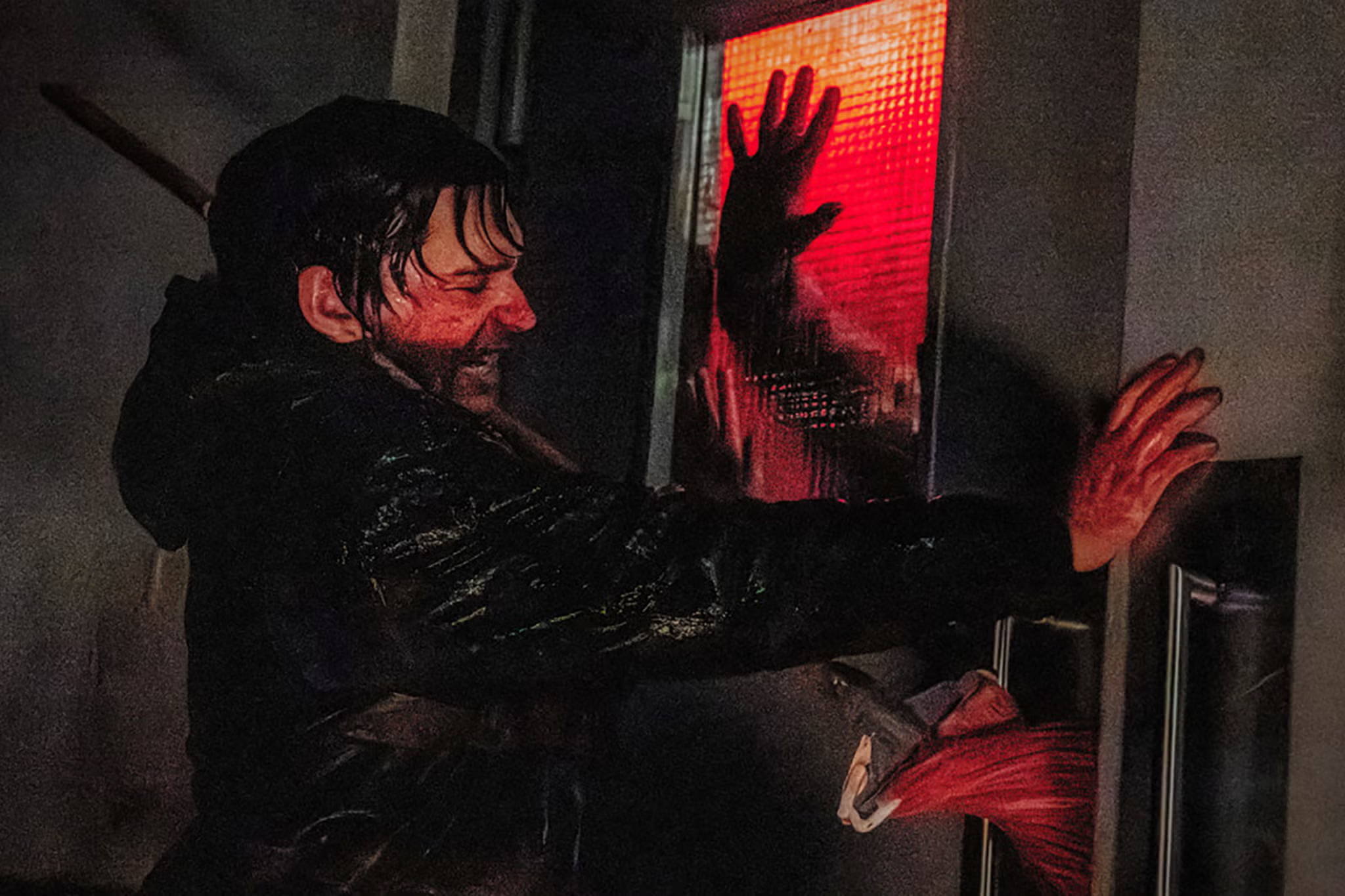
Coming off the cult success of Barbarian and an Oscar win for Weapons, there was never any doubt that Zach Cregger’s latest was going to be the most hotly-anticipated horror movie of the year, Resident Evil or not. Pacifying the stauncher fans of Capcom's legendary survival horror gaming series was always going to be a challenge, but as Cregger has made abundantly clear in his press-turned-defense-against-raging-gamers campaign, Resident Evil is not a direct adaptation of any of the games. It is instead a standalone story, co-written by Cregger and Shay Hatten, rooted in the same universe, set during a modern day version of Resident Evil 2’s Raccoon City outbreak and following medical courier Bryan (Austin Abrams) as his simple quest for overtime on a snowy evening turns into a bloody, brutal nightmare.
What Resident Evil might lack in lore accuracy (although if you want that, you’ve probably come to the wrong franchise) it more than makes up for in capturing the spirit of the games, particularly structurally. Bryan’s outbreak ordeal takes him through a series of locations recognizable to any Resident Evil fan as level progression – there’s the eerie stillness of a recently abandoned house, the vulnerable insecurity of Raccoon City's open city streets, a sewer full of slippery, slimy abominations, and, of course, the pristine veneer of a lab concealing something far darker.

One of the biggest problems with faithfully adapting the tone of a survival horror game is that a majority of play time is spent with a protagonist who is for the most part silent, an issue which Resident Evil skirts by having Bryan self-narrate his own saga. While the constant quipping can get a little tonally tiresome (and perhaps an indicator of Cregger’s distrust in his audience’s attention span), thankfully burgeoning scream king Abrams suffers so damn delightfully it is a constant joy to watch him flail desperately between ever-escalating circumstances.
Bryan is painfully relatable as an out of his depth everyman – think Ethan Winters, not Leon Kennedy – whose only experience handling a gun is a virtual one. Endlessly victimized by the film’s hilariously accurate grasp on video game logic, Bryan is far more akin to a particularly jumpy Resident Evil player than he is to a classic protagonist. How many of us have lamented simply not being able to shoot a padlock open instead of embarking on a mad hunt for a set of keys themed after a deck of cards? Or felt the sting of an agonisingly slow reload animation when there’s a Licker hot on your heels? Constantly screaming, throwing his gun in a panic, and greeting every obstacle with a muttered ‘fuck’, Bryan may not be the hero we deserve, but he’s definitely the one we need right now, graduated with first class honors from the Ash Williams School of Lovable Idiots
Resident Evil’s tight 90 minute runtime hurls Bryan full throttle from set piece to set piece, leaving us as viewers equally full of adrenaline and delirious disorientation. However, this blistering swiftness comes at the disservice of Resident Evil’s supporting cast, particularly Kali Reis, whose Maxine seems like she might be being set up to fill a Jill Valentine-esque role in the great Resident Evil tradition of badass women only to very much not do that, and Paul Walter Hauser, whose hurried exposition dump and reference to the Umbrella Corporation feels like it was added as an afterthought to justify its existence as a Resident Evil film to skeptics.

With his previous efforts Barbarian and Weapons, Cregger has proven himself a director adept at crafting a fully-realized world of nightmarish visuals for the horror to unfold in, and Resident Evil is no different. Dariusz Wolski’s cinematography, particularly in the first act of the film, helps to craft some of the most chilling images of Cregger’s career so far, emulating those early, most vulnerable stages of a video game when you have no idea what fresh hell lurks behind dark corners. Nestled in those corners are plenty of references and easter eggs that’ll tickle both Resident Evil fans and those who are only familiar with the series through cultural osmosis (for those looking for deep cuts: your mileage of appreciation may vary – don’t expect to see any nods to the Revelations games or the Ashford Twins here, sadly!)
It’s no surprise that the man who gave us the Mother and Aunt Gladys has conjured up a plethora of mutated monsters that are not only directly inspired by the creatures and creeps of Resident Evil, but also seemingly pull from other horror games like The Last of Us and Left 4 Dead. The Thing inspiration doesn’t just stop at the blood and snow, either, as the T-virus’ idea of DNA evolution apparently includes a whole lot of tentacles and tendrils. Thankfully, the majority of Resident Evil’s freakiest foes have been excluded from trailers, leaving plenty of welcome surprises for those who like their zombies with more pizzazz than your standard shambler.
Understandably a lot less conceptual than both Barbarian and Weapons due to the nature of what it’s adapting, Resident Evil delivers on what most of us surely thought (and hoped) it would be – a gloriously gory, uncomplicated thrillride that doesn’t overstay its welcome, nor try to shoehorn in deeper meaning to a series that has always been at its strongest when keeping things simple. The film's subplot involving Bryan and his offscreen girlfriend Michelle veers dangerously close to trying to be ‘about something’, before Resident Evil thankfully realizes its strengths elsewhere.
Resident Evil is the best video game adaptation in a year that already includes some pretty high highs (Genki Kawamura’s Exit 8) and low lows (Christophe Gans’ Return to Silent Hill), and is indeed, easily, the best Resident Evil movie to date (although don’t sleep on Death Island, y'all). Will it be enough to appease gamer diehards who slapped Cregger with the dreaded – and clearly unwarranted label – of LARPer before the first trailer even came out? Probably not, but maybe, just maybe, this movie isn’t for those who would’ve been impossible to please anyway. Resident Evil is a bonafide crowd pleaser, popcorn horror at its purest, and will surely be another big box office busting hit for horror in a year that has continued to prove the relevancy of our favorite genre – but we’ve been saying that for decades.
Resident Evil hits theaters on September 18.