As a deafblind filmmaker and horror film festival director, I advocate for many kinds of accessibility in film spaces, from wheelchair access to open captions to sensory spaces. However, one of the least understood corners of accessibility that I use personally is audio description. As a low-vision filmmaker who also sometimes has to avoid screens because of migraines, I use audio description to get all the gnarly details I’m missing when I have to look away from the screen. Horror movies make my heart sing, and well-written audio description (AD) lets the guts and gore strike a chord that stays with me forever.
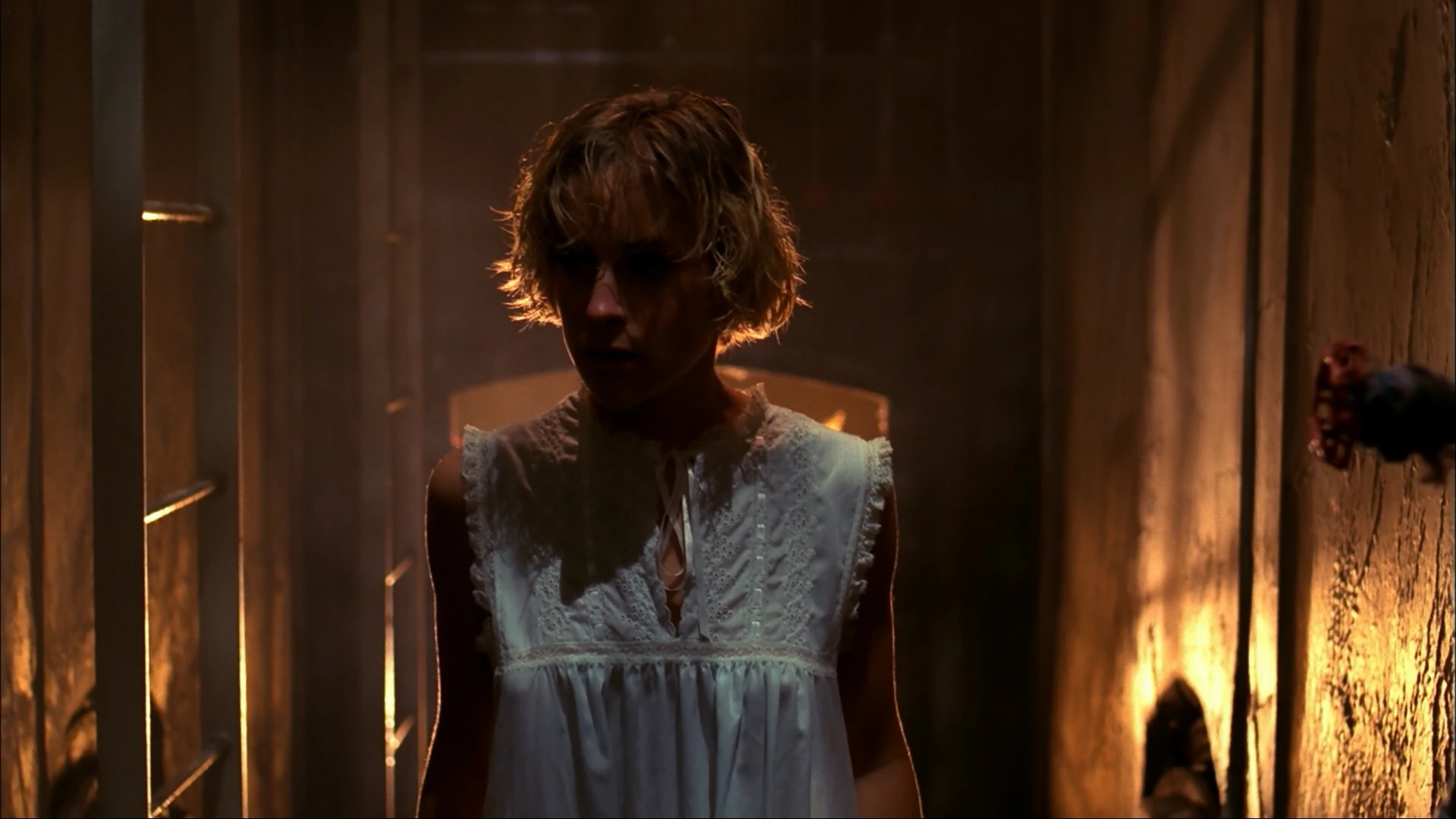
Because my monster of choice is Freddy Krueger (as discussed in my documentary Monstrous Me, available virtually for a limited time via Superfest Disability Film Festival), I will offer my object lesson in audio description and what it provides me, via Wes Craven’s opening to A Nightmare on Elm Street.
Imagine how you would experience the opening credits without the visuals, with only the soundtrack as a guide. Freddy breathing and grunting. Hammering and banging of metal on metal. Menacing, ominous music. Screams. Echoing footsteps. A whispered cry of “Tina” followed by bleating and loud cackling. Squeaking and clanging noises. Loud “white” noise. More low laughter. Hissing. Unearthly sound effects. Shouts. Rips. Heavy breathing, Tina screaming. Footsteps. Heavy breathing. Tina screaming. Animal sounds. Crackling. Freddy screaming. Unearthly sound effects. Tina screaming. A knock on the door.
“You okay Tina?”
“Just a dream, Ma.”
“Some dream, judging from that.”
Judging from what? Without audio description, we would have no idea that her nightgown is ripped to shreds, no idea that her dreams are beginning to blur into reality, and no sense of what Freddy’s iconic fingerknives look like, nor the threat they present. Without someone telling us what’s happening onscreen, Wes Craven’s carefully crafted setup for the premise of the film functionally provides only ominous music, meaningless exhalations, and dialogue that clarifies nothing.
In the hands of a master audio describer, though, those moments can have the chilling effect they were intended to have. The dripping pipes in the boiler room, the sharpening of the fingerknives, the sweat on Tina’s face, the lamb running past Tina in the strangely long and shiny hallway. These words create context for the atmosphere of fear that permeates this classic. The violence and viscera don’t mean a thing to blind and low-vision folks, or those with traumatic brain injuries (TBIs), concussions or migraines, unless someone takes the time to describe what is happening on screen.
In college, I had a blind girlfriend, and I always dreaded going to the movies with her. Understandably, she wanted me to describe what was happening in the silences or behind the sound effects. While other people in the theatre shushed us for being rude, I was trying to make sure she had an equitable experience, and it was painfully hard. Describing what you see on screen in terms that are simple and understandable and quick enough to fit in the time allotted is a true art form. While I did my best for that girlfriend, translating roundhouse kicks and vampire dustings on Buffy the Vampire Slayer, I definitely never mastered it the way my colleagues with Access:Horror, Monstrous Me, and the Open Caption Manifesto have.
Cheryl Green and Matt Lauterbach do incredible work opening up the visual medium of film to blind and low-vision audiences, and working with blind access providers to QC what they write to ensure that it matches the needs of their target audience. Too bad for my college girlfriend – at the time, she only had me, clumsy and embarrassed to describe in public, and too ashamed to identify as low-vision even though I was blind in one eye and could only see so much myself. Lucky for all of us though, we now live in an age where we can experience blood and guts and gore with captioning and audio description, allowing everyone to explore these fictional worlds in different ways. At my own festival, Access:Horror, we celebrate filmmakers with disabilities working in horror, and are proud to provide open captions and audio description wherever and however we can. In our first year, we had AD for three films out of ten. This year, we’re providing AD for nine films out of nineteen. We’re slowly expanding capacity in a world where accessibility assets, like everything else, require money, time, and expertise. Meanwhile, Superfest, where Monstrous Me is having its theatrical premiere this week, presents its entire line-up with audio description that you can toggle on or off. And best of all, it’s free.
Let the gore mean more. Try listening to audio description today, either via Superfest, Access:Horror, or Netflix’s extensive catalog, and experience horror differently.