It’s a tale as old as time (or, at least, 1897): man meets vampire, vampire sucks man, and a Dutch doctor leads a crusade against the vampire with the help of a really organized schoolteacher and her bestie’s suitors. Everyone knows about Count Dracula and the havoc he wreaks across London, as Bram Stoker originally penned it. It is a classically gothic tale that has been especially ripe for horror film adaptations for over a century, with its publication coinciding so closely with the birth of cinema.
After so many adaptations of Stoker’s gothic horror novel, including three famous Nosferatu retellings, the original story can feel stale. But just as many filmmakers have dared to plumb Dracula's depths to find fresh angles for the most prolific vampire to grace the silver screen. This list explores truly untold, unique films inspired by the legend of Count Dracula.
-
The Brides of Dracula
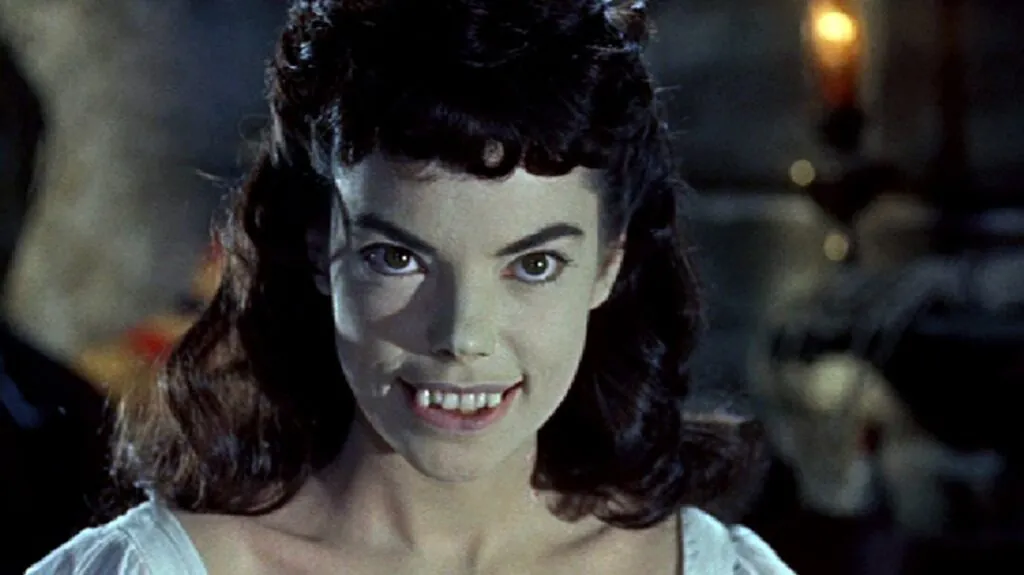
Andrée Melly in BRIDES OF DRACULA. (Credit: Hammer Films) The 1958 Hammer adaptation of Dracula, also known as The Horror of Dracula, saw Christopher Lee make horror history in his terrifying yet compelling portrayal of Count Dracula. It may seem strange, then, that the film’s direct sequel doesn't feature him.
Yet The Brides of Dracula defies expectations as a lush, seductively gothic Dracula entry all its own. Directed by Terence Fisher, The Brides of Dracula follows Marianne (Yvonne Monlaur), a French schoolteacher traveling to the Transylvanian countryside to start a new job.
After falling in love with and freeing Baron Meinster (David Peel) from his castle, Marianne meets Dr. Lawrence Van Helsing (Peter Cushing), who suspects something more sinister is afoot.
While Lee might be absent for this sequel, Cushing steals the show by reprising his role as Dr. Van Helsing. With much more heroism and bravado, this Van Helsing burns away bite marks with branding irons and comes up with even more liberal ideas about what passes for a crucifix.
The sequel’s plot is also distinctly more romantic, with Monlaur playing its magnetic damsel in distress, supported heavily by the texture-rich costuming and set design.
Lighthearted and fun to watch, this Dracula sequel ups the ante and earns its own legacy, one that even inspired Jesús Franco to enter the filmmaking business! You can rent The Brides of Dracula on VOD via Apple TV, Amazon, and Fandango.
Vampyros Lesbos

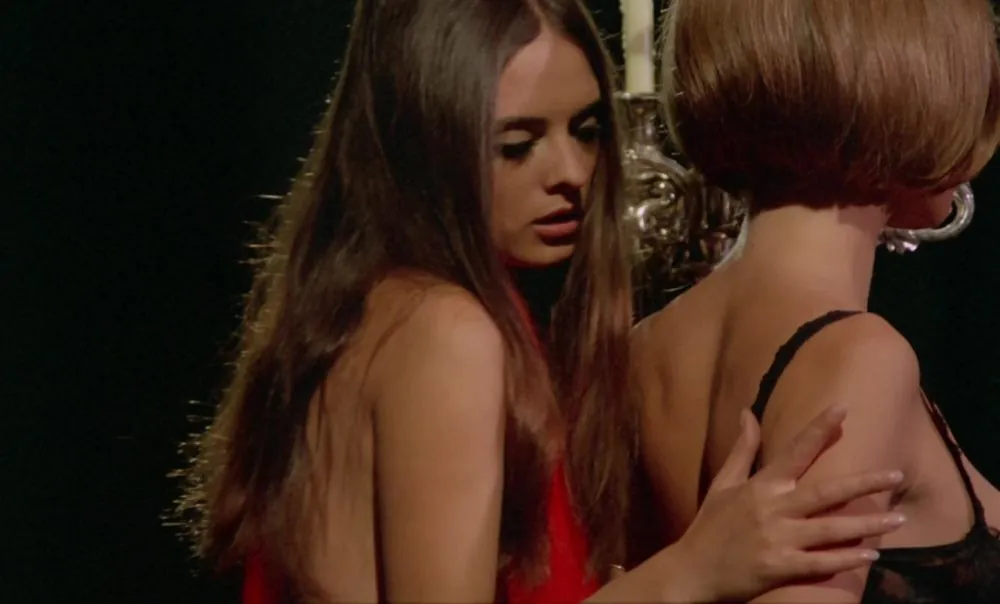
Soledad Miranda in VAMPYROS LESBOS. (Credit: Telecine Film) Speaking of the pervert cult movie king himself, few other vampire films are as emblematic of the sexy and kaleidoscopic characteristics of the 1970s as Jesús Franco’s Vampyros Lesbos.
In this sapphic film of sanguine delights, Linda Westinghouse (Ewa Strömberg) attends to the affairs of the mysterious Nadine Carody (Soledad Miranda), who has inherited Count Dracula's estate. Enchanted by Linda, Nadine tries to seduce her into joining her dark court.
Vampyros Lesbos does exactly what it says on the tin: these vampires sure are lesbians. The plot loosely follows the original Dracula story mixed with Sheridan Le Fanu's Carmilla, adapted for the times and pared down to prioritize what matters most—lesbian sex scenes. Even Renfield is a lesbian (and my favorite character)!
As a psychedelic erotic exhibition, this film’s garish flair shows up in every aspect of its presentation: costumes, setting, incomprehensible cuts to wildlife, and, most importantly, music. The soundtrack is funky, fun, and at times esoteric.
Celebrating its 55th anniversary this year, Vampyros Lesbos is a perfect match for horror fans looking to embrace yesteryear's eccentric allure. You can stream Vampyros Lesbos for free on Plex.
Shadow of the Vampire

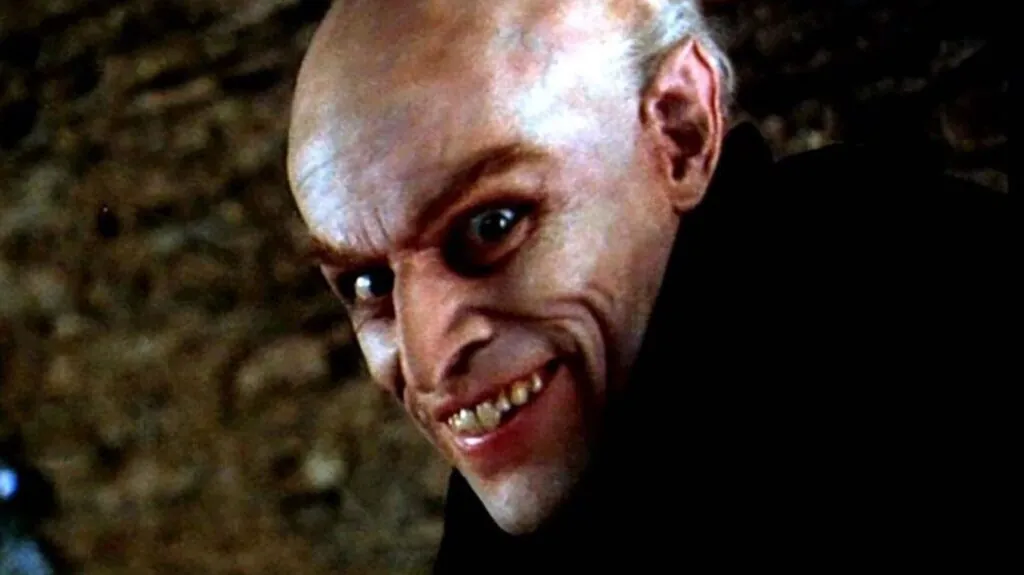
Willem Dafoe in SHADOW OF THE VAMPIRE. (Credit: Lionsgate) Directed by E. Elias Merhige, Shadow of the Vampire is a meta horror film about F.W. Murnau’s Nosferatu from 1922. The film is a fantastical reimagining of the making of the movie, suggesting that Murnau (John Malkovich) hired an actual vampire (Willem Dafoe) to portray Count Orlok.
The production then unravels as the vampire referred to as “Max Schreck” feeds upon the cast and crew. In spite of this, Murnau refuses to give up on the film, willing to throw his colleagues onto the vampire’s dinner platter for the sake of his art.
If you’re thinking this movie sounds exceptionally juicy, you’re absolutely correct. The cast alone is enough to draw in any film enthusiast: in addition to DaFoe and Malkovich, Udo Kier, Cary Elwes, Suzy Izzard and Catherine McCormack round out a lineup that is to die for.
By drawing a fresh veil of mystery over a well-known movie, Shadow of the Vampire becomes a tale of both suspense and hubris. So convincing is Dafoe’s depiction of a hapless, hungry vampire that the audience cannot help but become bewitched by his presence.
On the other hand, Malkovich’s portrayal of a more crazed and egotistical Murnau lends a type of mad scientist arc to the story, one steeped in the indulgences of pre-war Berlin and blurred by the loft of his own craft. Shadow of the Vampire is an absolute must-watch for any fan of Nosferatu, and is available to stream on Plex and MovieSphere.
Blacula

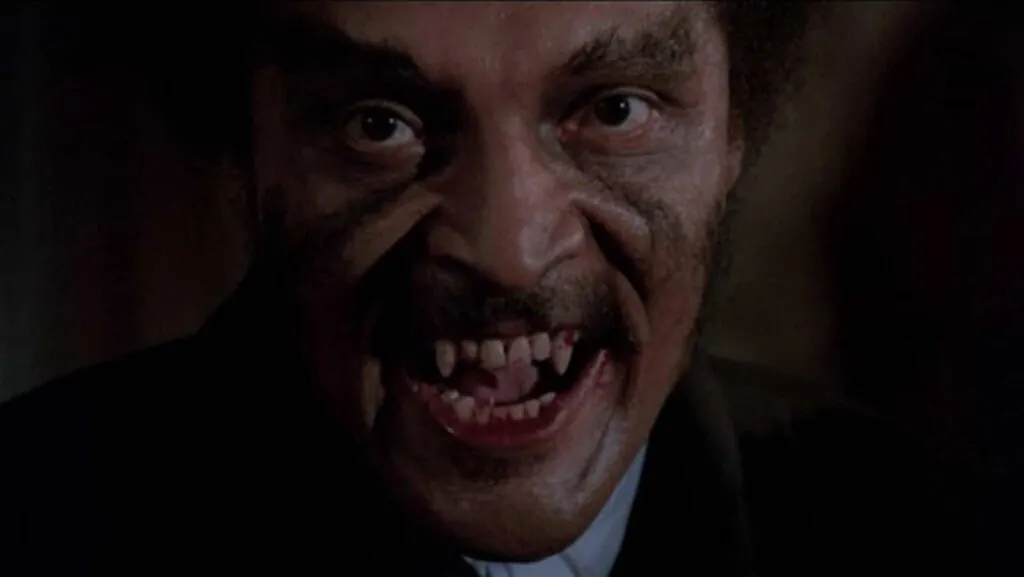
William Marshall in BLACULA. (Credit: American International Pictures) Perhaps the most famous Blaxploitation film in horror history, William Crain’s Blacula is a monster all its own. So much more than just a race-swapped version of Dracula, William Marshall stars as Prince Mamuwalde, a charming and gentlemanly vampire who desires only to be reunited with the reincarnated love of his life, played by Vonetta McGee.
After being attacked and turned by Count Dracula, Mamuwalde enters a century’s long hibernation, reawakening by chance in the streets of 1970s Los Angeles.
If you’ve ever watched the vital horror documentary, Horror Noire, you might already be familiar with the extent of Blacula’s influence on Black representation in the film industry. Suffice it to say, Marshall’s swarthy and sympathetic portrayal of Prince Mamuwalde was highly influential to perceptions of Black participation in horror cinema.
Marshall himself had a significant hand in adding much-needed dimension to Mamuwalde, taking him from a straightforward caricature to a misunderstood villain. Crain’s own battles with discrimination during the filming of the movie have also gone down in history, the fruits of his labor having produced some of the most famous scenes in vampire cinema.
Blacula is required viewing for any devout vampire movie lover, and is available to stream on YouTube, Tubi, and Pluto TV.
Dracula’s Angel

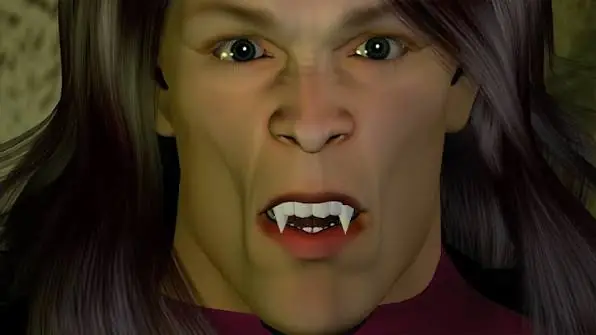
DRACULA'S ANGEL. (Credit: Bryan Beasley) I do not say this lightly: watch this movie with friends. As many as you can wrangle. This film is one you have to see to believe, and an absolute feat of creativity to say the least.
Dracula’s Angel is an animated indie movie about a woman who falls in love with the Count himself after he begins to appear in her dreams. Notably, the entire film was produced and voiced by only two people: Bryan Beasely and Carol Carson.
Now, I wouldn’t necessarily call Dracula’s Angel a good movie. In fact, it’s positively baffling. This film is heaving with barely-functioning animation, incomprehensible musical choices, and an entire cast of characters voiced by only two actors who are clearly stretching themselves thin. But, despite being so downright bizarre in every way possible, this movie has brought my friends and me a lot of genuine joy.
For one, it’s the type of movie that lends itself to lively commentary. More importantly, though, it’s an unexpectedly inspiring testament to how far the creative spirit can go to bring something to life. So, I’ll stand by this recommendation and say that if you’ve got the crowd for it, you’re in for a great time. Dracula’s Angel is free to watch on YouTube.
Dracula 2000

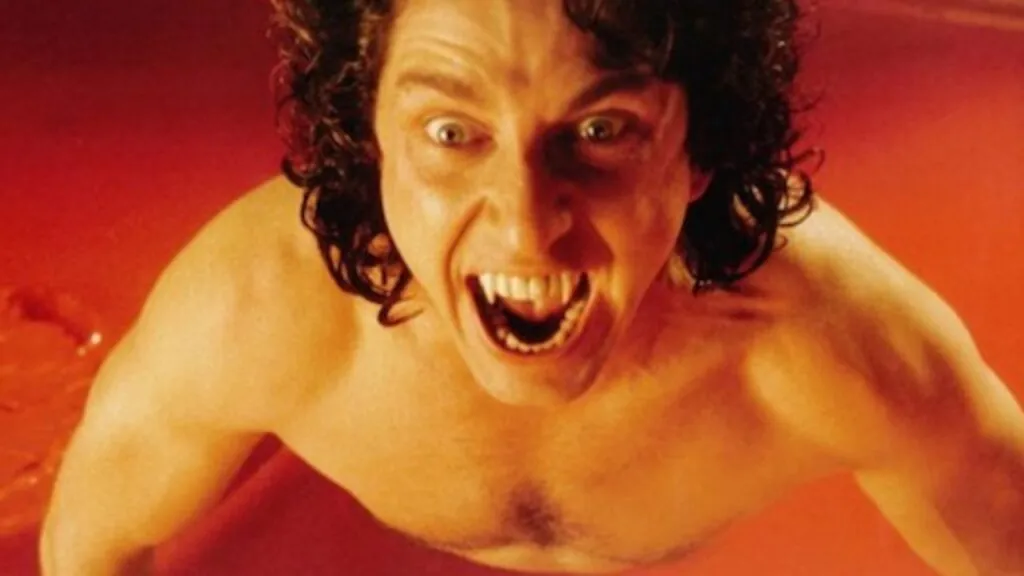
Gerard Butler in DRACULA 2000. (Credit: Dimension Films) Directed by Patrick Lussier, Dracula 2000 is one of the so-called “nu-metal” horror movies of the late ‘90s and early 2000s. An outfit of thieves realizes they’ve bitten off more than they can chew when they steal a coffin from the Van Helsing (Christopher Plummer) and discover that Count Dracula (Gerard Butler) is sleeping inside.
Now awake and thirsty for vengeance, Dracula breaks from his shackles and wreaks havoc upon New Orleans while trying to track down Van Helsing’s daughter, Mary (Justine Waddell).
This movie has everything: a pre-Phantom of the Opera Gerard Butler having hot vampire sex with Vitamin C, gratuitous action sequences, and the tamest Mardi Gras crowd I’ve ever seen. Dracula 2000 is also one of the few adaptations of Dracula to incorporate the extremely metal mythos of Judas Iscariot being the first-ever vampire, hence the count’s aversion to silver.
And you know that soundtrack is a banger, featuring Spider One, Linkin Park, and System of a Down just to name a few. This brainless romp of seductive thrills is perfect for fans of other nu-metal peers such as Underworld and Queen of the Damned. Dracula 2000 is available to rent on VOD via Apple TV, Google Play, and Fandango.
Blood for Dracula
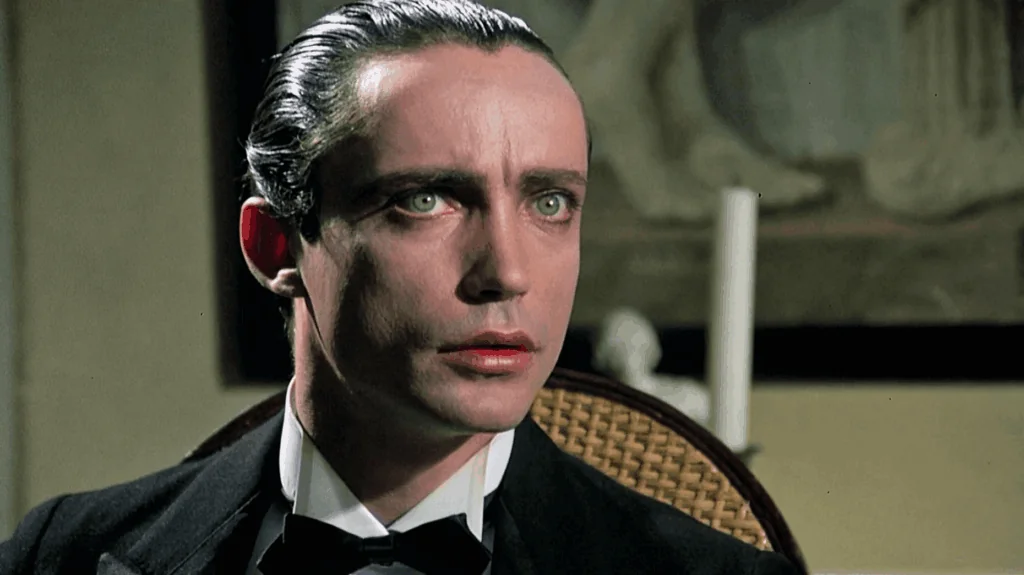
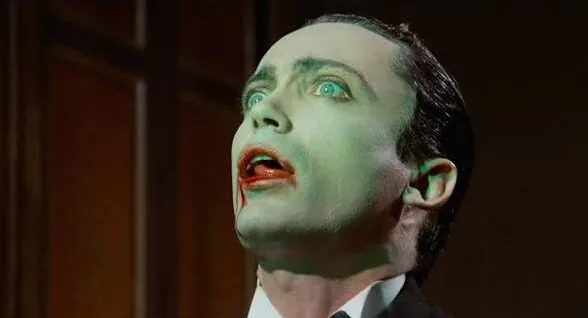
Udo Kier in BLOOD FOR DRACULA. (Credit: Euro International Film) Directed by Paul Morrissey and drenched in all the same taboo and debauchery Andy Warhol’s Factory is known for, Blood for Dracula is a hypersexual aesthete’s nightmare come true. Starring the late, great Udo Kier as Count Dracula, this vampire noble is thrust into the 20th century when his servant insists it’s time for a change.
Vegetarian, lonely, and long-deprived of the precious virgin blood he must consume to survive, Dracula travels to Italy under the assumption that because the country is so vehemently Catholic, the locale is sure to provide him with plenty of virgins upon which he can feast.
While Blood for Dracula takes place in pre-World War II Italy, its commentary is crude, present only for light satire, decoration, and a nod to Marx’s comparison of capitalists to vampires. However, where Morrissey’s aesthetic interpretation of Dracula truly shines is the Count himself, who is a far cry from previous adaptations.
Kier’s Dracula is pathetic, sickly, and woefully uncertain, a fish out of water without the comforts of his castle. As he writhes, covered in blood and spewing up his supper, he whines and bemoans his fate, looking delightfully baroque in his gore and sorrow.
Blood for Dracula is for the fans who like a good-looking movie and don’t mind a more mean-spirited story. You can watch Blood for Dracula on Shudder.
Dracula: Pages From a Virgin’s Diary

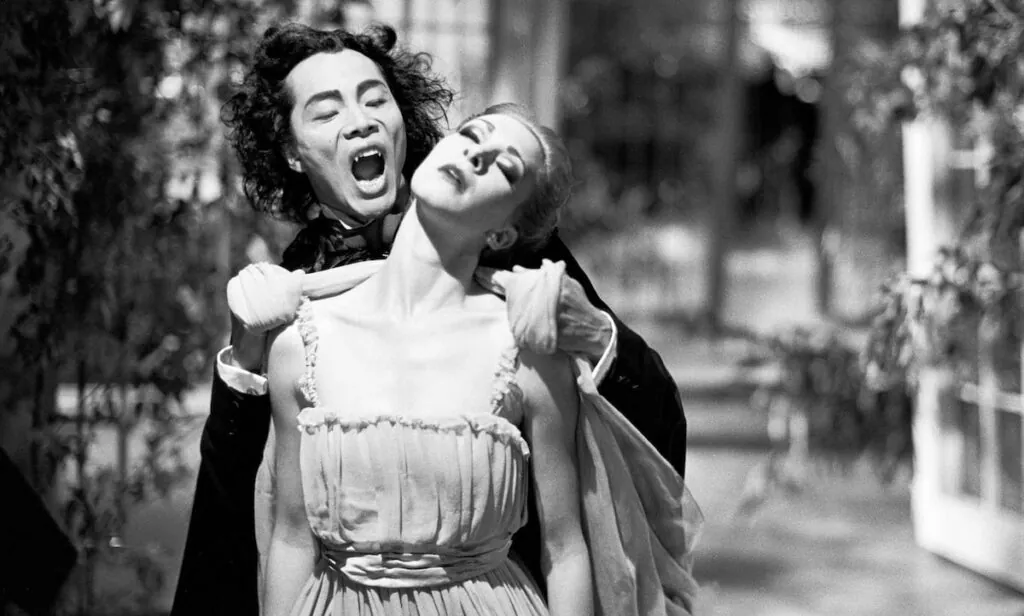
Zhang Wei-Qiang in DRACULA: PAGES FROM A VIRGIN'S DIARY. (Credit: CBC) Dracula’s story has been adapted to ballet several times over the years, but Dracula: Pages From a Virgin’s Diary may be the only ballet adaptation also put to film. While this is the most straightforward adaptation of Dracula on this list, no other Dracula film has so commanded the medium of dance.
Make no mistake, though, this isn’t just a recorded on-stage performance. Director Guy Maddin uses the story of Dracula to craft this stylistic gem of cinema.
Starring Zhang Wei-Qiang as a positively captivating Count Dracula, Pages From a Virgin’s Diary is a creative triumph. Maddin’s experiment with dance and horror imitates classic black-and-white silent films of the early 20th century while simultaneously playing with color grading and selectively colored sequences—gold shimmers as coins pour out of Dracula’s body, an organ spews out a cloud of green steam.
This new take on the classic tale is expressive, chilling, and even comedic at times. An exciting foray into multiple creative endeavors, this movie is sure to enchant anyone looking for a vivid new take on the Dracula formula. Dracula: Pages From a Virgin’s Diary is only available on physical media for now!

Vivi Estaris
Contributing Writer, since 2026
Vivi Estaris is a writer based in New Orleans. Their bylines include Fangoria and NightTide Magazine, and their fiction has appeared in Cosmic Horror Monthly.
See full bio