
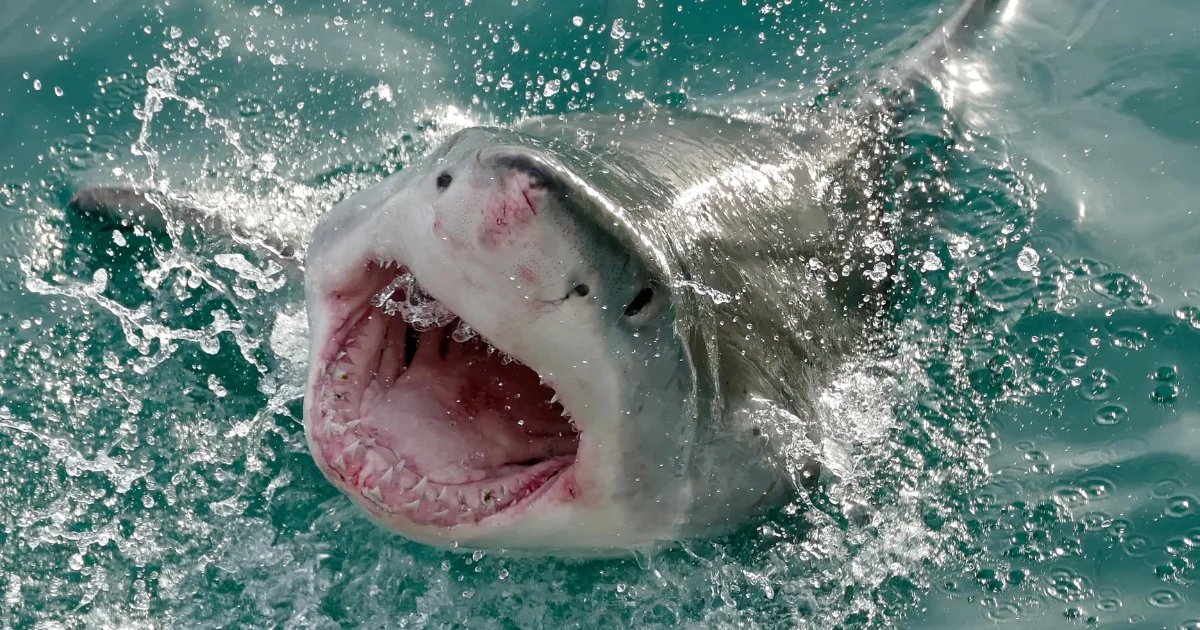
Despite less than 100 shark bites being reported in the last year, the massive marine creatures remain a fixture in our horror movies. They come for our children, they eat our protagonists, and they terrorize our fictional shores, no matter whether it’s a Hollywood blockbuster or the sixth film in the Sharknado franchise.
And while only thirteen of the over five hundred species of sharks have bitten humans a significant number of times, the movies keep on coming, with five alone released in the last year — which begs the question: why are we still so obsessed with making shark movies?
I mean, if you’re looking for a simple answer, it’s pretty obvious: filmmakers have been trying to reheat Jaws’ nachos for fifty years. Much like every sauceless Star Wars knockoff that came about in the 1980s, all modern shark attack movies inevitably owe their existence to Steven Spielberg and his hulking, malfunctioning animatronic Bruce.

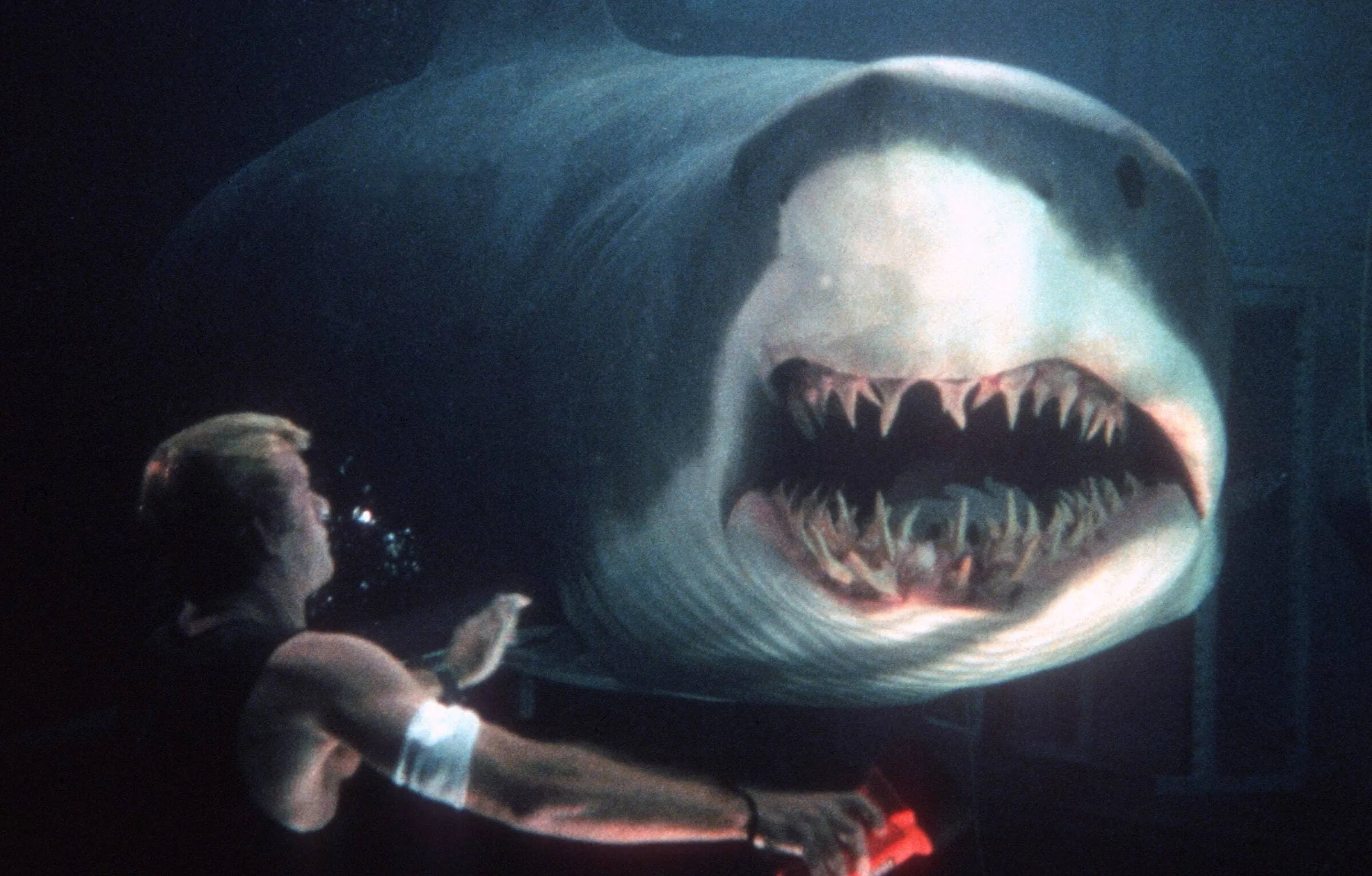
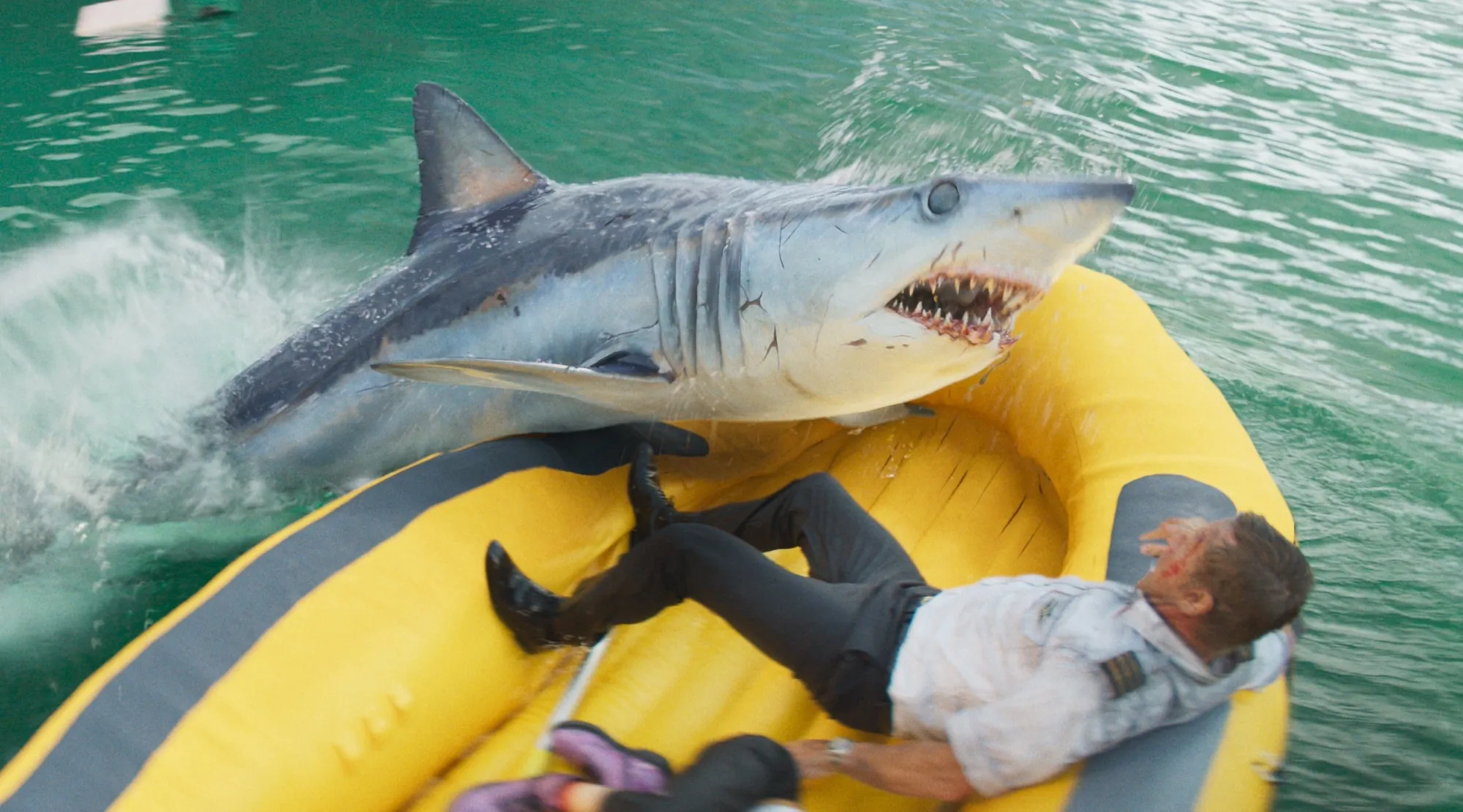
Some are more successful than others. Fans often name films like Deep Blue Sea alongside Jaws as their favorite aquatic horror film, while titles like Mako: The Jaws of Death and Hot Spring Shark Attack languish in relative obscurity. And with the Discovery Channel pioneering Shark Week this time every year for the last four decades, the public interest around the apex predators of the sea seems more intense than ever.
But why are we still so scared of sharks? Why do we show people, intentionally or not, that sharks are a danger to humans, despite the fact that cows, champagne corks, and even coconuts injure or kill more people in a year? What’s in it for filmmakers that “sharksploitation” has become its own genre?
It’s a tough question to answer, but once again, everything comes back to that damn animatronic shark.
Supposedly, author Peter Benchley’s idea for Jaws was wholly original, and didn’t take inspiration from the spate of shark attacks that plagued the New Jersey coast in 1916, but the similarities are there. Over the course of twelve days in July — often referred to as the 12 Days of Terror — five people were attacked along the coast of New Jersey, with only one, a fourteen-year-old boy, living to tell the tale.
Mass hysteria ensued, as it does in every attack film. The deaths made the front page of national newspapers, and President Woodrow Wilson met with his Cabinet members to discuss what to do. (Imagine that happening for Cujo.) Hundreds of sharks were captured and killed along the East Coast in an attempt to capture the “Jersey man-eater,” identified by author Richard G. Fernicola as potentially the largest scale animal hunt in human history.
Similar events happened when Jaws hit theaters in 1975. Massive shark fishing tournaments were organized in the wake of its $7 million opening weekend, with people convinced that not only were all sharks man-eaters, regardless of species, but that it was “sexy to go catch sharks.”

“Even up until Jaws, I don't think there was really this overarching large fear of sharks when people were swimming or going out into the ocean,” says biologist Wes Larson. “And Jaws being one of the first blockbusters ever really introduced that fear into the general public. It was such a well-made film…but it really did make sharks into this monster.”
Larson co-hosts the podcast Tooth & Claw, which examines real-life animal attacks in detail, from both the perspective of the victims and the biological circumstances that push creatures to predate on humans in the first place. They’ve covered plenty of famous attacks, including encounters that inspired films like Jaws and The Ghost and the Darkness.
“Directly following [Jaws] there was a large-scale campaign to remove sharks from the water, especially, these big macro predatory sharks,” he says. “Sharks like great whites, tiger sharks, [and] bull sharks were targeted, and they were targeted mostly by sport fishermen… They saw it as this test of manhood, almost. Like, the last act in Jaws when they're actually trying to catch the shark. These people thought that they should go out and do that and remove them from the water and make the water safer for people.”
As a result, between 30 and 100 million sharks are killed annually, and more than 30% of shark species are considered threatened, if not outright endangered. The film made the public “not care about sharks” the way they do about whales or dolphins, as Larson puts it, resulting in large numbers dying either by way of shark finning or as bycatch, when they’re accidentally caught in nets and line and killed anyway.
“Some species still haven’t recovered from that summer,” says marine biologist David Shiffman in Sharksploitation, a 2023 documentary that explored the killer shark genre. Even Spielberg regrets what happened, telling BBC Radio’s Lauren Laverne in 2022 that “that's one of the things I still fear…that sharks are somehow mad at me for the feeding frenzy of crazy sport fishermen that happened after 1975. To this day, I regret the decimation of the shark population because of the book and the film. I really, truly regret that.”
Despite it changing the world of filmmaking forever, Spielberg’s crowning achievement did create what Dr. Emily Zarka describes in Sharksploitation as the idea of the “meta shark,” a “horrific, monstrous image of the shark that is very loosely based on actual reality.” And while for the most part, the shark attack genre has spun off into concepts so insane that even the most misguided viewer couldn’t associate them with real sharks — see: Amityville Shark House — the idea of a shark intent on killing specifically humans remains.
A whopping five shark attack films have been or are set to be released in 2026, including Netflix’s Thrash, Renny Harlin’s Deep Water, and the forthcoming, Kathryn Newton-led The Devil’s Mouth. So why do we keep coming back to the idea of becoming a snack for the ocean’s greatest predator?
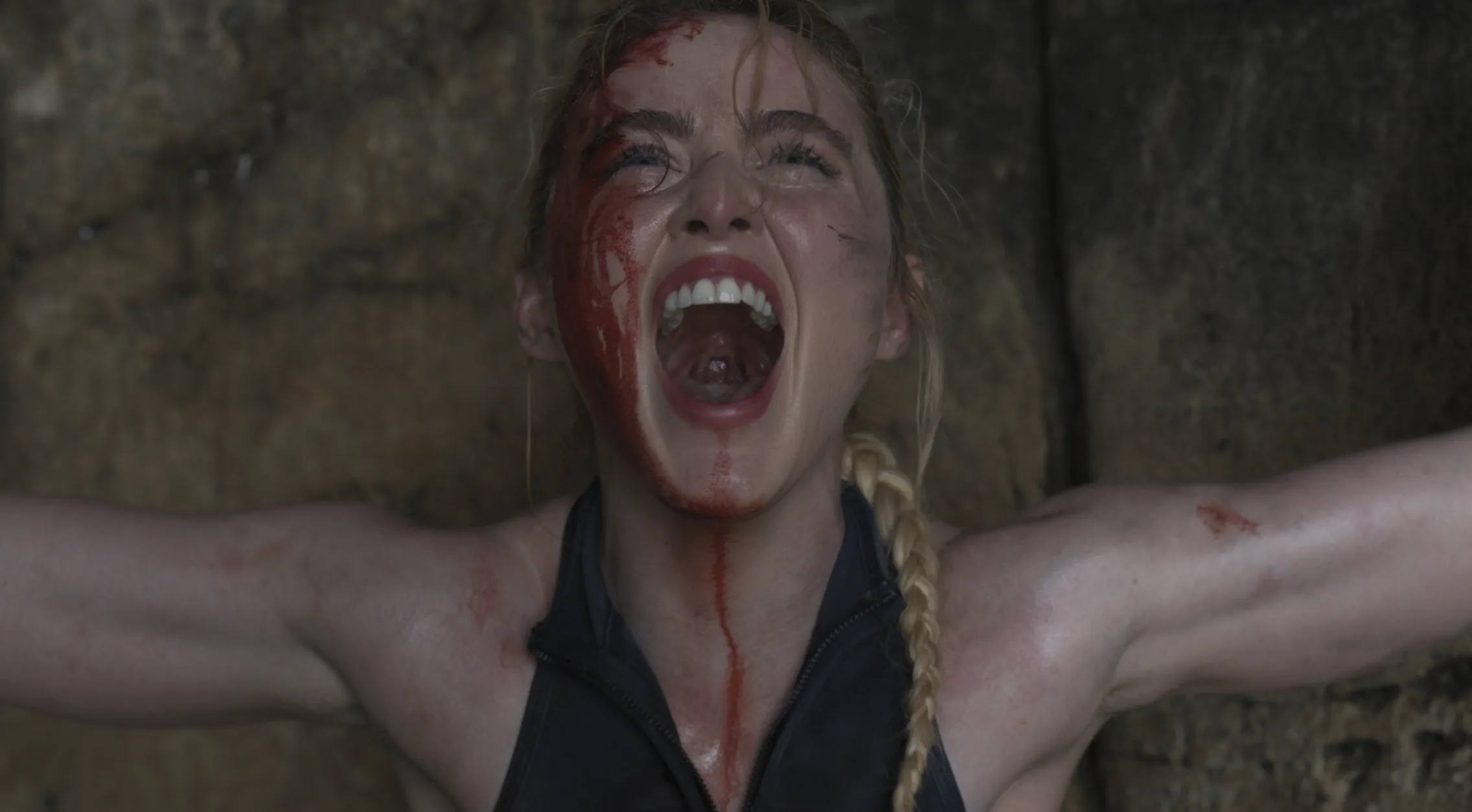
“I think there is something uniquely scary about shark bites,” Larson says, “and I think the thing that is so terrifying to us and stirs this primal fear is that we are in an ecosystem and a medium that we are not comfortable in as people when we're in the water.
“Obviously, there's cultures out there that are very comfortable in the ocean. But it still is not where we are at our most confident. And because of that, it introduces this whole new type of fear, of this thing coming up out of the unknown, out of this dark water where we can't even see them, and biting you and eating you. We know we're not top dog [in the water]. We know that we can't really defend ourselves.”
There are, of course, the occasional diamonds in the rough that treat sharks less like aquatic slashers and more like the powerful but misunderstood predators that they are. Sean Byrne’s Dangerous Animals, which made Jai Courtney’s serial killer the focus rather than the sharks he fed his victims to, is one such example. (We here at Fango loved that one, so it’s no surprise it’s a winner.) And of course, the average horror fan is no idiot.
“I do like that we're seeing that more and more, that people are realizing that audiences are becoming more discerning and a little bit better educated,” Larson says. “And you can't just throw sharks at the wall and think that it's going to be scary.”
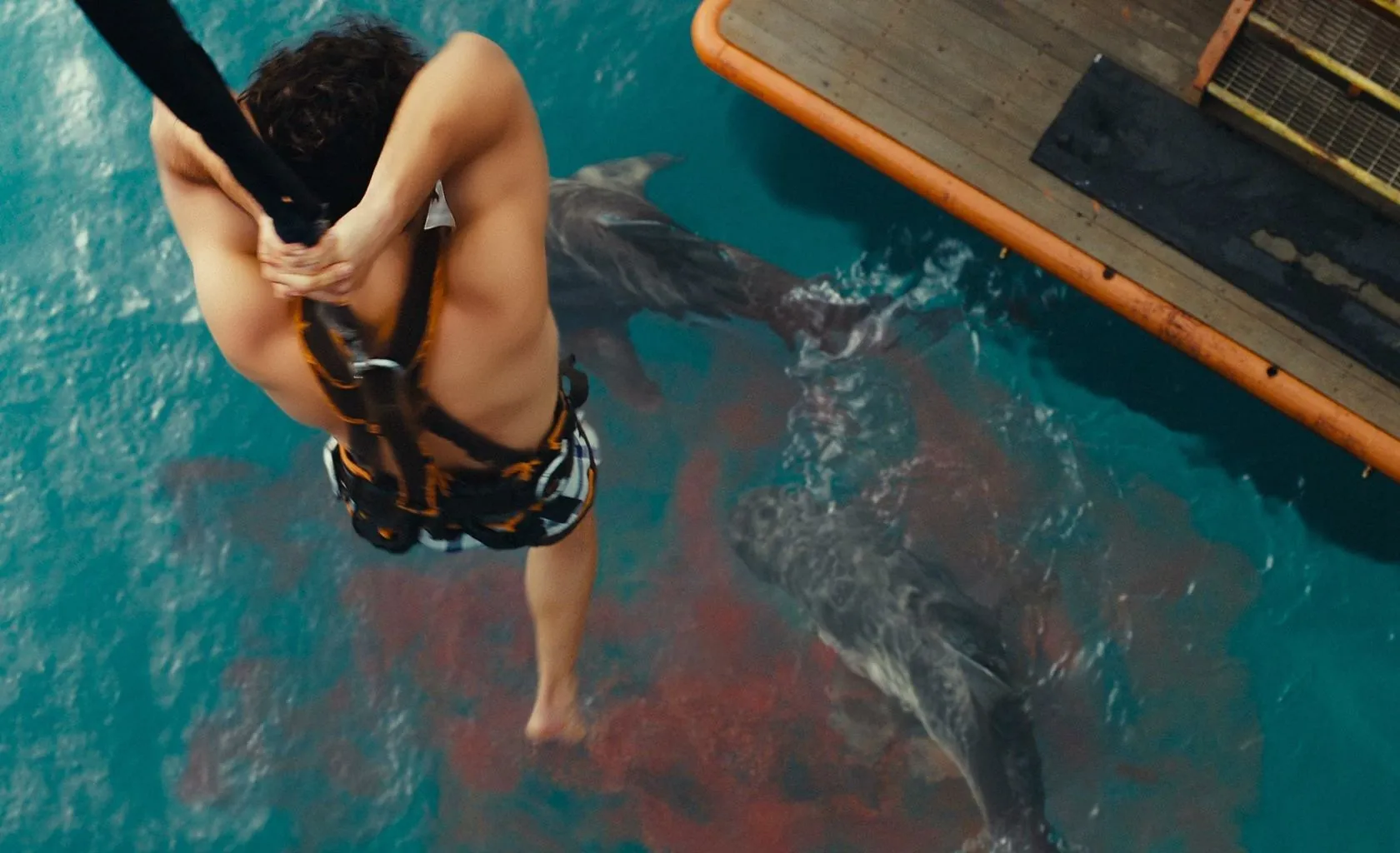
But if you’re still truly scared of sharks, don’t worry. Every horror fan’s got their real fears — mine is spiders! — but the statistics are on your side. Much like being chased down by Jason or Freddy, it’s highly unlikely that you’ll actually ever come face to face with a real shark in the wild, much less end up with your limbs in its jaws. (Get it?) In 2025, only 94 cases of shark bites were reported, and only 65 of those compared to the thousands of sharks in the ocean were classed as unprovoked bites.
Larson recommends staying out of murky water and swimming only in broad daylight, to avoid the ideal conditions when many sharks hunt for food. “When we talk about dangerous wildlife or potentially dangerous wildlife, the question is always, “How do I stop it?” And with sharks it's not about stopping,” he says. “It's about avoiding it.”
And while the average consumer can’t do much to stop the continuous stream of shark films that remain a B-movie mainstay — hey there, Water Park Shark — there’s a lot you can do while still enjoying a good Jaws rewatch. Turn off Discovery Channel and check out Bimini Shark Lab instead, or their east coast cousins The Atlantic White Shark Conservancy, who both do excellent work with sharks and educate on just how important they are to our oceans.
“I think that the timing was just right when Jaws came out,” Larson says, noting that new films probably won’t ever inspire quite as much terror as the 1975 classic. “I think people just didn't understand enough about this animal. They didn't really know how scary they could be, and it just was a perfect package to deliver that. And I don't know if we'll ever see a movie like that again.”
