
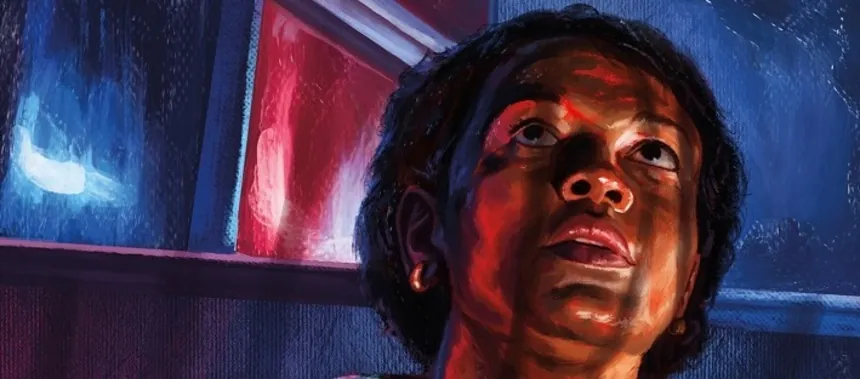
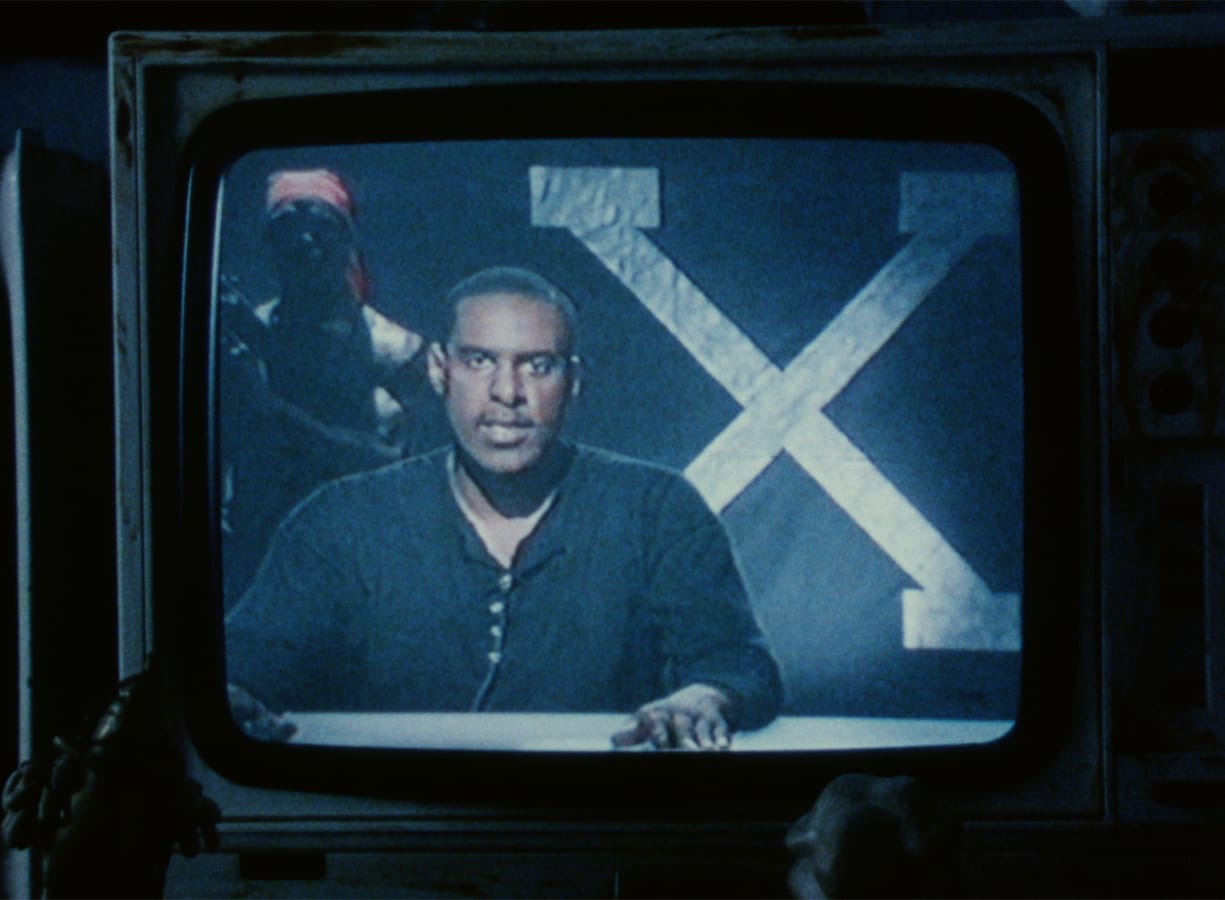
“No one actually lives in the Terrordome.” In 1995, British-Nigerian director Ngozi Onwurah made history with Welcome II the Terrordome, the first theatrically distributed British feature film directed by a Black woman. Three decades later, the newly-restored dystopian sci-fi film is back in theaters and will enter the Criterion Collection with a stunning physical release chock full of extras (including three of Onwurah’s short films) this coming October.
FANGORIA spoke with Ngozi ahead of the film’s limited theatrical run at the Brooklyn Academy of Music in New York (July 31- August 13) about its legacy and rediscovery, the historical events and horrific headlines that seeped into the narrative, and her relationship to hip-hop and genre films.
I saw Welcome II the Terrordome for the first time this past week. I’m a little pissed that I had not even heard of it before the announcement of the upcoming Criterion Collection release, but I’m glad that that has been rectified because it’s amazing.
Ngozi Onwurah: Thank you. So it’s a horror movie? [laughs]
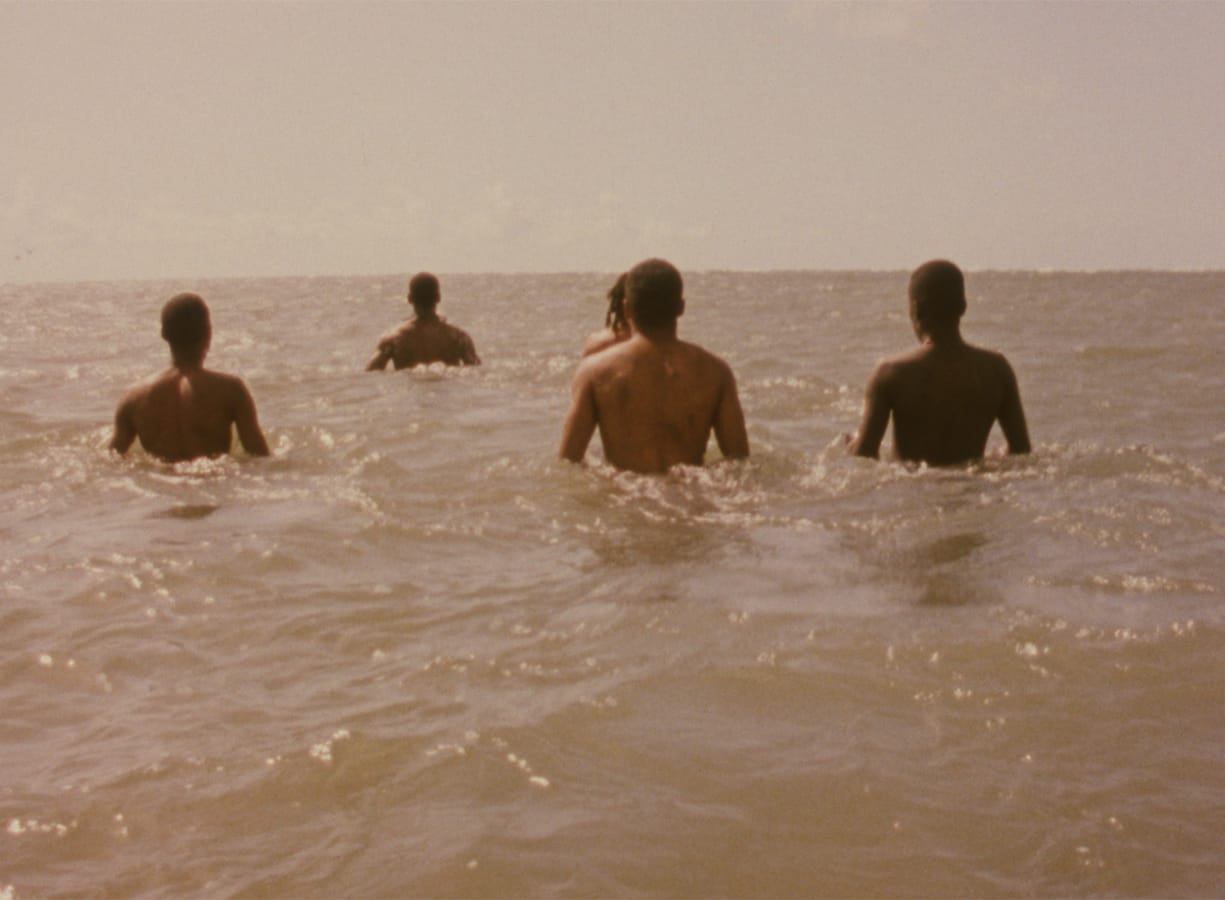
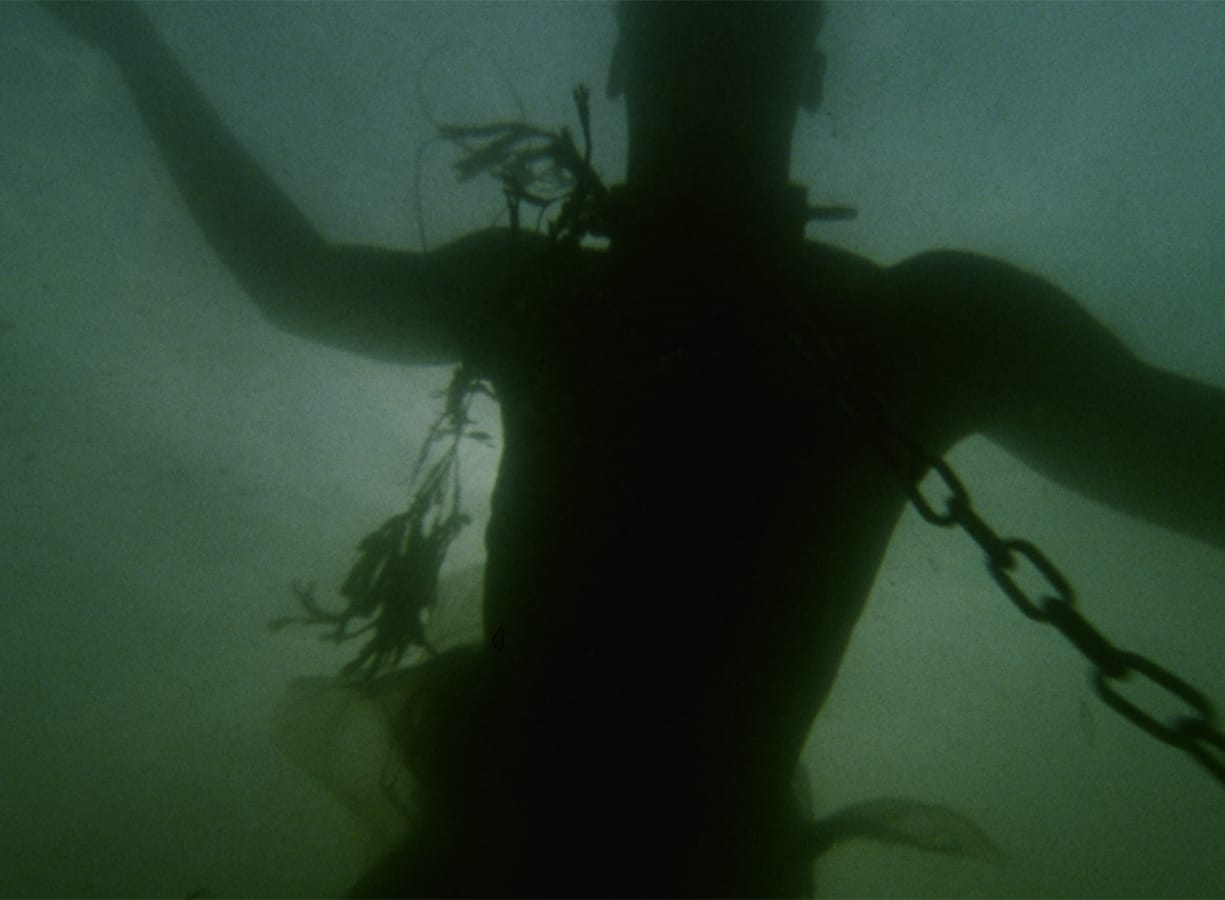
It’s not. I mean, there’s definitely some horrific things in it. But with genre films there’s a lot of overlap with the themes and the tones. I was reading about the opening scene and how it was inspired by the Igbo Landing Defiance of 1803, which I had also not heard of. When did you learn about it, and when did you decide to include it in the film?
Ngozi: So I grew up with that. I’m Igbo, at least my father’s Igbo, and so I was in Nigeria as a young child, and that was one of the big legends. There’s a lot of tribes in Nigeria, but there’s three predominant ones and Igbos are one of them. That’s one of the folklores or legends that you grew up with.
They came to take Igbos from Nigeria to America, and when they arrived they could see what was in store for them. And so they decided to jump in the water rather than be slaves and go back to the land of the ancestors rather than live in slavery in America. It was one of those legends where there were certain truths to it, but I don’t think it was just Igbos. There are recorded cases of the enslaved once they arrived, jumping or refusing to go into it. But in a way—because we’d just come out of a civil war in Nigeria between the Igbos and the Yurabas and Hausa and we lost the war— that legend became very prominent as a way of putting down also the Yurabas and the Hausa as a way of saying they were a kind of people that were willing to accept slavery, whereas Igbos didn’t.
Then also in America, you know Julie Dash, the filmmaker? She made a film called Daughters of the Dust, which was a really seminal film. And it was the legend of the Igbo Landing from the American point of view. So the legend goes around quite a bit and it’s very important.
For me as someone who was dealing with the diaspora, I feel very much part of the triangle between America, Black America, Black Europe, and Africa. The idea of Igbo Landing, it felt like I wanted to explore whether they made it all the way back to the land of the ancestors, which it didn’t feel like they had because of the way people, their ancestors were living in America and in Europe. So that’s where the whole idea came from. It’s all based on Igbo Landing and the idea about what happened to those people when they went below the water. Did they die? Did they go back to the ancestors? Or did they end up in this in-between zone, which is the Terrordome.
Was Welcome II the Terrordome the original title? I understand it’s a reference to Public Enemy, but was it there from the beginning?
Pretty much. When I sat down to write it, I didn’t have a title essentially, but I wrote it while listening to Public Enemy. It just summed up the kind of place that I had in my head, the idea of a Terrordome, literally the word terror and dome, this place that’s trapped people in it. So it was pretty quick. We were worried about whether there was going to be a copyright issue, but there wasn’t. My brother’s the producer and he sorted all that out. He did reach out to Public Enemy way back in the day, and they had no issues with it anyway. So it just stuck from then.
I did write the entire film to a little bit of NWA, but almost entirely Public Enemy.
Something I noticed with synopses or short blurbs about the film is that a lot of people talk about how it was ‘ahead of its time’ or that audiences weren’t really ready for it at the time. Did you ever feel that, or did you feel like you were making a film that was very much in and about the ’90s?
It was both. I knew that it was pushing it to the edge in terms of the stories and the way it was being told, and that was deliberate. But I really did think it had an absolute direct connection. It was about that time that we were living in back then and the history leading up to that time.
Everything that happens in the Terrordome is based on something that happened in real life. And what I did was put it all together so it happened in one night. That was the futuristic element. Because everything happened, but I thought it was getting diluted in the public consciousness because it would happen and then there’d be a lull and then something else would happen. This idea that if people saw the extremity of it all happening at once, it would be like, ‘Oh my God, this is terrible.’ It’s when you’re a naive filmmaker and you think that your film can actually change things. But that was clearly a message that people either didn’t want to hear or didn’t believe was real.
It was still considered extremist. There were words like nihilistic. The biggest thing was that it wasn’t offering any solutions. It was this big howl of rage and anger without coming up with how to stop it.
A lot of what happened in terms of it being rediscovered was what happened during the Black Lives Matter movement was absolutely worse than what was happening in Terrordome. And it was happening almost every other day. You couldn’t keep up with how much it was. And because of the advent of cell phones and could see it. You were seeing it in real time. You saw people die on camera, essentially. So then with that perspective looking back on it, it was like Terrordome wasn’t that extreme in the end, which is a terrible thing to say.
Was there a difference in how the film was received in America versus in the UK?
There was a big difference. The big explosion happened in England because in England, for a start, Black folks were a much smaller community. In America, you have a critical mass, whereas in England, we are definitely a minority. We’re even a minority within the minorities. And then England, it’s a bit like the Southern states of America. It has this reputation for politeness and restraint. And so they don’t like this. I was too out. I was too in your face…
They saw the violence differently. And then also there’s the fact that in England, I’m a woman. Women are meant to be the negotiators and the peacemakers rather than the ones that want to go and blow people’s heads off. So there was all this at play.
In America, it was a much more calm reaction based on the film itself. In England, we had a lot of supporters, but there was a lot of—for both Black community and the white community—this was just too violent and too without hope and without the answers. We also took [the film] to Africa a few times, and the reaction there was closer to the reaction in America, especially in places like South Africa where it was much more of a lived reality as well.
Tell us about your relationship with hip-hop and how that has changed, if at all, over the past 30 years.
What I loved about hip-hop was everything. The music, the lyricism, the lyrics, it felt like a real continuation of African oral storytelling. It felt like it was the American or the Black European, Black British, Black American… it was their connection back. You could see the line through the kind of storytelling and the way it was quite often unfiltered, but very lyrical. We have a very dramatic way of speaking and talking, and you could feel that all in hip-hop. So it just resonated on so many different levels, emotional, political, music, dance, rhythm.
It was my medium. And Public Enemy were absolutely at the front of that. And I just loved the rage. There was so much rage in it that by listening to it, you lost some of it yourself. You could take on board some of it and feel better at the end of it, of the song. My relationship to it has changed, but that’s because hip-hop changed. Now I really like Kendrick Lamar. There’s obviously the ones that stand out, but I think also you have to be young for it to be as revolutionary.
That was going to be my next question: If you were to remake Terrordome now, which artists or what music would you want to have on the soundtrack?
Kendrick. I think I would still actually use Public Enemy as well because I think they’ve reached the point where they’re just classics. They’re touchstones. They’re like hip-hop Shakespeare or something. But I would also bring in a lot of Afrobeats because I think that was an element that I would change was some of the joy inside the Terrordome didn’t need to always be through hip-hop.
Afrobeats is really crossing over. It’s another link between Africa and the diaspora. We had a bit of it, but I really love traditional Igbo music, and I think maybe I would’ve put a little bit of that in.
But the thing about Terrordome is I don’t think it can be remade. It would be a different film if I remade it just because I’m so much older. I call it my angry film because I made it when I was angry. And I’m still angry, but you find different ways of talking and discussing and telling things.
Switching back a bit, since this is a kind of dystopian sci-fi-ish film, I’m curious about your relationship with genre films. Were you a big horror fan? Were there any things that inspired you when you were making Welcome II the Terrordome?
No, I was scared of horror and I still watch it through my fingers. So I miss all the really…
The blood and gore?
I’ve seen Sinners three times and there’s still sections I haven’t seen because I do that, but it’s getting less and less. So no, I was very much into storytelling films in terms of dramas, thrillers. I wasn’t even particularly into science fiction films. I say this over and over again: we weren’t aware we were making Afrofuturist sci-fi. What’s the other one it gets called? Dystopian. The world is dystopian, but it is the world. So no, in no way were we trying to make a genre film.
Over and above that I wanted it to be a hip-hop film. Do the Right Thing is the obvious inspiration. And before that, I liked Martin Scorsese films, Francis Ford Coppola, classic drama, thriller kind of movies. And the biggest thing that I took from them was the aesthetic. I wanted a filmic aesthetic because what always annoyed me about Black films was because the budgets were so low, it was always meant to be ‘urban,’ it was always meant to be gritty. Taxi Driver was done on a really low budget, but it was really cinematic. It was nighttime lights and all this. So it was to get a filmic aesthetic, to get black skin lit properly. Back then, because we shot on film, film was balanced [for certain skintones] but there was nothing that was balanced for Black skin. So we flipped that to make that a very important part of the film that people would look good and it would look cinematic.
If you’re looking for recommendations of Black horror films that are more your speed, that are from the same era as Welcome II the Terrordome, and that tackle similar themes, I’d suggest checking out Tales from Hood directed by Rusty Cundieff.
I’ll definitely check it out. I got sent a script, which was set in Zimbabwe, and it was really good. They were using the whole juju thing as a basis for a horror movie, but it had a really good twist in terms of how the juju was being used. It ended up not happening, but I do think that whole area is ripe for mining and also the perception that white audiences have of those things could lean to making a really interesting film. I guess Ryan Coogler did it a bit in Sinners, but just stretching what people’s beliefs are to those things could make really good horror movies.

