
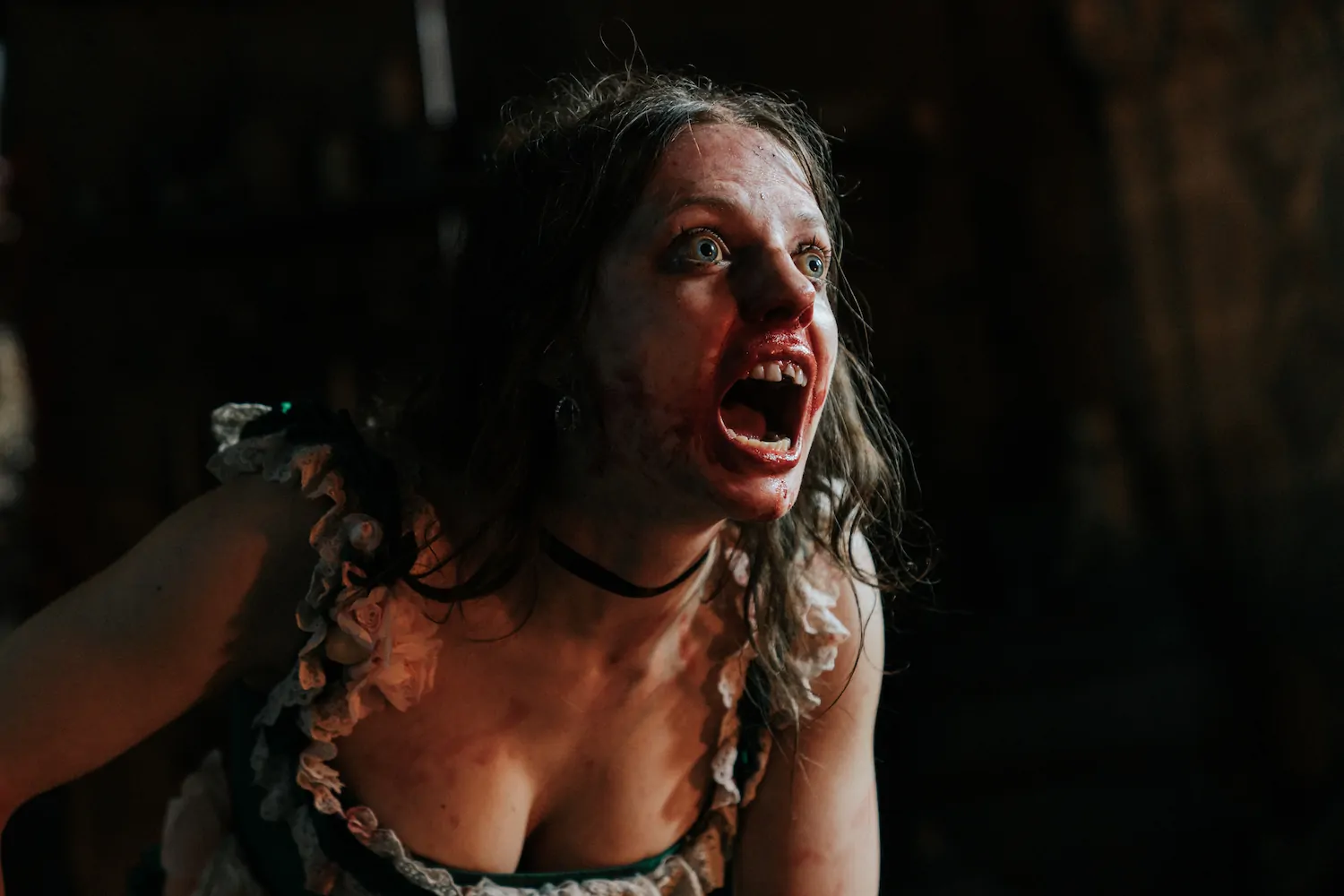
As each awards season passes, the cries for horror to be taken seriously by major voting bodies grow louder. In the past decade, those frustrations have often gone unheard, with many believing performances like Toni Collette in Hereditary or Lupita Nyong’o in Us were unfairly snubbed on Oscar nomination day. The push is there, however, with a slow but sure movement, thanks to the waves of nominations and wins for films like Get Out and The Substance. It’s the latter film that felt like the floodgates truly opening. Coralie Fargeat’s body horror epic couldn’t be handwaved away as “elevated horror,” but rather, an explosion of blood, guts, and grime that took the Oscars by storm.
A year later, not only did a similarly sticky and gross film about the rot of beauty standards pick up a nomination, but its success feels even more shocking. Squaring off against giants like Frankenstein and Sinners in Best Hair and Makeup is an independent and international dark spin on Cinderella.
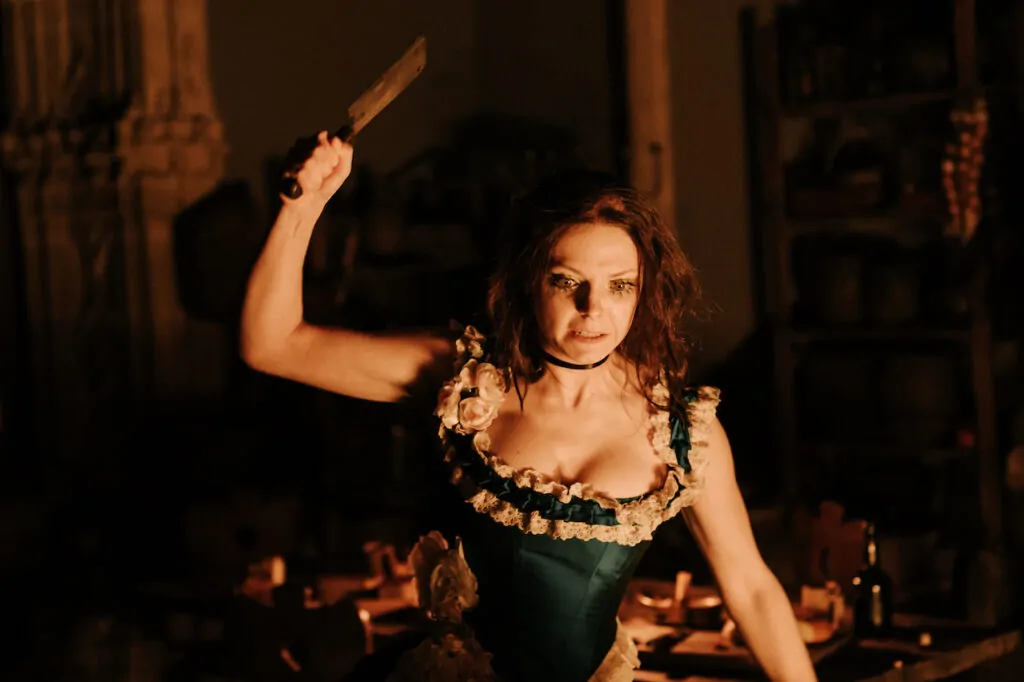
Filtering the classic fairy tale through how society uses and abuses women in the name of “Beauty,” The Ugly Stepsister upends the classic tale with twisted glee. Centering on one of Cinderella’s (here, named Agnes, played by Thea Sophie Loch Næss) stepsisters, Elvira (Lea Myren), the film follows her descent into extreme body modification in the name of bagging the handsome prince. With the introduction of tapeworms, broken noses, and severed toes, writer/director Emilie Blichfeldt weaves touches of the Grimm fairy tale with her own research into 19th-century beauty procedures. Much like The Substance, Blichfeldt uses grotesque practical effects and a whole lot of bodily fluids to scoff at how pathetic and silly our standards for women are. Balancing a tricky line between sympathetic and downright frustrating, Myren’s Elvira is a conundrum. Refusing to allow her work to be a polemic, instead letting her images speak for themselves, Blichfeldt forces you to contend with what these demands really do to the women who internalize them. The result is watching a woman, with nothing at all “wrong” with her, waste away.
An Oscar nomination for a film like this, low budget and outside the typical margins, would have felt unheard of just a few years ago. As the Academy diversifies its roster and makes strides towards paying respect to genre-filmmaking, it feels as if we’re living in a brave new world. At least one hopes. Ahead of the 98th Academy Awards ceremony, FANGORIA sat down with Blichfeldt, prosthetic makeup designer Thomas Foldberg, and makeup designer Anne Catherine Sauerberg to discuss the film, the absurdity of beauty, and that monumental nomination.
“Ugly” is such a loaded and harmful term, and what struck me most was how, by societal standards, Elvira isn’t “ugly.” I know that’s subjective, perhaps reductive, and even discussing it as such begins to fall into what this film is pushing against, but I think it’s important to talk. What were the conversations that went into making her stand out from the girls around her?
Emilie Blichfeldt: It’s a very interesting place to start. It’s like a hot potato to talk about what is ugly, what is not, how do we create a character, and not who’s supposed to be viewed as ugly, but do we think as ugly, and all of these things. We had a lot of conversations about this. It’s interesting that you say that she’s not ugly by societal standards, because that’s where we talked a lot. What are the standards, and what is our point? Should we make a character that is on the outskirts or really like a caricature who’s very obese, almost, or has a nose that is so large that it’s almost not believable? Is that where we’re going with this? We really decided that it was important for us that one of the points here is that the societal standard for beauty is so narrow. The smallest things can make you or make others comment on you, or make you feel that you don’t fit in. Elvira might be more relatable if we don’t characterize her too much.
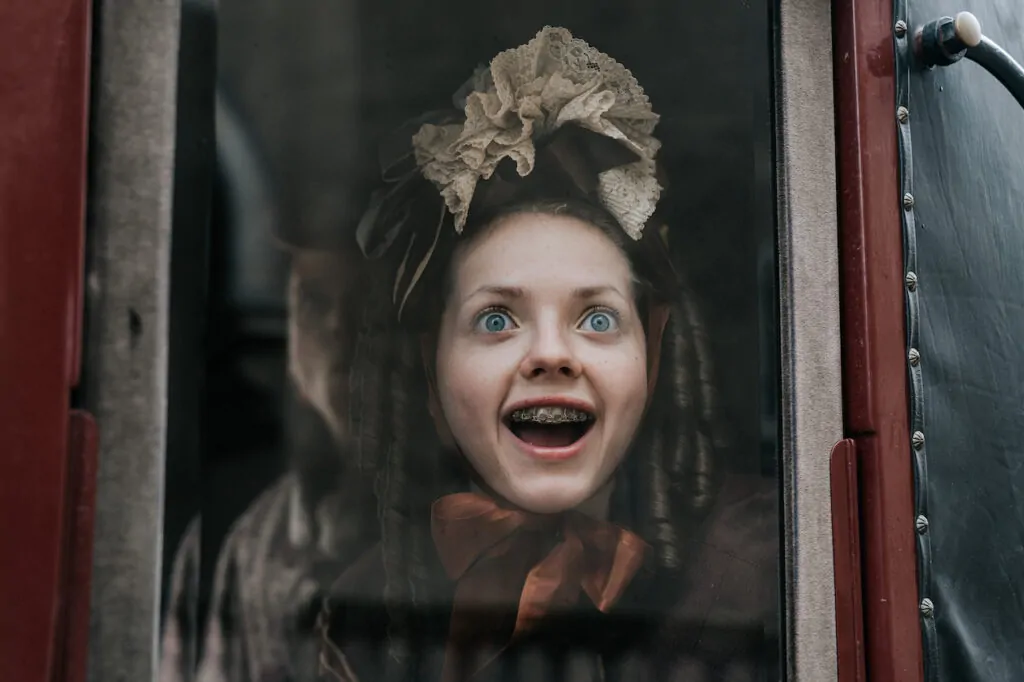
The type of nose we gave her before she goes to Dr. Esthétique is the same kind of nose that is on the before pictures of a lot of rhinoplasty procedures. It’s not that the things that we are ashamed of are that extreme. A lot of these things that people consider as, ‘Oh, I don’t look good,’ are such minute things that grow so big in our heads and in the media. So we really wanted to find this sweet spot where, because you, as an audience, like Elvira, but that’s also when she becomes beautiful. I think that’s also interesting. Who do we find beautiful? It’s the people around us that we love. That’s the people we find beautiful. We would never think they were ugly. It’s a big, complex discussion.
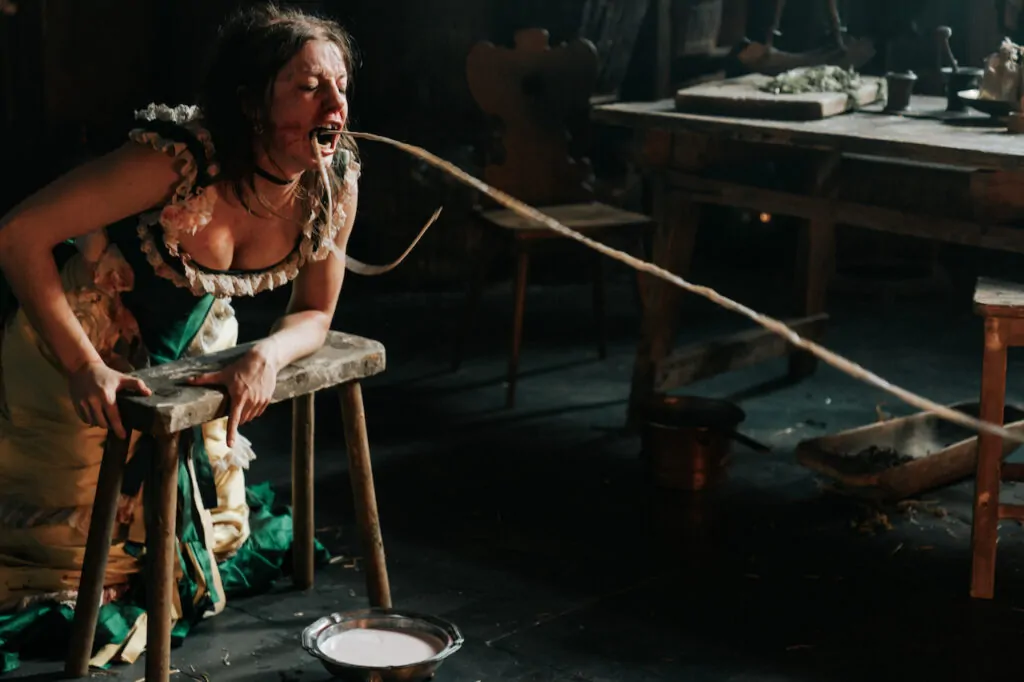
Well, to accomplish that, she undergoes increasingly absurd and horrific procedures. I’d heard of people using tapeworms, but how much research went into 19th-century beauty procedures? The sewing in of fake eyelashes really got under my skin, in particular.
EB: There are parts of the tapeworm diet that I took out that I thought were too far. For example, how you get rid of it because it doesn’t come out of the mouth. It comes out the ass. [laughs] I thought I’ll spare my audience that at least. I’m very gracious.
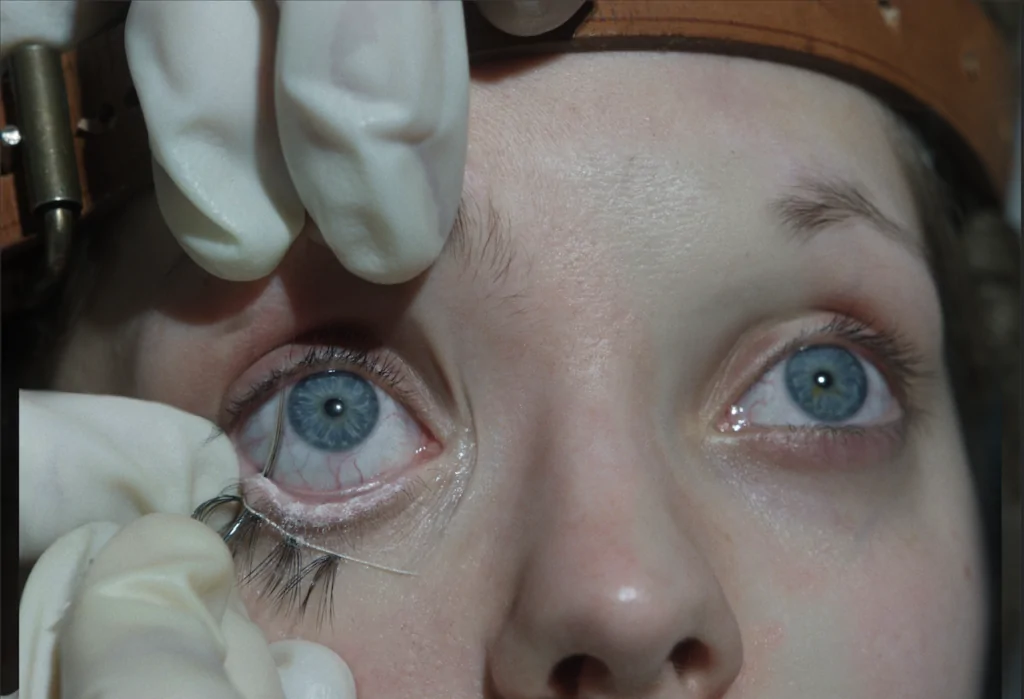
But it’s all based on research, and some of it, like the eyelash treatment, is more like a rumored treatment. It comes from a small notice in the newspaper in New York, like news fashion from Paris, girls sewing in eyelashes with a needle and thread. I don’t think it ever happened, but I thought it was gross and interesting. Eye trauma is interesting, or very visually striking, in movies.
Then the contraption on her nose is based on a real thing from the 1920s, I think, but they didn’t break their nose first. They just slept with it or something and hoped it would change the nose, but I thought that wouldn’t help. Maybe if you break the nose first, it would help. Then the chisel that he works with, the first cosmetic surgeons used chisels because they thought of themselves as sculptors and were very inspired by Greek sculpting. So it’s based on research, but then, of course, it’s a fairytale, so we made our own spin on it.
Tell me a bit about what went into pulling the eyelash scene off.
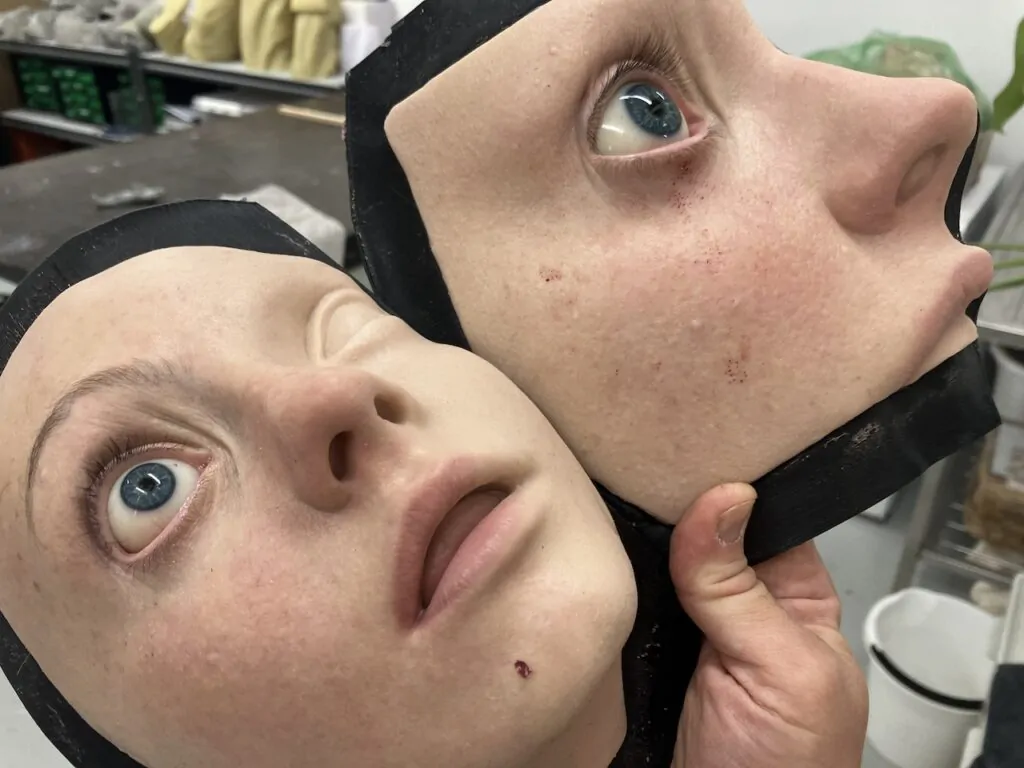
Thomas Foldberg: First of all, it took a lot of talking, and it took a lot of storyboarding from the beginning because obviously it was going to be quite complex. So we thought about it, if it could be a regular prosthetic makeup, with maybe some enhancement done afterwards, or something like that. And then it could be a whole fake head because that would fit the whole idea of stylized makeup effects. But that also seemed, budget-wise, a little complicated. When the storyboards came, and I got the vision from Emilie that it was going to be extremely close up and all of that, we had to go a different way.
So we ended up doing this with a whole dummy head of Lea’s face as Elvira, which could be stitched. Then it was shot in the same angle as Lea was in the scene, and then it was stitched together in post in the VFX. So no CGI involved, but a nice composite shot. That was definitely the way to do it because it was both easy to do on set, with resetting, but also, of course, we didn’t have to take care of an actor’s eyes or anything. So that was it. But a lot of thought went into it, and yeah, it was a tricky one to pull off. I was the one stitching it in the film, and I had practiced without rubber gloves, and then I got these very thick rubber gloves. So that was interesting to do, but it worked.
When we first meet Elvira, Lea Myren is wearing prosthetics on her arms or neck and they blend seamlessly, and then, as she progresses, the more obvious effects work like blood and gore, take over. As a makeup person, is it more of a challenge to create those hidden prosthetics?
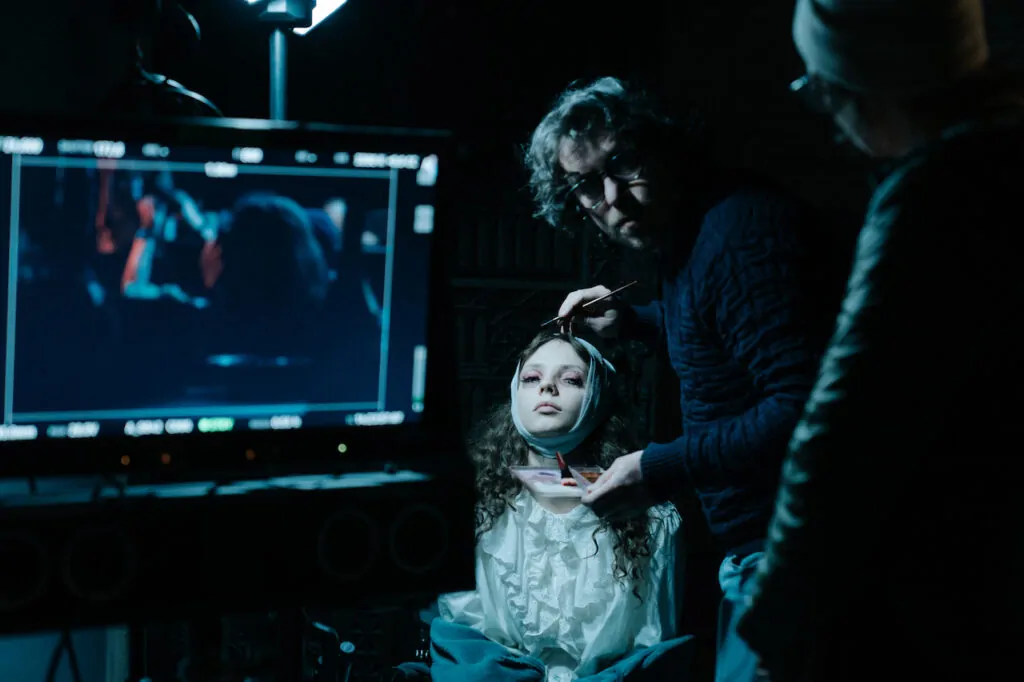
TF: Definitely. Yeah, because Emilie wanted to have the effects look like effects, well done to make it fit into its own world, then she also had a vision that Elvira’s look would seem perfectly natural to the audience. So it was, first of all, a matter of finding a design that worked, which was quite complicated to land in this area between a little cartoony and some realism, and also being really cute and innocent and a little goofy. So a lot of parameters were there to work within. Then on top of that, putting prosthetic cheeks and a nose and a double chin and a neck, as she has on a very young woman like Lea, it’s not uncomplicated. Especially with really long shooting days and a tight schedule and jumping back and forth in continuity, that part was complicated as well. Definitely much more difficult than the gore effects.
Anne, for you, when creating her hair, where were you drawing from? I’ve seen that coiled hairstyle in other period films, but there’s something so humorous about how it looks on Elvira.
Anne Catherine Saureberg: Emilie had some pictures of some ringlets, and we moved them up a little bit, and they are like an actor themselves. I think they’re expressing a lot of emotion and excitement about the horror of not having any money. I think it is not a very atypical hairdo for the late 1800s, but a lot of Elvira came from ’what would a mom do to a child?’ We had to have her just on the cusp of being a young woman, so I thought of this hairdo as something her mom would do to her. I think very much about how it is possible. How would it happen? How would they make this hairdo? Because I really like it when it’s plausible.
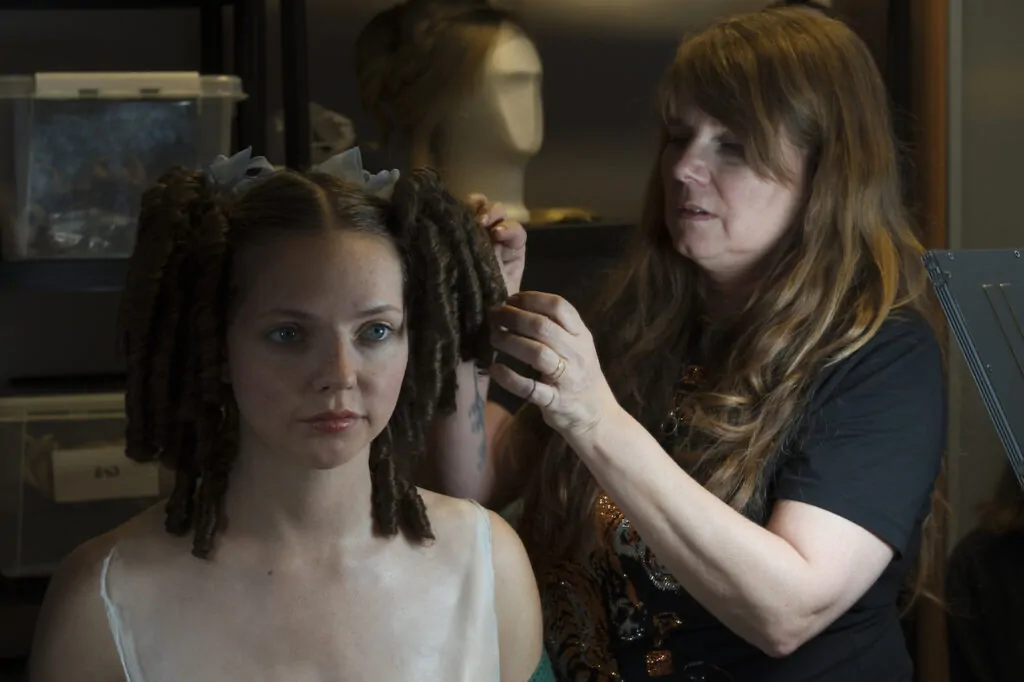
I could see her mom doing this, really tight center parting and curling her hair with an iron in the fire, and maybe burning her a little bit. Then, towards the dreamy party, the big ball, what would she think was pretty? What would she think was beautiful, and what would be the fashion of this period? So with some mood boards from Emilie and a little bit of imagination and some research from the time, or just what I already knew from movies I’d done, it was very important to make her relatable and cute. It is super interesting, this whole idea of what is beauty and what is ugly and what is… I really immediately loved this idea that Lea is already so pretty by herself. But it just takes a little pimple, a little blemish, a little bump on the nose to make people feel really, really ugly. I completely agree with what Emilie says, that the idea of beauty is so narrow. It’s just like little things. And then, of course, our Cinderella, our Agnes, is stunningly beautiful. At the beginning of the movie, it’s lovely that Elvira looks up to her and just thinks, ’Whoa, I got a real pretty big sister.’
There’s been so much talk about this flipping the fairy tale on its head, and I think my favorite moment for that is when the silkworms crawling all over her father’s corpse are the things that create Cinderella’s dress. Can you tell me about how that all came about and how you did that in-camera?
EB: Actually, Thomas has his fingers in all of this movie. Everywhere there’s a little bit of Thomas. I love that you say that it’s your favorite. That was a big moment for me, writing it, because I was taking the fairytale parts and then trying to not lose the fairytale, not lose the archetypes and stuff, but to make it actually plausible and real, somehow tangible. In the Brothers Grimm, it’s a tree and the birds on the dead mother’s grave that give Cinderella the dresses. And then you have the sewing mice in Disney, and then it’s all these worms in my universe.
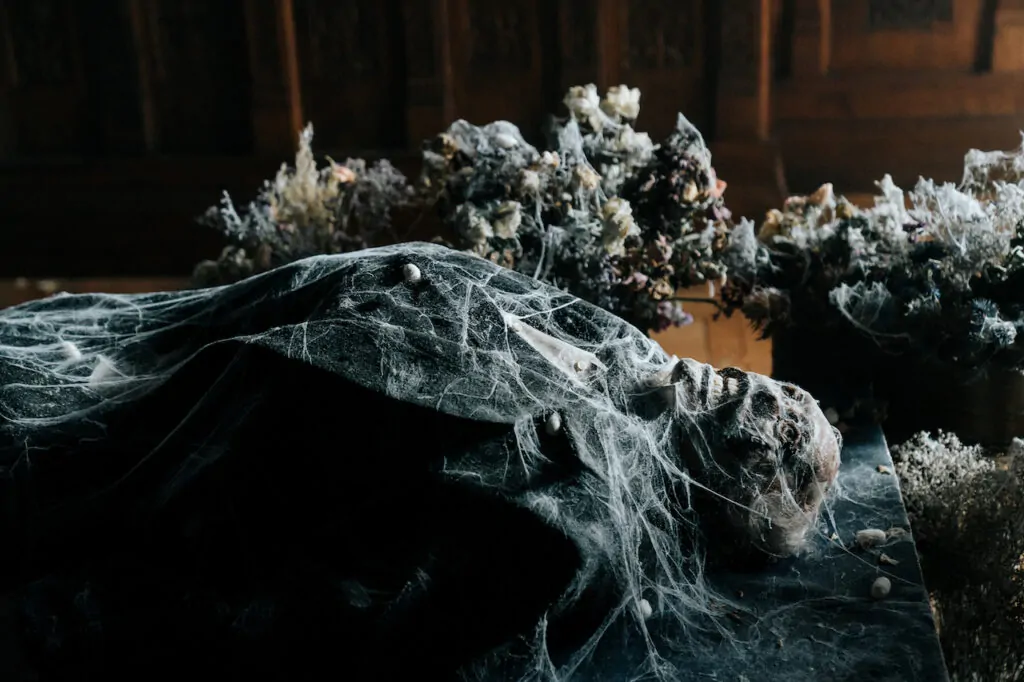
So it was like these three things getting mixed up together, and having this idea that it’s actually the remains of the rotting father that these silkworms have been eating that is making the dress. For me, that’s also a metaphor for how it’s actually her class and her upbringing and her parents’ love for her that is making it possible for her to marry the prince. It’s a class issue.
Making silkworms make a dress takes a lot of time. They’re real silkworms that Thomas’ friend and puppeteer, another Thomas, was moving around with chopsticks very carefully for hours, with small strings attached together with our amazing VFX supervisor, Peter Hjort. And then it’s composites of those real shots with shots we did on set.
So what you’re saying is that the silkworms should have a costuming credit? [laughs]
EB: Exactly! [laughs]
Something that always surprises me, either having friends who make films or my partner who makes horror films herself, they all say it’s the least exciting effects scene in the film that ends up being the most challenging on the day. What did that end up being for you?
TF: I think the most challenging was actually chopping off the toes because it was such a long day, and we kept pushing this effect. So it ended up being the last, I think, one hour and forty-five minutes that we had. Before that, we had a lot of talks with the props department and the set manager about having blood on set. We were filming in this museum, a castle that was a museum as well. And when we were about to film it, we were told, ‘Yeah, but you can only have blood on this piece of rock,’ and it was so small.
So it was literally pulling the rug out from under us. So we had to manage and together with the effects, how can we actually solve this because time is running out and we can’t spray blood? That was a very confusing hour-and-a-half, figuring out what to do. But it ended nicely, and we managed to do it without ruining anything on set. Then we did the blood sprays afterwards in my studio with the same foot prosthetics. Then that’s put together with the other footage in post. Again, it’s not CGI or anything. It’s all stitched together.
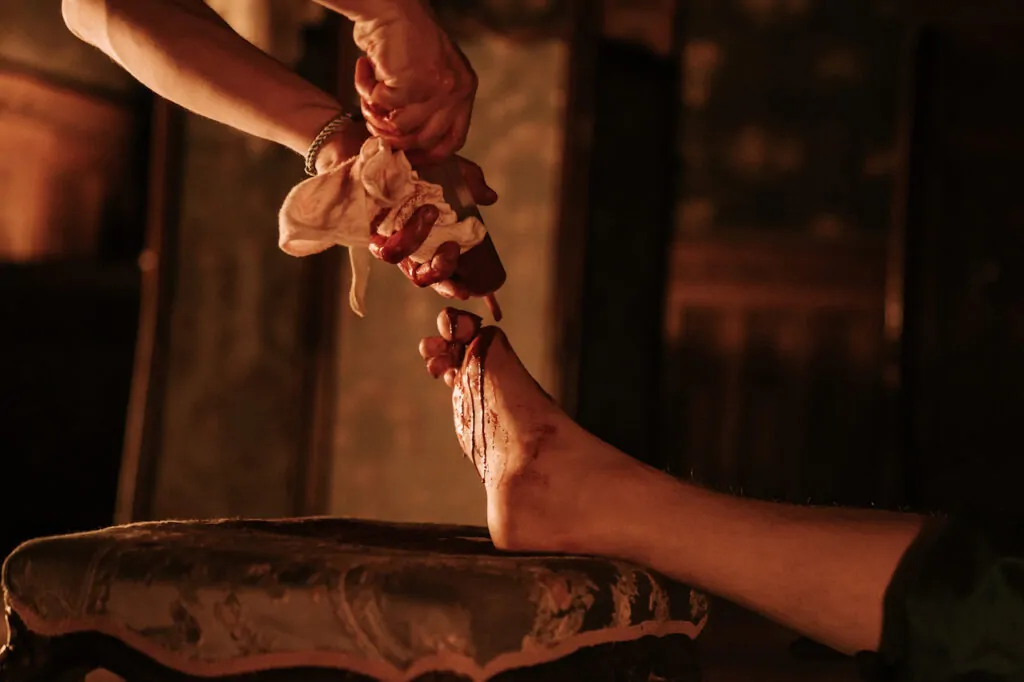
EB: A lot of the most beautiful gore shots are made in Thomas’s studio in a two-day period, with like four people: the cinematographer, Thomas, and the VFX supervisor, Peter, and a few assistants. Even when she cuts the worm in half at the end, that’s like a linoleum floor with an assistant in Elvria’s costume. We made her nails dirty and tried to match them because we had no chance, because these scenes are such big acting scenes. For me, actually, the hardest thing, and Catherine and Thomas were also a part of this, is having a character lose hair in movies or having someone pull out hair. To make the audience understand that that’s happening, that was something that we were really struggling with. It’s like, it should be really easy, but then it started just falling out by itself, or we couldn’t find the right piece…it took forever!
I think it’s silly to ask you all what this nomination means to you, that should be obvious to anyone. So instead, I wonder, do you think this means the Academy is truly changing? Does it give you hope for not just the recognition of horror films, but for independent films like this?
ACS: Yeah, I think it’s a very big thing. A lot of the movies I have done lately have been quite small and very independent. I think when you look at the other nominees, it’s a very different group of people, for very different things. It’s all such amazing work. There’s a really nice podcast called Last Looks, where it goes through all of the things that are done, and it’s so different, and the expression of the films is so different. So yeah, I think there would be a lot of hope in that and the way film should move forward after the big streaming feast and all of their content. I think that it’s moving towards small works and small movies.
EB: I think it’s interesting because we’re all waiting for cinema to die, right? With the big TV boom, ‘Oh, my God, cinema’s dying.’ But I think it’s interesting what has happened is that actually the more commercial and easy content moves over to TV. But in the cinema scope, suddenly there’s space to celebrate more of what cinema is and maybe some of the more artistic visions. To get people to go to the cinema, you really have to make something that’s really cinematic because to just watch a rom-com or wherever they can see at home on their computer or in a TV series. So I think with Sinners now as well, people are really talking about that dance sequence. There are sequences and genres and different things that make the cinematic expression alive. That’s why we are discovered because people are seeking something unique out and wanting to discover, and not just taking whatever the big wave from Hollywood gives you.
This interview has been edited for length and clarity.