

Last Updated on March 16, 2024 by Justin Lockwood
We’re saddened to learn of David J. Skal’s passing. In his honor, we’re re-sharing the below article, originally published last year.
The first book I read by renowned genre historian, producer/director, and writer David J. Skal was either The Monster Show: A Cultural History of Horror or Death Makes a Holiday: A Cultural History of Halloween. Both are amazing works and indispensable for horror fans. Skal’s exhaustive research and carefully crafted writing demonstrate how artful and transcendent nonfiction can be, and treat the horror genre with the reverence it deserves.
David J. Skal debuted in 1990 with Hollywood Gothic: The Tangled Web of Dracula from Novel to Stage to Screen, an early example of his passion for classic horror. In 1993, Skal tackled the whole horror genre with The Monster Show, an expansive and tremendously entertaining book. (Psycho author Robert Bloch declared it “The best book about horror movies I have ever read.”) In a series of chapters with witty names like “Drive-Ins Are a Ghoul’s Best Friend” and “Scar Wars,” Skal explores everything from German expressionist films like The Cabinet of Dr. Caligari to more modern terrors like An American Werewolf in London.
FANGORIA is highlighted in “Scar Wars,” with both an appreciative assessment of the publication– “printed in full color, the better to reproduce its center spreads and foldouts of lovingly photographed carnage, like a necrophilic parody of Playboy”–and an overview of the controversy it generated. Skal explains that it was banned from a Canadian convenience store chain, while “in England, FANGORIA caused a Nightmare in Downing Street for Prime Minister Margaret Thatcher, who called it ‘absolutely appalling’ and urged a member of Parliament to determine whether the magazine fell under the Obscene Publications Act of 1959. It didn’t.” That exemplifies the wit and humor that enliven the book and gives Skal’s work a distinctive narrative voice.
![The EVENT HORIZON Sequel Is ALIENS In Hell [Exclusive]](https://www.fangoria.com/wp-content/webp-express/webp-images/doc-root/wp-content/uploads/2026/03/EventHorizon-Inferno-CoverRBG-Cropped-2-300x169.jpg.webp)
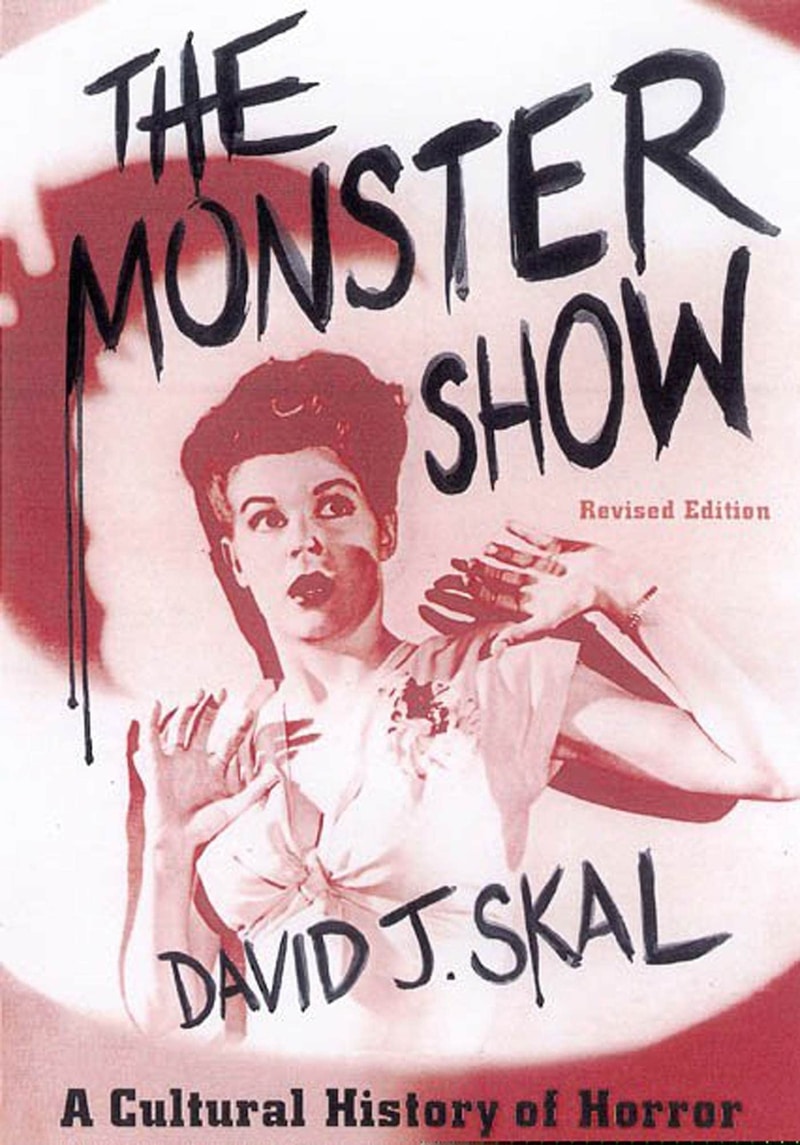
The Monster Show is also marked by the author’s keen cultural and historical analysis. In “Dread and Circuses,” Skal relates Lon Chaney’s grotesque characters, including the Phantom of the Opera, to both disfigured World War I veterans and contemporary art movements. “Chaney’s plastic experiments on his own body shadowed the concurrent efforts of cubist, dadaist, and emerging surrealist painters to stretch the human form into increasingly bizarre configurations,” he observes. In “Rotten Blood,” Skal writes about how the AIDS crisis was mirrored in horror, especially vampire stories, while touching upon Anne Rice’s connection with, and popularity among, the gay community, declaring that “her sympathetic portrayal of an alternate, supernaturalized sexuality that survives a world of death conveys a complicated healing message to a community which has suffered, and continues to suffer, a concentrated level of human loss unprecedented outside of wartime– or medieval plague.” Skal himself is gay, which grants him additional insight into LGBTQ+ history and culture.
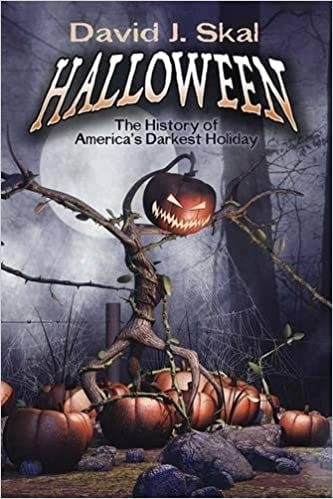
That history is prominently featured in his wonderful Death Makes a Holiday: A Cultural History of Halloween. Death Makes a Holiday consists of a series of essays, like “Home Is Where the Hearse Is: Or, How to Haunt a House,” “The Devil on Castro Street And Other Skirmishes in the Culture Wars,” and “Halloween On Screen.” The book is both very insightful and tremendously fun. In one of my favorite chapters, “The Witch’s Teat,” Skal writes, “Accused witches in New England were subjected to grueling ordeals, but perhaps none so challenging as locating a parking space in modern Salem during a typical October weekend.” As a Massachusetts native, I especially appreciate this exploration of how Salem became “the Witch City,” a touristy Halloween mecca. Skal details the strange events of the Salem witch trials, while also pointing out the disconnect between the gruesome past and the capitalist present: “the trials would ultimately take on the commercial patina of a festival whose purpose and meaning its victims would find utterly mystifying and, no doubt, abominable.”
“The Devil on Castro Street” introduced me to some vital gay history. The essay identifies José Sarria, a server and performer at San Francisco’s Black Cat Café, as “a pioneering gay activist who injected stinging political commentary into his performances … and encouraged men shaken down on ‘morals charges’ to demand jury trials, in which the lack of evidence would be apparent.” Sarria ran for the board of supervisors in 1961, a bold move for an out gay man. Unfortunately, the Black Cat Café was closed by the homophobic local police on Halloween 1963, in a struggle that reflected tensions between cops and LGBTQ+ communities across the country.
“In the years before the defiant Stonewall riots of 1969, in which Greenwich Village drag queens violently refused to acquiesce to police harassment, the closet was brutally enforced,” Skal writes. “Fortunately, the closet had plenty of costumes.” The author notes the special attention drag queens garner from the media at both Halloween and Pride events, which irks assimilationists; he smartly points out that “drag queens have always been at the forefront of gay activism, if only because of their intrinsically heightened visibility.” I’ve referenced that statement many times over the last few years– including or substituting “trans people” for drag queens– because it provides important historical context and relates very much to our current climate (in which the trans community has become the most visible and frequently attacked part of the LGBTQ+ community). While Skal focuses particularly on the tumultuous history of Halloween in San Francisco’s Castro neighborhood, he broadly conveys the special significance of Halloween for queer people.
“Home Is Where the Hearse Is” is a great examination of haunted houses, from the high-tech thrills of Disneyland and Universal Studios to the homegrown magic of “yard haunters.” Skal writes about people like Bob Burns, a Burbank resident and horror and sci-fi movie collector who created dazzling installations in and around his home beginning in 1967. Rochelle Santopoalo, editor of Happy Halloween magazine and expert on the yard haunter phenomenon, notes how neighborhood haunted houses “seemed to reclaim a sense of community.” “People would come year after year to this one house– they were like beacons,” she tells Skal. “Because of the stability of that particular recurring event, there was an instant sense of camaraderie. They’re putting out a welcome sign– they’re saying ‘We’re open. We want you to come.’” This chapter hit especially close to home for me, as a veteran of Halloween 313, a homegrown haunted house show that ran for over twenty-five years in the Clinton Hill neighborhood of Brooklyn. Initiated by my friend Janna, known locally as “the Halloween Lady,” the show involved a massive stage, dozens of local volunteers, and Broadway-style production values that drew thousands of neighborhood children year after year. Skal’s book compares the mounting of a haunted house to a barn raising, and that’s exactly what it felt like for me, gathering year after year with the other “Halloweenies” coming together to put on the show.
In the two decades since Death Makes a Holiday, Skal has remained busy, writing, directing, and producing documentary features on classic horror films and writing books like Claude Rains: An Actor’s Voice and, most recently, 2020’s Fright Favorites: 31 Movies to Haunt Your Halloween and Beyond. Fright Favorites, dedicated “To Monster Kids of All Ages Everywhere,” demonstrates the precision and insight of Skal’s writing, with astute analyses of movies like Nosferatu: A Symphony of Horror, Halloween, and Get Out. In his review of Night of the Living Dead, Skal observes:
“[George] Romero intended no social commentary at all; he had, for instance, cast Duane Jones for his acting talent and not to send any message about race. But because the sociopolitical climate of 1968 was so unstable, many audiences regarded simply viewing the film as a kind of protest, a transgressive gesture against the stubborn status quo represented by the parents, film critics, and even editorial writers who railed against the film.”
David J. Skal continues exploring the horror genre in intelligent, surprising, and provocative ways. We’re lucky to have his voice.
