
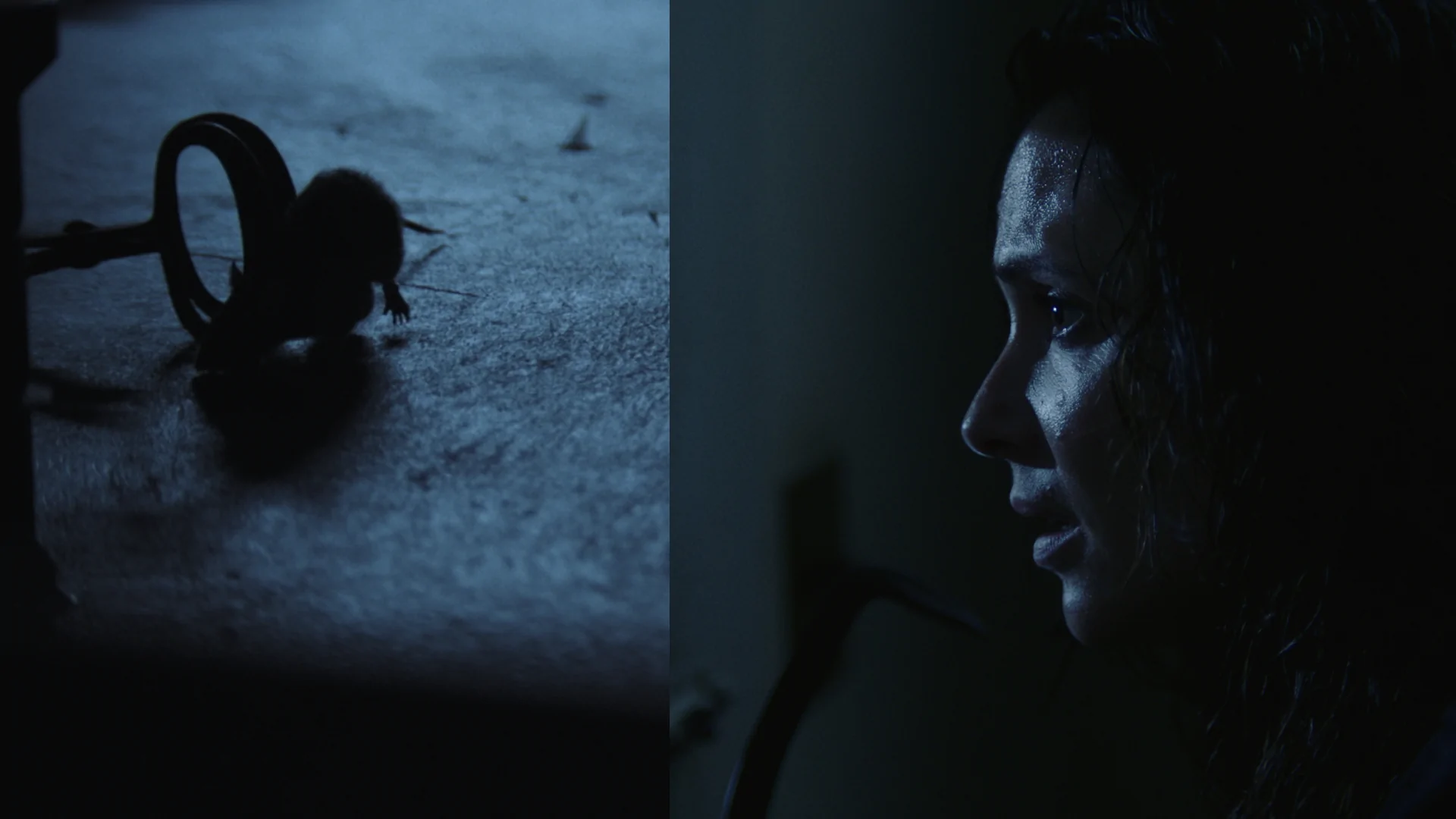
Writer/director Will Canon’s The Confession is a modern take on the Pied Piper story, centered on a recently widowed musician who returns to her childhood home with her young son after her father's death. She discovers a tape in which her father seemingly confesses to a string of grisly murders to protect himself from an evil force. As Naomi investigates her father’s claims, her son exhibits increasingly unsettling behavior…
When we think “Pied Piper,” we think music, children, and RATS. Canon shared some sweet behind-the-scenes videos of The Confession‘s rats in action, and more about the process of working with the tiny creatures.
“The Pied Piper Of Hamelin is a story that people know, to varying degrees, but the actual story is such a dark one about all the children from the town being taken away because the adults backed out of a deal. I thought there was something really interesting there,” said Canon. “I think now there have been a couple of films over the last few years that have dealt with the Pied Piper, but they hadn’t come out yet when I was writing this.”
In The Confession, the rats serve as a visual marker. “The rats are tied into the Pied Piper mythology as a warning sign. When they start showing up, it’s a warning to the main character, Naomi, that all is not well here. I thought there were some really cool opportunities to use the rats, music, and the idea of the town owing this debt, in a modern story.”

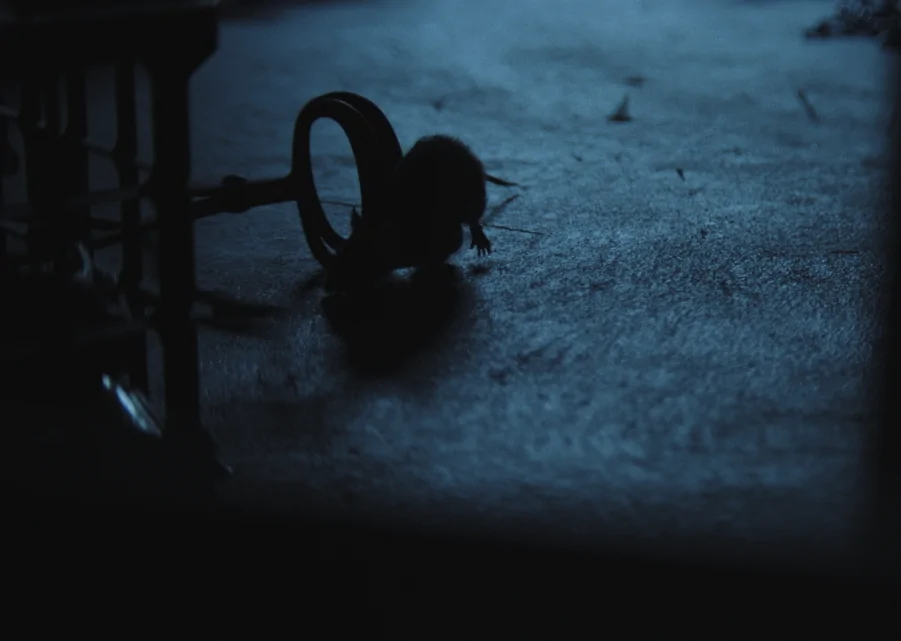
As a fan of practical FX, Canon opted to use real rats for The Confession. “If you can do anything practically, nine times out of ten, you’re going to be happier with the result. We looked into creating digital rats, but I never saw any examples that excited me, and having someone create them on our budget would probably have been difficult,” Canon shared.
The choice to go practical enhanced how the rats interacted with one another and their overall appearance in the environment. “I was really pleased with the choice to use practical rats and then comp them into the things we had shot on location. It’s funny because in some of the reviews, people have said, ‘Well, obviously they did the rats with CGI.’ I think it’s because some of the things that the rats do in the movie are hard for people to imagine real rats doing, but the rats are all real! We used real rats and then comped them into the practical locations.”
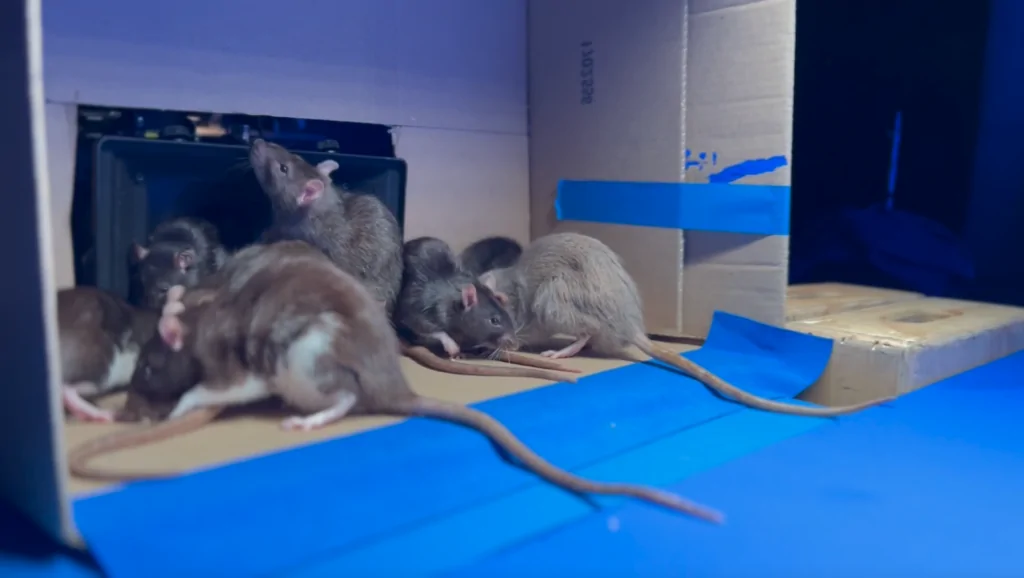
To achieve the effect, Canon and his team used real rats, shot against a blue screen, and later edited the rat footage into the previously shot scenes with the actors. In fact, the actors and rats were never in the same space. Instead, they were shot at different times and in entirely different locations. The scenes with the principal actors were shot in Wilmington, North Carolina, followed by a shoot in Los Angeles with the rats roughly five months later. Take a look at the “ractors” in action below.

“It was logistically tricky to make sure we were getting everything we needed and that the shots with the rats would match and cut together with the scenes from principal photography. But I was really happy with how it all turned out. Seeing it all come together once we’d shot the rats and our fantastic VFX people had done their work to put it all together was really rewarding.”
To do that, the team had to match the Los Angeles rat shots to the scenes they had done in Wilmington, and semi-recreate the practical environment the rats were meant to inhabit, using VFX to seamlessly blend the practical elements. “We essentially used the same camera, the same lenses, the same exposures, and recreated the shots that we had done in North Carolina, but in LA with the rats. We were able to remove the blue backgrounds and place the rats into the shots we had done in Wilmington. The VFX team was really smart about creating similar textures for the blue screen, so the rats have things to interact with (like running around a box in one shot) that help sell them as actually being in the practical environments where our actors were.”
The team also used insert shots to create the illusion that the actors and the rats shared the same space. Movie magic, baby! “There’s a scene in the Piper’s basement where a rat walks over to a weapon that Italia Ricci’s character has brought with her. We thought it would end up as a digital shot where we’d comp in a real rat, but we realized we could just recreate the basement floor from Wilmington in the studio in LA. So we dressed the floor to look like the basement, brought out the prop weapon, and got that shot practically without having to do a comp.”
Naturally, the most difficult shots involved very specific movements required from the rats. Luckily, they were up to the task (and had great trainers). “We have a shot of a rat running around a box in an attic and another where a rat is digging on a pile of dirt. Those weren’t too difficult. But then we have shots of the rats in a big mass on a wall, running down it, and running at the camera. Those were all a lot more difficult to get.
“The script also called for the rats to move in very specific directions and in specific ways that aren’t how rats typically move, so motivating them to do what we needed was probably the trickiest part. But the trainers on set were great and were able to give us pretty much everything we wanted. We had a pretty meticulous shot list and were ticking off shots as quickly as we could get them.”
While you’ll notice a large swarm of rats in the film, Canon and the crew were actually working with a much smaller mischief of rats on set. “Several shots call for hundreds of rats to be crawling all over each other on a wall. We didn’t have anywhere near that many rats, so we would lock off the camera and have them do the action in different areas on the wall, then the VFX folks stitched all of that together to make it seem like there were hundreds of rats.”
Canon confirms the rats did indeed go off script quite a bit, but the key was to keep rolling and exercise a whole lot of patience. “They were probably off script more than they were on script. I found that the best thing to do was to let the camera run and give them as much time as possible to try and get the action right, and let the trainers work with them. I’d just watch really closely and see if there were parts of what they did that I could use, or in some cases, maybe they’d get the entire motion that I needed. But if you saw the raw footage, there was a ton of stuff that just wasn’t going to work, but we were able to capture enough of the specific actions we needed to pull it off.”
But there were some happy surprises as well. “There’s a moment where the rats are all on the wall, Italia’s character sees them for the first time, and there’s kind of an alpha rat that looks at her and raises up. There was some skepticism about whether any of the rats were going to be able to do that, so it was kind of gratifying that the rat was able to do something that was pretty similar to what I was envisioning.”
Robert Eggers reportedly used 5,000 live rats on the set of Nosferatu. While Canon did enjoy the experience and overall challenge of working with the rats, he’s in no hurry to break that record. “I love animals, but they’re kind of tricky to work with. They were a lot of fun, and they’re really smart, but the old cliche about working with animals was true for me, so I’m not in a big hurry to get back to working with rats. If we had eight on The Confession, I’d say 20 to 30 is probably a good max for me. 5,000 is pretty remarkable, and I loved Nosferatu. Hats off to Robert Eggers.”
Making eight rats look like a much larger mischief through clever shooting techniques enhanced with VFX is worthy of a hats off as well. You can check out the rats (and humans) in action for yourself in The Confession, now available on demand and digital.