Last Updated on March 16, 2024 by Michael Gingold
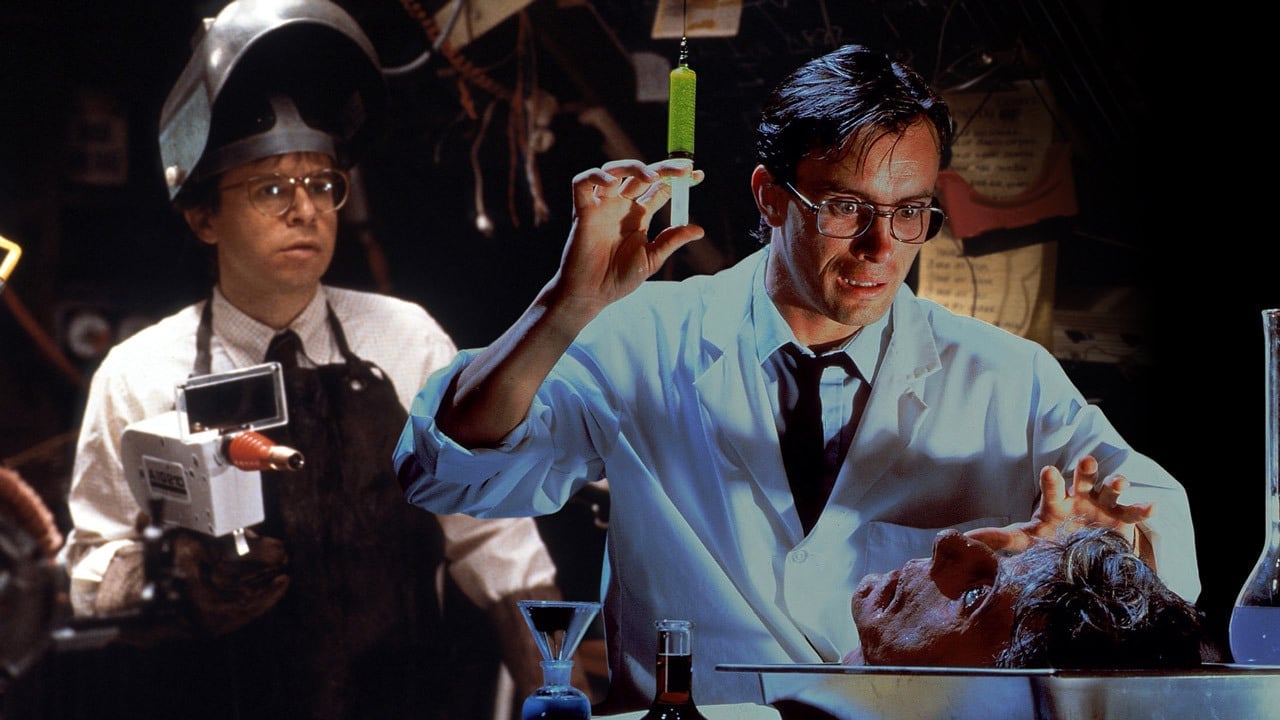
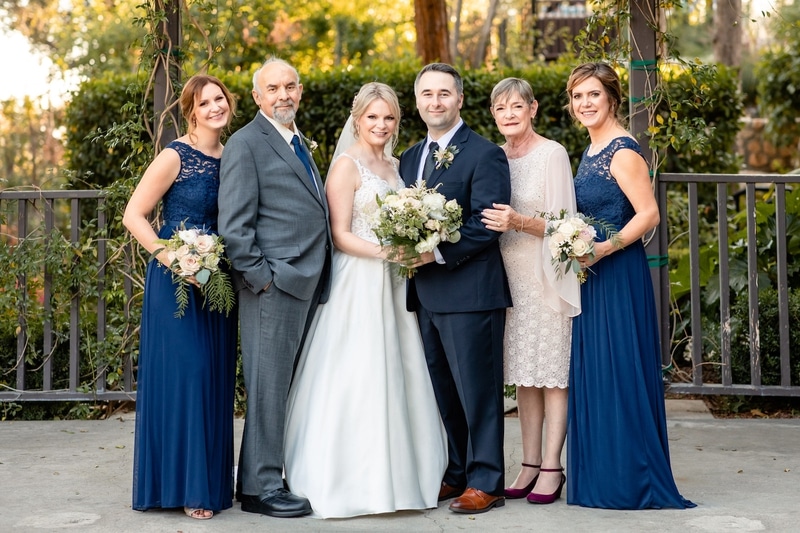
With the late horror legend Stuart Gordon’s memoir Naked Theater & Uncensored Horror seeing publication this summer by FAB Press (go here for further details and pre-orders), FANGORIA got an extensive chat with his daughter Jillian (pictured below at left at her younger sister Margaret’s wedding). Part One of our chat covered some of his best-known horror films and their stars; the talk now turns to a major kids’ adventure on which the director was involved…
Stuart was the original director on Honey, I Shrunk the Kids. As a youngster, did you feel a sense of disappointment when he was no longer involved?
Yes. Fun fact: He actually came up with the idea for Honey, I Shrunk the Kids telling it to my sister Suzanna and me as a bedtime story, which was awesome. Whenever my parents would put us to bed, my mom would always read from a chapter book, and my dad would say, “You know what? I don’t need a book, I’m just going to make up a story.” And he would, and we loved it; he had an incredible sense of storytelling and imagination. He would lie down between our twin beds and just go, and that’s how he came up with Honey, I Shrunk the Kids, and we loved it so much. I want to say that he told it to us in parts; the next night, it was like, “Let’s hear more of that story!” He really got into it, and then he and his writer friend Ed Naha got together and came up with the script for Honey, I Shrunk the Kids.

He was attached to direct, and I think I was in kindergarten at the time. He was working with Ed and also [Stuart’s regular producer] Brian Yuzna, and Brian’s kids and my sister and I were all about the same age, so we were very close family friends with them. A lot of development work went into getting Honey, I Shrunk the Kids off the ground, and even at my young age, I knew that there was a big project afoot. Then when he was not able to direct, I have pretty strong memories of that turning point and knowing that something major had happened. Obviously, in the book, he speaks very candidly about it, as he has in past interviews. Clearly, that was a very disappointing moment in his career, although now I believe he came away from it thinking that if it had happened, he might have been pigeonholed into doing projects that weren’t really speaking to him and the directorial freedom that he wanted to do later on. It’s like because that shook out the way it did, he felt from there that he could go off and do whatever he wanted. And he did.
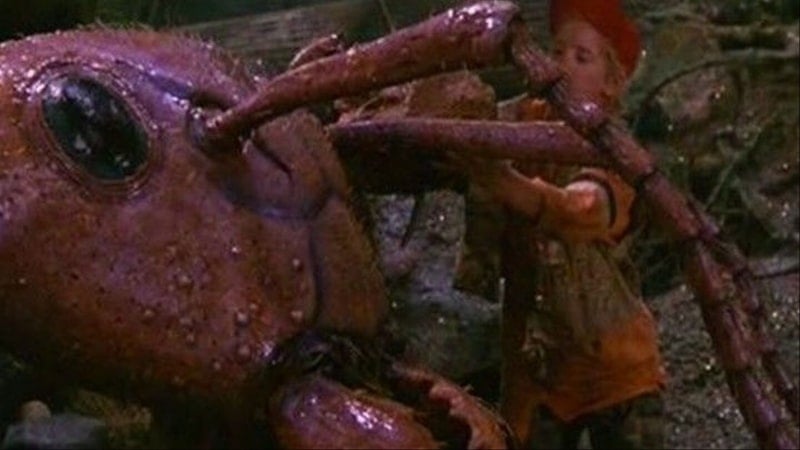
So, in the end, it turned out okay. Though at the time, it felt like a disappointment because he worked really hard on Honey, I Shrunk the Kids, and there were certain battles he fought on that movie that he eventually won prior to his not being able to direct. For example, he went to battle with Disney over the character of Antie [the ant the tiny kids befriend]. They wanted to do it like, “Oh, let’s make Antie cartoonish and lovable,” and my dad was great at understanding the nature of fear and how it can easily transform into something like laughter or love. It’s a very real emotion, and he said, “No, Antie needs to be scary.” It needed to initially be a character that the kids are frightened of because it takes you through an entire emotional journey, and by the end, everybody’s crying when Antie dies when at the beginning, they were terrified of it. So I’m thankful that he was still able to leave his mark on that movie.
A lot of his movies had literary origins, can you talk about the importance of literature to his filmmaking inspirations?
Obviously, he was a major H.P. Lovecraft fan, and much of his work is based on Lovecraft and Poe. My dad was an avid reader and a major believer that the best stories started in books before they were transferred to the screen or the stage. He eventually did Nevermore, the one-man show, when he returned to the theater, with Jeffrey Combs playing Poe, which he also did in the Masters of Horror episode The Black Cat. My dad felt that those two influences were especially great at scaring you in ways expressing the idea that your greatest fears lie in the things you don’t see, or prey on things that are simple but terrifying, and wonderful at putting prose to that. When we were children, he would read us Grimms’ Fairy Tales and things like that, which now I look back and I’m like, “Those were kind of scary to hear before bedtime!” [Laughs] But there’s no better way of telling a story than putting it to a page and then taking that idea and playing around with it. And he always made sure to pay tribute to the greats in his work.

And now Stuart’s own story is coming out in book form. When did he first get started on his autobiography?
Prior to his passing, he had been working on it for about eight years. He had a lot of iterations of it; I read a couple of different versions. And he was also living his life, so there would be more to add. I want to say he started putting it together probably in 2012, and he passed away in 2020. It really covers everything, and that’s what is so great: You get to read the whole story. Because his career spanned the stage and then film, you have fans who were very into the theater in Chicago in the ’70s that he was instrumental in crafting. And then there are the horror fans and the people who came to his work later, and he goes into the early stages of how he was given the opportunity to make Re-Animator, and how that transformed his entire career trajectory, and eventually his return to the stage with Re-Animator: The Musical. It also covers his college days, and there are some pretty wild stories in there; he and my mom got arrested back then for an illicit production of Peter Pan! That was always family lore, you could say, and I love that now it’s finally all in his own words.
Is there anything you’d like to say in conclusion about the book or your father’s legacy?
One big thing to note about this book, and I want to give a real big shout-out to FAB Press because they were wonderful in making this happen: It’s pretty much unedited. Sure, there were a couple of factual things or grammatical things that we adjusted here and there, but it’s otherwise untouched, which my dad would love! We can call this the director’s cut of the book, and people who are fans of his work will know what that means. He didn’t hold back at all in the telling; you’re getting the good, the bad, the ugly, and the gory! He’s giving it to you, as he puts it, the way that he remembers it, and telling you all the trials and tribulations of putting these projects together, all of the behind-the-scenes stuff that went into them.
I also had the opportunity to source some great behind-the-scenes photos, and I want to give another shout-out to some of his friends in the industry: Brian Yuzna and other people who went into their storage units and so on. They’d say, “I think I shot a round of Polaroids back when we were on Re-Animator, let me go find those!” so we could get them in the book. People were more than willing to help and make this happen, which was wonderful.
And for me, on a personal note, this was his last piece of unfinished business, and I wish he were here to see it because he worked so hard on it. I think he knew he was not going to see the book in its final form, and because there was that extra task of finding photos and additional material to round out the stories, it was a special opportunity for me to get a closer look at his life and his legacy. He has four, soon to be five grandchildren, who will have this forever. That, for us, is awesome, and everyone who loves his work will not be disappointed. I’m biased, but this is a really good read!