

Wu-Tang founder RZA (Robert Fitzgerald Diggs) lives by the old adage, “If you want something done right, you do it yourself.”
To finance his fourth film, RZA’s One Spoon of Chocolate, the writer/producer/director put skin in the game. And now, to get the action/revenge film into theaters, he’s launching his own theatrical distribution company, 36 Cinema, which releases One Spoon of Chocolate today.
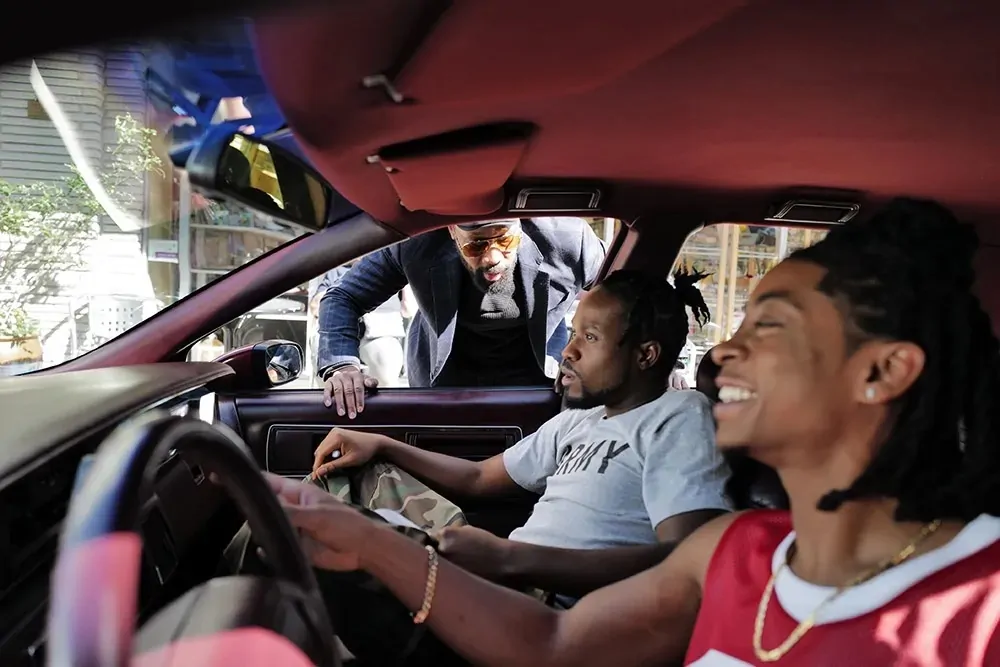
Actually, One Spoon of Chocolate would play even better at the drive-in, venues known for the type of gritty 1970s movies that inspired RZA’s latest flick. Chocolate follows a military vet (Shameik Moore, the voice of Miles Morales in the Spider-Verse films) who settles in a small town where he encounters racism, police corruption and an organ-stealing ring (!). But this war hero won’t go down easy…
In the following exclusive interview, RZA discusses his mentor and Kill Bill collaborator Quentin Tarantino, who “Presents” One Spoon of Chocolate; the over-the-top fight scenes and the surprising horror influences that permeate his film.

There’s been a major cinematic racial reckoning going on with many African American genre filmmakers participating. Is One Spoon of Chocolate following that path?
No, not directly. It’s more serendipitous that these types of films seem to be coming out now. The art world or the creative world is just making it happen without us intentionally doing it. In the ’90s, there was a hip hop movement when you had Nas, Biggie, Wu-Tang, Jay-Z, and it was a string of a sound that just came out independently of each other. It’s happening in black cinema right now as well. We filmed my movie a year and a half ago, not knowing what anybody else was doing. It just happens to be a wave that maybe our industry needs.
The movie has a great feel for ’70s drive-in classics like Walking Tall. Was that an inspiration?
Well, I love that film. I mean, come on, Buford with that stick. We almost made our poster like that. I saw that film as a kid. I was living in North Carolina at the time, and it always stayed with me. White Lightning, another great film, also In the Heat of the Night. Those films all have a spoonful in my film. When I say, “One spoonful of chocolate,” I’m not only talking about my character who says it in the film, but also One Spoon of Chocolate is a spoonful of all these flavors of different genre films that found their way into my film.

Tarantino is also a huge fan of those films. When did you involve him with One Spoon of Chocolate? Did you try to get him onboard with the script or just show him the final film?
Yes. I showed him the final film, and he loved it. Everybody knows that Quentin’s my film godfather. He’s my mentor. I studied with him for about six years. I asked him if I could use his Red Apple brand in my film. I don’t know if you noticed it, but it’s in there. My cinematic world is intertwined with his. Because he’s my teacher. And when you think about Quentin and Inglorious Basterds, that’s a movie that’s taking place in a tough time in World War II. People are going through real hell. People are being rounded up and sent to these camps like animals. And yet, he gives you this movie that touches your heart one way, but then gives you this other satisfaction by shooting Hitler at the end. And because I’m from his school, my art finds a similar translation.
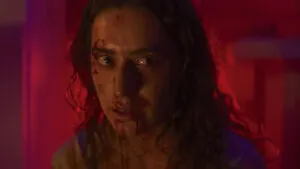
The organ-harvesting idea, I read articles on this. In the beginning of our film, it says, “Inspired by real events.” And those real events are, of course, little pieces of my life. Those real events are some articles that I read. There are certain towns that you could end up in today in America and not get home.
The organ-stealing subplot adds a real touch of horror. Is horror something that you always wanted to dabble in?
Yeah, because when the hero is on his journey, he has to have multiple layers of things to overcome. So, on the surface, of course, we see a hero comes to a small town, and you see the surface, which is corruption, which is racism. But then there’s an insidious subplot; this [organ-harvesting] is actually a business. This is actually something else going on in this town. As the film unfolds, you start noticing my “Missing” posters are around. You probably didn’t notice them in the early part of the film. But then as the film opens up, you go, “Wait a minute, that’s another missing poster right there.” So, this is something that happens in this town.
Some people consider organ-stealing an urban myth, but your research disproved that?
While we were filming, my producer, Paul Hall, actually did some research and found the article from Atlanta where a young kid was in high school, and he didn’t come home. And his parents were like, “Where’s our son?” And then they found his body under the blue mats in the gym. The story is that he must’ve snuck under those mats to hide, get a nap and cut class, but smothered and died. But when they got his body, his organs were missing. So, it’s like, “What the heck is that all about?”

What time period is the movie set in? There are no cell phones, the cars look modern. Did you deliberately keep the time period vague?
Yes, I removed the time intentionally for artistic reasons. That’s one of my gags: Let’s remove the time. When you see the video game they’re playing, and the guy has this glove on his hand, that doesn’t exist; that’s the future. I totally played with time. You don’t know where you’re at. Where’s Karensville at? I’m also a big Twilight Zone fan. I’m an Alfred Hitchcock [show] fan, all these different things. And so, when I’m making my art, my goal is to give you a story that’s hopefully good and resonates with you. But yet it’s served to you on a dish that’s like a mosaic.
To finance the film, you had to dip into your own pockets to get it made?
Yeah. Intentionally. My wife [Talani Diggs] and I made some real estate investments. I come from the music industry and had success there. I was able to leverage some assets, and we were going to maybe make another real estate investment, but at the time, the industry was in a writer’s strike. A lot of my peers in our industry were not working. And I had an inspiration of creativity. So, I asked my wife, “Listen, we could go and invest in another home, or we can make a film.” And she said, “Well, what do you want to do?” I said, “I want to make a film.” And she said, “OK, I’ll stand behind you.” She’s been in the industry herself, from modeling and a few small roles in films and been beside me for my career.
And so, to come together and work together, husband and wife, and to bring work to others, is something that I feel proud of, out of all of this. When we got to Atlanta, a lot of people weren’t working, and this job got them over the hump. I’m happy to be able to help our industry. I love this industry. I fell in love with it as a showrunner for four to five years. I know how a film or TV series helps people with mortgage payments, or to buying their first homes. People get married on movie sets. It’s such a beautiful business in that way. I’m in love with it. I’m happy that I can actually help them economically by making a film and giving a crew a chance to come and work for those 14-15 weeks.
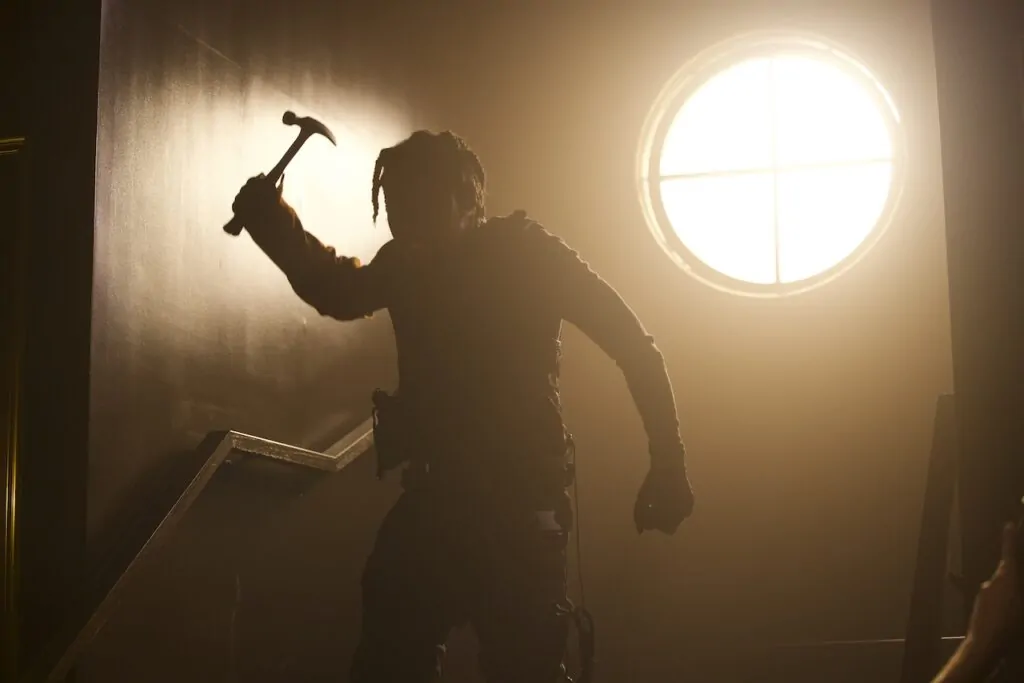
The fight scenes are real highlights. Was the bulk of the production spent on the film’s last act?
I’ve known Marrese Crump, my fight choreographer, for years. He trained Chadwick Boseman for Black Panther. He was my stunt man on Man with the Iron Fists. He’s a talented man who I knew could handle it. I was able to get him and his team to actually start prepping when we started prepping. When I wrote the screenplay, I wrote out a lot of the action. When I read the first draft of Kill Bill, Quentin wrote out: “Pow!,” “Bam!,” “Whack!,” like the Batman [TV series’] signs. And so, from learning that, when I write my scripts, I know that I could put ideas in it that would help somebody understand. And Marrese knows his martial arts so well, him and his son and his team, that we had our pre-viz and everything all done before we even got to week two of shooting. But then we dedicated the last week of filming to the entire action sequence.
There’s a great buildup at the end, and we want to see the bad guys really punished. Was there a concern in making it too violent? Was it tough to find that right balance of satisfying the audience’s bloodlust without getting too extreme?
Yeah, it was a challenge. I mean, we definitely left some stuff on the cutting room floor. We debated it and shot it two ways: First I shot it without blood, and then I said, “OK, now let’s put the blood packs on everybody, and let’s go through it again.” And then in the editing, I was like, “You know what? I think that the audience is gonna see these people die!” [laughs]
Shameik Moore is a revelation as your lead actor. What led you to cast him?
I’m a big fan of his; this is my third project with him. I gave him the lead role in my last feature film, Cut Throat City. He’s the only actor on my TV series [Wu-Tang: An American Saga] who didn’t have to audition. I just called him and said, “I think I got something great.” I met him when he was 19 years old. CAA introduced me to him, and this kid is a sponge. Some actors study the lines and become Method, but he’s more of a sponge. He lets himself be free to the music that passes through him.
I’ve learned that about him, so when I was up to about page 50 or 60 [on One Spoon of Chocolate], I told him, “Let’s have a meeting, I want to talk to you about something I’m doing.” I read him the first 20 pages, and he said, “Sounds really interesting. Let me know when you’re finished. I’m here for you.” And when I sent it to him, he was like, “Wait a minute. I gotta do all this?” [Laughs} I said, “Yeah, just start working out right now. Get ready. I’ll be ready in April-May. Clear your schedule.” This was December 2023, and I was happy that he was available, that he gave us the dedication, and I personally think he’s great in the film. It’s a great role for him.
What was the toughest thing about this shoot?
This was a tough shoot, brother. Quentin yelled at me in an excited way. He was like, “How the fuck you find the time to get that chase scene in a self-financed film?” Our stunt coordinator, David Morizot, was nervous on how we could catch it. And then I wanted the whole rotisserie car twist gag, which cost so much money, but I had my crew try to make another version of it, maybe cut the car in half, or just so many different things. This was tough, tough. I got sick; if you look at my pictures from the shoot, I look about five years older than I look now because this was my toughest shoot to date.
Besides moments in One Spoon of Chocolate, your side band, Gravediggaz, also touched on horror. Would you ever direct a horror film?
Yeah. We can’t predict the future but if things go my way, I could do a horror film next unless a studio brings me in and gives me one of my dream films, which I’ve been working on for about four years. If they green-light that, then I’ll do that. But if not, yeah, I got a very interesting horror film that is crazy. And here’s one weird one that found its way into One Spoon of Chocolate: Motel Hell. Remember in Motel Hell, they cut everybody’s throats out, and they put ’em all under the ground and smoke ’em? A little bit of that is in my movie because of the idea of the small town, the idea of: “You’re trapped in a world that you can’t get out of.” And when I was trying to show my production designer [Ryan Sbaratta] the way I wanted the organ set to be, I showed him Dr. Butcher, M.D.! [Laughs] Let’s take a look at this shit and the way he had the light and way he had the glass there. I was like, “I want a shot like that!”
What’s next for you: more movies, more music?
Right now, I’m on tour with the Wu-Tang Clan, our final tour, which is hard to say goodbye to, but I want to let this chapter of creativity close. And yes, I want to make movies; my ambition, my dream, my desire, my inspiration, is to continue to make films. I’ve evolved as a filmmaker. I’m ready now. I always appreciated what I’ve done and appreciated the opportunities. Not to name-drop, but when Quentin and David Fincher both watched my film, it just was like, “OK, I’m in the building. I’m ready to move on with my peers, not as a student.” Quentin once actually said to me, “The student has become a master.” I feel good.

