
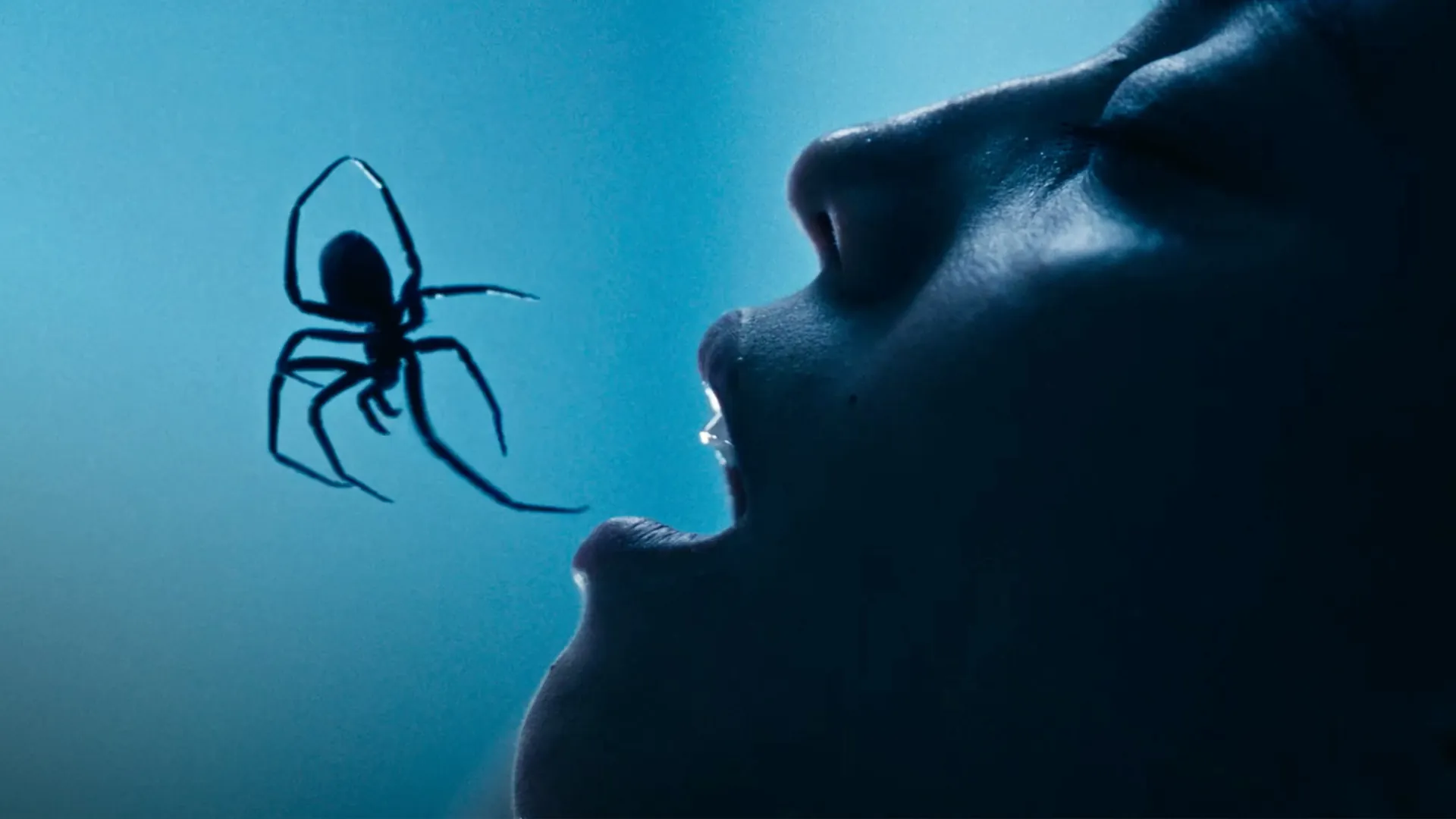
If you’ve ever wanted to see a spider hold a baby hostage, Crawlers is the film for you. A thriller about an apartment building overrun by poisonous arachnids, writer Jayson Rothwell (Polar) and director Angel Gómez Hernández (Don’t Listen) abandon all pretense of believability to deliver what feels like an exhaustive series of bug-themed jump scares, none of them original. Matilda Lutz (Rings) plays the building’s long-suffering superintendent-turned-savior to a group of the most undeserving tenants ever written while Hernández pumps relentless — and pointless — visual flair into the half-witted survival story.
Lutz plays Serena, an aspiring singer and resident manager at the Paradiso Palms, a building owned with true slumlord flair by entitled jerk Mr. Rossmore (William Miller). Rossmore seems to attract similarly unlikeable qualities in his renters: there’s Bernice (Isabella Egizi), a lawyer powerful enough to abuse Serena, but not powerful enough to live anywhere better; Lance (Sam Lucas Smith), a computer nerd with an AI girlfriend (Diana Cruz) and a pet snake; and Bradley (Gregg Sulkin), a dim, heavily pierced content creator. Serena’s only friends are new dad Paul (Paul S. Tracey), dominatrix Lady Lash (Melina Matthews), and Molly (Andrea Scott), the injured daughter of a frequently absent single mom.
After another tenant, a “sad sack” professor named George (Chris Rogers), turns up dead in his apartment, local authorities led by epidemiologist Dr. Woodward (Gary Stennette) come in, remove the body, and quarantine the building with everyone inside. But soon the residents convince themselves they’ve been exposed to some sort of COVID-like virus, and Serena discovers the truth: deadly, venomous spiders infest every corner of their building.

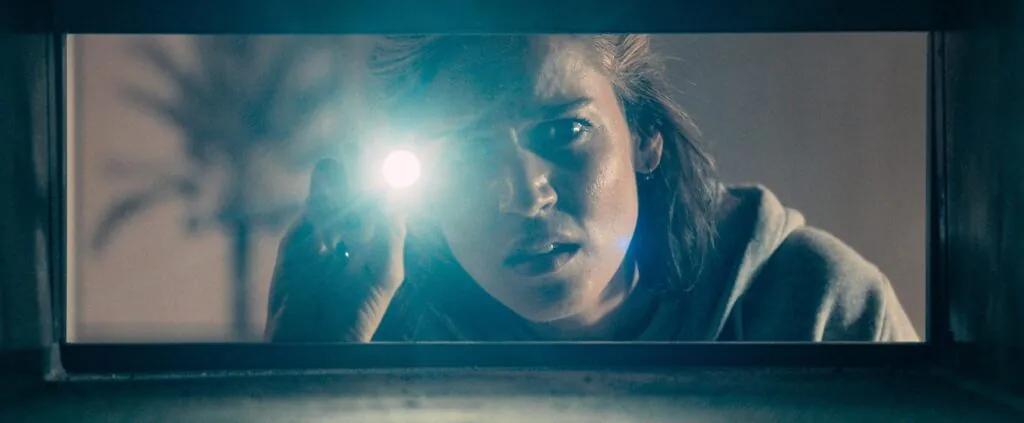
Cut off from the outside world after Woodward’s team suppresses their phone and internet service and drops a fumigation tent over them, Serena pleads with her neighbors to band together to alert someone — anyone — who can intervene and rescue them. Until then, they must fight the exponentially growing army of spiders killing humans one by one and turning the building into a giant nest.
Creature features are so rare these days — at least ones that aren’t somehow a metaphor for trauma — that a filmmaker could be forgiven for bending realism or good taste and throwing everything they’ve got at their premise. But if they’re going to do that, they need to expand the canon, not simply steal from it. Hernández is the first director I can think of in years — maybe since MTV stopped playing music videos — who feels like they came to film from that medium, and it’s not a compliment: his camera always seems to be perched at some odd, impossible angle or spinning like a top regardless of whether the moment calls for that kind of technique.
Rest assured this includes plenty of shots from the point of view of the spiders themselves, including one from inside a potato chip bag and another peering into the mouth of a sleeping human where it intends to make its home. Frank Marshall did these gags 36 years ago in Arachnophobia! Show us something new. And new doesn’t mean stealing wholesale from other films — in particular, featuring a glue gun that mimics the pulse rifles in Aliens, and an Alien-style ticking time bomb festooned with red lights and sirens that the main character has to get away from before it explodes.
Rothwell’s script unfortunately gives the audience few characters to root for, so we are almost eager to see them die; with the exception of asshole property manager Rossmore, none of them are developed well enough for us to enjoy it when they do. At a certain point, when you have created a million spiders with CGI, they stop being interesting, much less scary, so punchlines like a spider exiting a human skull after pushing out an eyeball feel like outliers instead of a strong bar for the film’s imagination. Consequently, the characters all pretty much die the same way — swarmed by digital creepy-crawlies — and it ceases to be thrilling.
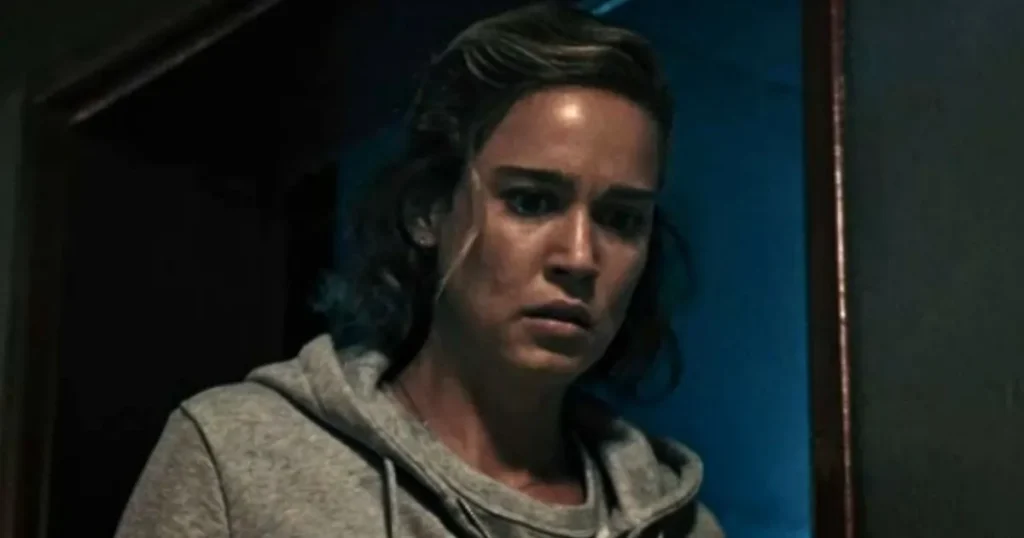
In internet parlance, Lutz isn’t quite “innocent” of the rest of the film’s transgressions, but editors Luis de la Madrid and Guillermo Lorenzana Torns do her performance no favors by dragging out every shot in the guise of wringing suspense, instead making Serena careless and/or foolish. Yet if the film had instead focused on Melina Matthews’ Lady Lash, we might be having a different conversation about its place in the spider-movie subgenre.
Matthews’ performance is self-assured and appealing in a way no one else in the film is, not least because Lady Lash seems like a multidimensional person who has some compassion for others (well, when she’s not locking them into trunks for money). Without giving anything away, her influence gives the movie’s final act an overdue, electric charge, and it’s the only time Rothwell’s script steps away from lowest-common-denominator ideas.
Then again, there is that aforementioned scene where a spider holds a baby hostage, but by the time it happens, you will be asking how an arachnid has not just finely honed strategic instincts, but enough emotional intelligence to target a human it’s holding the baby hostage from. Ultimately, the problem isn’t that Crawlers makes you ask these questions, but that it doesn’t actually intrigue you enough to care about the answers. As it opens, title cards playfully offer a handful of highly unlikely “facts” about spiders intended to prepare you for the ride you’re about to go on — tonally if nothing else.
If it followed through on that promise, winking as it sinks its fangs into viewers, Hernández’ film might have joined the ranks of horror’s best creature features. Unfortunately, the only spider ephemera that holds it together is more familiar and much less provocative—namely, cobwebs.