
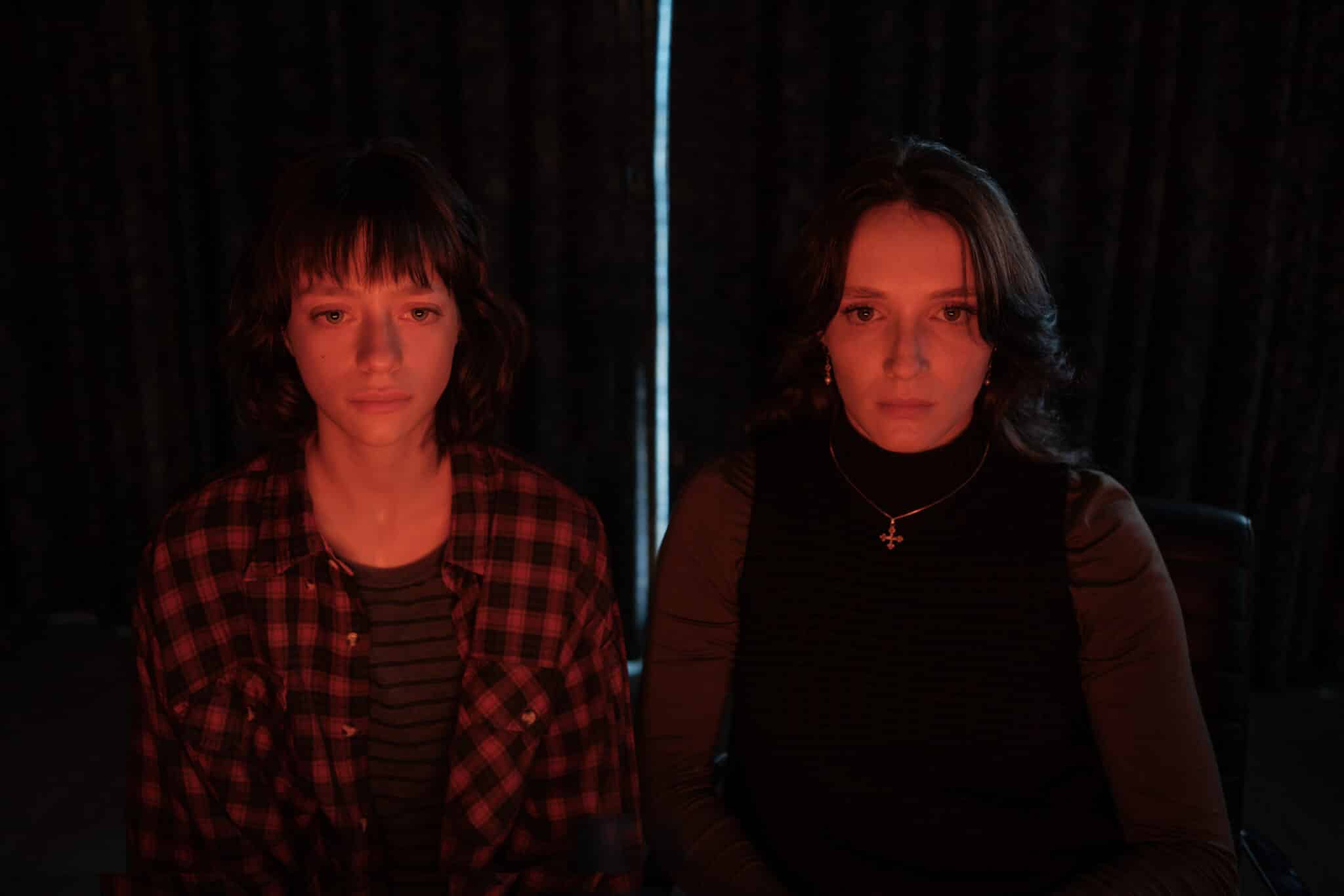
From the nihilistic ambience of Kiyoshi Kurosawa's Pulse, the screenlife thrills of Unfriended: Dark Web to the ambient, Creepypasta inspired horror of We're All Going to the World's Fair, the Internet has been horror's techno boogeyman since the turn of the century. And no wonder, when the threat of AI, deepfakes and rampant radicalization has become a constant thrumming fear in the backdrop of our everyday lives. Officially entering the ‘Internet is hell' canon is Pascal Plante's Red Rooms, the disturbing festival hit that's seen viewers covering their webcams and questioning those true crime podcast subscriptions.
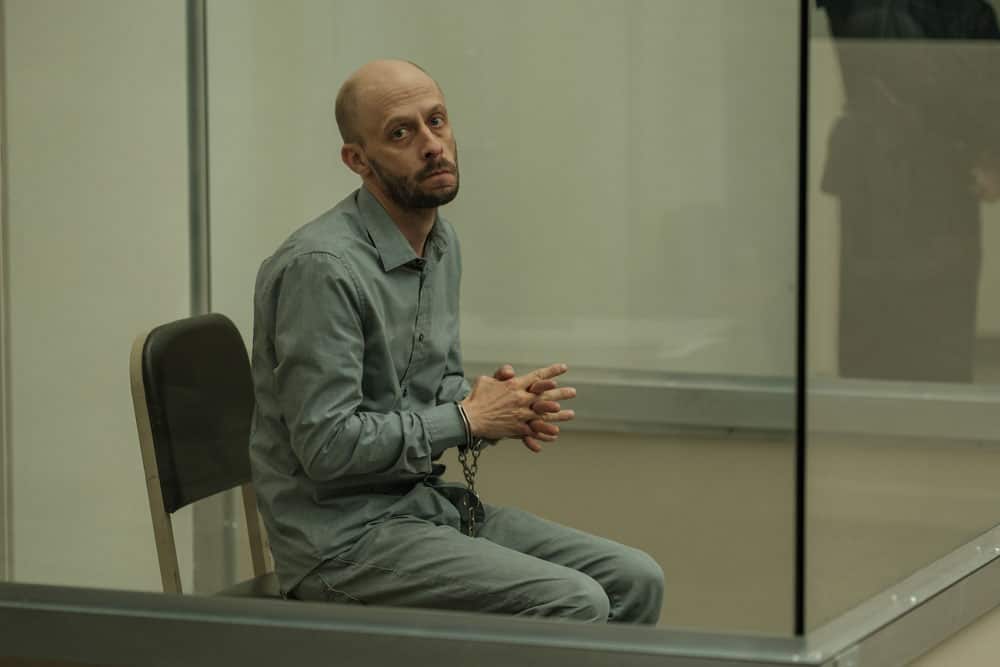
In Red Rooms, a grisly string of child murders shakes Montreal to the core and attracts the attention of Kelly-Anne (Juliette Gariépy), a cold and enigmatic model and online poker shark with a twisted obsession; the alleged serial killer Ludovic Chevalier (Maxwell McCabe-Lokos). Attending his ongoing trial with all the fervor of a teenage girl following her favorite boyband around the world, Kelly-Anne meets Clementine (Laurie Babin), a delusional fan of Chevalier who is firmly of the belief that the man is innocent, video footage be damned.
Ahead of Red Rooms' digital release on October 4, we sat down with director Pascal Plante and stars Gariépy and Babin to pick their brains on crafting one of the most disturbing movies of the year.
This interview contains mild spoilers for Red Rooms and has been edited for length and clarity.

Red Rooms goes to some very dark places – the dark web, online violence, the urban legends of broadcasted snuff films. The research process must have been tough, was it ever hard to pull back from those rabbit holes?
Pascal Plante: There was almost a sociological need to understand. If you watch true crime shows about killers, there are usually a few shots of people with billboards or people who show up to defend these narcissistic monsters. I want to understand those people. And cinema is the perfect medium to explore those gray areas. Juliette and Laurie also didn't want to judge these people, they wanted to try and understand them, to discover what it is that makes us similar.
Similarly, Juliette and Laurie, your performances as Kelly-Anne and Clementine both seem like they required you to explore some very intense parts of the human psyche. How did you all go about crafting these characters?
Juliette Gariépy: The character of Kelly-Anne is complex. She isn't just a junkie for disgusting things – she's also trying to redeem herself. Her plan was never to save the world but she happens to give some freedom to the mother of one of the victims. Red Rooms as a movie to me is not rooted in disgust and violence, but instead we're setting the pace for understanding these people. In some parts of the movie it felt like we were opening a door that had never been opened before when it came to understanding this underground, anonymous community. It felt more fascinating than draining.
Laurie Babin: Before shooting, Juliette and I researched a lot of true stories about these criminal ‘groupies' and went down the rabbit hole of murderers who had these fans. It was pretty dark. I got immersed in it fully for the duration of the movie and only really came out of it during the end. When Clementine watches the videos, that was hard because the imagination is always worse than the reality. Apart from that we were not in contact with anything really disturbing, so I almost feel the experience of watching the movie was darker than actually shooting it.
![The EVENT HORIZON Sequel Is ALIENS In Hell [Exclusive]](https://www.fangoria.com/wp-content/webp-express/webp-images/doc-root/wp-content/uploads/2026/03/EventHorizon-Inferno-CoverRBG-Cropped-2-300x169.jpg.webp)
PP: Clementine and Kelly-Anne are not based on any single person, and the fun was creating these very contrasting characters who are on two ends of a very wide and complex spectrum that fascinates me. I wanted Clementine to wake up from this bad dream – she has the last words, which are very telling of where my heart stands on the matter. Kelly-Anne, her disappearing… the riddle is still alive, as she indulges in her dark fantasies. But I think there is still light at the end of the tunnel.
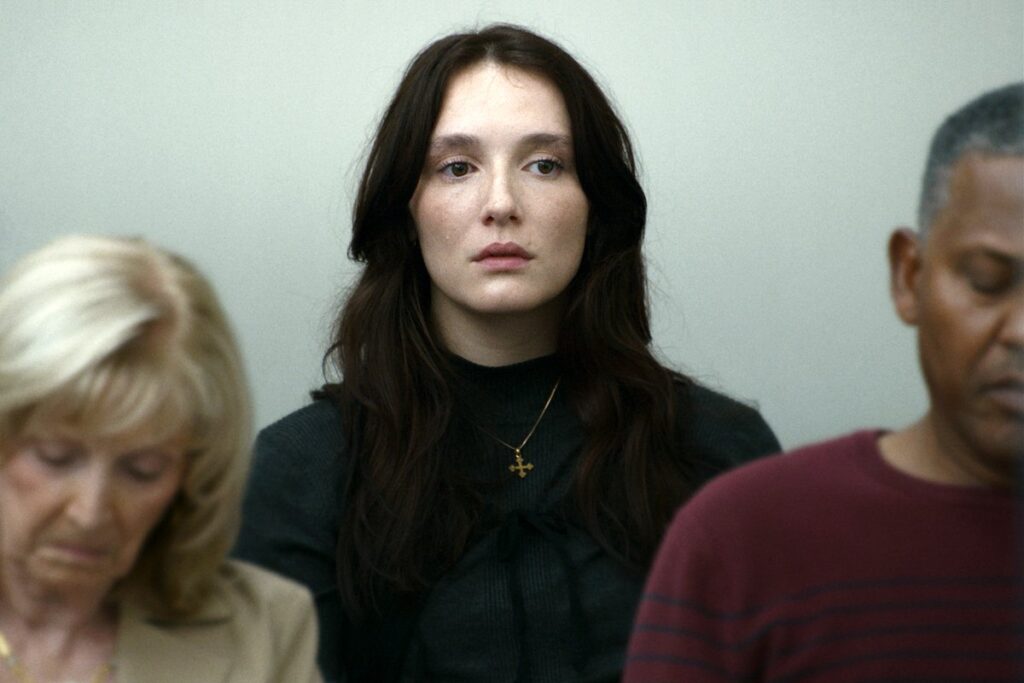
Kelly-Anne is an especially interesting character. She's got this coldness to her, this sort of Michel Haneke-esque apathy and emotional detachment usually reserved for male characters. Clementine is the opposite. She's a desperate livewire with a distorted empathy at her center. I'm interested to know how these two women were created, and how you think their gender plays into the film's themes especially.
JG: As someone who loves cinema and loves women, we grew to normalize watching movies where women are either the mother/wife/girl-next-door or the seductive, evil mistresses who just wants to fuck up all the men. But in Kelly-Anne we have something completely the opposite. Many people have questioned why this character would be fascinated by these disgusting men. There are many reasons. She's maybe looking for a place on the front page or to have a TV show made about her. When women get mad and commit crimes, we don't get put on a pedestal, so it's somewhat attractive to be close to that power. I'm sure a lot of women who watch this movie can actually relate.
PP: The history of cinema is paved with Travis Bickles! In the last decade, one film I really like that I haven't talked too much about is Nightcrawler – this dark anti-hero with no backstory and a sense of danger and mystery. We don't identify with him, but we can't look away as he goes to these dark places. I love that. I dislike profound backstories for characters – for me, the weakest part of Psycho is the ending [laughs]. It's way less scary when you overexploit and come up with theories about why people do what they do. I knew I didn't want that.
We watched so many films that look alike, and at some point, you start making the film you want to see. I wish I saw more thrillers about killers that are not about the investigation OR a portrait of the killer. Plus, there are so few female protagonists that look like her. I get a lot of comparisons to The Girl with the Dragon Tattoo but I wanted Kelly-Anne to be as far from that as possible. She's way more spectral than Lisbeth Salander, who is very punky, grounded and rooted. But the comparisons keep coming, which shows there are so few of these characters that we cling to these few examples.
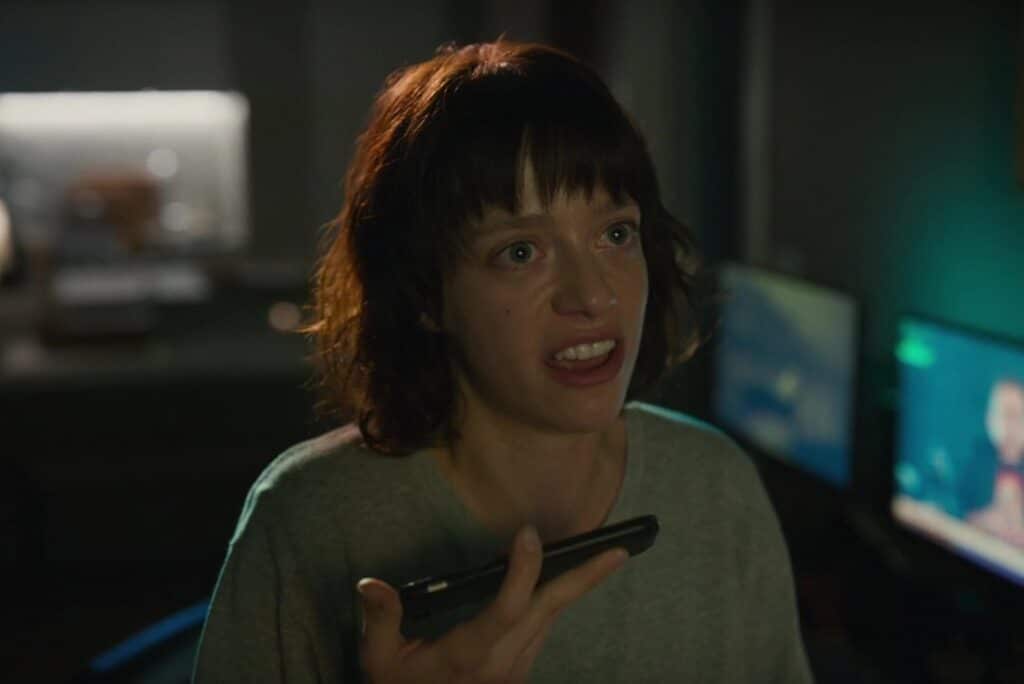
What's so refreshing about Red Rooms is that you do explore this dark, albeit fictional, crime, but it never feels disrespectful to the victims of similar, very real, crimes. What goes on in the videos of these red rooms is shrouded in mystery. Was it important for you as a team to avoid those pitfalls of exploitation that so much true-crime-tinged media finds itself trapped in?
PP: We don't see what's on screen, but we see something way more interesting – the faces of the two characters and how their reactions contrast. The dark stoicism of Kelly-Anne, and Clementine's world crumbling… that to me is way more interesting than prosthetics of arms being ripped off. Also, with gory images, we can push them away, we can rationalize and see the tricks. But we never wanted to go easy on the audience.
We had to be harsh – at this point in the movie, there are people who want to see it. But when they hear what's happening, they ask themselves why they wanted to see it. On the other hand, some people wish they never heard anything. It's like a test of your humanity – what were you looking for, what were you expecting, why are you bloodthirsty and seeking this kind of extreme content?
LB: There's a very thin line between denouncing violence and glorifying or selling it. One of the best things this movie does, and what was most important to all of us, was to not cross this line. We never sell those girls, we never see that violence. We only denounce what is actually there.
In contrast to Red Rooms' comments on a modern zeitgeist and themes of malicious technology, there are plenty of references to classical or medieval art. Fans of the film have been wondering about the significance of Kelly-Anne's screenname, The Lady of Shalott, and her AI assistant Guinevere.
PP: We didn't discuss much backstory – they did their homework, and if they wanted to come up with a backstory as actor's homework that was on them. That bores me. But medieval art is so tied to the divine and the religious, yet it's very dark. In preparation for the role, we talked about witches and hacking as modern witchcraft.
There's very little to cling to with Kelly-Anne, so we give a lot of meaning to minimal things. The wallpaper of her computer, the name she chooses online… we cling to these few meanings. It's also tied to the personality of the film. Another cyber thriller might have pulsing electronics on the score – we put a harpsichord on there. [Writer's note: Red Rooms' score and sound design is one of the year's best, making use of one certain musical sting that almost took years off my life.]
Are you scared of the Internet?
PP: No, I'm not really. Even after making this film, I don't cover my webcam or change my passwords as often as I should. I don't want Red Rooms to come across as a cautionary tale about the dark web – I'm not preaching anything. None of the technology in the film is evil in itself, but what is scary is the humans using it. Humans will be humans. What scares me is people spending time on 4chan.
We are in an era of very nonchalant, blasé humor and trolling culture. People laugh at rape and murder. It makes me wonder where our empathy is. What's happening to the world? Why do people act this way online? Is it a twisted mirror, or is it really what people think inside them? Is the trolling real, or is the outlet real? However you approach that riddle is scary.
Red Rooms is now streaming.