

Tarsier Studios, the developer behind Little Nightmares and Little Nightmares 2, was acquired by Embracer Group in 2019. Since Bandai Namco owned the Little Nightmares franchise, Until Dawn developer Supermassive Games took over the series with last year’s Little Nightmares 3. Tarsier’s new spiritual successor, Reanimal, is now here. And it's every bit better, all the way down to the gameplay, level design, environmental variety, and co-op functionality.
Reanimal follows a brother and sister as they attempt to flee their nightmarish home and save their three friends. The characters have voiced dialogue rather than just simple grunts and sounds. While the script is very small, only consisting of a few character lines here and there, it still helps us understand the friendship dynamic better. It explores themes of trauma, and Tarsier has billed this game as being “scarier” than what they’ve created before. But due to the somewhat cutesy art direction, I didn’t really feel all that scared. Sure, Reanimal can be unsettling at times, but that’s just about as far as it goes for me.
Similar to Little Nightmares 3, Reanimal introduces co-op mechanics with two players controlling the brother and the sister. Both aren’t very different from each other in this aspect, as players will need to work together to solve puzzles. However, Reanimal has both online multiplayer and local couch co-op, while Little Nightmares 3 only has the former.
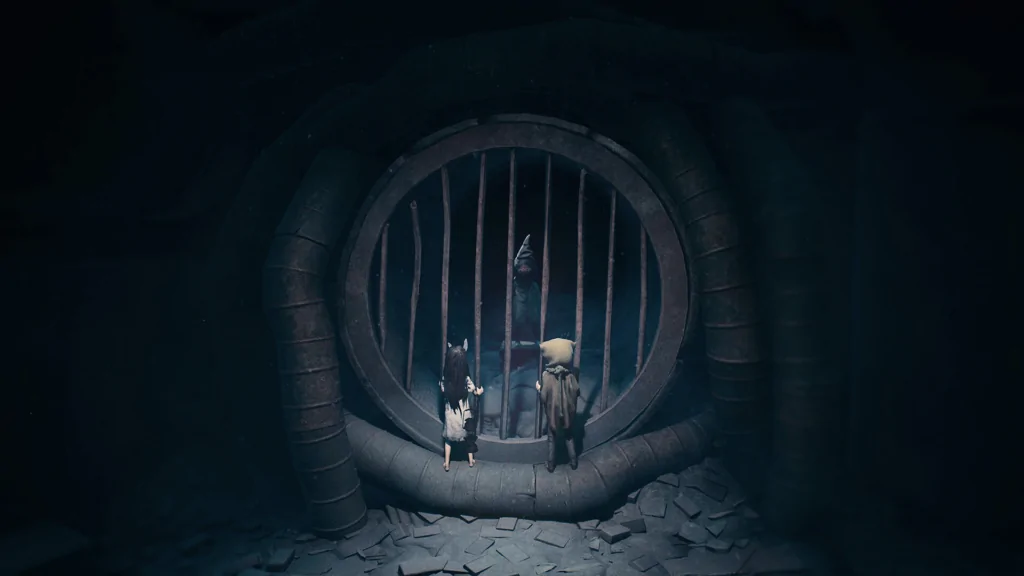
Additionally, Reanimal has full cross-platform play, meaning that it doesn’t matter which platform you're on; players can still join each other. A PS5 player can do online co-op with Xbox, PC, and Switch 2 players. Little Nightmares 3 doesn’t offer this, so PlayStation players are restricted to only playing online co-op with those on the same platform. These two aspects give Reanimal a huge leg up in multiplayer functionality.

The similarities with Little Nightmares 3 don’t end there. Reanimal also has some straightforward combat mechanics, but here, they felt more impactful in comparison. Playing as the brother, the swings of my crowbar were tactile as I swatted birds and other nasty creatures away. The companion sister NPC does a competent job of fighting other enemies with her knife if you’re playing the campaign on single-player. Combat sections are sparse and don’t overstay their welcome. It’s a welcome change of pace to have a bit of action in between all of the sneaking and puzzle solving.

Reanimal has an open-ended level design that lets you occasionally go off the beaten path to find collectibles, which makes exploration a bit more enjoyable. However, when I came across multiple paths, it was sometimes hard to tell which one was the main one to progress the story and which one had a collectible at the end. In some instances, I realized I was on the main path and had already passed the point of no return.
Thankfully, though, Reanimal’s settings are surprisingly varied. There are areas like a clock tower, an underwater ship, and even a wartorn battlefield. Tarsier took this chance to try out some new environments that make its new horror adventure distinct from its previous work. Reanimal also uses chase sequences sparingly, maximizing their impact when they do occur. They’re just as exhilarating as the ones from Little Nightmares.

When I died in combat, missing a jump, or failing a chase sequence, the loading times between death and reviving at the checkpoint were incredibly long, at least on Xbox. That’s the biggest issue I had with Reanimal, but it’s relatively minor in the grand scheme of things.

I know it’s tiring to compare Reanimal to Little Nightmares, but it’s hard to avoid the comparison when the former is quite literally a spiritual successor to the latter. It seems like this was the direction that Tarsier would’ve gone in had they continued to work on the series. Reanimal is basically Little Nightmares 4 in a sense, as it does everything Little Nightmares 3 does, but better.
Reanimal is now available across platforms.