
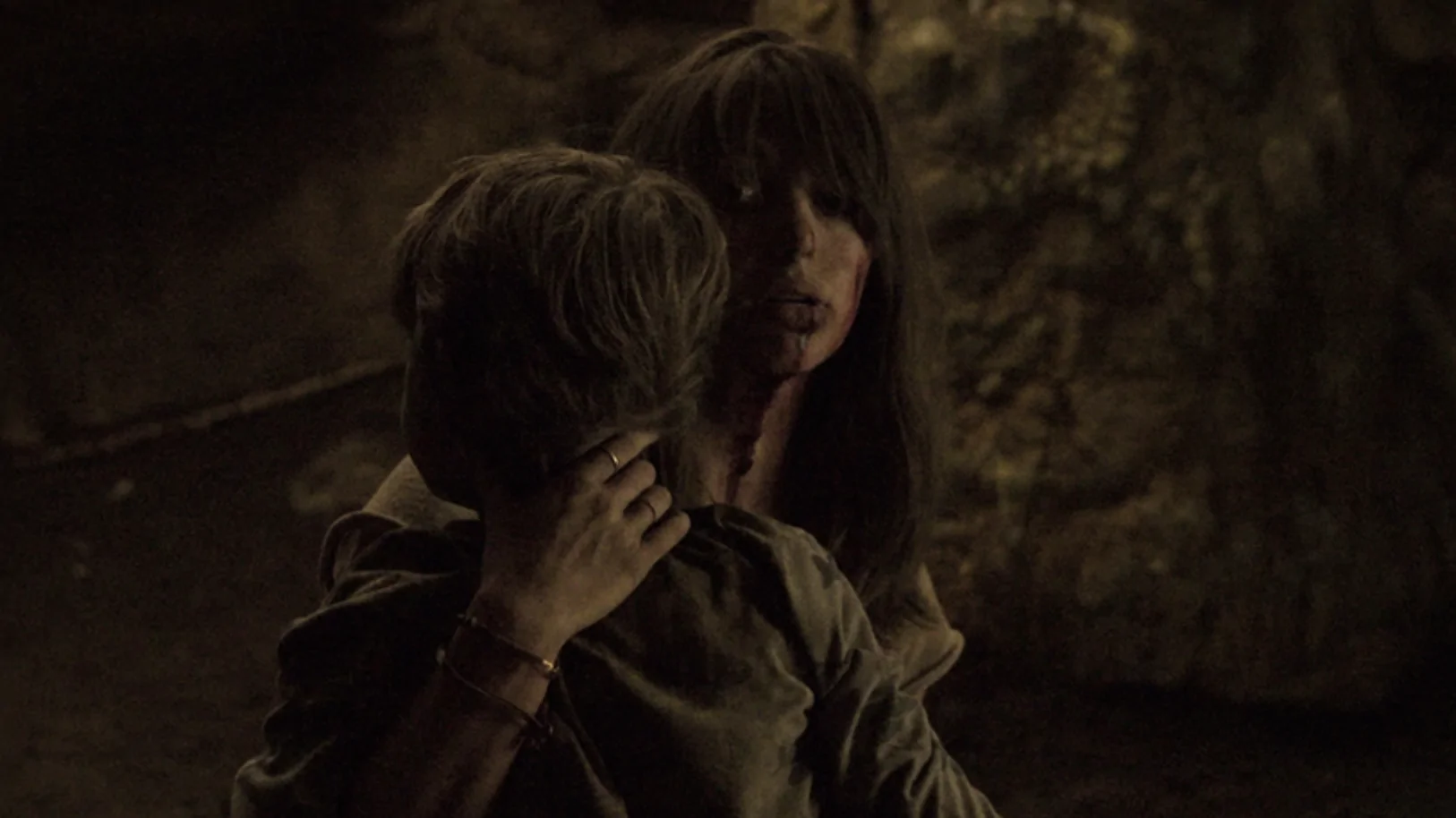
Cronin's third feature film, The Mummy, arrives in theaters this week, and, apart from being a reimagining of a classic movie monster, it also once again tackles the writer/director's favorite themes. It's the story of a young girl named Katie who disappeared years earlier, only to return to her family changed in horrifying ways by her experiences. What happens next puts every member of the family in jeopardy, as they must contend with the monstrous.
This is not new territory for Cronin, but it is inarguably fertile. He explored it in stomach-churning ways in his previous films, the jaw-dropping Evil Dead Rise, and seven years ago with his feature film directorial debut, The Hole in the Ground. Even if you've only seen a trailer for The Mummy, you can see the shared DNA between that film and Cronin's very first, so before The Mummy hits theaters, let's take a look back at the film that started it all.
Like The Mummy, The Hole in the Ground is the story of a child who returns to their parents, changed by an unknown supernatural force, but it's told in a much more stripped-down, intimate way. Released in 2019, the film begins with a family already on the brink, as Sarah (Seána Kerslake) flees from a possibly abusive marriage with her young son, Chris (James Quinn Markey), to live in a small community in Ireland.
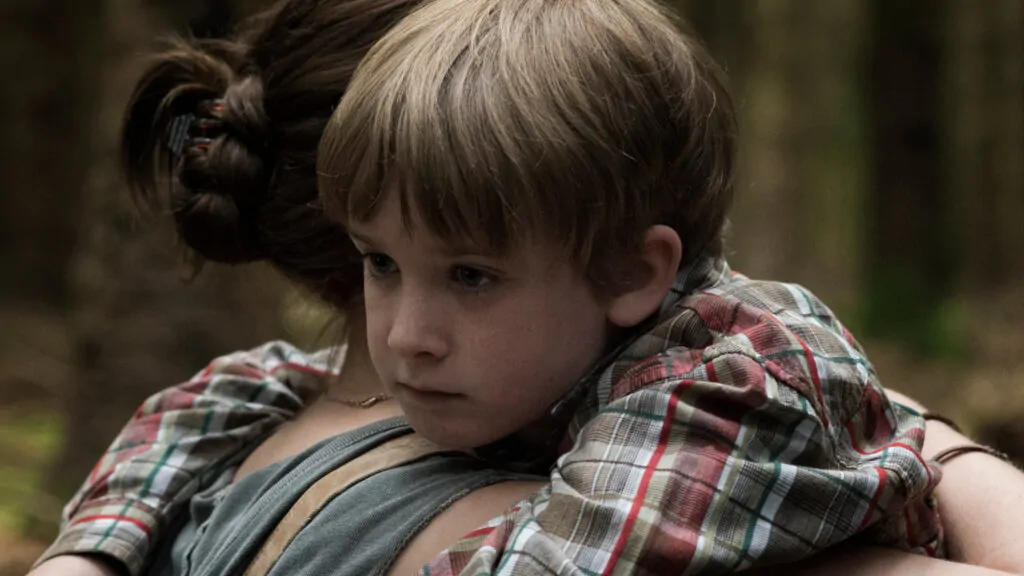
Sarah and Chris are close, even if Chris doesn't quite understand why his father isn't with them. It's clear she's a loving, deeply caring mother, but something's not quite right. After she discovers a strange, massive crater in the woods near their house, Sarah panics when she realizes Chris has disappeared. He re-emerges moments later, but in the days and weeks that follow, Sarah grows increasingly convinced that the boy who shares her home is not actually her son.
This is all classic folk-horror structure, as Cronin sets up a modern-day Changeling story in the middle of an idyllic Irish forest and even adds supporting characters who underscore Sarah's fears. Whether she's out with friends at dinner or running into one of her creepy neighbors, everyone seems to have a story about a child that someone no longer recognizes, a person driven mad by the conviction that their loved one was gone, replaced by a thing wearing their skin. It's undeniably effective, but it's what Cronin does within that paradigm that makes The Hole in the Ground stand out.
Visually, there are three clear motifs that recur in this tale. Shots of mirrors bookend the film, while cameras play a key role in Sarah's attempts to investigate Chris's true identity. These are both ways of seeing, but neither is a way of seeing absolute reality. Photos and reflections place the viewer and the characters at a slight remove, throwing up a scrim in our mind's eye.

Mirrors can lie, so can cameras, and this veiled nature of perception constantly puts Sarah at odds not just with Chris but with herself. She doubts, she agonizes, even as Chris' strange behavior intensifies. She catches him eating a spider, when she knows he hates spiders, and despite a doctor's attempts to assure her that sometimes little boys eat weird stuff, she's never convinced one way or another. Until she is.
Then there's the issue of the dirt, which at all times reminds us of both growth and graves when it's rendered through Cronin's camera. The dirt is something you get under your fingernails as you work to make something new, as you cultivate and fertilize new beginnings and nurture fresh life.
It's also where you hide things, something emphasized by the unforgettable scene in which Sarah discovers her neighbor's corpse with its head buried in the earth. Then there's the title hole in the ground, a vast crater that might be where something impacted the earth or might be where something escaped.
It's almost incomprehensibly big in Sarah's eyes, a void into which anything might tip, including her son, her sanity, and whatever she's hoping to grow for her little family out here in the forest. Like the mirrors and the cameras, the earth can distort, trick, or even lure. It invites us to interpret its depths, even if we might not like what we find.
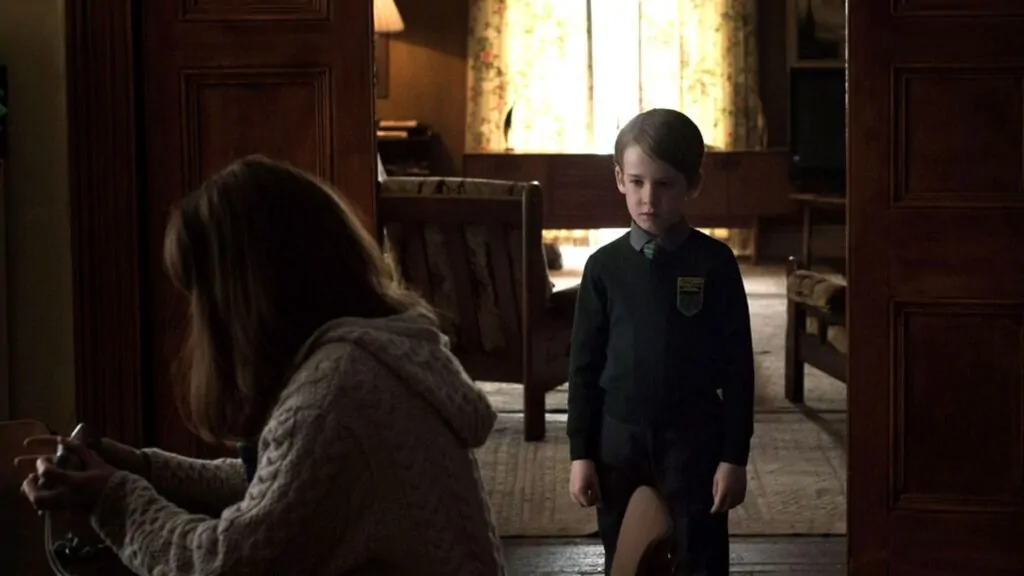
All of these motifs serve to underscore the principal source of The Hole in the Ground‘s fear, and it's not just the creepy kid who eats spiders when he thinks his “mother” isn't looking. Cronin understands innately, from the first frame of this film, that parenthood is a funhouse mirror. Your perception of many things changes the moment you're in it, and it only gets worse as your child ages, because no two days are alike.

Parenting books will tell you that routine and consistency are key to a child's well-being, but the truth is, there is no such thing as routine with a little boy running around. The legend of the changeling grew out of this fact. Children really can be angels one day and demons the next. They can slip on the stairs and make you suddenly terrified of two-story houses for the rest of your life. They can deliver one throwaway remark in a fit of anger that'll make you believe you're a failure for days, weeks, even longer.
For parents, children themselves are wells around which reality bends, and no matter how prepared you are, how stable, how determined to get it all right, you are never truly ready for each new distortion field.
Kerslake's performance hinges on making this very phenomenon believable in a fictional context, and like other great horror movie moms – Ellen Barkin, Essie Davis, Toni Collette – she gives herself completely over to this transformation. Her performance aches with the tension between reality and what she perceives to be reality, and even when she takes all the right steps – trying medication, taking Chris to a doctor, seeking help from friends – things just keep spiraling.
Its central performances (Markey is also excellent) make The Hole in the Ground a masterclass in horror as metaphor, but what makes Cronin such an effective horror filmmaker is his insistence on going this deep with theme while still delivering the creature-feature goods.
The climax of the film, in which Sarah descends deep into the Earth to try to save her son, is packed with wonderful sound design and often shocking visual effects, putting the mother at the center of it all through an almost literal hell. This film came along after “elevated horror” had become a buzzword, as other filmmakers were doing their best to shave all the genre edges off their work in favor of something operating at almost purely metaphorical levels.
Cronin doesn't do that. He goes for the throat of his monster, leaving us with a deeply satisfying horror movie ending.
Lee Cronin has only grown more confident in his direction and his ability to generate visceral intensity in the years since The Hole in the Ground was released, but he's also stayed true to the themes that brought him this far. With The Mummy, he's set to tell us another story of a family driven mad by an encounter with the monstrous, but no matter how big and bold that film goes, it's good to remember that it all began here, with a mother and a son and a hole in the ground. Lee Cronin's feature debut is not just proof that he's great at telling these kinds of stories, but a launching pad for everything that's come since.
Lee Cronin's The Mummy is in theaters April 17. The Hole in the Ground is streaming on HBO Max and Prime Video. Go in-depth with The Mummy in the latest issue of FANGORIA.
