So you can see dead people. It happens. Should you be worried? Well, it depends on which movie you’re watching.
Your classic ghost stories, such as The Innocents, The Others, and The Shining, would suggest this is very bad, and you should be extremely scared. And that’s fair. But in the past decade or so, another brand of ghost story has seized the attention of horror audiences.
Traditionally, horror movies featuring ghosts have asked two questions: are the ghosts real, and what should we do about them? But the new wave of supernatural suggests there are more pressing issues at hand than the legitimacy of ghosts. In fact, yes, ghosts are definitely real. A better question is: how am I going to get out of this basement? Or why didn’t our clients follow industry-standard burial procedures?
Sure, I guess you could call the naked man in your wardrobe a ghost, but it seems like there’s a parallel dimension intersecting your house, and we should really address that first. And what’s in that tin box that you found in the locked cupboard upstairs?
Ghosts and ghost stories are still the driving force behind these movies, but the answers and situations are not nearly as clear-cut. New wave supernatural is defined by how the ghosts inform a greater mystery beyond their own existence. Of course, this isn’t a new concept in ghost stories, but it is a structure that has picked up momentum in recent years. The latest and greatest in this style is Never After Dark, a Japanese horror movie now playing in theaters.
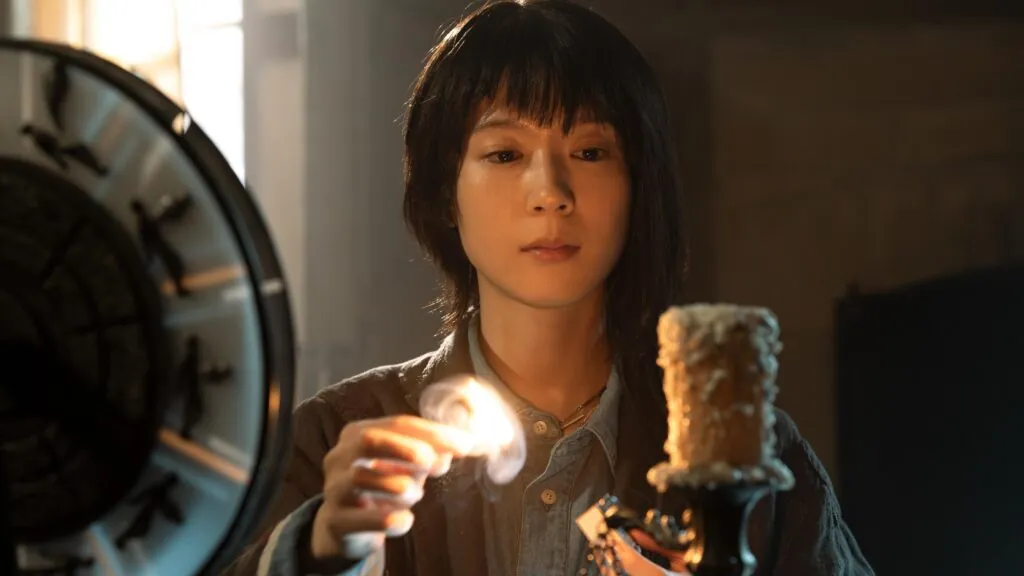
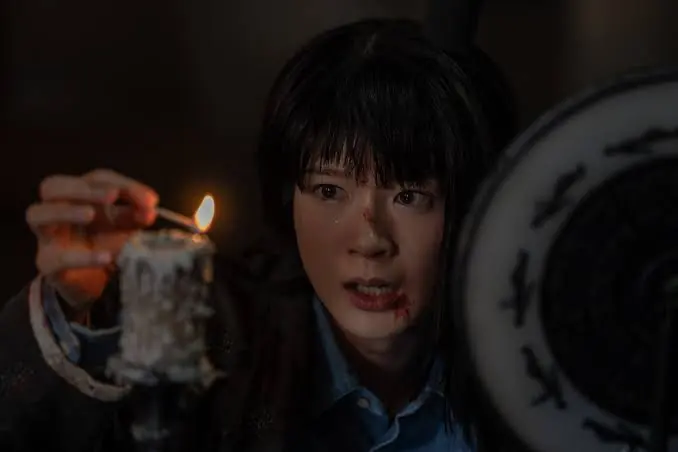
Never After Dark follows a spirit medium named Airi as she begins a new case on her own following the recent loss of her sister. As she investigates the hotel-turned-home where the film’s haunting takes place, she begins to fear she may have bitten off more than she can chew.
Airi as a protagonist is an important hallmark of new wave supernatural because of the way she carries herself. She is a medium, after all. This is her job, and this is just another day at work. There are risks, sure, but as a seasoned professional, she has ways of mitigating those risks. Your standard haunting doesn’t scare someone like Airi.
Director and writer of Never After Dark, Dave Boyle, says this subversion was important to the story. He notes that most ghost stories start with innocents being terrorized by the undead. “I really wanted to make something that was told from the point of view of the medium character who, 90% of the time, drops in in the middle of the movie.”
Think of the Warrens in The Conjuring or Tangina Barrons in Poltergeist—psychics who show up after the ghost has been established and the haunted parties are desperate for help. But Boyle wanted something different from his medium character. “The story to me felt like somebody who has been there, done that, and is meeting the ultimate challenge, at least for them personally.”
Exhuma, written and directed by Jang Jae-hyun, has a similar approach to its main characters. When a wealthy family’s child becomes mysteriously ill, they suspect it may be the ire of a wronged ancestor. They hire a duo of Korean shamans, who then enlist a geomancer and a mortician. The four are colleagues who have worked together on similar cases before, and they aren't easily frightened.
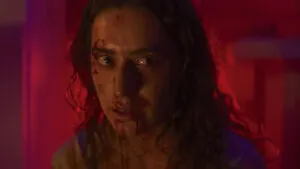
It’s like Ghostbusters, but with characters who are a little more seasoned and don’t play up the comedy. But this ominous, epic tale of cursed graves and spiteful ancestors inevitably overwhelms the team later in the movie. A turning point becomes clear in the characters’ demeanors when they realize what’s really happening.
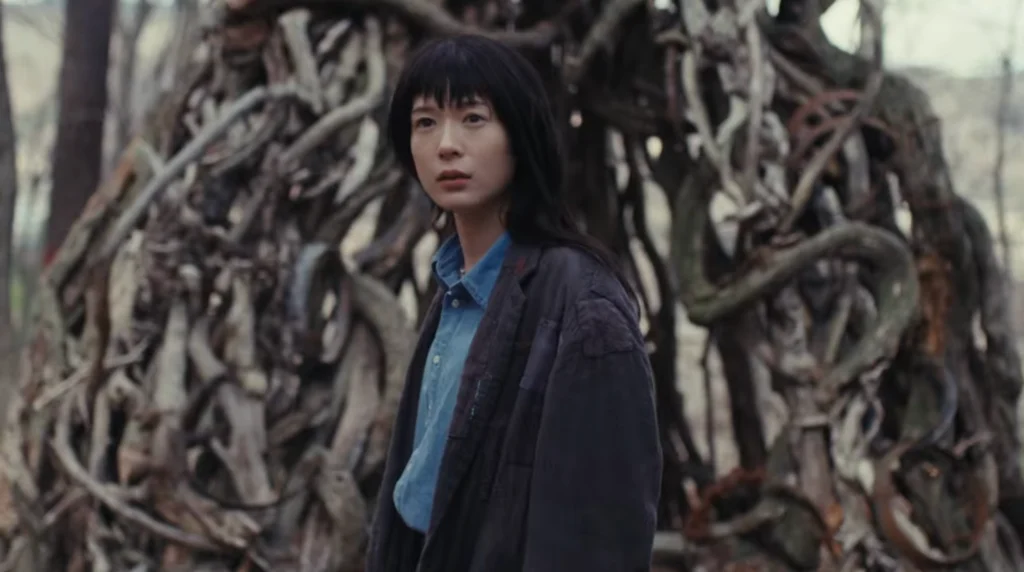
The brilliance of putting professional mediums front and center in both movies is how it signals when the audience should take what’s happening seriously. Seeing ghost hunters treat their cases with the mundanity of someone sending an email makes the vengeful spirits even scarier when those same ghost hunters suddenly become terrified. Even if the viewer doesn’t understand exactly what’s happening, they know it should not be taken lightly.
Boyle also cites The Changeling as a big influence on Never After Dark, saying he had his crew watch it in preparation for filming. “It successfully tackles a lot of the same challenges that we were facing with this movie. The most basic of them being like, how do you make a movie that is scary if your hero is not that scared?”
Indeed, using the audience’s ignorance of an industry that is largely unknown to them, but still treated with a certain number of standards, is a great way to sow unease. Boyle also emphasizes that he wanted to create an implication of a larger world within the movie, one that the audience may not get to see. As such, he and his team put a lot of work into the production details.
“One of the things I love about working in Japan,” Boyle says, “is that the assistant directors tend to come on the movie pretty early, and they function as a sort of research team to strengthen the things at the core of the story and help the director find new things to bring to the table.” In Never After Dark, these purposeful flourishes include a ritual that breaks the mold.
Airi’s ritual includes a few key components that echo certain spiritual traditions, and her transportation to the world of the dead is sure to remind audiences of the Further from the Insidious franchise. However, Boyle sought to create something truly unique and memorable while developing the ritual scenes.
“I thought it'd be really fun and interesting to come up with a new ritual, a new way to communicate with ghosts,” Boyle says. “You tend to see the same tools and thought processes over and over. And I wanted something that was really simple and really tactile and wasn't technology-based. Something that suggested a whole wider world without ever explaining it… You can turn the volume off, you can not listen to the dialogue, but you still know exactly what she's doing and why she's doing it.”
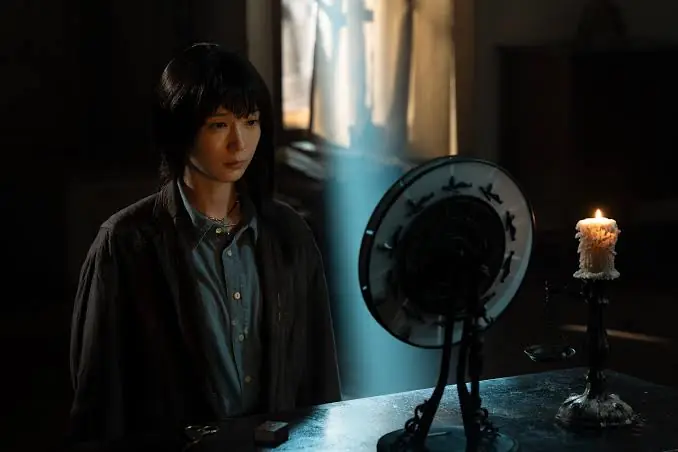
We’ve come a long way from spirit boards and séance circles. Talking to ghosts and other supernatural entities has taken on some unconventional forms throughout horror movies. Ringu’s mode of communication steps into the modern age when Sadako literally steps out of a television set and calls her victims on the telephone. And maybe you don’t want to answer Sadako’s call, but for Finney Blake, the protagonist of The Black Phone, a phone call may be his only hope of survival.
The Black Phone is another film of recent years that has posited some interesting ideas about how characters can and should interact with restless spirits. Based on a short story by Joe Hill and adapted to film by Scott Derrickson, the phone in question offers a lifeline to its main character, Finney, who is kidnapped by a neighborhood boogeyman known as The Grabber.
Left alone most days, with no obvious means of escape, Finney uses the phone to ask questions of previous victims, seek advice, and find closure. This is one of the few times in a horror movie when the most pressing threat in the room isn't the supernatural forces that haunt it, but the human monster who committed the cruelties that created the haunting.
What’s more, while Finney is locked in the Grabber’s basement, the search for him hasn’t stopped. His sister, his dad, and the police are still looking for him and the kidnapper, chasing clues and scouring the neighborhood. Here’s another vital trend in the new wave of supernatural films that makes them more exciting and engaging.
“I just really love movies that are procedural and detailed,” Boyle says about the central mystery in Never After Dark. “Like with Gene Hackman in The Conversation, watching him deal with all those reel-to-reel recorders and everything.” Something the aforementioned movies already have in common is some level of crime-procedural structure, whether through the characters involved or how they unravel the story.
Discussing the procedural aspect of Never After Dark in any in-depth way would spoil too much. But Demián Rugna’s Terrified from 2017 has a crime procedural framing vital to moving the story forward. Rugna’s fourth film, which focuses on the supposed haunting of a particular neighborhood, jumps back and forth in time to show how strange happenings at two different houses have implicated its residents in violent and unusual crimes.
The police get involved, much to Commissioner Funes’s obvious displeasure, and are forced to witness what might not be a stereotypically supernatural event at all, but an interdimensional disturbance using mundane means and spaces to lash out at the investigators.
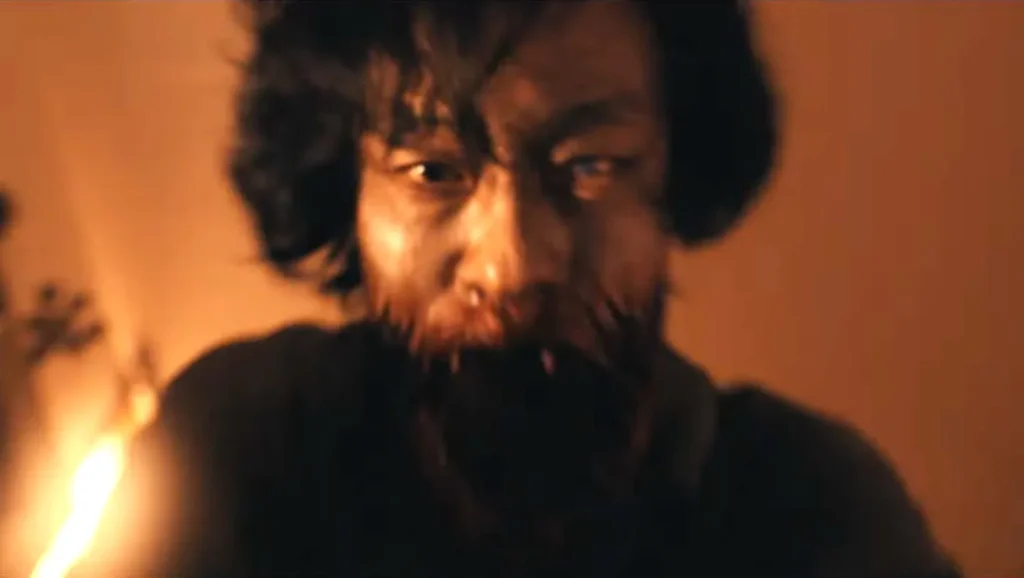
Terrified plays on the audience’s predisposition to assume ghosts are behind what is happening to these residents. The consequences of these occurrences involve local authorities, lending further credence to the idea that something more complex may be at work. Through the eyes of a confused police officer, the audience must come to terms with the true nature of the haunting. Never After Dark shares many story elements with Terrified, yet both remain completely unique and unforgettable.
Boyle’s work on Never After Dark has certainly earned him respect in the realm of J-horror. But his accolades have also yielded bittersweet fruits, as he has been selected to helm a new remake of Kiyoshi Kurosawa’s Pulse, another movie notorious for its innovative ideas about ghosts, particularly in the age of the Internet. But Boyle’s experience with Japanese horror filmmaking makes him a more promising candidate than most directors, not to mention his collaboration with known titans of the industry.
He says about his crew and their work on Never After Dark, “We are kind of playing a little bit of a twist on a lot of the conventions of Japanese ghost stories and Japanese horror movies. So much of the team is veterans of the Japanese film industry who have worked on a lot of those movies and innately have a fluency in the visual language of J-horror.”
Whether Boyle is up to the task of remaking this classic, his original work speaks for itself: Never After Dark offers a self-contained, finely honed ghost story that is as bone-chilling as it is inspiring.