
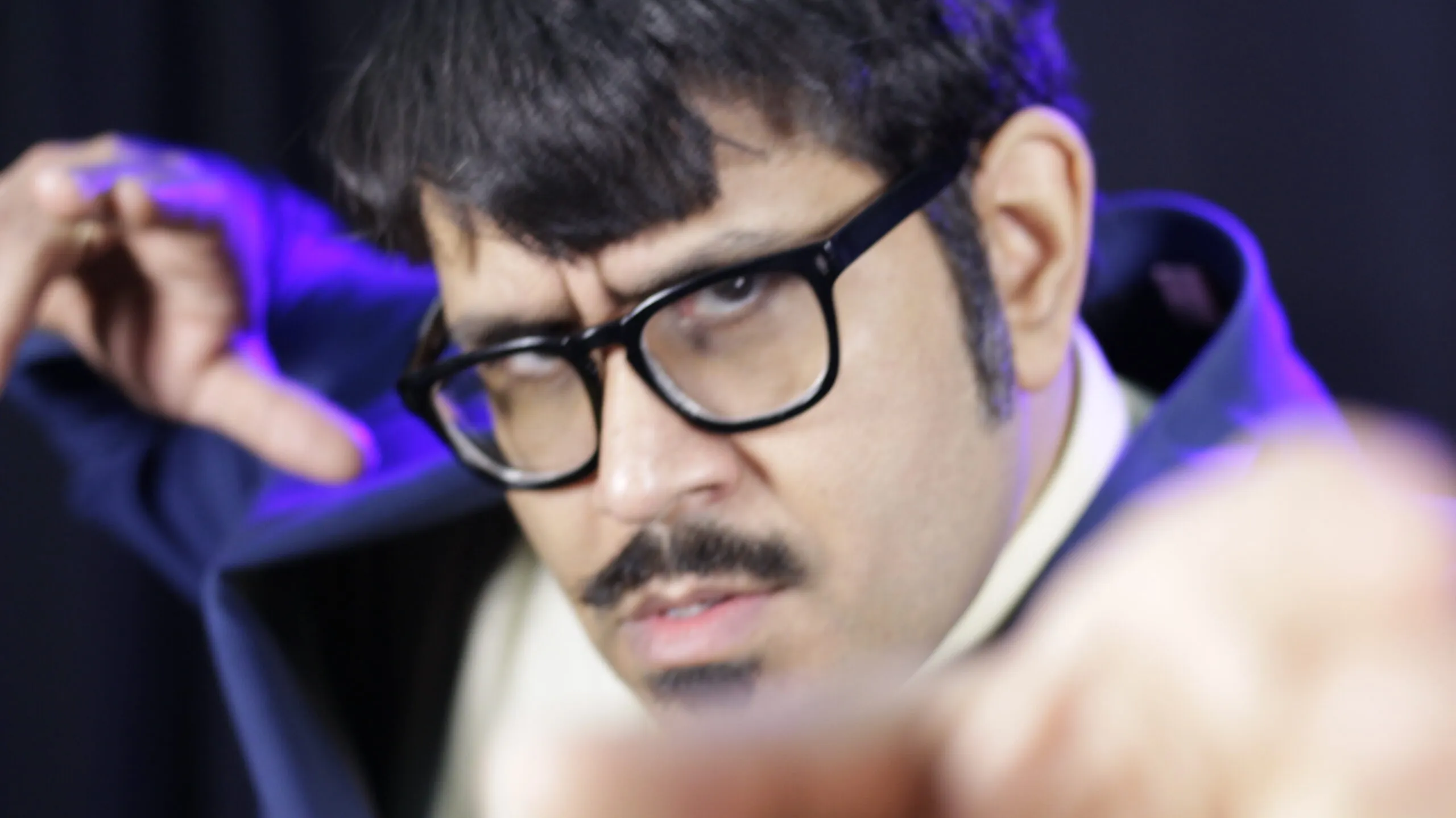
An outspoken champion of misunderstood movies and multi-award-winning horror host, the incomparable Mr. Lobo has become one of the most identifiable figures on the late-night scene. For the last 25 years, Lobo and his celebrated series Cinema Insomnia have been a hub where fans of fright, schlock, and cult films gather and commune with an emcee who gets their fascination because he loves the movies he hosts as much as his audience loves watching them.
In the recent print edition of FANGORIA (Vol. 2, Issue 33), Mr. Lobo sat down for a look back on his beginnings and what it’s meant to grow Cinema Insomnia over a quarter of a century. From his own fascination — and eventual friendship — with horror host Bob Wilkins to the launch of his own streaming platform, Mr. Lobo spoke at length about his rather rich and storied history.
As such, not everything made it to print, and presented here is a further conversation with Mr. Lobo that doesn’t appear in the physical magazine but nonetheless provides an earnest and raw insight into a modern architect of the horror host movement… and specifically what happens when we allow our fandom to become our guiding light.
Here, Mr. Lobo discusses becoming the horror host that he always was, and was meant to be.
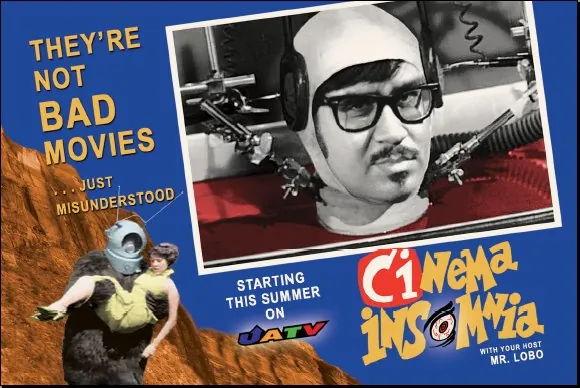
In the pantheon of horror hosts, we have the hosts that are the characters with the grease paint, à la the weatherman who becomes Count Whatever or-

Vampires and mad scientists and witches. Yeah.
Exactly, but there’s this other class of horror host that's sort of like “the gentleman” host.
The guy in a suit.
Yeah, the guy in the suit, which you clearly embody, and I assume were inspired to do from the host that you grew up watching, Bob Wilkins. But, obviously, I think there's a difference between your daily life and Mr. Lobo…or is there? How did you navigate the creation of a character where you kept your name?
This is where it gets weird. Okay, you're right, there's the character guys, and there's the normal guys. Mr. Lobo lays in between there somewhere. I'm not a regular guy. You don’t go and have a beer with Mr. Lobo…and you don't imagine Mr. Lobo picking his kids up from soccer practice. He exists in kind of a weird space between.
What makes him different from the “normal guys,” would you say?
The “normal guys” were usually staff announcers or reporters from the local TV station who were saddled with hosting the horror movie. I'm almost a parody of that… and also kind of unnecessarily mysterious, as if there's something more to me than just being a regular guy. Whereas Bob was so good at being Bob.
…but, I did learn that Bob's thing was somewhat of a character. He didn't really smoke a cigar. The cigar and the rocking chair… they were effects that he created to hide his nervousness. When he's flicking his ashes, he's looking at his notes for what he's supposed to say. He also thought it would be funny to have a big cigar. He had tuberculosis. He was not going to be really smoking cigars, but it was funny to him to present as a big shot. So again, he was kind of doing a character. I guess more of a persona than a character.

What marks the delineation between a person and a character?
Originally, I thought, “oh, maybe I could just be me.” And it didn't feel right. I was so self-conscious. I guess Mr. Lobo is my cigar. It's my prop. It's not me doing it… It’s the character doing it. I can be a buffoon, or I can make a mistake, and it doesn't shake my confidence. Whereas if it's just the same person that I was for my friends in school or for my mom or for my teachers or for the people I pay bills to. If it's that person, that person feels like they have no business having a TV show.
Why not?
It felt more fake to me than being a character did. And then something really weird happens…you start to realize that you’re always pretending. You pretend to be someone for your friends in school. You pretend to be someone for your spouse. You pretend to be someone for your mom and dad. You pretend to be someone for your boss. So…here's this person you're pretending to be, but you're pretending to be them for yourself. And there's a point where you realize, “This person I'm pretending to be for myself is closer to who I really am than the person I pretend to be for everybody else.”
Wow.
I think that's the weirdness that happened with me with Mr. Lobo, because there's a point where I realized that this is not just a character or persona; this is just a version of myself. And obviously on Cinema Insomnia, I'm a little more amplified, a little more annoying perhaps, but honestly, even the people who watch me know when I'm putting it on and when I'm being myself.
So, it is kind of an interesting thing because I don't even know who the person before Mr. Lobo is anymore. I don't even relate to him. I feel like that was just a series of people who I was pretending to be for other people. And so, then it becomes weird because you introduce yourself as “Mr. Lobo” to people and they think, “Who does this guy think he is? What kind of respect does he think he's owed? Why should I call him something like that?” And I think to myself, “If I met Mr. T, Dr. Seuss, or Mr. Rogers, I don't know if I would even question that. I would be excited for the opportunity to play along with something that's more fun.”
It's interesting, though, because a lot of the characters that we know and work with in the world of horror, we just automatically accept, especially when they present as exaggerated other, like fabulous creatures or drag monsters. I'm wondering if there is a strange stigma where, if you're presenting as something that's next to normal, people have a harder time. Even Mr. T, who we all just accept as Mr. T., has gold chains and a mohawk, and it's like that thing where…the exaggeration is the pathway. It made me think about the Leonard Nimoy of it all and his book I Am Not Spock, and then many years later, him finally saying, “Wait, no, I am Spock.”
Yeah, yeah, yeah. And growing up with that, that was always kind of sad, right? It was like, wow, you feel trapped by the person who you're most beloved as. You know what I mean? I felt like Paul Reubens felt trapped by that. He was most beloved as Pee-wee Herman…and I think he felt like he was suppressing himself somehow.
I think you’re right. So, I guess the revelation here is that…
The revelation is I AM Mr. Lobo. Listen, I knew how important Bob was to me. I knew how important Captain Kangaroo is to me or Rod Serling, you know what I mean? It's like if I want to meet the spectral narrator of The Twilight Zone, I don't want to meet the guy who picks his kids up from school. So, for me, the illusion is so important. I am an artist and I want the creation to stand. One of the things that I love the most about being Mr. Lobo is that when fans meet me, they tell their friends, “I met Mr. Lobo.” And to me, that is a huge achievement, because you've created something that lives beyond just what you put on the screen.
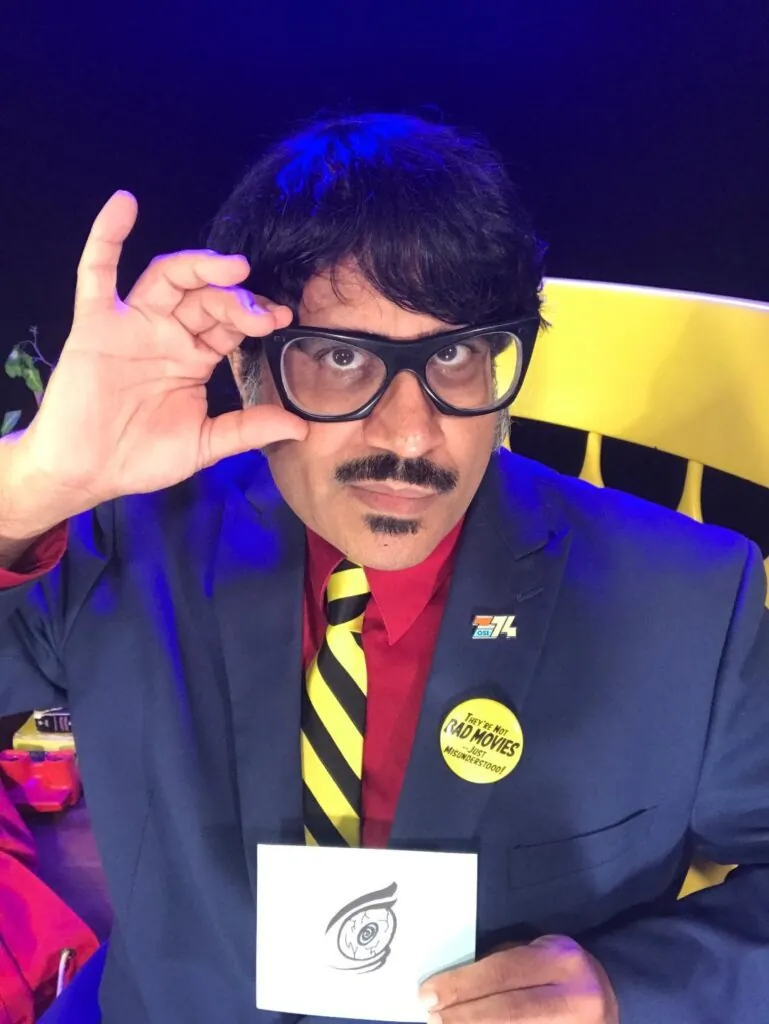
So, Mr. Lobo isn’t just for TV, he’s for always.
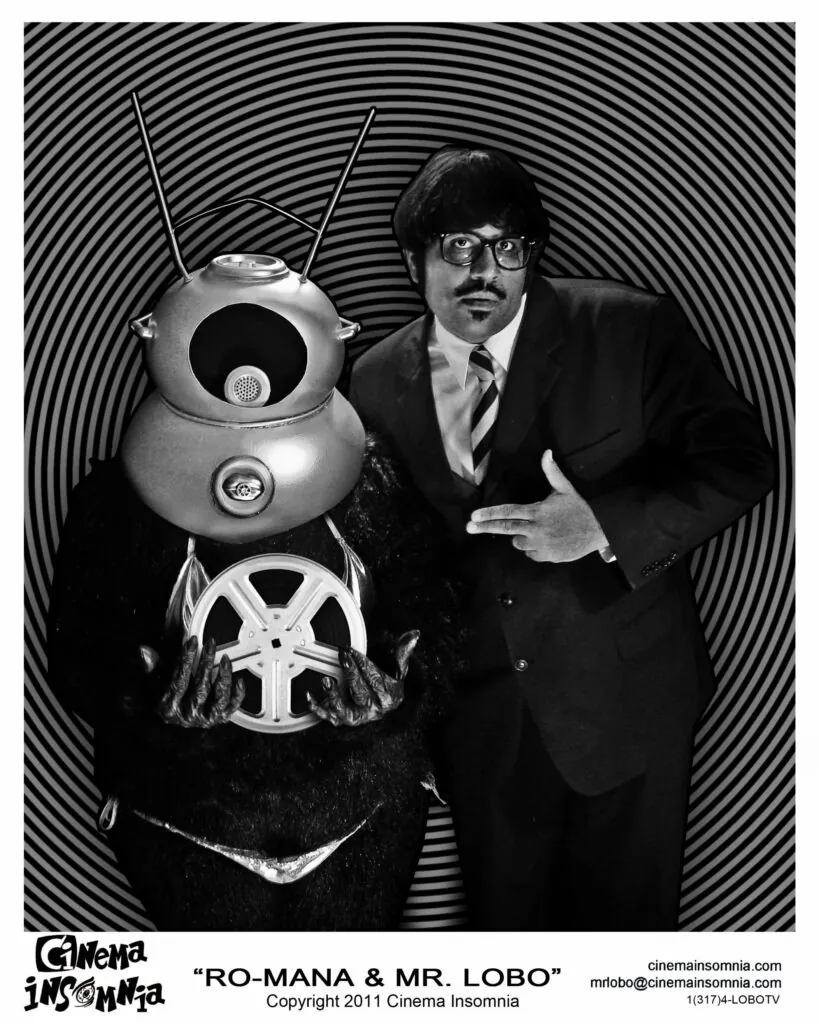
When I take pictures with people at a convention or when they see me on the street, it's a fully complete like, “Oh, wow, I met Mr. Lobo.” The suit, the thick glasses — those weren't put on. Those were all things that, aesthetically, I like or wear anyway.
So, it's not something I have to keep up, and you start to notice that there is a certain disconnect where you grow into the role of being the horror host…and there's less and less of a line between the host and the person. A lot of horror hosts are lifers. I think about Zacherle, doing Chiller Theater in his 90s. At a certain point, he didn't bother putting the makeup on…he just put his undertaker coat on, and he was ready to go, and it was really John Zacherle that everybody was coming to see, but there was hardly any distinction between meeting John Zacherle and meeting the character.
So, I think there's a certain point where you grow into it, or it grows into you.
