
Last Updated on May 17, 2024 by Fangoria Editor
From the classic thrills of the best horror movies from the 1980s and 1990s to the laughably bad horror films that we love to hate. We even love reading horror books and comics filled with over-the-top ghoulish hosts and post-apocalyptic zombies.
Horror films have always been an extremely self-referential genre, but they reached new heights of recursiveness in the 2000s. The found-footage genre was obsessed with making horror films about horror films.
The biggest new franchise of the decade, Saw, featured a villain who was essentially a horror movie director constructing sets to trap his victims/viewers. Reflexivity pushed the genre to new extremes of arch humor and mannerist excess; it’s a decade that includes some of the funniest horror films, and some of the most repulsive.
The films are listed in order from best to less best, but still great.
-
Paranormal Activity (2007)

Image Credit: Paramount Pictures. The Paranormal Activity Blumhouse found footage franchise quickly plunged into the mediocre sequel abyss, but the first entry remains a masterpiece.
Oily, subtly controlling boyfriend Micah (Micah Sloat) decides to film the odd phenomenon occurring around his girlfriend Katie (Katie Featherstone.) Director Oren Peli is a master of squeezing horror out of non-effects: a chandelier swinging or a door opening. The actors deliver their bickering is delivered with such small-as-life querulousness you can barely believe it’s acting.
The Blair Witch Project inaugurated the found footage genre, but this may be its most perfect form: just two people filming each other, and the demon taking shape between them.
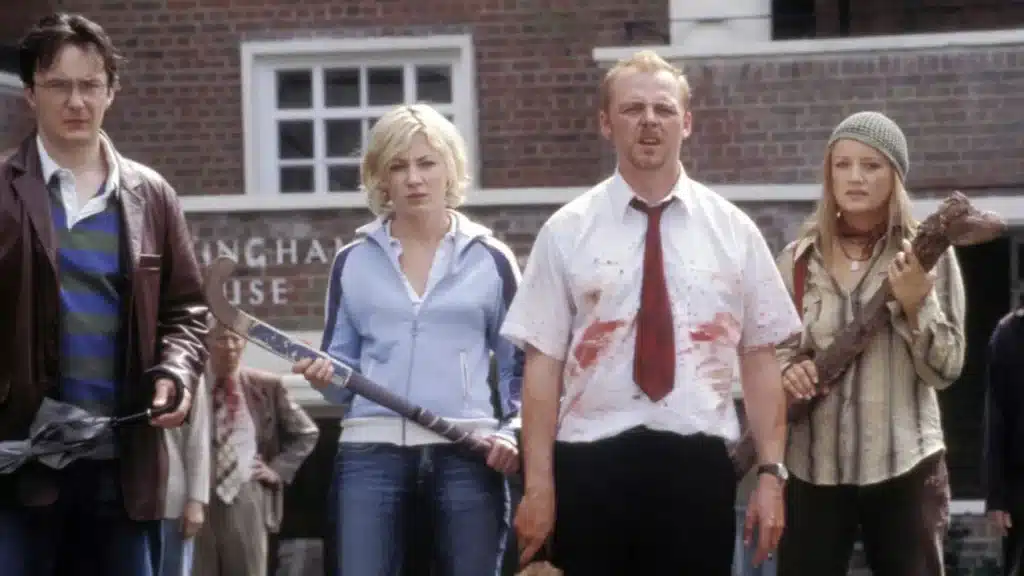
Shaun of the Dead (2004)
Image Credit: Universal Pictures. Edgar Wright’s best film is both a send-up of the zombie genre and a loving example of it. Wright takes George Romero’s core metaphor—the zombies are us!—and pushes it to its logical extreme; Shaun (Simon Pegg) and Ed (Nick Frost) are stuck in such pointless dead-end shuffling lives that they don’t even notice when the dead start rising and devouring around them. The brilliant set-pieces in which Shaun wanders on his daily rounds while carnage shuffles quietly around him are juxtaposed with jump scares created out of nothing but genre cues, brilliant camera work, and lower-middle-class ennui.
It’s also one of those rare horror movies, and rare comedies, in which the final twist ending is one of the absolute best gags in the film, and just in general.
Death Proof (2007)
Image Credit: Dimension Films. Quentin Tarantino’s sole foray into horror is probably his least discussed movie. Which is unfortunate, because Death Proof, originally part of the Grindhouse double feature, is fantastic.
Kurt Russell plays a Kurt Russell parody tough guy who gets his kicks by crashing into women’s cars and killing them. It’s basically a slasher on wheels. But where most films in the genre show you little of the victims except for their fear, Death Proof spends the bulk of its run time exploring the nuances of women’s friendships and relationships. Every death is someone you know. It’s a horror film that will break your heart—which only adds velocity as the second act speeds towards revenge.
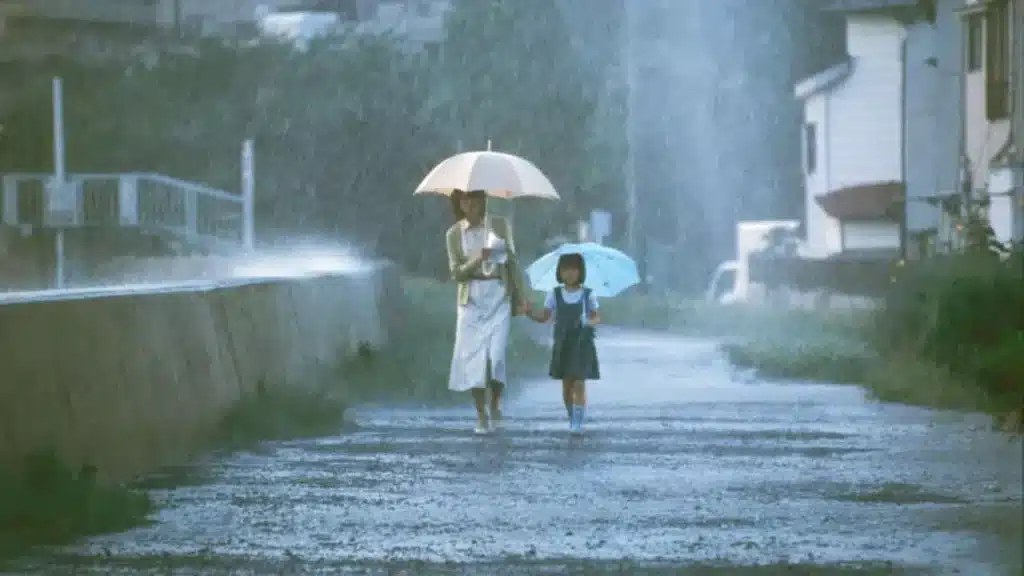
Dark Water (2002)
Image Credit: Toho. The Ring is the most famous Hideo Nakata-directed J-horror based on the writing of Koji Suzuki. But the little-known Dark Water has a deeper and clammier chill. Yoshimi Matsubara (Hitomi Kuroki) is a single mother trying to retain custody of her six-year-old daughter. The two move into an apartment haunted by a perpetually leaky ceiling and a sodden ghost.
Initially, in horror film tradition, it looks like some evil something is coming for the child. But this isn’t the Exorcist, with its theatrical demons. There’s no real antagonist or evil in the run-down building; just love thwarted and the steady, agonizing drip, drip, drip of anxiety, grief, and loss. The film’s rhythms are as mesmerizingly ominous, and as inevitable, as water rising.
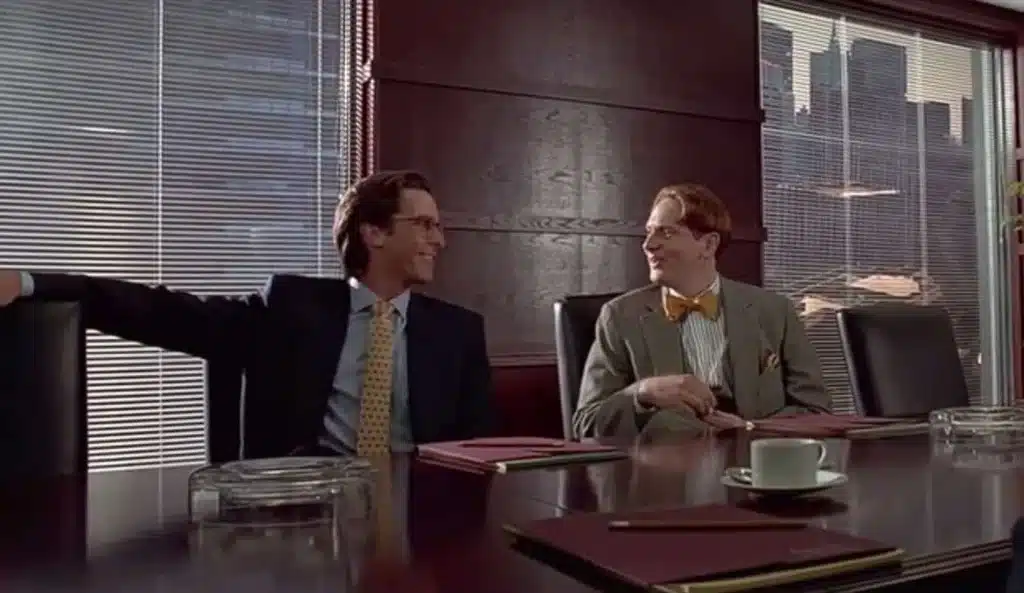
American Psycho (2000)

Image Credit: Lionsgate Films. Silence of the Lambs presented serial killers as super-cool super-genius. “Pfft to that!” said director Mary Harron, and gave us Patrick Bateman—serial killer as a bland corporate social climber with atrocious musical taste.
Christian Bale wears his good looks like an empty shell as he brutalizes women, tries to place dinner reservations and praises Huey Lewis with the same mix of bland insecurity and teetering rage. The horror isn’t so much in the blood and murder, which, given Bateman’s tenuous hold on reality, may or may not even actually happen. Rather, the movie is unsettling because of its portrait of a life and a culture so empty even the super-cool super-evil super-geniuses have nothing on their minds but their own business cards.
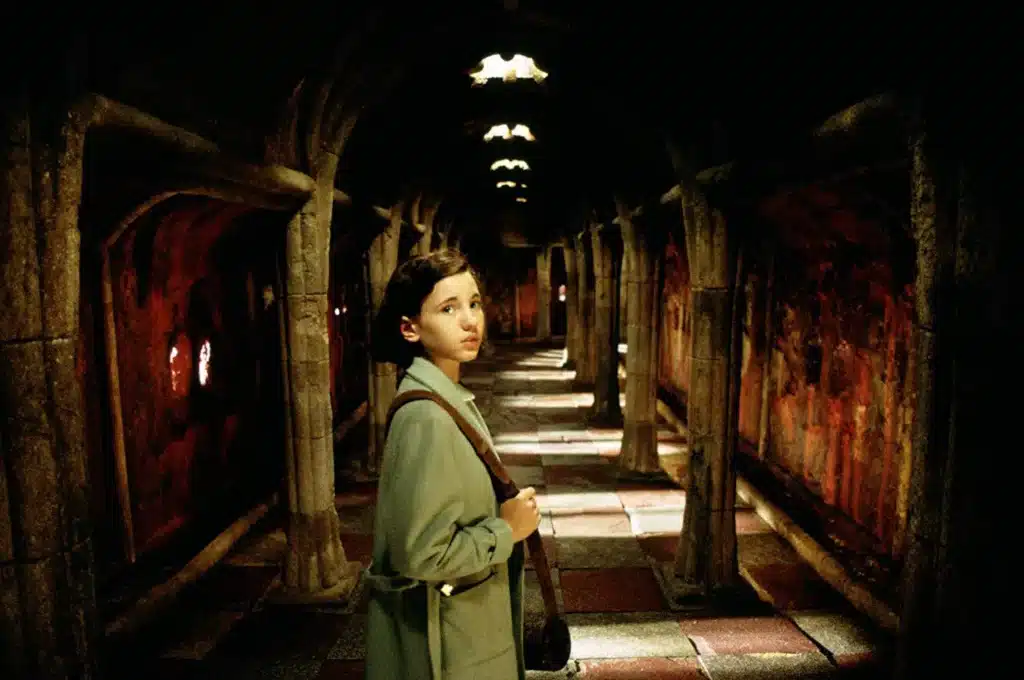
Pan’s Labyrinth (2006)

Image Credit: Warner Bros. Horror often plays with the line between fantasy and reality, but rarely with such grace or cruelty as in Guillermo del Toro’s breakthrough film. Ofelia (Ivana Baquero) is a lost princess who must complete three tasks to return to her father’s kingdom. Or else she imagines she’s a princess to escape a miserable reality in which her mother has died and left her in Franco’s Spain with a fascist father who hates her. Every time Ofelia steps through the chalk-drawn doorway, you want to yell at her not to come back. But when she doesn’t, it’s worse.
The effects—including a bloated mud-spewing toad and a flesh-eating Pale Man with eyes in his hands—are amazingly imaginative and tactile. All the more so because the movie never lets you forget for long that the real child-eaters are less wondrous, and colder.
Hostel (2005)
Image Credit: Lionsgate Films. Slashers like The Texas Chainsaw Massacre and The Hills Have Eyes are often built on urban/rural anxieties and resentments. Eli Roth switches up the formula to east/west, so you get to delight as Europeans take their bloody revenge on misogynist entitled American backpackers, and then delight further as the Americans get their revenge in turn. The film is notoriously gore-filled, but the most disturbing bit involves a creepy German who eats salad with his fingers. He says he wants to get closer to the guts of life…which is the ugly motive of tourists, and of horror film watchers too.
Hostel II is the rare sequel that rivals its prototype, so if you like this, you should watch that. But not, for pity’s sake, Hostel III.
The Human Centipede (2009)
Image Credit: Bounty Films. Dutch director Tom Six’s nightmare surgical hybrid of body horror and slasher is often dismissed as a crass exercise in self-indulgent depravity. Treating crass exercises in self-indulgent depravity as art is one reasonable definition of horror, though. Six really has managed to create a carefully, bloodily constructed new creature from the bits and pieces of Dr. Frankenstein, David Cronenberg, and his own grotesque, self-loathing vision of humankind as a suffering, crawling thing.
German Siamese twin specialist Josef Heiter (Dieter Laser) kidnaps two American tourists and a Japanese man and surgically connects their mouth to the anus with a single digestive tract. The film is as viscerally repulsive, degrading, and cruel as that description suggests. It’s an atrocity and a triumph, and it will make you despair. What more can you ask from a horror movie?
Martyrs (2008)

Image Credit: Wild Bunch. The most infamous movie of the infamous New French Extremity movement, Pascal Laugier’s Martyrs both depicts and embraces torture for its own sake. Young girls Lucie Jurin (Mylène Jampanoï) and Anna Assaoui (Morjana Alaoui) are brutalized pointlessly by a cult that seeks to create martyrs through extended suffering. The second half of the film is little but Anna being force-fed, struck, and tormented with mundane cruelty as gentle music plays and she wastes away before our eyes.
Laugier tempts viewers to embrace violence as grotesque revenge, violence as genre payoff, and/or violence as formal aesthetic beauty, even as he continually reminds you that violence is pointless and exists only for its own consummation. It’s a frustratingly gratuitous and gratuitously frustrating film, which leaves you unsure whether to be angry at the director, yourself, or the world.
Final Thoughts
I only wanted one film per director, but I thought about picking Hostel II or Cabin Fever instead of Hostel, and The Devil’s Backbone instead of Pan’s Labyrinth. Other films that were on and off the list were Ginger Snaps and Battle Royale. And I seriously considered Claire Denis’ Trouble Every Day, which is supposed to be great. But I ended up not being able to stream it. The best horror has to be a horror you’ve seen—though there are always other horrors out there.
Teeth (2007)
Image Credit: Roadside Attractions. There are a fair number of female vampire films, and a lot of revenge films, but there is nothing quite like Mitchell Lichtenstein’s teen coming-of-age castration romp Teeth. Dawn (Jess Wexler) is an abstinence-touting purity-culture devotee trying to make sense of her growing attraction to boys.
When the nice Christian youth she’s been fantasizing about tries to rape her, though, she and he discover that the local nuclear plant has somehow given her a vagina dentata, which enacts bloody vengeance when her consent is violated.
The inevitable scenes of unpleasantness (enacted upon skeevy step-brothers and condescending gynecologists alike) are uniformly flinch-worthy. But what really makes the movie is Wexler’s performance. Dawn starts out afraid of her sexuality and her power, and gradually recognizes the pleasures both of saying “yes” and of being able to say “no” with teeth.