
Last Updated on July 14, 2024 by FANGORIA Staff
Halloween is almost upon us, so why shouldn’t there be a new Halloween score to commemorate the occasion? John Carpenter, his son Cody, and their collaborator Daniel Davies return once again to complete their soundtrack trilogy, whether or not you like all, some, or none of David Gordon Green’s films that go with them. Their Halloween Ends record is a finale, catharsis, and stopgap all in one — especially because it’s anybody’s guess when we’ll get another Carpenter album of Lost Themes again. And it’s pretty terrific, even if it slightly too frequently leans into the more sound design-heavy style that has dominated much of Carpenter’s latest work.
To understand what that means, listen to the original score for Halloween or most of Carpenter’s scores up through at least Prince Of Darkness. Most of them are strongly Wagnerian, at least insofar as he creates distinctive and powerful cues for Michael Myers, Laurie, and so forth, and otherwise creates these little melodic jabs that communicate atmosphere or provide a classic “sting.” While he obviously revisits a few of those on Halloween Ends (there’s more than a little bit funny about cues that are simply named “Laurie’s Theme Ends”), he builds them out with more of the bells and whistles of contemporary synthesizers, which are more versatile and complex, both in the tools they offer and the sound they create. Consequently, there’s a lot of melody-free ambiance that, while effective on screen, feels more like foley work or field recordings than the more intimate and direct cues that chilled audiences a few decades ago.

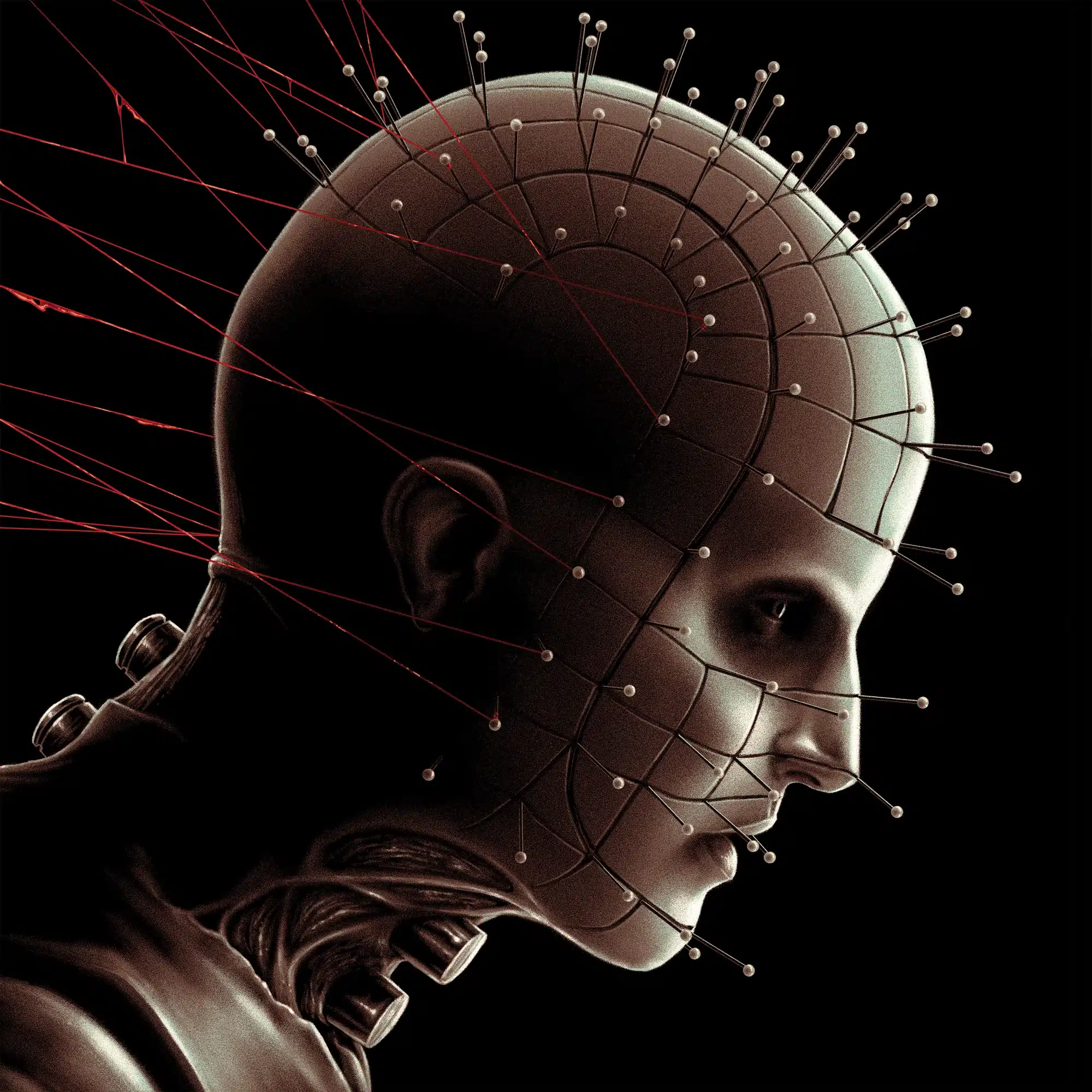
But Halloween Ends is only the beginning of this special extra edition of Let’s Score Todd To Death, which collects some recent releases just in time for your Hallow’s Eve bacchanal. For example, there’s Mondo’s dual release of the score to Hellraiser (1987) and Hellraiser (2022), which come in their typically gorgeous packaging and form beautiful bookends for the franchise — at least for now. Mondo has also helpfully released the scores to Hellbound: Hellraiser II and Hellraiser III: Hell On Earth, if you are so inclined to be, well, more of a completist (no one has yet compiled all eleven scores in one convenient location), but given director David Bruckner’s skillful, measured reimagining of Clive Barker’s world of endless, excruciating sensation in the new film, looking at those particular scores opposite one another seems appropriate.

Of course, Christopher Young’s score for the ’87 film is a thing of beauty. The main theme perfectly captures the elegant descent of the characters into a hellish netherworld, but Young swings for the fences with something that broadly almost sounds more like a traditional classical piece than one that conveys more traditional, vamping menace. At the same time, on tracks like “The Lament Configuration,” he captures the metallic and ritualistic qualities of the individuals who dare open the puzzle box, delicately juxtaposed with a sound that, in a Steven Spielberg, could almost suggest wonder, not fear or danger. And then, of course, Young brings the whole thing together with the gothic theatricality of pieces like “Reunion,” which immediately evokes early Danny Elfman, before Danny Elfman was yet Danny Elfman.

Taking over for Young on the ’22 Hellraiser, Ben Lovett very shrewdly only flirts with Young’s familiar themes throughout much of his score, and it (and the film) is better for it. “Blood Box” wastes no time setting a mood, but as it stomps forward with grander orchestration, he injects just a distant hint of the main theme, employed later as a welcome payoff to the escalating danger that these young characters face. “Mansion Party” bridges a lovely but unusual gap between piano ballad and trap anthem, definitely a byproduct of the film’s era, but one that offers a more fun listening experience than if the record were simply filled with menacing cues. In fact, Lovett exploits those deep 808 beats as a heartbeat and a bit of a brown note to lead viewers toward the impending horror. He also broadens the musical spectrum with tracks like “Audience With God,” which lean more heavily into the sadder and more melancholy elements of young Riley’s addiction and loss (it is called “The Lament Configuration,” after all), before finally delivering that iconic melody in “Such Sights To Show You,” orchestrated almost as a triumph. For listeners, that’s exactly what it is.


Finally, there’s Tyler Bates and Timothy Williams’ score for Ti West’s Pearl, which is a pretty extraordinary piece of work musically as it navigates the distance between the title character’s Technicolor aspirations and the more deadly disappointments she faces — and inflicts. The main titles are just kind of stunning, a seeming tribute to the era of Max Steiner and Alfred Newman, who, along with Erich Korngold, effectively founded film music. But as you venture further into the record, it’s clear that there’s a dark edge to Pearl’s dreams, communicated with low, deep string melodies and a level of explosive bombast that feels like it would be just as home in Merian C. Cooper’s King Kong.
What’s really lovely about Pearl is not just that, well, it’s a genuinely lovely score, which is something you can’t often say for horror films. But what augments the unease and violence that eventually unfolds in the story is that Bates and Williams are willing to let certain cues just be beautiful, if they’re using a waltz or some more delicate compositional structure, and then injecting those more traditional horror elements. As a whole, what makes this such a great addition to the canon is not simply that it’s so different than the score for X, but it’s so different from most scores, especially those recorded in contemporary horror. But it also reveals so much depth and dimension as it progresses. You’re guaranteed to make new discoveries every time you listen to Pearl.
