
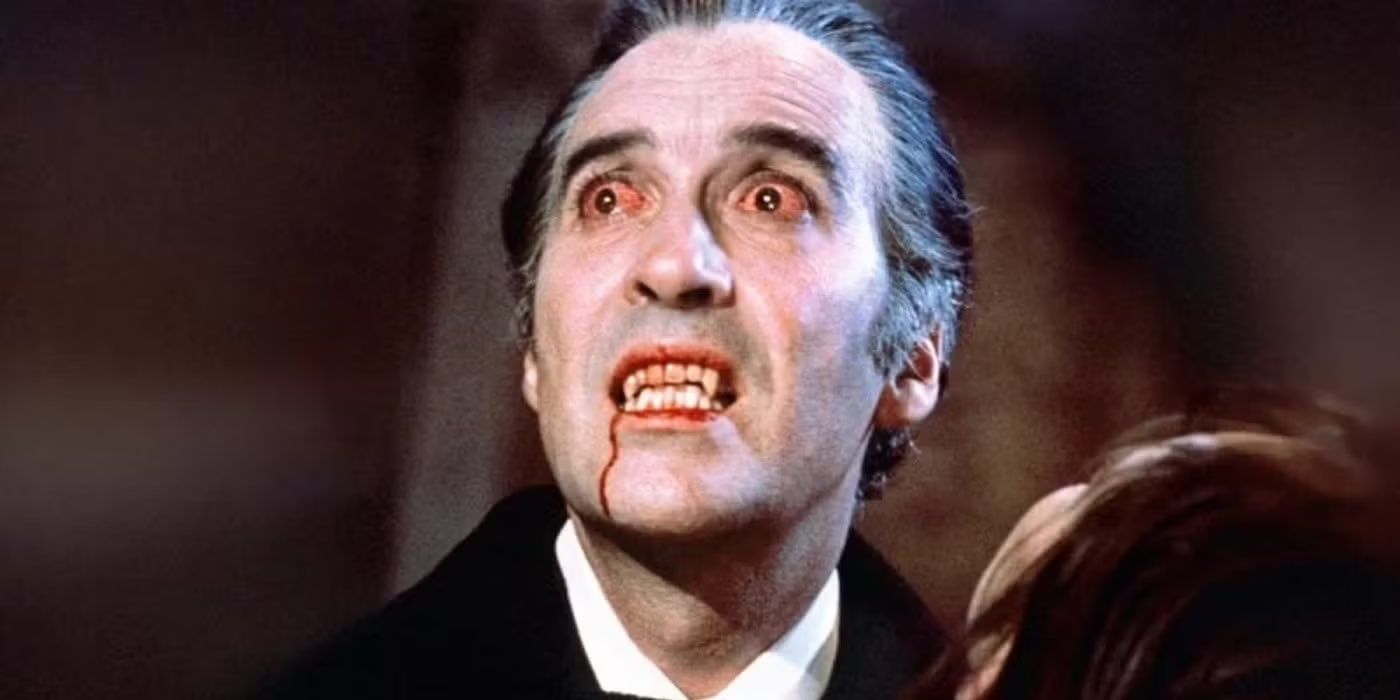
Horror fans are spoiled in the modern age of home media. It seems like there’s always an exciting new restoration or release of a niche film that keeps it preserved for future generations. Truth be told, it’s one of the best feelings in the world when something you love gets its due, and love and care go into presenting it in its best form.
That’s how I feel about Hammer’s restoration of the 1958 seminal classic Horror of Dracula. Handled stateside by Warner Archive, the release features no less than four cuts of the film in various forms (five if you decide to dish out the cash for the gorgeous deluxe box set). Though the film has seen its share of releases over the years, this is the first time that it’s truly been given the care and respect it deserves.
Released in 1958 (under the title of just “Dracula” in its native England), the film saw Hammer Studios riding on the success of their film The Curse of Frankenstein from the year before. The horror genre was in a bit of a rut at this time. The Universal Monsters had worn their welcome thin, and the Atomic Age of horror in the '60s hadn’t quite kicked in. Hammer smartly decided to reimagine classic cinema monsters on the cheap and take advantage of the UK’s newly formed X rating. This meant that Hammer could show a level of violence and sexual undertones that hadn’t been possible in monster movies before.

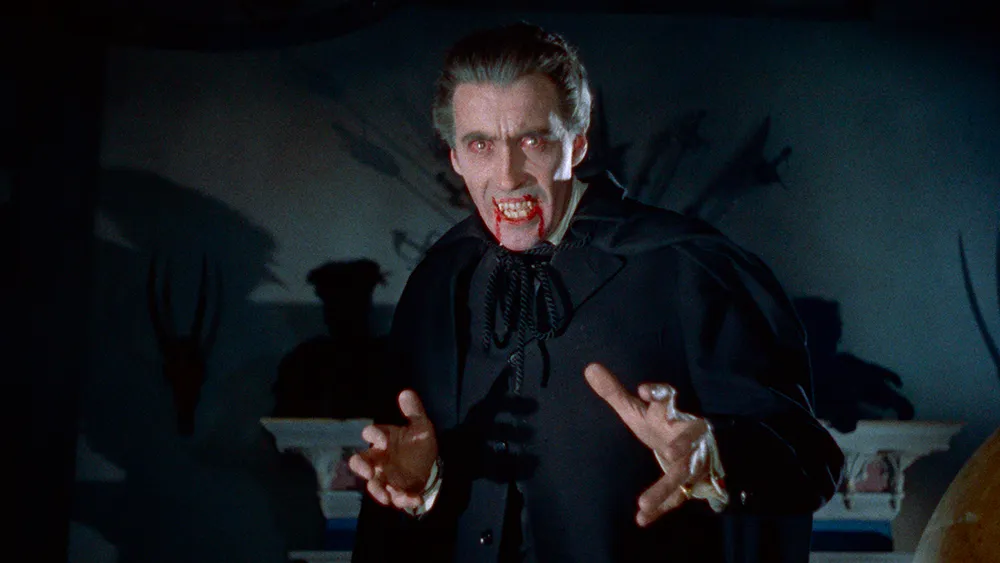
Horror of Dracula provided an opportunity for the studio to retell the tale of the world’s most famous vampire and reimagine him for a new era. From the blood-soaked title card to the themes of sexual liberation, this retelling differs greatly from the Lugosi version Universal made in the 1930s. Played by Christopher Lee, this version of the Count is less aristocratic and more gentleman-like.
From the moment he’s on screen, he provides a welcoming demeanor which makes his reveal as a bloodthirsty demon all the more alarming. His appeal carries over to the women he preys on in the night, providing a threat to the idea of the nuclear family and expectations of female partners at the time. Hammer’s version of Dracula contains nuances lacking in Universal’s adaptation and, in turn, provides a more book-accurate portrayal.
Hammer’s take on the source material challenged nuclear-family ideals and sexual norms. Lee’s Dracula, with his gentleman demeanor and feral feeding, proved to be a more sexual take on the character than Lugosi’s portrayal. The vampirism is a metaphor for giving in to sexual desires and wants. At the tail end of the 1950s, and right before the sexual revolution of the '60s, Horror of Dracula feels very topical for the era. The main character, Mina, who traditionally becomes Dracula’s victim, instead gives in to her urges and willingly becomes seduced by the Count. While audiences think of a seductive Count Dracula today, this was the first time he was portrayed on screen in this manner.
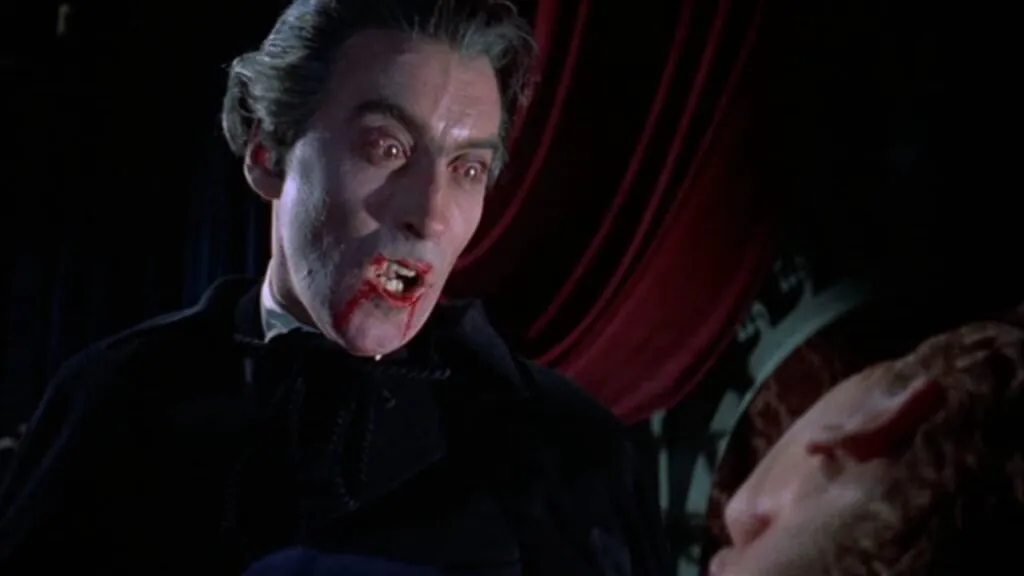
The film is also loaded with violence and gore unseen in 1950s horror films. Peter Cushing’s Van Helsing goes to great lengths to dispose of vampires, often ending their lives in a gloriously bloody fashion involving a stake to the heart. Horror of Dracula was the first Dracula film in color and, as a result, features copious amounts of the red liquid. It ranges from hanging around on the tips of Dracula’s fangs to flowing from the chest of a slain vampire. Though the film is from 1958, it remains a gory delight to this day.
One of the most notable scenes of violence involves Van Helsing and Arthur Holmwood baiting Lucy after she becomes a vampire with a child. After which they stake her in the heart after burning a cross into her face. Lucy preying on children is an element of the novel that was only mentioned in the 1931 film and wasn’t ever fully resolved due to censorship at the time, but in Horror of Dracula, this subplot reached a gory end as the audience is treated to a river of blood as Lucy is set free from her mortal coil.
This restoration restores the film to the way director Terence Fisher intended it to be seen. While the Horror of Dracula has been restored in various forms over the years, most attempts have been plagued by missing footage, incorrect aspect ratios, or, worst of all, incorrect color grading that gave the film a bluish tint. Hammer and Warner Archive have gone to great lengths not only to restore the picture as intended, but also to include theatrical and uncensored cuts that unearth four minutes of previously unseen footage. They’ve also gone the extra mile, including both the UK and US versions of the film, which offer different aspect ratios and title cards. This is quite possibly the most complete Horror of Dracula has ever been, even surpassing its original theatrical exhibitions.
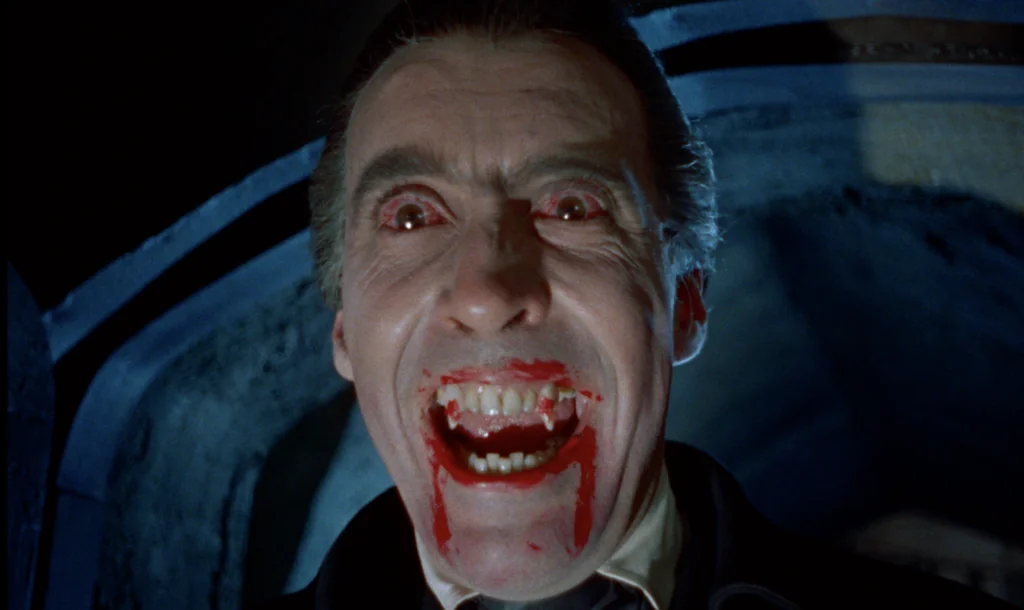
Even further, Hammer has dug through its vaults and found a never-before-seen workprint cut of the film. Though it's exclusive to the sleek deluxe edition box set, the fact that something like this exists and hasn’t been seen for nearly 70 years is an astounding achievement in film preservation. Horror of Dracula is one of the greatest adaptations of a story that has been adapted a million times over the years. It gave us a Dracula that encouraged his victims to give in to sexual desires. It gave audiences a level of violence and gore that hadn’t really been common in the horror genre up to that point.
As important as the film is, it hasn’t really received a restoration that keeps it as intact as possible. That changes this month, thanks to the efforts of both Hammer Studios and Warner Archive, who set out to achieve the impossible and restored this film to a level never seen before. If this is setting the standard, then one can only hope that they will eventually work their way through Horror of Dracula’s many sequels. One can only hope.
You can pick up Warner Archive’s restoration of Horror of Dracula here.