
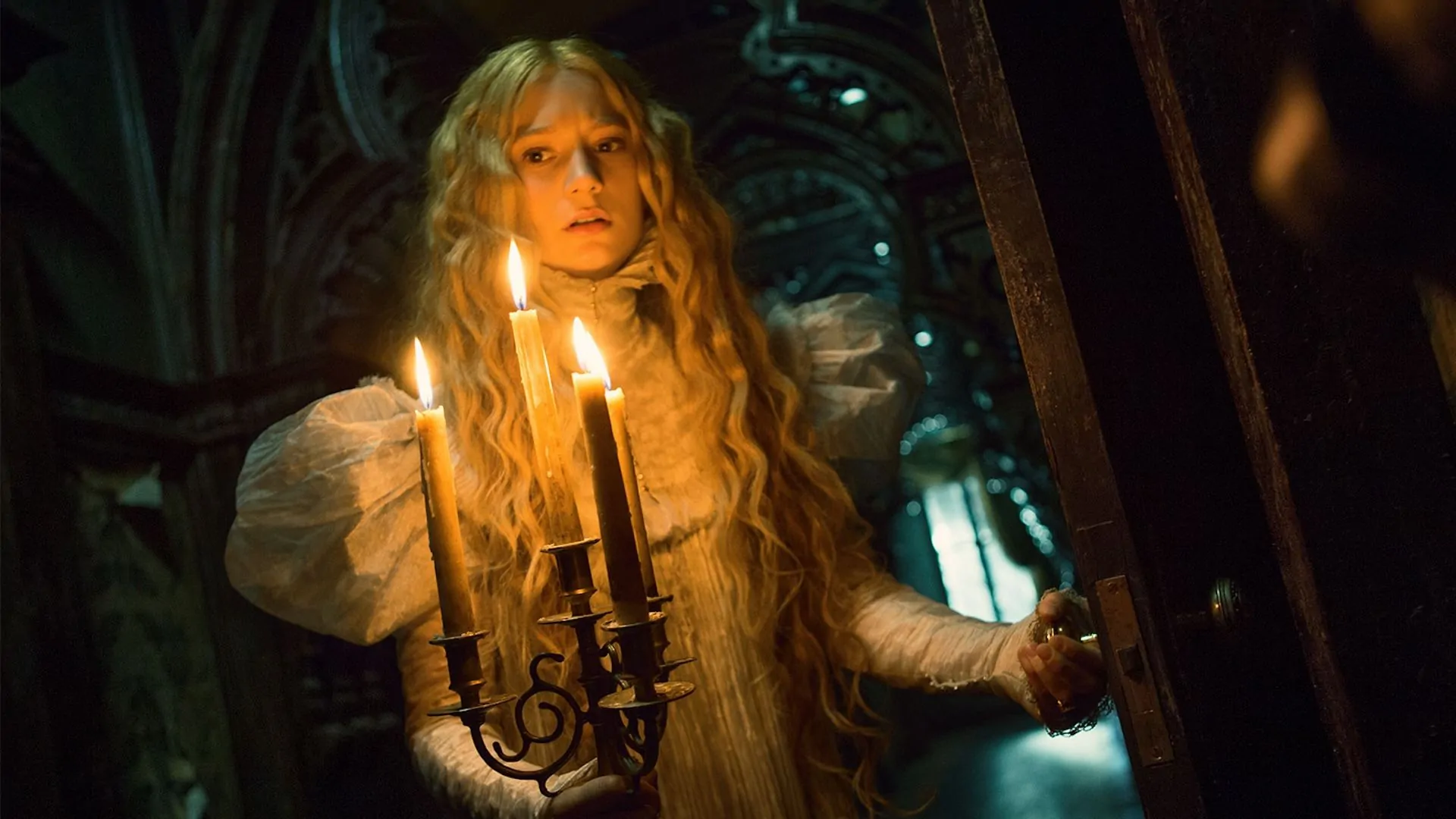
For reasons I'll never understand, Universal mismarketed the hell out of Crimson Peak back in 2015, resulting in a much lower box office take than it deserved. Like most great films, it has since found its audience on home media, but it's still a shame that more folks didn't see the lush cinematography and incredible sets on the big screen. Personally, I found it to be Guillermo del Toro's best American movie, yet it sold fewer tickets than the forgotten Mimic. A tragedy. (His next movie, The Shape of Water, won several Oscars, including Best Picture, so that probably evens things out for him, career-wise.)
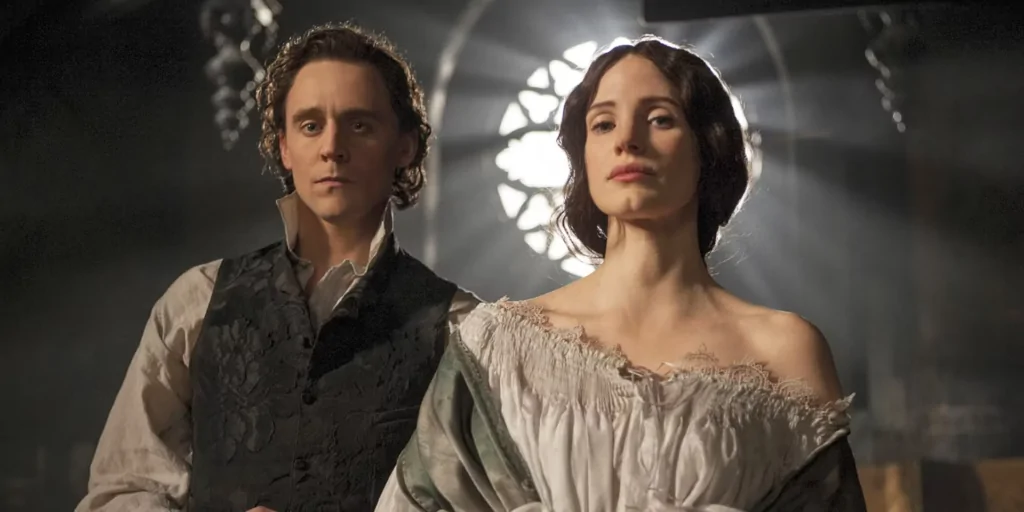
But I never got around to reading its official novelization until now, partly because someone told me at the time that it wasn't all that different. This wasn't too surprising; most modern novelizations do sadly stick to the finished film, with the rare exceptions having an unusual reason for doing so (Halloween Ends, for example, was written by one of its screenwriters, so he had creative license working for him!). That said, Nancy Holder's adaptation does have a few notable additions that help flesh out the twisted relationship between its central antagonists, Thomas and Lucille Sharpe (Tom Hiddleston and Jessica Chastain, respectively), and also gives Alan (Charlie Hunnam) a bit more to do.
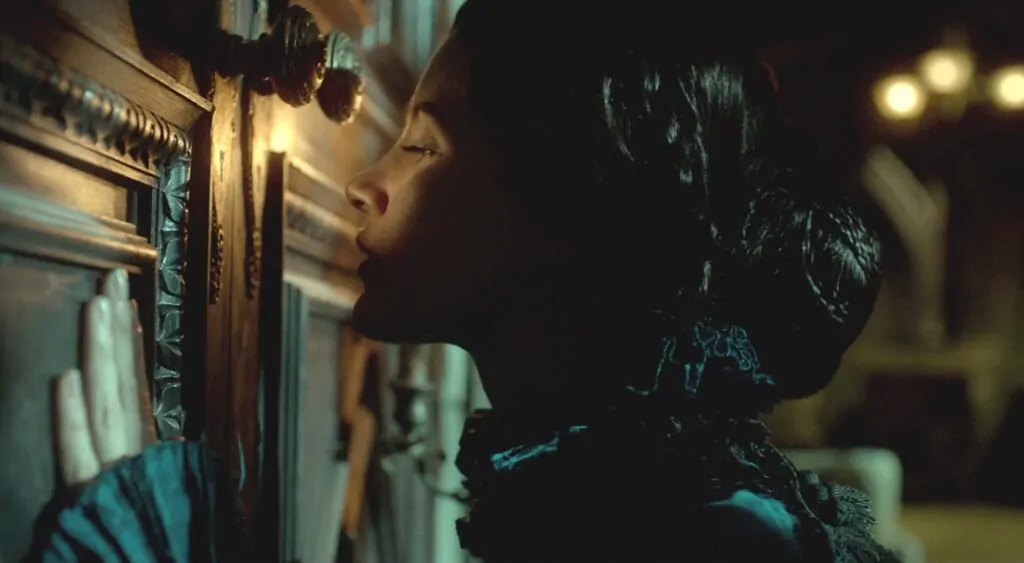
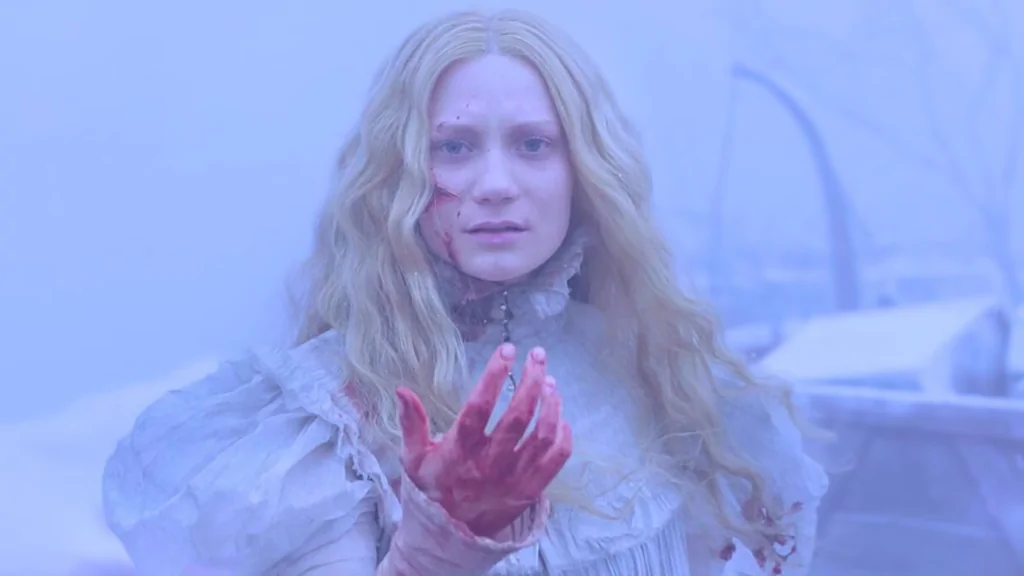
The biggest inclusion is easily a flashback sequence that occurs late in the narrative, after poor Edith (Mia Wasikowska) has become aware that her new husband and his sister intend to harm her. Right after she injures her leg, we are treated to a scene from the siblings’ childhood, where the pair are playing in their abusive father's office and accidentally break something.

As she has in the past, Lucille shields the younger Thomas from any harm, instructing him to hide and lying to her father that it was she alone who caused the damage, resulting in a beating (not her first, either). Thomas then feels guilty that she took all the punishment and makes her a small toy as an apology.
It's the sort of scene one might expect to see at the very beginning of the story, where we might wonder “Why are we seeing this?” and then have the context gradually revealed throughout the story. As it stands, it's slightly awkward, as it suddenly asks us to sympathize with Lucille after we've already seen her do such horrible things, but hey, it's something new!
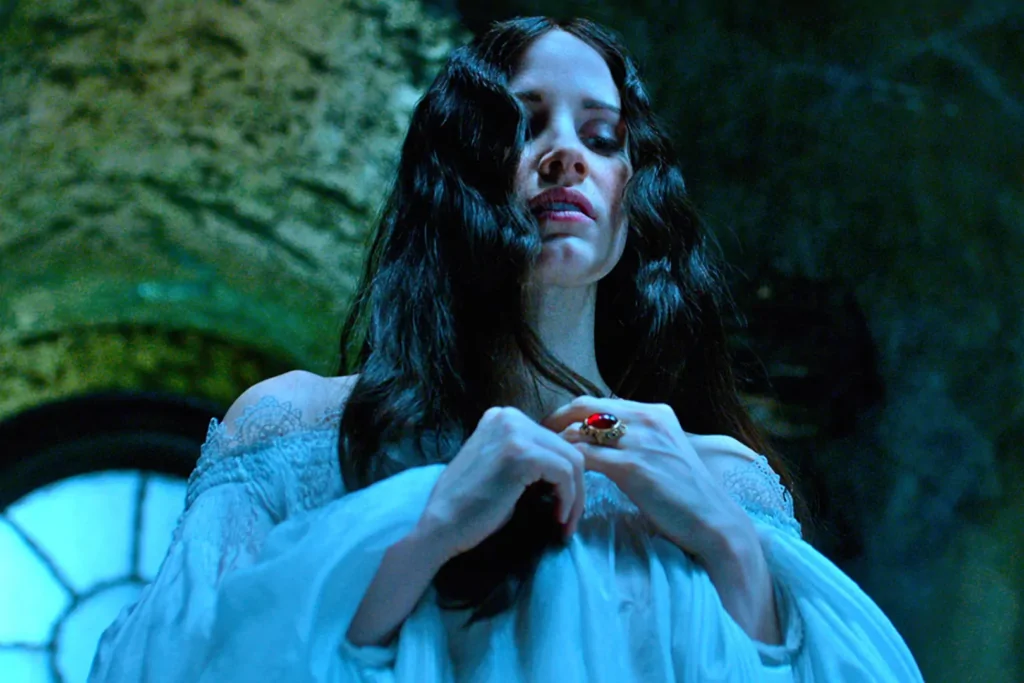
As for Alan, we get more of his journey to the Sharpe's home (nicknamed Crimson Peak, for those who may have forgotten what the title meant). In the movie, he just kind of shows up, but here we see him on the boat to England, making small talk with another passenger while trying to avoid saying exactly why he's heading there, for fear it would be seen as improper.
Indeed, there's quite a bit more about social norms for its time; most of it is in inner monologue, like when Edith frets about going to the party at all without a date and knowing she shouldn't even speak to Thomas when he is courting Alan's sister, Eunice. Alan also frequently worries about speaking to Edith; despite his concerns for her safety, he still feels he has to be a proper gentleman and not speak to another man's wife in private. It's all very silly to a modern brain, but that's really how it was back then. Probably why the average lifespan was about 20 years shorter. So much stress!
Edith's inner monologue makes up the bulk of the rest of the novel's changes, as the movie obviously couldn't have her saying these things out loud. One amusing running gag of sorts is that she apparently hates typing, feeling that the QWERTY arrangement was needlessly complicated. She does indeed say something about how slowly she types in the movie, but Holder takes it to another level, having her think about how confusing it is several times. Later in the story, she even wishes Thomas would build her a new typewriter with the letters in order!
We're also treated to an extra example of how innocent and naive she can be when she discovers Lucille and Thomas fondling and kissing. Rather than just accepting the idea of incest, she assumes this means that Lucille is actually his real wife and is merely posing as his sibling. This is actually a bit of spoken dialogue, and Lucille relishes correcting her, confirming she is indeed his blood relative and they are just a bit too close for comfort.
That said, for those looking for more alluring reading material, it is my sad duty to report that the author tones down the content of that scene, as well as the love scene between Edith and Thomas. Despite having no MPAA to worry about, Holder is not particularly descriptive of these moments and gives them only a line or two. So if you were looking for a slightly smuttier version of this romantic horror tale, you will walk away disappointed!
We also get another perspective: that of the ghosts. Every now and then, Holder puts the reader into the head of one of the many ghosts watching Edith, which gives the book a slightly creepier feel than the movie, as these diversions often occur in scenes where we do not actually see these entities on-screen. Sometimes the ghosts even wax philosophical, ruminating on the complexities of life as they watch a spider ensnare a fly, while “the bride” (meaning Edith; the ghosts don't seem to know the characters' names) is also being trapped in a metaphorical web.
If you ever watched the deleted scenes on the Blu-ray, they're all added back here, including the second scene where Thomas demonstrates his model to Edith's father and his associates. It's unclear if those other new scenes were also from Del toro's original cut or maybe in the script but never filmed, but as it touts being the “official” movie novelization on the cover, and includes a quote from del Toro at the end, one can assume that he is at least OK with their existence, whether he came up with them or not.
Other scenes have a little more dialogue than in the movie, particularly the moment when Thomas reveals to Edith that she's been poisoned. In fact, there's quite a bit more with the poisoned tea throughout; there's a bit where Edith makes Thomas a cup and he frantically asks which container she made it from (honestly I'm glad they cut this part if it was ever scripted, because it makes Edith seem foolish for ever drinking it again), and later when she finds the photos of the now-dead previous brides, they're all seen drinking it! The Sharpes aren't the most careful murderers, even in the movie, but here it's occasionally ridiculous to believe they haven't been caught yet.
All in all, not a particularly enlightening book, but there's JUST enough there to make it worth a read if you're a die-hard fan, giving what would amount to maybe ten minutes' worth of extra material in the movie if it was presented on-screen, with most of that thanks to the boat scene with Alan and the flashback to the Sharpes' abusive father.
None of it is essential, mind you; as with most “extended cut” versions of movies, the right call was made in editing – none of this material is necessary or explains anything that was confusing in the film. But of course, a fan can always appreciate getting a little bit more to see and hear in a story they love, and in this case, I feel it's more or less worth your time to read.