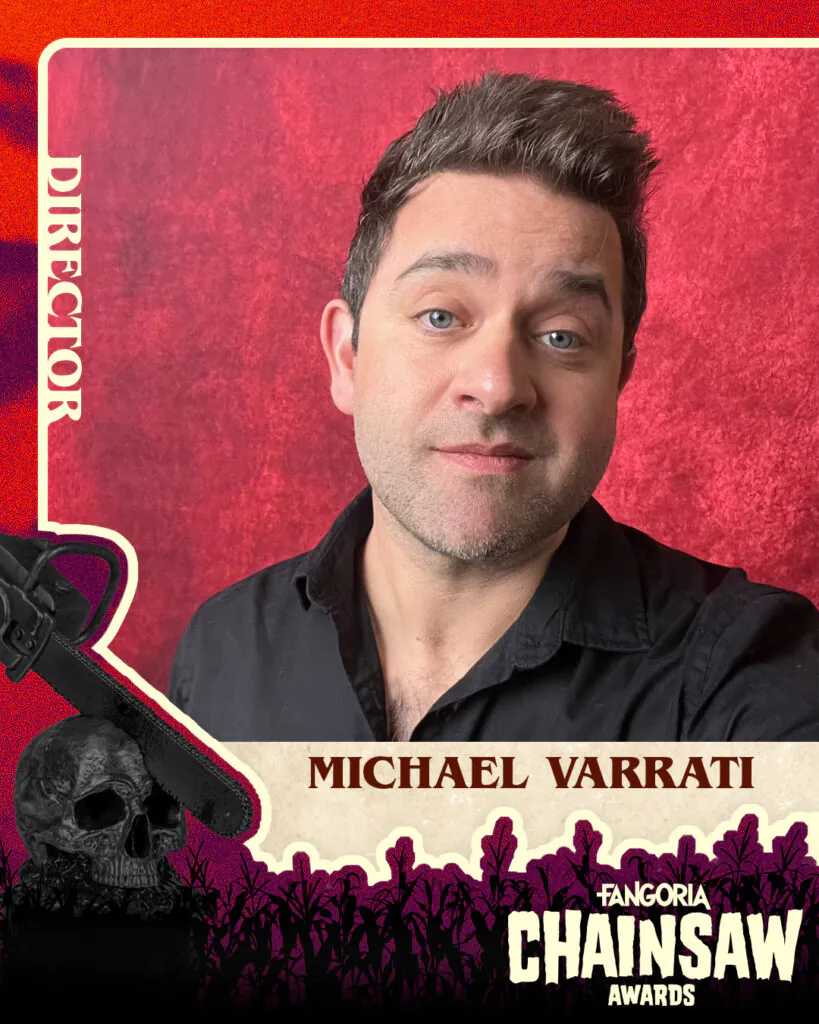
For the past five years, Michael Varrati has written, directed, and produced the FANGORIA Chainsaw Awards. A decorated filmmaker, screenwriter, producer, author, host, and frequent contributor to Fango in print and online, he has shaped our annual celebration of achievements in horror film, television, and gaming over the last half-decade.
“This is a show that is always in flux, and by that I mean there is a malleable element because even if we know that it's a fixed point in the calendar and we're going to do a show every year, there are things that we are only able to put in the show once voting and nominations happen,” he tells me. “Which means we spend half a year planning for something that we actually have the meat of for like several weeks before shooting happens.”
Varrati says the germ of each show theme traditionally forms on the set of the previous year’s ceremony. For instance, two years ago, he had joked that by franchise rules, it was time for the FANGORIA Chainsaw Awards to go to space. So when he filmed last year’s show, hosted by Josh Ruben and Barbara Crampton — rightfully set in space — he felt compelled to do the complete opposite of the cold, metallic, steel-oriented aesthetic for this year’s show. The result was warm and autumnal, exemplified by a harvest-themed show.
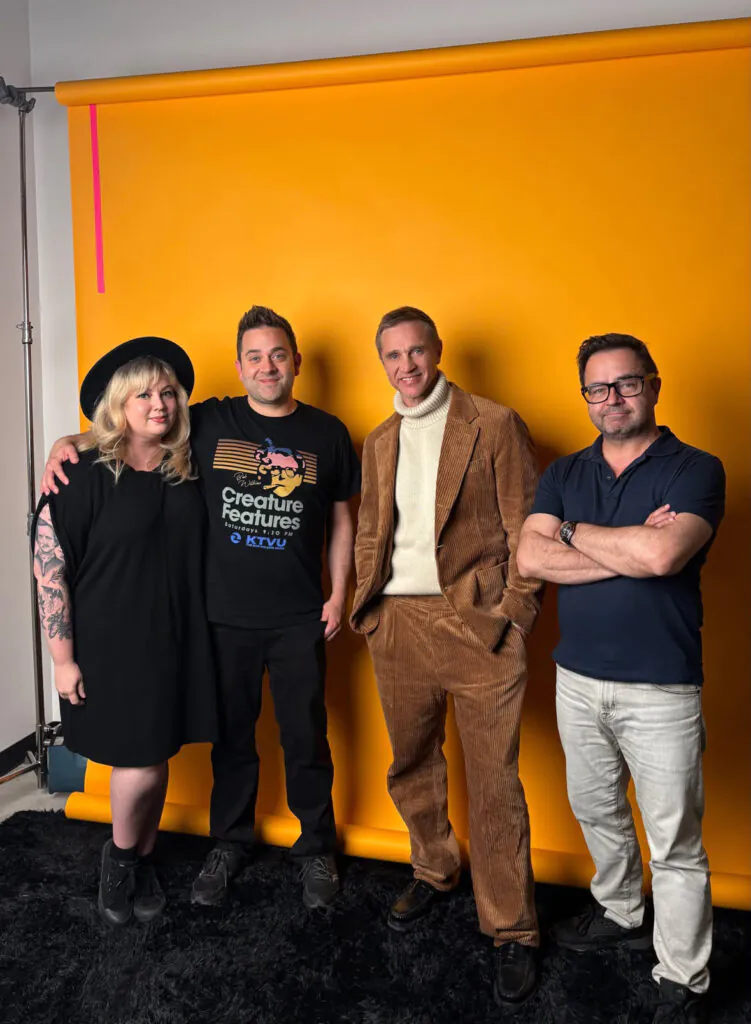
Carved pumpkins, haystacks, corn stalks, and plenty of earthy hues adorned this year’s set, which I was privileged enough to see firsthand. It also allowed for this year’s host, Devon Sawa, to rock a sick turtleneck + corduroy blazer combo. Like the show's theme, having Sawa host was in the works while Varrati filmed last year’s show. “We were going to have him present an award with Jeffrey Reddick, but due to scheduling, he was unable to attend,” Varrati explains. “We had talked to his team, and they said he would be very interested in returning, possibly even in a bigger capacity, and I said, ‘Well, he should host,’ and once that discussion started, I kind of didn't let up on it.”
As Varrati rightly points out, Sawa is a perfect fit for the Chainsaw Awards because he bridges generations of horror fans. Many of us grew up watching him in films like Casper, Idle Hands, and Final Destination, but younger horror fans might recognize him from Heart Eyes or the Chucky series. Varrati tells me that, from the start, Sawa wanted his presence on the show to communicate why the horror genre is special and why it matters to him. As Varrati explains:
“He wanted that earnestness, and I really enjoyed that that was the thing he brought to the table. He requested, ‘Can you make sure that people know I love this?’ and I said, ‘People know you love this, but let's let them hear you say it,’ and so then we built the show around that, and the idea that this is a warm, cozy Halloween special with a person so many of us grew up with telling us, ‘Hey, it's Halloween. Welcome home.’”
With Sawa locked in as the host, Varrati starts by writing the show’s cold open, which features the Backstage Butcher, Fango’s resident slasher who haunts the show each year. “Even though it just seems like a kitschy thing that we do for fun, it also helps me establish the tone of what the rest of the show is going to be,” Varrati explains. The cold open's writing also helps establish the staging, allowing production designer Brendan Haley (who also plays the Backstage Butcher) to start building stage elements.
“We don't need to know who the nominees are to build a corn maze or build a spaceship, but I do need to know how it's going to be oriented in the world that we're putting on camera,” says Varrati. “Anything that I can narratively structure into the show before we start doing the award portion that helps me build the rest of it, so that happens fairly early on.”
Once Varrati has this in place, he starts putting together a list of people he’d love to bring in as presenters. “One of the great things about the Chainsaw Awards is that for people who work in the genre and create in the genre, they hold as much love for it as the fans do,” he tells me. “So when we are building a list of presenters, often when we reach out to folks, there is such enthusiasm about coming to participate because, to them, this is a way — much like Devon — to honor this genre that they themselves love.”
It’s not uncommon for someone to step into the green room during the show’s production and see presenters who were wrapped hours earlier still hanging around to catch up and spend time with other presenters and winners who have just come in the door. That camaraderie is key to building the talent roster. First, the producers reach out to “friends of the family,” so to speak, to lock in folks horror fans not only want to see, but who want to be part of the show.
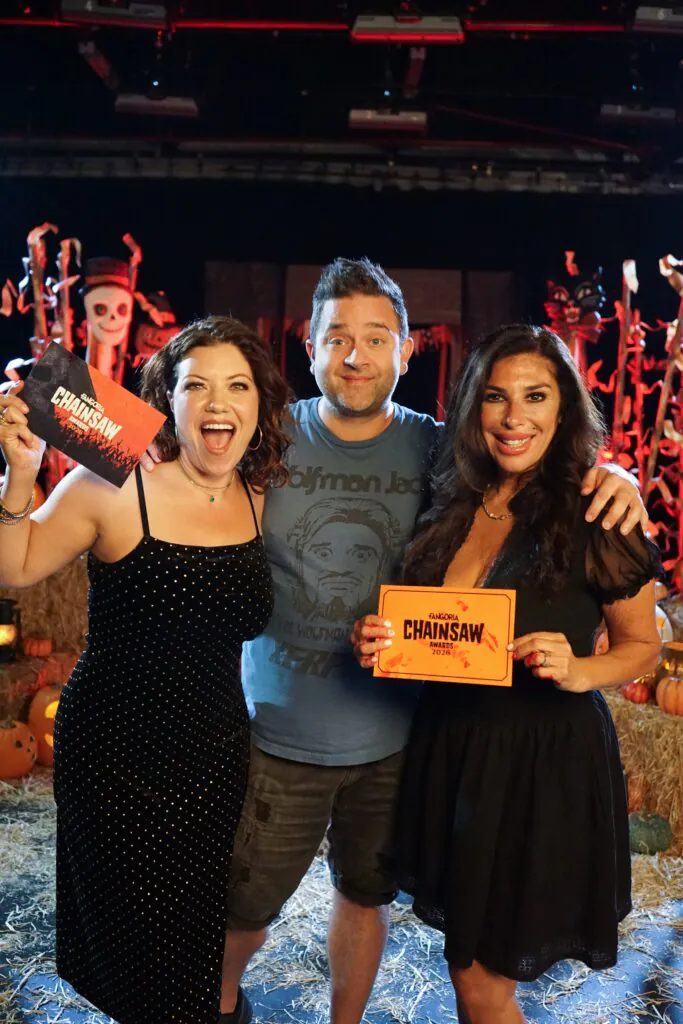
Once nominations come in, the team starts reaching out to nominees to see who's available and wants to take part. “It's a mad scramble usually, but there's also something very joyous about it because you get to send out the letter every year to be like, ‘Hey, it's that time,’ and you get to see who responds,” Varrati says. Of course, one of the biggest hurdles with nominees is seeing whether they're available to come in for filming and not tied up with other projects. Chances are, if they’re a recent nominee, they’re staying booked and busy.
And while horror has never gone away and has long been one of cinema's most prolific and profitable genres, mainstream awards bodies have finally given it the love it's always deserved. Many winners of the FANGORIA Chainsaw Awards have gone on to take home Oscar statues, and with a film like last year’s Sinners, we were the first awards show to add statues to Ryan Coogler’s shelves. Coogler not only made sure his team gave an acceptance speech for every award Sinners won, but he also presented an award virtually to honor another filmmaker.
“It was wild to think that as I watched the Oscars, mere months previously I was on a Zoom with Coogler and he was expressing his love of horror and how exciting it was for that to be the first honor that Sinners received because he was inspired by so many horror filmmakers like Ernest Dickerson and Robert Rodriguez,” Varrati explains. Dickerson actually presented Best Wide Release at last year’s show, so Coogler received his award from one of his inspirations.
This year, given where the eligibility window landed, Guillermo del Toro’s Frankenstein took home Oscars for Best Costume Design (Kate Hawley) and Best Makeup and Hairstyling (Mike Hil, Jordan Samuel, and Cliona Furey), the same awards they won at this year’s Chainsaw Awards. Additionally, Amy Madigan continued her Best Supporting Performance sweep and can now place her Chainsaw Award next to her Oscar, if she so chooses.
“I think what's important to note is that when we build the Chainsaw Awards we take into account that horror fans like things a little bit different,” Varrati says. “We don't want the Oscars, we don't want the Golden Globes … we can respect those things, but we also understand that those institutions have kept us at an arm's length, and the ceremony of those things often discredits what this genre is all about.”
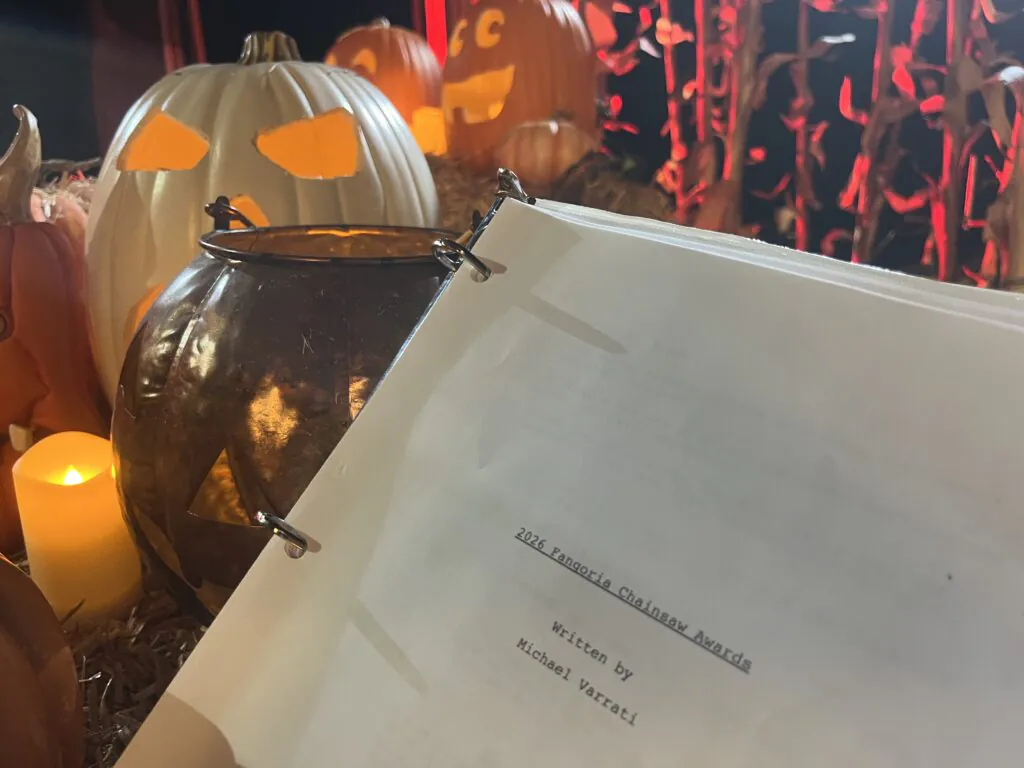
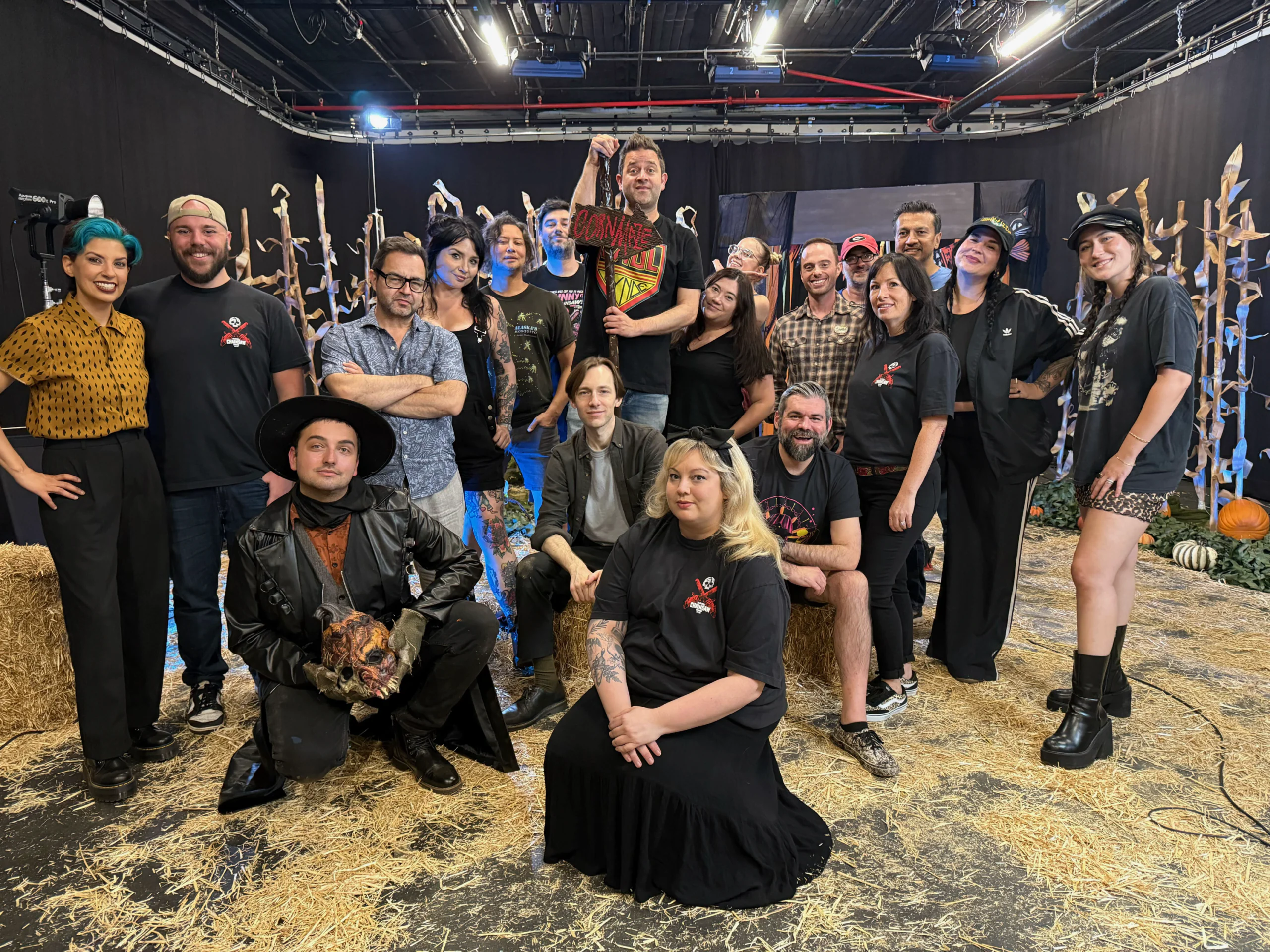
Armen Aghaeian, Tara Ansley, and Abhi Goel executive produced the ceremony, with Amanda Grace Collins as lead producer and Phil Nobile Jr. and Varrati as producers. The Chainsaw Awards are a pre-planned, pre-recorded celebration shot in August to air in October, and Varrati says this isn’t necessarily for economy, but out of love for what horror fans want.
“We are creating a television special that is crafted and befitting horror fans; we're basically making a 90-minute independent movie that just happens to give Awards throughout,” he tells me. “But our show can have an annual slasher that appears throughout the show; we can see the host interacting with that year’s monsters, and we can have a popular drag queen appear as Nosferatu or Aunt Gladys [the incomparable Biqtch Puddin’] and do a whole gag.”
“We can do things that other award shows can't because we are allowed to get weird; the audience expects us to get weird, so we don't want to deny them that”