
Halfway through Trauma or, Monsters All:
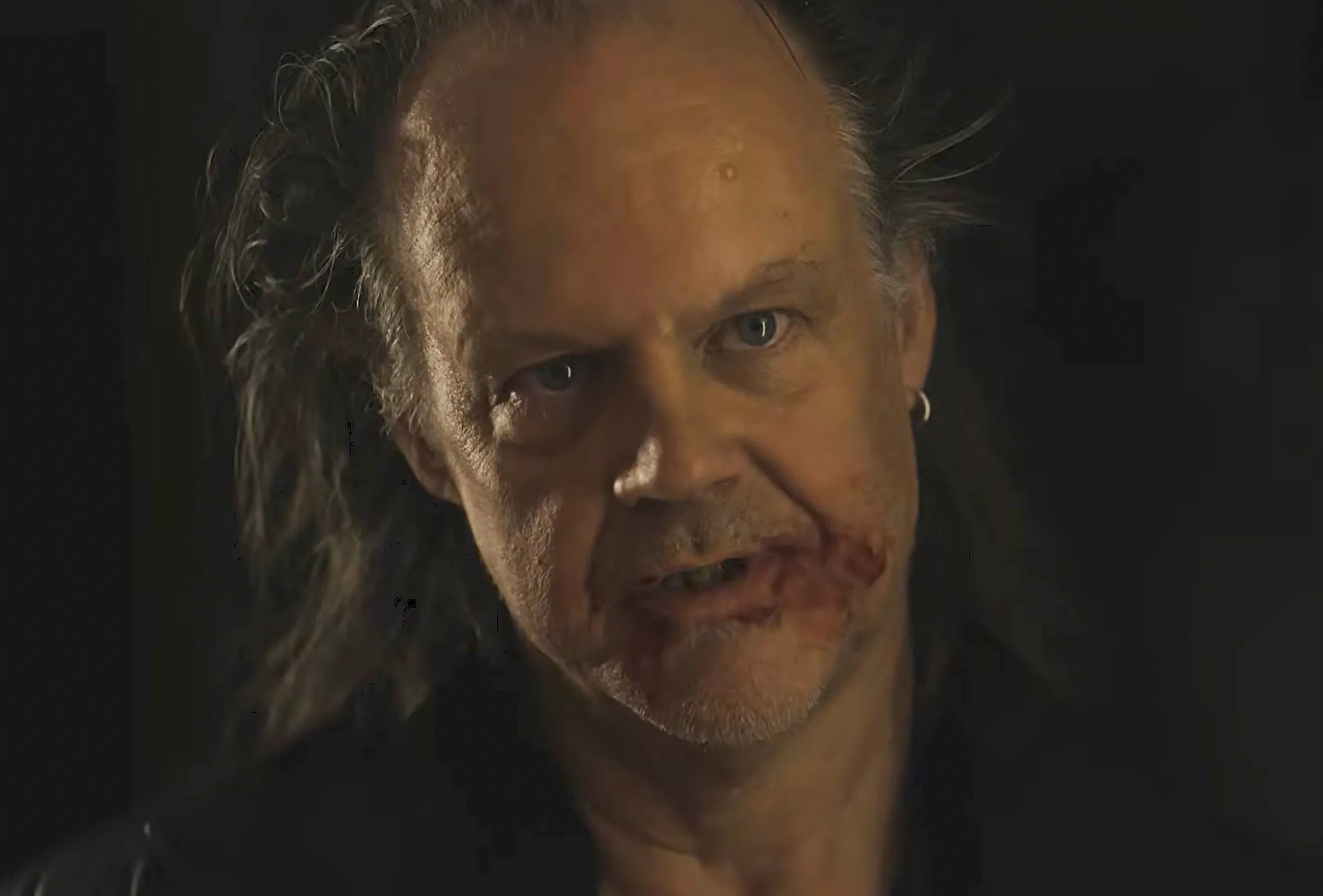
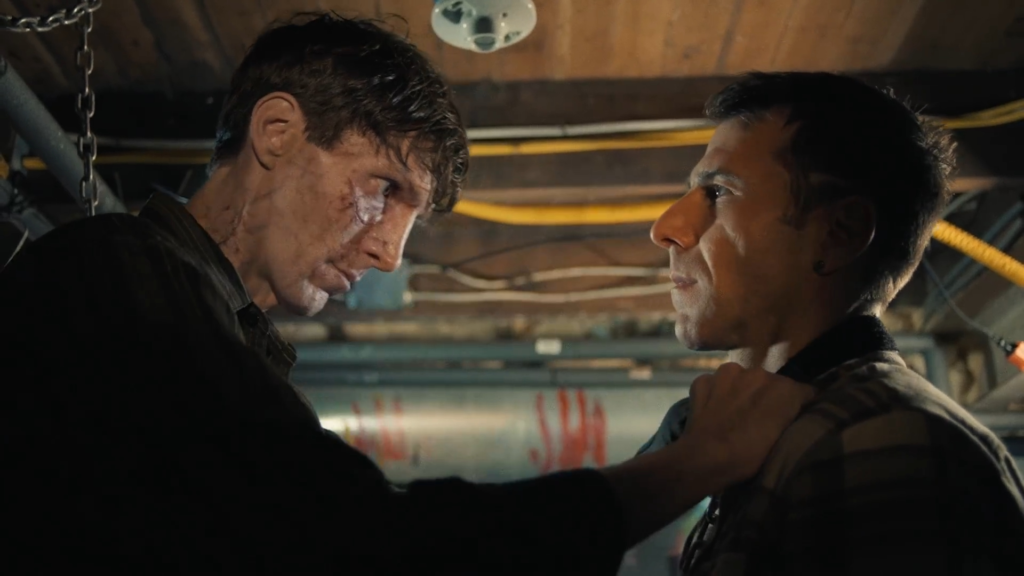
A rawboned and sad-eyed Frankenstein’s monster named Adam (Alex Breaux) brutally strangles the mad scientist who’s tracked him to his rural New York hideaway. Adam’s roommate and only friend, Charley (Alex Hurt), a suicidal werewolf currently in human form, desperately begs Adam to stop while holding him at gunpoint, all while—unbeknownst to either beast—a nihilistic NYC vampire, Sam (Trauma writer-director Larry Fessenden), is descending upon their small town. The camera whiplashes inside the dying scientist’s brain, where the last of his flashing neurons collapse like dying stars, before wrenching back out of his head when Adam slams the man’s dead meat to the floor.
In the house next door, Gen Z historian Cassandra (Laëtitia Hollard) listens as her new friend/love interest, Agnes (Aitana Doyle), dryly monotones a family confession: “My mom and dad, they got a divorce. It was nothing big; I think they just gave up. But we all still live in the same town, so I dunno why they bothered. It just means Christmas has sucked ever since.”
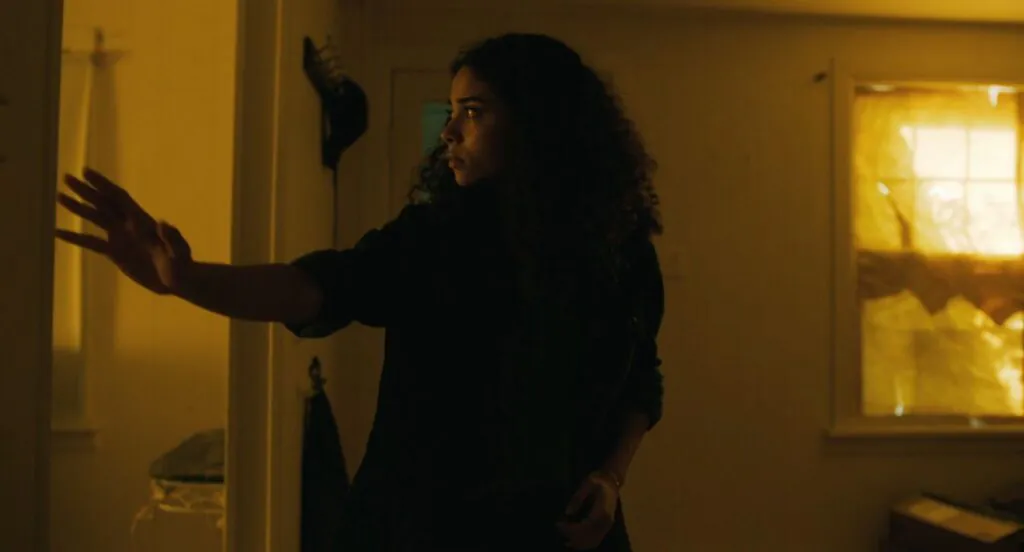
It’s a moment not only of absurdist hilarity—smash-cutting as it does from the nu-gothic chaos of Adam and Charley’s accidental abattoir to the banality of Agnes’ childhood sadness—but one that, in its collision of mythology and mundanity, highlights Trauma or, Monsters All’s central argument:
From reconstituted corpses to wolfmen to children of divorce, we all suffer, and we are shaped by that suffering, and then we shape others by how we make them suffer.
It’s an über-theme that has spattered across Fessenden’s entire filmography of chatty chillers, though most especially in the handcrafted horrors of his 30-year “Monsterverse” movie arc: 1995’s Habit, 2019’s Depraved, and 2023’s Blackout, all before culminating in the astounding Trauma or, Monsters All.
Each is fluent in the cinevocabulary of the Universal Studios Monsters—the melancholy masterpiece Habit is a gender-flipped urban Dracula narrative that finds the grieving, alcoholic Sam seduced and turned by a female vamp; Depraved sews together a Frankenstein re-do in its story of a PTSD’d Army medic who seeks to overcome trauma by reanimating a biological collage of body parts he names Adam; Blackout is moonlit by the self-loathing of the Wolf Man films, in which the deeply depressed Charley is so horrified by the chaos and death he causes with every lunar cycle that he reaches into his painful family history to unearth a secret that could save his rural hometown, Talbot Falls.
And now there is Trauma or, Monsters All. If the first three films in the series found Fessenden, a horror auteur of extraordinary creativity and conscience, softening the bleakness of his investigations into sorrow and society with the fun of monster-movie mythology, then this daring and angry new work aims to suffuse an otherwise silly subgenre with a level of introspection and social awareness that’s as shocking as its violence and wacky mise-en-scène.

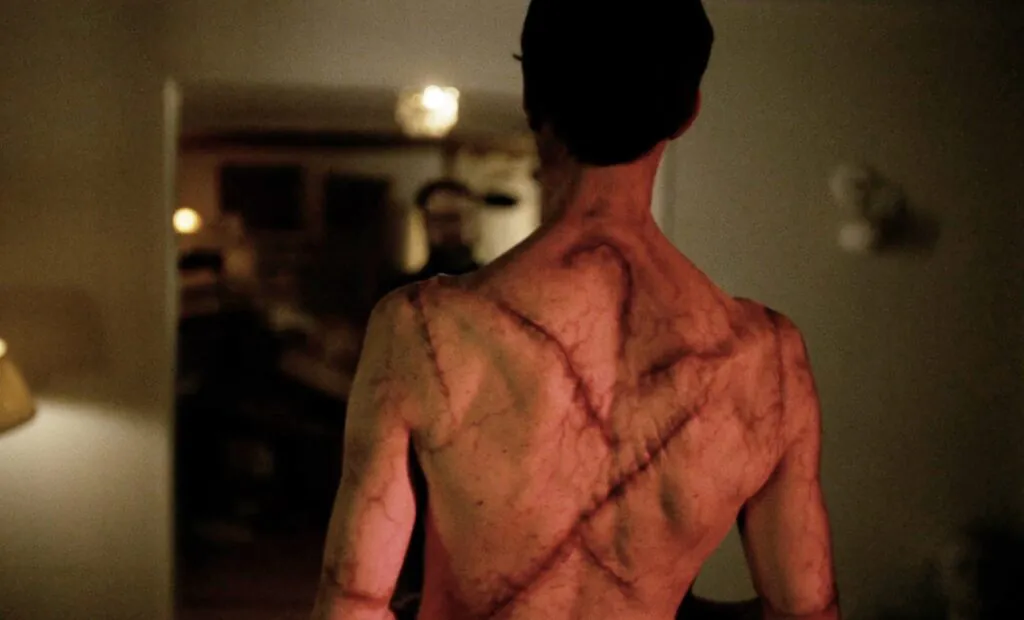
Cleverly resurrecting the “meet-up” Universal Monster movies like Frankenstein Meets the Wolf Man and House of Frankenstein, Trauma is also a madly ambitious mega-sequel/capstone to the other films in Fessenden’s Monsterverse (and it doesn’t require the homework-viewing of the first three films—though you should still see them all). It gathers together Sam the vampire, Adam the Frankenstein’s monster, and Charley the werewolf into the rural environs of Talbot Falls, a town as traumatized and monstrous as each of these men, and just as capable of salvation or damnation, of healing pain or causing more of it.
Further—and so refreshingly unlike every other modern horror movie—Fessenden’s creatures are not tired metaphors for trauma. Rather, in Fessenden’s world, trauma is the trauma, and these monsters are alternately driven together and ripped apart because of it.
And because of Cassandra.

Having recently moved to Talbot Falls, Cassandra is a naïve but perceptive historian seeking peace and quiet as she completes her biography of George Washington Carver, a man whose childhood was savaged by unspeakable trauma but who grew to live a life of exceptional scientific achievement and humanitarian service. In a moment of carelessness, though, Cassandra becomes distracted by the goings-on in the house rented by Charley and Adam next door, Rear Window-style; soon she digs into Talbot Falls’ painful histories of immigrant exploitation and supernatural killings, writing an op-ed for the local paper that rips open the town’s festering wounds, inadvertently doxxes the hiding duo, and catches the attention of the malevolently lonely Sam in NYC.
Cat’s-cradled within the zany (and frequently funny) insanity of that monster mash is a profoundly moral and empathetic vision of a people, of a town, of a country divided—divided by pain, divided by loneliness, divided by politics, divided by othering. Born of mixed-race parents, Cassandra wrestles with feeling neither black enough nor white enough as she struggles to write her path into the world; Charley’s suicidal self-hatred curdles into bloodlust; Adam continually strives for kindness amidst ugliness; Sam’s loneliness presses him to create more monsters for companions; Talbot Falls (via cameos and flashbacks from prior films) offers a number of short-story digressions into the pain of a small-town America that has become atrophied in the darkness, repeating endless cycles of anguish.
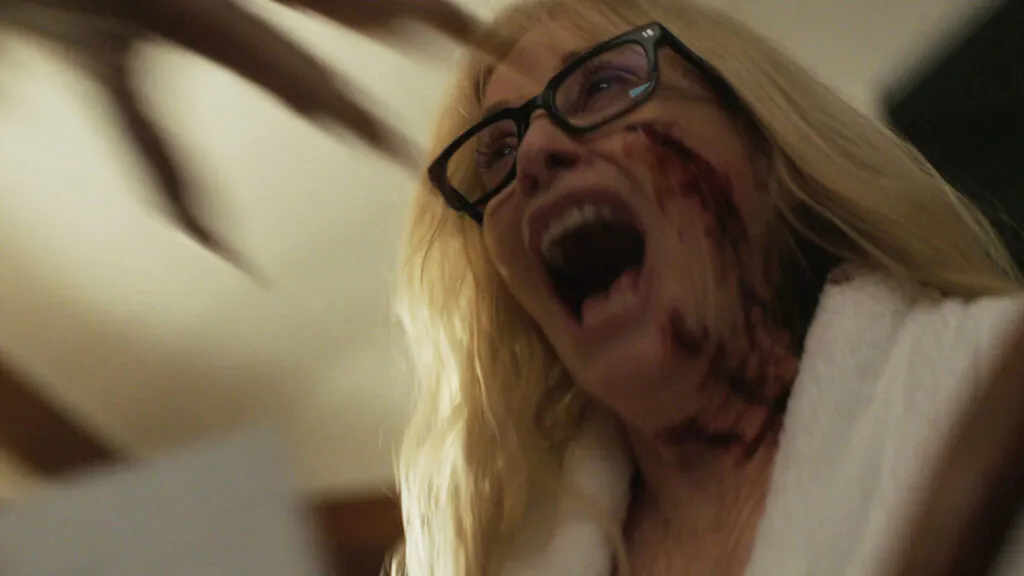
Through his lost souls and wayward monsters, Fessenden presents an earnest (but mischievous) pulp parable of a society fractured by a kind of civil war: not only do these people define themselves by their trauma, but because of it they also define everyone else—as less-than, as others, as monsters. In the surrealist bloodletting that follows, the few characters who survive do so only by coming to terms with what hurt them, so they can (hopefully) heal enough to someday not hurt anyone else.
“I’m a historian, but sometimes I wanna get away from the past,” Cassandra confesses at one point. “I’m just tired of trying to re-litigate everything that’s happened when I know that history can’t be changed. You can only change yourself. Otherwise you’re trapped by the past—it’s like a ghost that haunts you.”
In Larry Fessenden’s astonishingly human and humane Trauma or, Monsters All, the ghosts are as real as the traumas, the traumas as real as the ghosts. To escape the haunts of one is to escape the haunts of the other and to avoid a fate that the film, and Talbot Falls, presents as worse than death: Monsters, all traumatized.
