
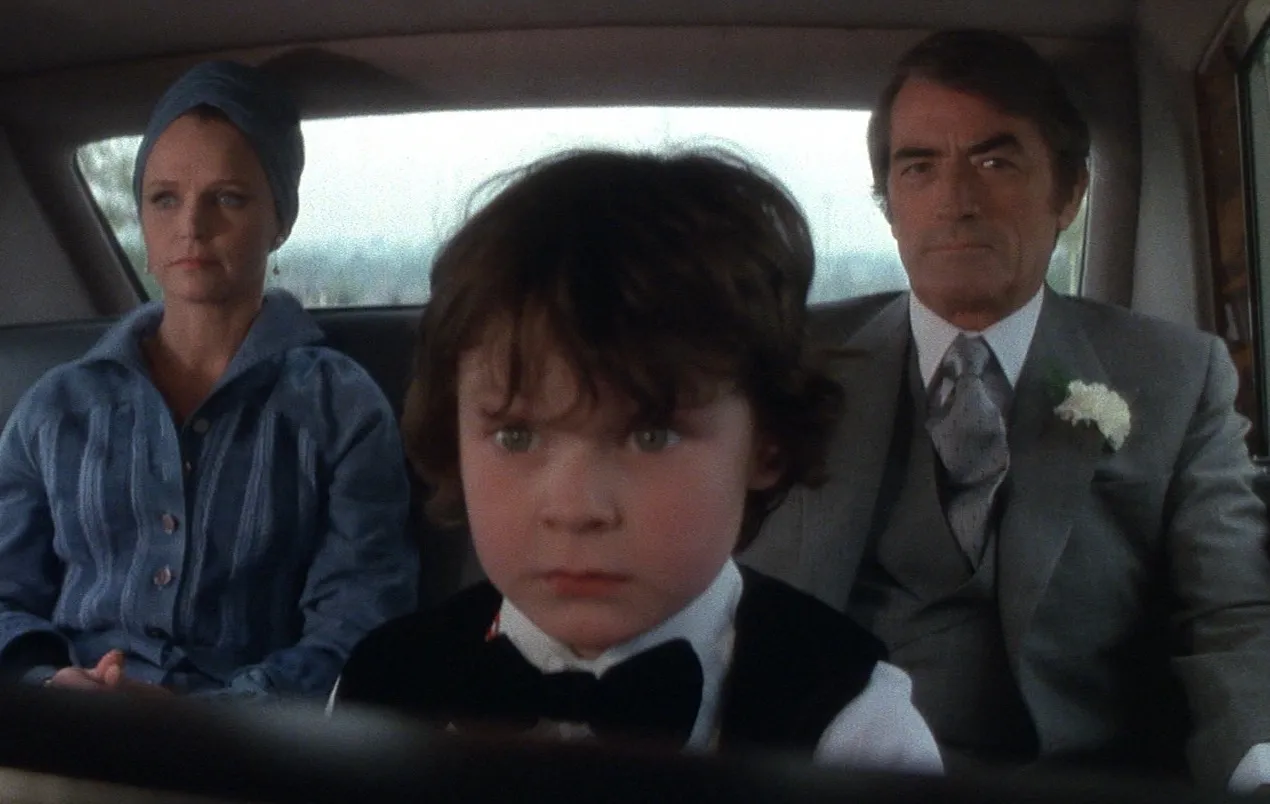
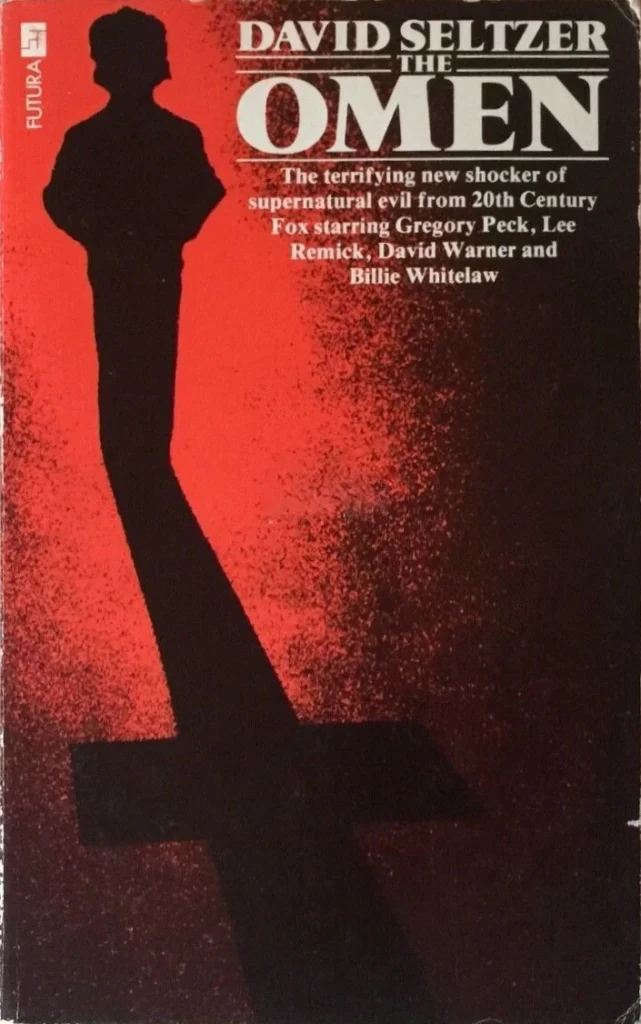
For many years, I thought Richard Donner based his 1976 smash hit The Omen (which spawned a franchise) on a novel, with screenwriter David Seltzer adapting his own book for the screen. But it turns out it's the other way around – Seltzer wrote the script and then was hired to novelize it himself. It's unusual but not unheard of, but what is notable is that the writer made several deviations from his own screenplay, resulting in a novelization that actually *reads* like an original novel that got adapted for the screen. Reading the novelization, you'll discover changed names, wacky ideas that probably wouldn't have passed a round of studio notes (even in the looser 1970s), and filler that probably wouldn't have been all that interesting to see on-screen.
Of course, to a casual fan it won't seem much different at all. The basic story is exactly the same: an ambassador named Robert Thorn (Gregory Peck) and his wife Katherine (Lee Remick) lose their son at childbirth, but a mysterious priest comes along instantly and offers the grieving father a solution. Another child was born at the exact same time, and his mother died, so Thorn can take the child as his own, prevent his wife from the heartbreak, and spare an innocent baby an orphan's life. He agrees, and for a few years everything goes well as his political status rises.
However, strange occurrences and even a few deaths occur around the child, named Damien, prompting Thorn and a curious reporter named Jennings to go on a global search for the truth behind the child's birth and whether or not he is, in fact, the Antichrist. At a mere 202 pages, for a movie that is just under two hours, it's not surprising that there isn't much to it beyond what we saw on screen 50 years ago (I am using the royal “we”, of course).
But it has several minor diversions, so it's still well worth reading for a fan. It's unclear why Seltzer changed some of the names around (Robert is given the first name Jeremy in the book, nicknamed “Jerry” by his wife; Holly, the ill-fated nanny, is named “Chessa” here, and Father Brennan is instead Father Tassone), though given that they're all more colorful, one can imagine that someone suggested simpler ones for mass audiences to remember more easily. It took a bit of getting used to (“Who is Jeremy?” I'd catch myself asking, being more familiar with the character as “Robert”), but ultimately came off as more of a quirk than anything.
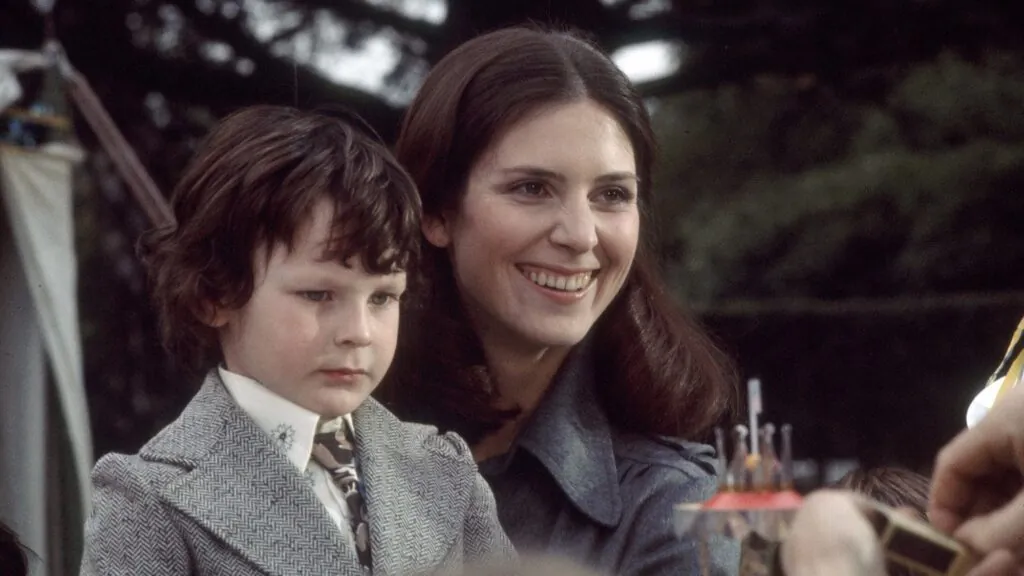
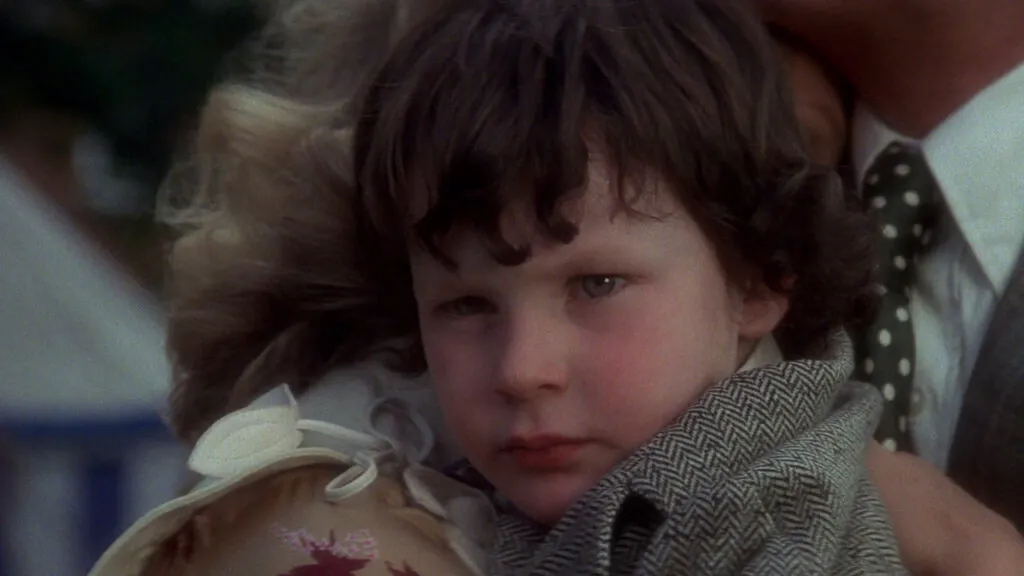
The other deviations, however, gave the story a little more scope, and I couldn't help but wish some of them had been included in the film. Chief among them was the zoo scene. In the movie, Damien walks up to some giraffes, and they quickly scatter, followed by the terrifying baboon scene. But here they go to multiple exhibits, with the animals always fleeing (and at one point, Katherine turns back and sees them returning just as quickly, now that Damien is walking away).
It's a bit repetitive, sure, but it gives Damien a sympathetic moment that the film doesn't always remember to offer (if you recall, Donner wanted audiences to be on the fence about whether or not Damien really was the Antichrist or just a harmless little boy caught up in some unfortunate coincidences). The poor kid just wanted to see some animals, and they all kept ghosting him!
The story also affords Katherine more sympathy. Through her husband's inner thoughts, we learn that this child was actually their third attempt, with the other two ending in miscarriages. Each one broke the woman's heart further and drove her closer to insanity, and the main reason Thorn agrees to take Damien as his own (and, again, not tell her about the switch) is that he fears she will lose what's left of her sanity to find out it had happened again.
The movie reduces this struggle to a single line (“She wanted a baby so much, for such a long time…”), but as presented here, it really drives home how much she wanted a child, and thus why she became so broken when he started to grow, and her intuition told her that something was deeply wrong with him. If this bit of backstory were ever scripted as dialogue, they'd be wrong to revise it.
I also would have loved it if the movie version of David Warner's Jennings was depicted as he was in the novelization, because Warner is always a delight to watch and I could see him really enjoying himself in these otherwise unseen moments. Early on, after his first encounter with the Thorn family, the lonely Jennings puts a chicken on top of a root beer bottle and makes it a little pal of sorts (think “Wilson” from Cast Away), settling for sardines instead of eating his “friend.” Later, during his adventure with Thorn, he suggests passing the time while they wait to hear from their contact by hiring some prostitutes. Thorn refuses, but Jennings simply takes off with both women, and later washes his penis with his own urine to fight off any infection he may have picked up from the encounter.
Thorn is, unsurprisingly, disgusted by this and goes off on his own for a while. Indeed, the relationship between the two men is less friendly here than in the movie; on-screen, Warner and Peck seemed to be bros by the time they found Bugenhagen, but in the novel it comes off more like they are simply forced together by geographical convenience than anything else. They also keep using the same poor cab driver throughout, whereas in the movie they apparently rent a car after utilizing the man for a stop or two.
Ms. Baylock is also depicted differently, and here we can assume Seltzer went back to his original idea for the character. As covered on the Blu-rays and in interviews over the years, Billie Whitelaw would not have been a suitable choice for the role as written, but Donner loved her and her audition so much that he revised the role to suit her take. Here, the woman is described as quite hefty and more grandmotherly, only coming off as a real threat in the final encounter with Thorn, where her considerable size proved a physical obstacle for the man (as opposed to the rather tiny Whitelaw).
Side note – as an End of Days aficionado/apologist, I couldn't help but wonder if that movie's casting of Miriam Margolyes was a little tip of the hat to this original conception of the character, since they fulfill similar roles in movies about the coming of the Antichrist.
Baylock also has more frequent arguments with the Thorns, particularly the scene where she tries to keep Damien from attending the Church mass (Catholic here as opposed to Episcopalian in the movie, which may be interesting to note for any religious scholars here). In the movie, she makes one or two opposing remarks and then gives up, but here it goes on and on until they start arguing about whether she should even be kept on as his nanny. There's also more pushback over the dog she brings into the home, with Thorn, in turn, getting grouchier about it. But again, she doesn't come off as evil as the movie's version does right from the start – just stern.
It's also interesting how she is introduced much earlier here. In the movie, she doesn't come along until after Thorn has already met with Brennan, but here it's pretty much immediately after Holly/Chessa dies. Speaking of the Brennan scene, in the movie he is cut off before he explains that Damien's mother is a jackal (“She's a jack-!”) but here he gets it out and even repeats it. I kind of wish the film had kept it, because it's such an absurd idea that it actually strengthens Thorn's outright opposition to what the man is saying.
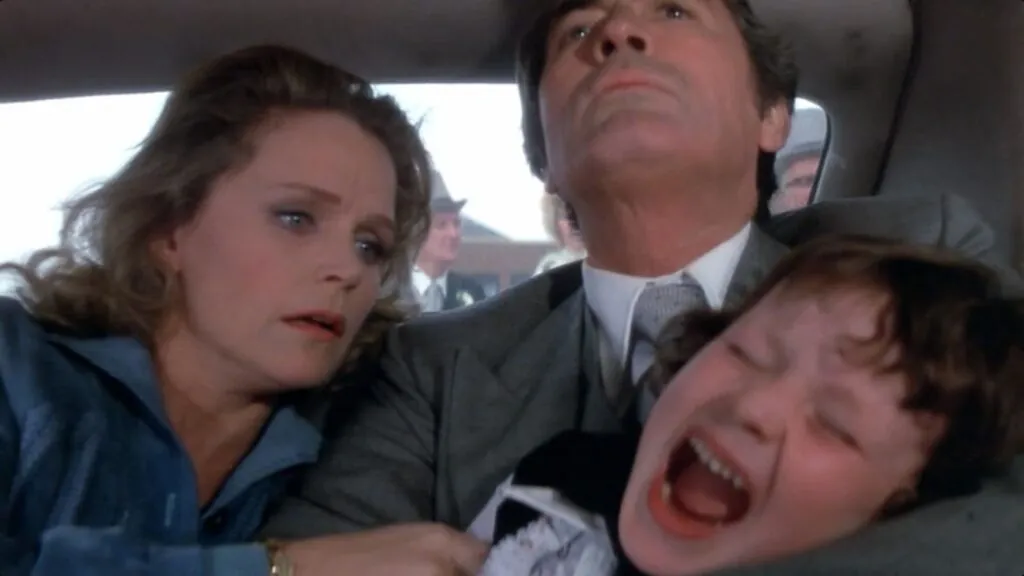
Since the priest knows that Damien is not his blood child and has other information he shouldn’t be privy to, Thorn dismissing him outright comes off as needlessly stubborn, but if he actually got in the outlandish “And she was a jackal” part, maybe it would be easier to side with Thorn in the moment.
On that note, we are also treated to Brennan/Tassone's insane backstory, which involves everything from starting political skirmishes to watching in horror as his young male lover was castrated and had his testicles eaten by his attackers. Since all of this was conveyed through interior monologue, it's unlikely it ever made it into any scripted version of the movie, though it would have been a hoot to watch Patrick Troughton monologue his colorful past to an increasingly annoyed Peck.
Oh, speaking of Peck, Seltzer lists Thorn as being a mere 42 – the actor was 60 at the time of production! Roy Scheider was up for the role at one point, and being about that age (technically 44) at the time, I wonder if Seltzer thought Peck was too old for the character he envisioned and inserted this little detail out of spite.
There's also a character essentially cut from the movie: the Thorn family driver. It's not a major role, but there is an interesting scene where the man, named Horton, tells the Thorns about some of Ms. Baylock's strange behavior, including the suggestion that instead of using the toilet, she relieves herself in the woods (his wife, the family's maid, had told him that the roll of toilet paper in her private bathroom hadn't been touched in the weeks she had been staying there).
Later, Ms. Baylock tells Thorn that the two of them had quit; it's not made explicit, but there's a suggestion she killed them. It's one of the few scenes here that have no counterpart in the movie, as most of the differences are presented via inner monologue or a different take on the character, but as with Jennings' weird chicken scene, it would have been funny, just to see the look on Peck's always serious face as his driver talks about a woman's bowel movements.
Another major scene unrelated to the finished movie has Thorn speaking at an assembly, only to be accused by a crowd member of not doing enough with his wealth to help the world. When the protester even suggests helping poor kids, Thorn considers telling the crowd that he adopted his child, only to think better of it and simply tell the young man that he agrees with him and that he will do better in the future. Thorn's political duties pop up from time to time throughout the book, and if they were ever scripted, I am glad they were cut, as they would not only drag the movie out, but also date it a bit.
Long story short, despite the brief length and the fact that it was reportedly written quickly to help promote the movie (it was released two weeks before the film's theatrical debut), it has enough changes to warrant a read, and is a decent enough novel on its own to read even if you've never seen it. The strange bits of characterization and occasionally increased violence (the fight with Baylock and the dog goes on much longer, and a truck driver is also killed during the scene where the priest is impaled) give it a low-key “Paperbacks from Hell” vibe that surprised me, and the more rounded-out backstories for the Thorns gave them depth that the film versions somewhat lacked; it's mostly our affinity for Peck and Remick as performers that keeps us rooting for them.
Of course, on the page you can't hear Jerry Goldsmith's haunting (and Oscar-winning!) “Ave Satani” or see the hilariously over-the-top decapitation (the book version is much simpler and obviously isn't shown multiple times from different angles), but as a page-turner, it does its job surprisingly well. It’s been reprinted several times and is easy enough to find, so even a casual fan of this franchise should keep an eye out for it next time they’re scanning the shelves at their local used bookstore.