Last Updated on April 7, 2026 by Amber T
Celebrating its 47th anniversary this year, Salem’s Lot was the second-ever Hollywood project to adapt Stephen King’s best-selling work for the screen.
The Texas Chain Saw Massacre director Tobe Hooper, working from a script by Paul Monash (producer of the first King-related Hollywood project, Carrie), brought King’s 1975 novel to life across two 90-minute segments starting on November 17, 1979. That date marked the first time I saw Hooper’s adaptation, or part of it, anyway. I was three years old.
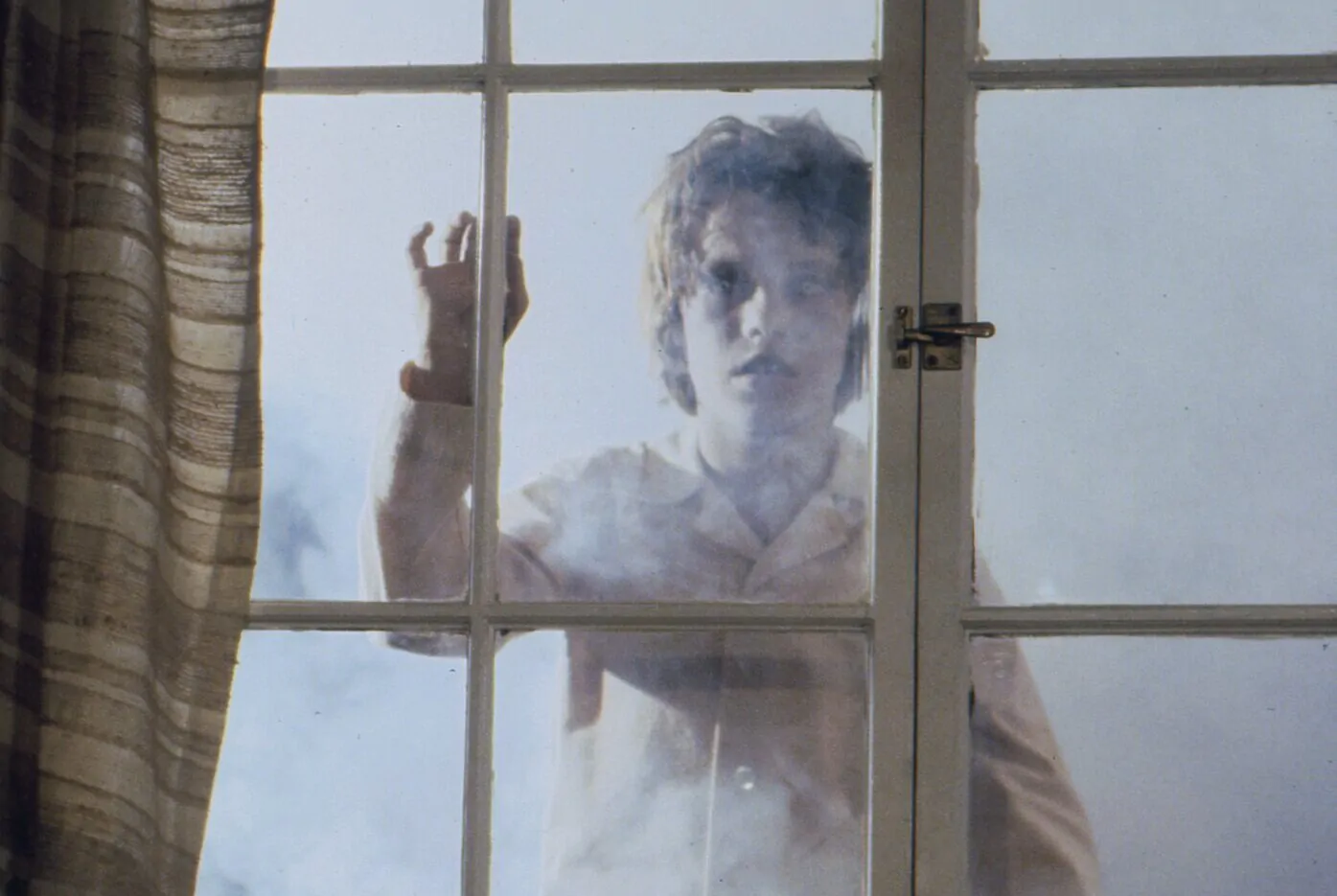
You may or may not be surprised to learn that this experience caused me lifelong trauma. The story goes like this (or at least, how I remember it): on the chilly November night of the Salem’s Lot Part One premiere, I was perched on the lap of a parent or guardian who was reading a newspaper, supposedly using it to shield my eyes from Hooper’s small-screen treatment of King’s work. Yet the paper dipped, exposing me to a terrifying scene in which a fanged young boy floated out of a cloud of mist to scratch at a glass window at his brother, lying restless in a hospital bed. After approaching the window to open the sash, the scene cut to the next morning, where a nurse entered the room to discover the body of the formerly living boy, contorted and dead on his mattress.
I don’t remember seeing anything else from the film, because I was soon whisked off to bed in one of the three bedrooms in my grandparents’ house. However, my dear late grandmother had installed gauzy floor-to-ceiling curtains in my designated room (in fact, in all of them), which filtered in the moonlight with an otherworldly, altogether unsettling glow. For the rest of my grandmother’s life (until she passed away in 2015), these were the first two memories that entered my mind any time I stayed in those rooms, or even visited.
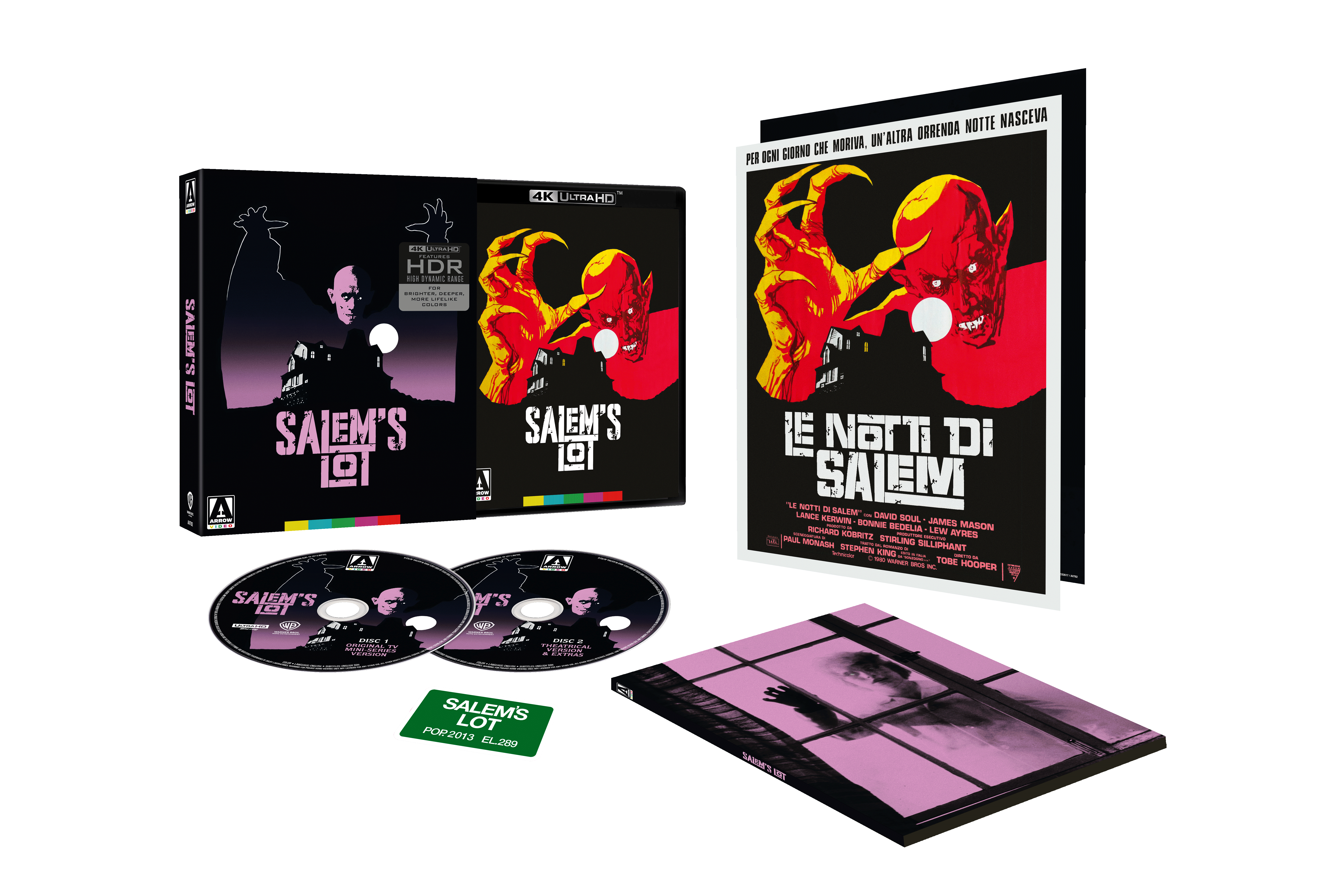
Ironically, and despite becoming a fan of classic horror iconography at an early age (dressing like Lon Chaney Jr.’s Wolf Man for Halloween just a few years later), it took me almost two decades before I even knew what movie that scene was from. I found Salem’s Lot on VHS in the 1990s and tried to watch it then, but couldn’t get through it. While in my late 30s, I hunted down a clip of the scene I remembered on Youtube but noped out of it 15 seconds after pressing play. In the meantime, I watched hundreds of horror films of varying levels of intensity, while familiarizing myself with the behind-the-scenes movie magic that made their scares so powerful. And then in January, just a month or so after I turned 50, Arrow Video announced plans to release a limited-edition 4K set featuring two cuts of the adaptation and all of the bonus-material bells and whistles that make the company one of the best distributors of physical media operating today.
More or less simultaneously, I became a new father. The coincidence of my first child and my very first scare prompted me to wonder if the movie — and that scene — would still retain the same power it held 47 years earlier. In the interest of promoting their new 4K release, and reviving a critic’s childhood anguish as he navigates his son’s first steps into a big, scary world, Arrow happily sent a copy of the set my way.
To commemorate the 4K release of Salem’s Lot on March 31 — and test my resilience as a father (much less a film-lover) — I watched the film this week. The almost five-decade build-up, I discovered, was warranted. It was also worth it to push past it and confront this memory that had inextricably commingled stolen glimpses at a too-early age and late-1970s home décor into a lifelong, paralyzing fear. (Seriously: when my grandmother passed away I briefly contemplated how I could buy the house for my own future family, but aside from not being able to afford it I mostly worried I’d never be able to roam its halls without thinking about that kid tapping on the windowpane.)
The most immediate and unexpected discovery I made was how similar the experience I embarked on was, in key ways, to the journey taken by the main character of the film. In Salem’s Lot, Ben Mears (David Soul) is a successful author who returns to his Maine hometown to confront the mystery of a nearby mansion. “The Marsten House” figures heavily in the memories of his childhood, when he snuck inside only to see what he believed was the ghost of its owner Hubie Marsten, hanging by his neck. While the remoteness of the Marsten House only amplified its legendary, haunted status, Ben never forgot his vision of the alleged ghost, so he arrives in town with the intention of confronting his past while writing about the building’s tragedy-stricken history.
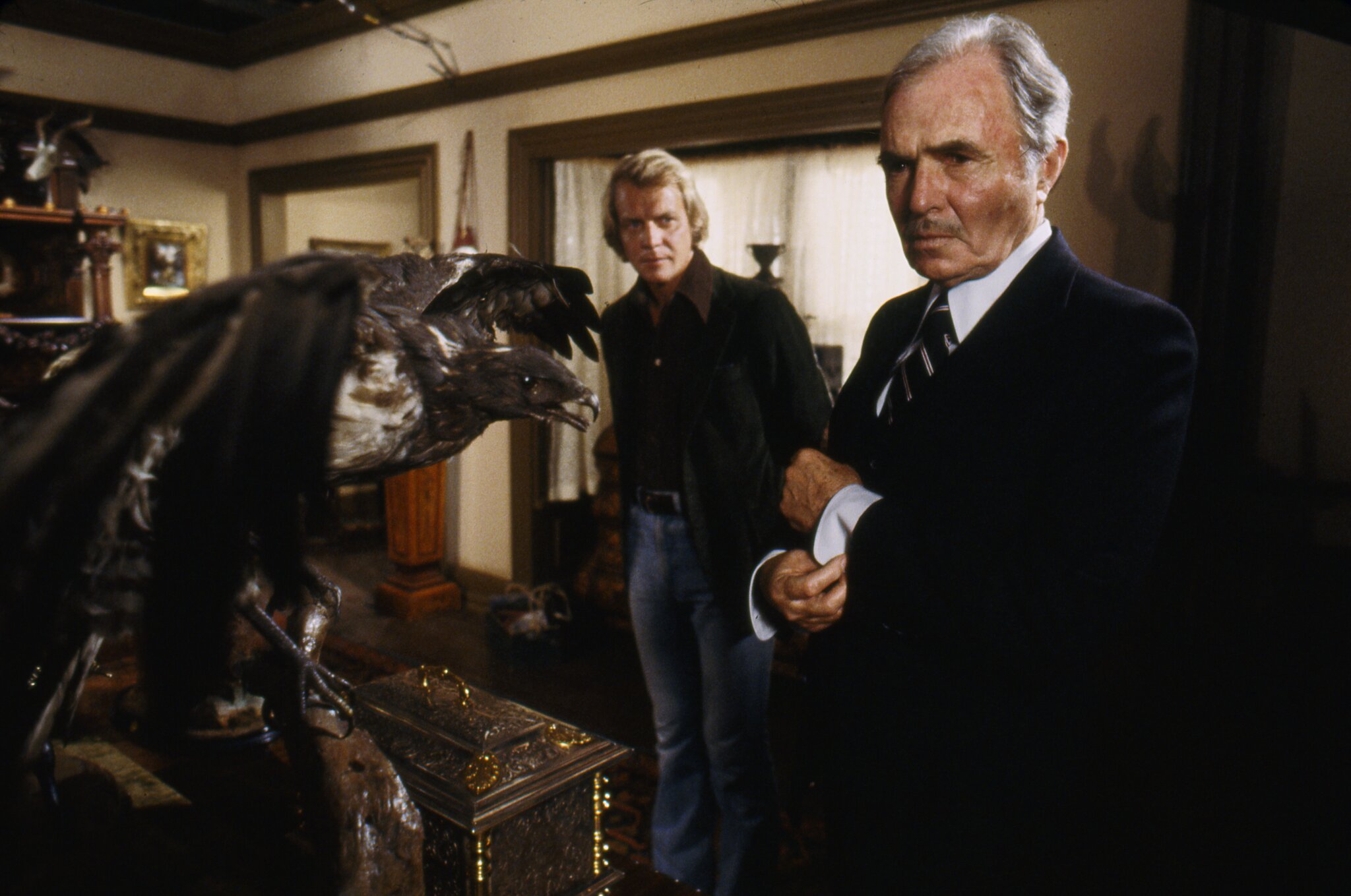
Monash’s script never confirms if Ben’s recollection was correct or not, and rather than ghosts the Marsten House proves to be inhabited by vampires, none related (on screen, anyway) to its deceased owner. But this narrative detail buoyed my curiosity as I dug into Salem’s Lot, even as I anticipated with no small dread the scene which terrorized me for many decades. Imagine my surprise to discover not one but three such scenes involving vampires scratching at windows! The first takes place at the window of young Ralphie Glick’s (Ronnie Scribner) bedroom; watching it, I shrunk into my couch, eyes squinted. When the second scene began, this time in a hospital room, my initial sensations of déjà vu gave way to the realization that this was the actual scene that I’d watched at age three from behind my careless parent or guardian’s newspaper. It was as scary as I’d remembered.
The reason for that feeling, I discovered from my adult, seasoned movie-watching perspective, was that it was an expertly executed scene from a technical and filmmaking standpoint. One of the remarkable details about Salem’s Lot that gets minimized in the legend of its artistic achievement is that the adaptation was conceived for broadcast on the CBS television network, and as a result there is little violence and almost no blood. Yet Hooper deploys all of his tricks as a filmmaker as if he doesn’t have one hand tied behind his back to make this primetime special as frightening as anything he’d delivered on the big screen.
As explained in the Arrow bonus materials, the shots of the window and the approach of the floating, vampire child were filmed in reverse. That alone creates a surreality as Ralphie’s little brother Danny (Brad Savage) emerges from a swirling cloud of fog and begins scratching at the glass. He and the other levitating vampires were also held by a boom crane rather than traditional wires, so they float a bit more nimbly through the window frame after it’s been opened. But it’s the make-up that the actors wear, featuring jagged fingernails, a mouthful of fangs and glowing yellow eyes, that makes the scenes feel so disturbing. The second scene with Ralphie opening the window for Danny ends when his younger brother embraces him and buries his teeth in his brother’s neck as the screen freezes and goes dark; watching it as an adult, I realized that the collective otherworldliness of the actors’ movements and the half-theatrical, half-realistic environment created a perfect atmosphere for my then-young brain to layer over what was one of the most consistent and welcoming spaces in my life, from child- to adulthood.
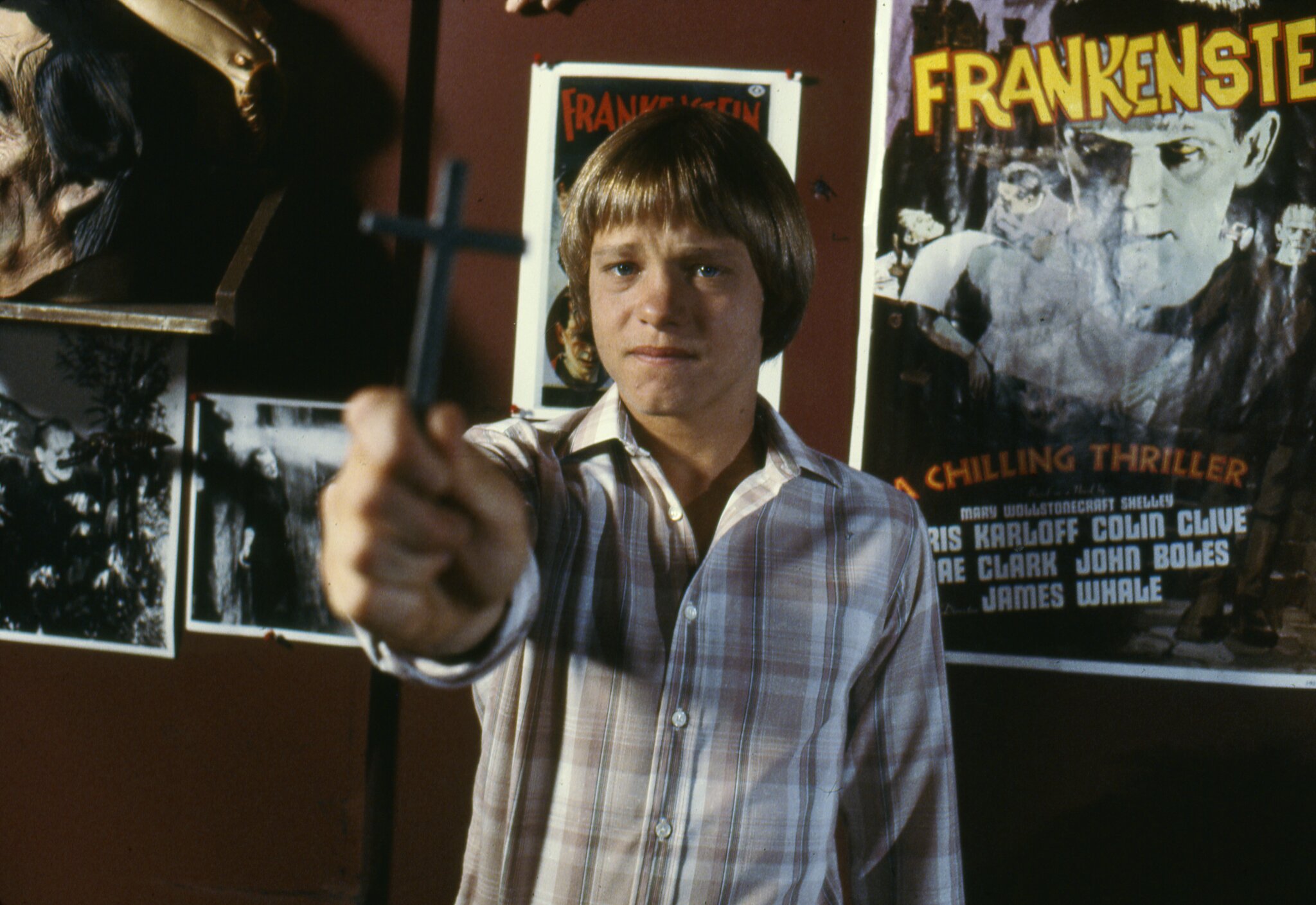
I was further surprised by the arrival of a third bedroom window scene in Salem’s Lot Part Two, in which the Glicks’ horror-fan classmate, Mark Petrie (Lance Kerwin) fends off Ralphie by wielding a cross, and by simply not opening the window to let him in. (Perhaps if I’d seen that scene all of those years ago I might have armed myself, either psychologically or physically, from whatever I was imagining lurked outside my grandmother’s windows.) But with the benefit of age and a total of zero translucent curtains in my current home, what I most took away from watching the film at age 50, after some 30 years as a critic and scholar, was that it’s a pretty great work of art.
The cast, comprised mostly of A-list character actors (Fred Willard, Julie Cobb, Ken McMillan, Geoffrey Lewis, Marie Windsor, George Dzundza, Elisha Cook Jr.), gives Salem’s Lot (the town) the right kind of smalltown eccentricity, full of soapy micro-dramas and simmering conflicts that would be worthy of further exploration were they not bitten in the neck by bigger circumstances. As Richard Straker, the familiar of vampire Kurt Barlow (Reggie Nalder), James Mason (Lolita) manages to be having a blast exuding European menace without turning the growing threat against the town into camp. The make-up and design of Barlow, meanwhile, resurrects the imagery of Count Orlok in F.W. Murnau’s Nosferatu, magnifying the mostly-unseen character’s chilling power and intensity.
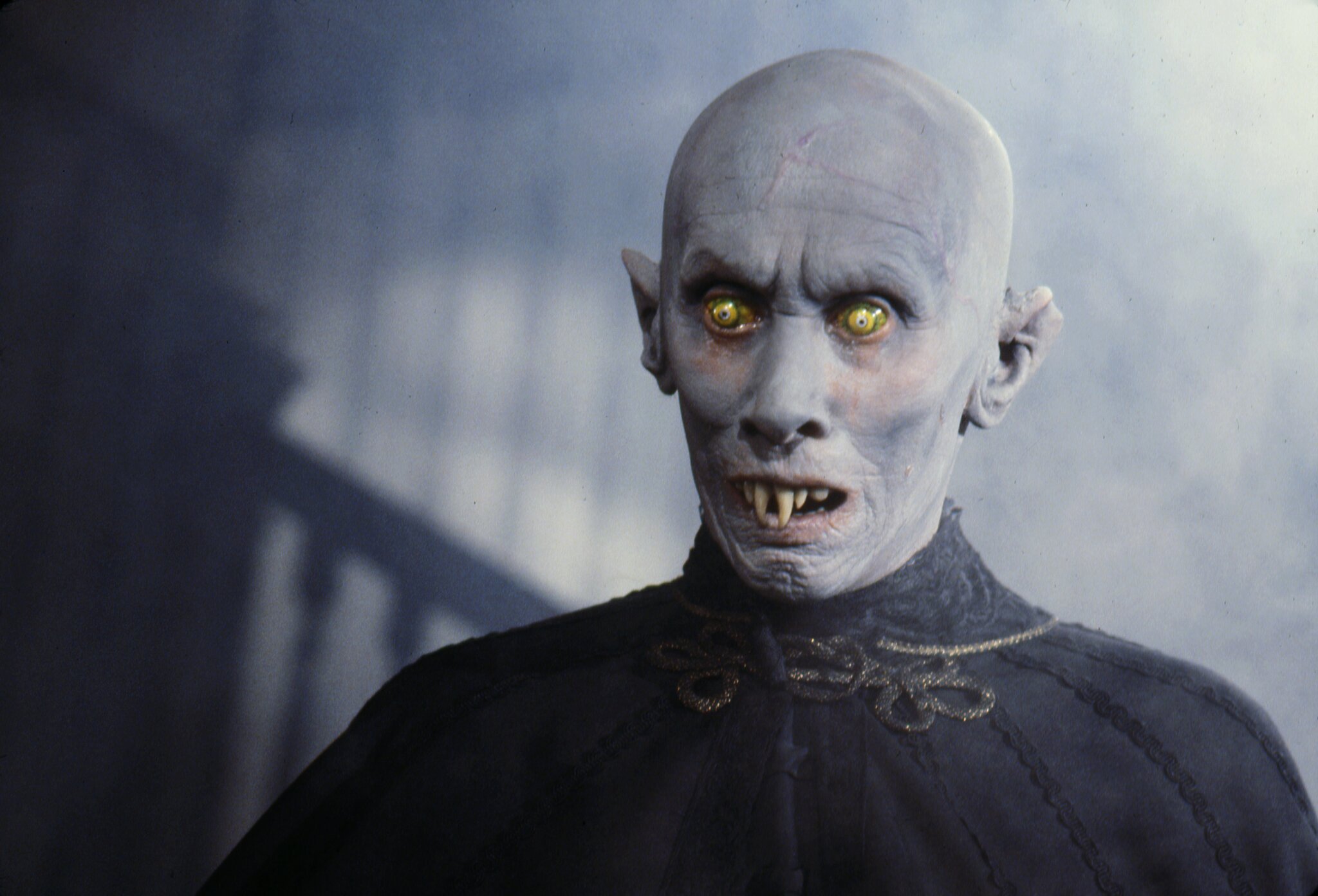
Add to the monster pyrotechnics an intriguing idea — what if a town wasn’t merely occupied by vampires, but in threat of being overrun by them? — as well as the longing and regret of a main character in Mears whose obsession with this house from his childhood exposes this deadly conspiracy but also costs him virtually all of the people he once cared about. Aside from being a foundational text for my childhood, Tobe Hooper’s Salem’s Lot features all of the conceptual and technical elements that would prompt me to label it a really entertaining, even extraordinary film.
Now, will I ever watch it again? I’m not sure. Certainly, I’m glad that Arrow Video’s 4K technology offers me the opportunity to watch it in the best presentation quality it’s ever had. I do genuinely admire the craft involved in its making. But we’ll see. Either way, I learned an important lesson about parenthood through this experience — if nothing else, to make sure there’s more protecting my son from his future trauma than a few sagging pages of newsprint.