
Sometimes a movie features incredibly scary moments that catch the audience off guard. When we watch a horror movie, we typically have an idea of what to expect. The title, the poster, the trailer, even the friend who recommended it, all signal that we should brace ourselves. We may not know when the scare is coming (ideally), but we know scares are on the menu.
But then there are movies that sneak those scares onto the plate like some sort of diabolical secret menu item that Chef Slowik would be proud of. It’s one thing to go into a movie knowing you may be scared, but it’s a whole other experience when you go into a movie thinking it’s a family-friendly adventure only to find yourself traumatized, scared shitless, and the reason therapists stay in business.
Cinematic scares aren’t limited to the Kreugers or the Vorhees or Jigsaws of the world. Horror DNA and fear can and do exist in any genre and in any medium. But the expectations beforehand can make all the difference in how those scares land.
With that in mind, I present a countdown of my top 5 moments when movies from other genres briefly became horror movies. (And dare I say, in a way, they became scarier than they were for a moment too.)
-
5. The Central Park at Night Sequence in Home Alone 2: Lost in New York
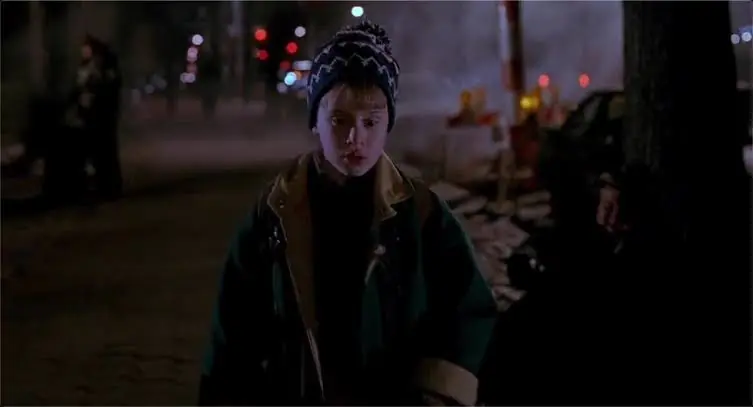
Macaulay Culkin in HOME ALONE 2: LOST IN NEW YORK. (Credit: 20th Century Studios) Kevin McCallister’s New York adventure initially looks like an excellent argument for losing track of your family. Kevin has a suite at the Plaza, room service with a three-scoop sundae, a limousine that takes him to a toy store, and his very own cheese pizza that releases steam the moment the box opens, among other things. He even has the good fortune of meeting Ally Sheedy at a New York airport (it’s true, look it up).
But at one point in the film, that fantasy starts to collapse. Kevin is forced to flee the hotel. He can no longer live off his dad’s Visa because it's been reported stolen, and Tim Curry threatens to call the cops on him. At that point, Kevin has only the fireworks he bought in Chinatown and a few cookies he took from the plaza's mini bar, which pigeons later eat.
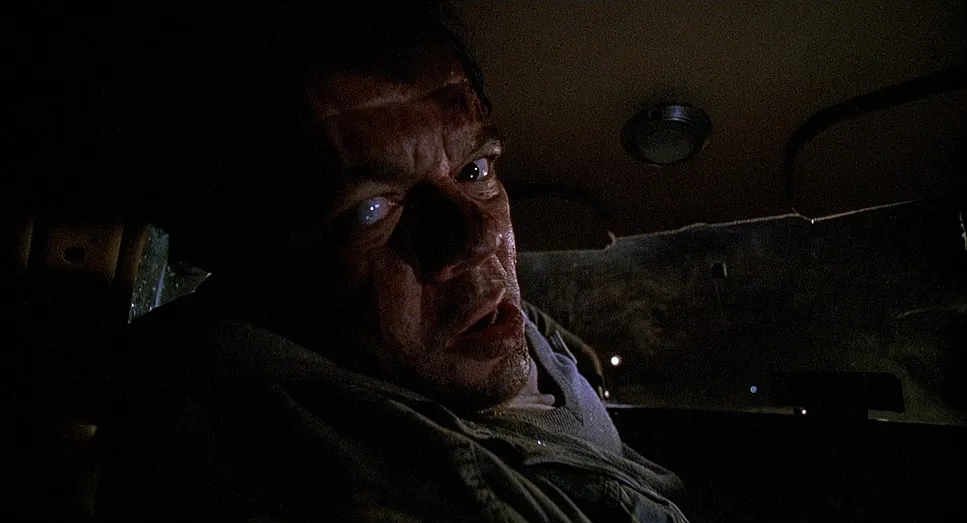
The stretch of nighttime wandering that leads Kevin back into Central Park changes the meaning of his independence he always craved. Encounters with strangers feel threatening. The open city becomes somewhere he cannot control. The scary homeless man and scary cabbie don’t help matters. And when he encounters the Pigeon Lady and gets his foot caught while trying to flee, the boy who usually engineers elaborate escapes suddenly cannot get away.
That shift is frightening: the movie lets us feel the difference between being resourceful and being safe.
Kevin’s smallness matters here too. Earlier, adults are obstacles he can manipulate. In the previous film, when he was 8 years old (and somehow he is 10 here, even though this takes place one year after the events of the first movie), he had home-field advantage. Here, the world feels bigger than he can handle. The darkness and uncertainty make his lack of a parent feel less like freedom and more like exposure.
Another complication is worth acknowledging. The sequence draws fear from Kevin’s perception of unfamiliar adults, including a woman experiencing homelessness. Her appearance is framed as frightening before he understands who she is. That reflects his limited perspective; it doesn’t make her dangerous. You’d think he’d learned his lesson from the false rumors that old man Marley was the South Bend shovel slayer. But then again, the plot has to work, right?
And like the first time Kevin was all alone, the movie eventually reverses that fear. The Pigeon Lady listens to him, befriends him, and helps save him. Someone he initially treats as a threat becomes his protector and someone worthy of the turtle dove ornament.
That makes this entry more interesting than a simple creepy person reveal. The movie first unsettles our confidence in Kevin’s independence by letting fear slowly invade the excitement of his accidental NYC adventure, then challenges his confidence in his own judgment. He realizes (once again) that he can be wrong about what and whom to fear.
And I’ll just say that with all of this accumulated trauma, this is giving us more evidence to support the idea that Kevin McCallister did indeed grow up to be Jigsaw. But that’s a whole other discussion.
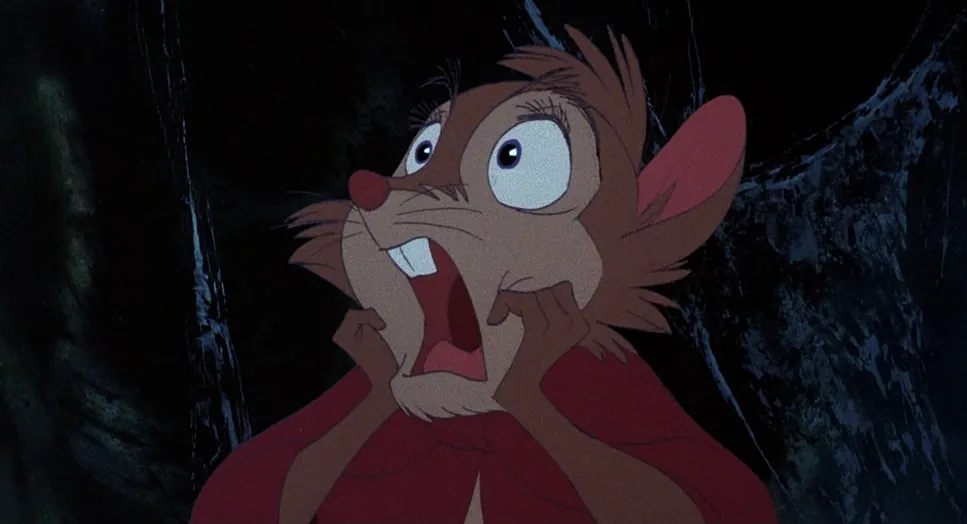
4. The Spider Scene in The Secret of NIMH

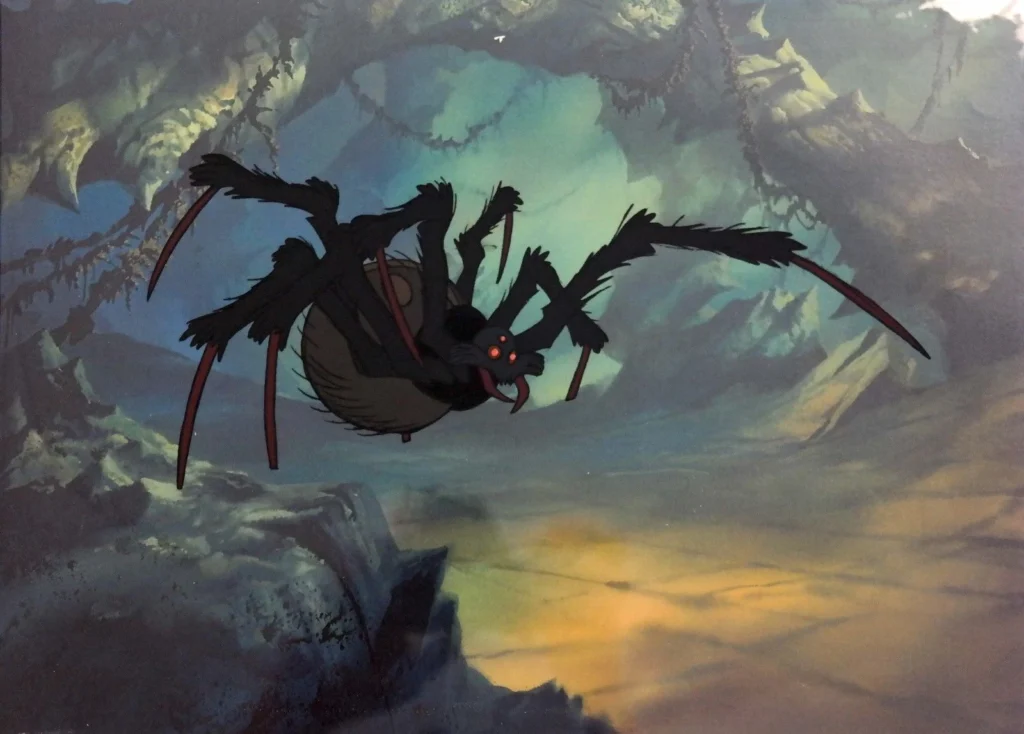
The Spider in THE SECRET OF NIMH. (Credit: MGM/UA Entertainment Co.) Now, before I get deep into this, I will acknowledge that The Secret of NIMH never promises an entirely comfortable viewing experience. Mrs. Brisby’s world already contains illness, predators, and threats to her family. But that doesn’t mean that expectation violations don't come into play here. (more on expectation violations later)
I remember seeing this as a kid, and it completely warped my perception of animation. I never thought cartoons could take me to a dark place until I watched this. (Thanks a lot, Don Bluth!)
The moment Mrs. Brisby visits the Great Owl is when I (and I imagine many others) was exposed to an unexpected creature feature. Brisby enters a space filled with bones and cobwebs. The environment makes her place in the food chain impossible to ignore. She is seeking advice, but before she can get that advice, an eight-legged threat makes the situation even worse
The sequence uses scale to turn a familiar animal into a monster. Mrs. Brisby is tiny, the lair is overwhelming, and the spider’s sudden appearance makes the surrounding darkness feel populated. What else is close enough to reach her before she sees it?
The Great Owl’s intervention removes that immediate danger without making the setting reassuring. Being rescued by a predator is still an unnerving proposition when you are a mouse.
The animation is especially effective here. It has invited us to identify with a small, expressive protagonist, then forces us to experience the physical consequences of being that small. We aren’t looking down at a spider from the safety of human height. We’re sharing Brisby’s vulnerability. That, in turn, makes us imagine what it would be like to see a giant-sized spider in real life.
The surprise gets our attention. Her predicament gives it somewhere to land. I’m also convinced this is where my childhood fear of spiders came from. And truth be told, I never even finished the movie as a kid. That spider was just too much. And it still is.
3. The Pleasure Island Transformation in Pinocchio

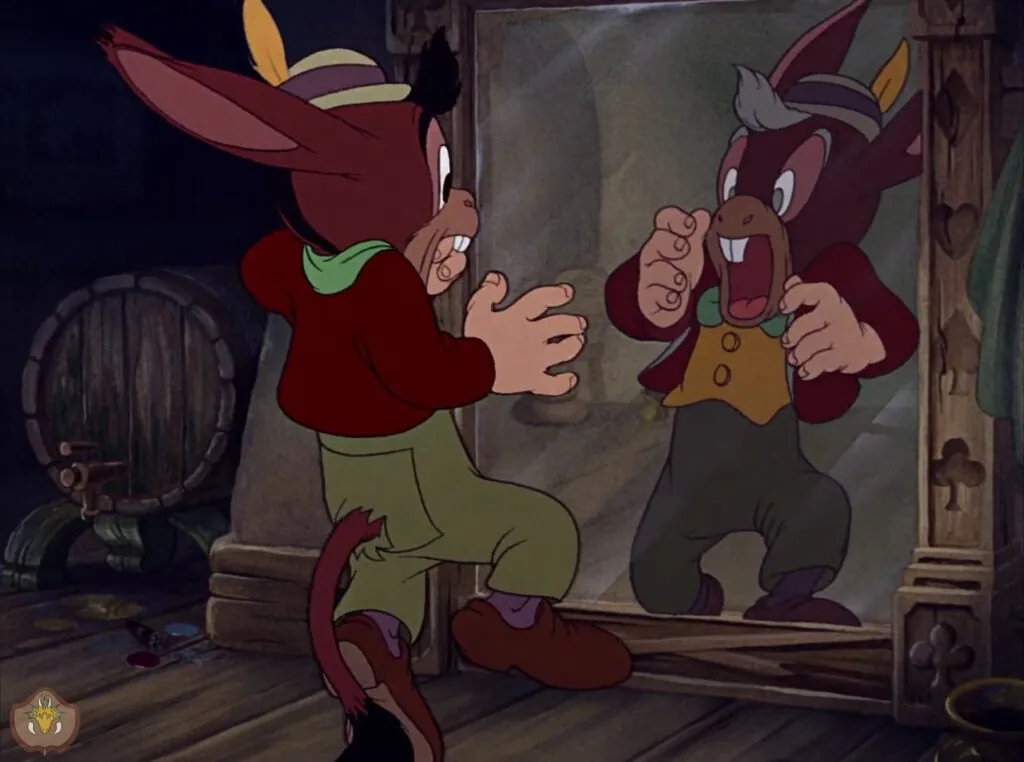
Lampwick in PINOCCHIO. (Credit: Walt Disney Pictures Animation) Pleasure Island sells the boys a fantasy: no school, no rules, no consequences; everything you want, whenever you want it. The consequence is losing the ability to want anything at all as a boy.
Lampwick’s transformation is horrifying because he remains aware of it while it happens. What begins with unfamiliar ears and a tail becomes panic as his body changes beyond his control. His laughter turns into braying. His hands become hooves. And perhaps most heartbreaking of all, he calls for his mother moments before he loses his ability to speak at all.
The scene moves from bravado to helplessness with devastating speed. The kid who seemed so confident suddenly needs the person he might ordinarily insist he doesn’t need.
The use of silhouette is particularly cruel because this is an open invitation for our own imaginations to picture the worst possible visual; a philosophy we know the late great Alfred Hitchcock would be on board with. The transformation continues in shadow, letting the body's outline communicate what is happening without softening the implication. This sequence is a great example of how our brains can work as viewers. We want to make things make sense. So it’s not always necessary to flat-out show all the steps. You drop enough hints, and we can put the pieces together.
Overall, what we’re watching here is body horror through the lens of a child’s nightmare. Lampwick cannot stop what is happening, explain it away, or negotiate his way out. The body through which he speaks and acts is taking those abilities from him.
Pinocchio, meanwhile, watches, and the danger immediately becomes personal. His own donkey ears and tail mean Lampwick’s fate previews what may happen to him. And to cap it all off, the movie never gives Lampwick a reassuring rescue. Pinocchio escapes, but the friend we have just watched disappear into an animal body is left behind along with many others.
The visual's shock value is through the roof, but shock value alone doesn’t leave a lasting impact. It’s really the lack of comfort that makes the scene so powerful. I’m sure Lampwick would agree.
2. The Judge Doom Reveal in Who Framed Roger Rabbit

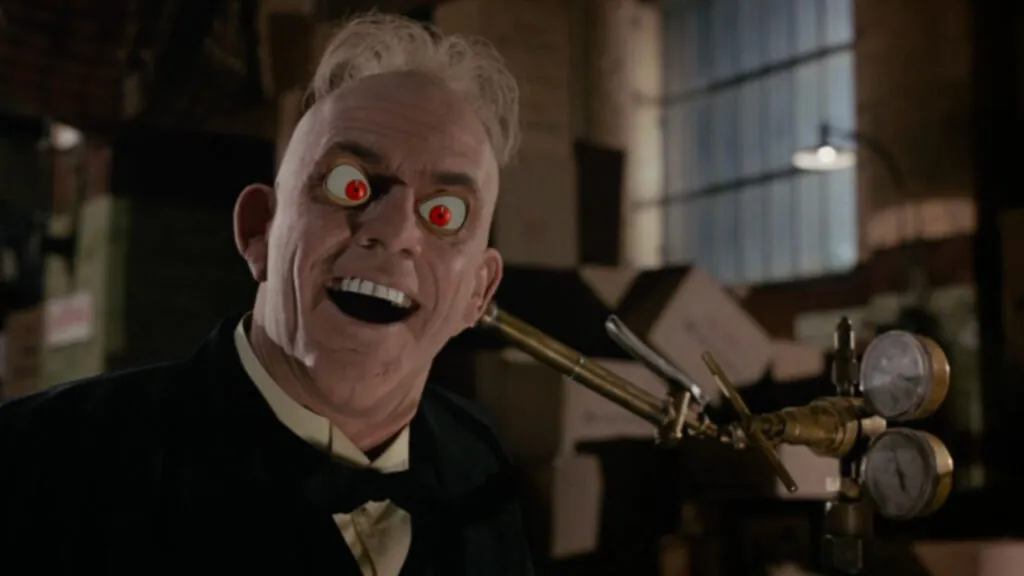
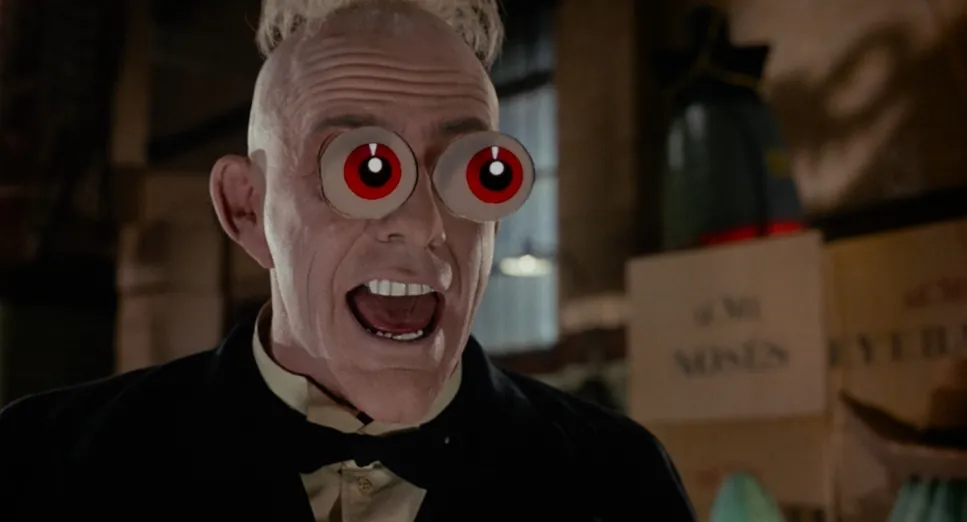
Christopher Lloyd in WHO FRAMED ROGER RABBIT. (Credit: Touchstone Pictures) The first act of Who Framed Roger Rabbit subverted our expectations of the cartoons we knew and loved by showing us that cartoons can suffer, as Judge Doom demonstrates the toon-killing power of The Dip.
But the steamroller reveal near the end finds a new way to disturb us by turning cartoon resilience into something unexpected.
If you grew up watching Looney Tunes or Tom and Jerry as I did, you probably thought of elastic bodies as a source of comedy. That carries over to Who Framed Roger Rabbit. Toons stretch, squash, and recover; their physical impossibilities are part of the pleasure of watching them. In a way, the movie runs on the same meta, self-referential engine that Scream did by pinpointing the rules of its respected medium.
But then we watch Doom get flattened. And on the first watch we think we’re watching a grotesque destruction of a human body; that alone is jarring. It should be cathartic to see this Dip ambassador of a villain perish, yet we’re left feeling more disturbed. Then we get even more disturbed and perplexed when we see the reveal after the flattening: Judge Doom survived the steamroller attack, and he’s a toon. BUT NOT JUST ANY TOON!
Suddenly, a rule we understand becomes evidence that we don’t know shit and misunderstood the person standing in front of us the entire time. The true monster was hiding inside the very cartoon logic the movie (and years of programming) taught us to enjoy.
His eyes and voice complete the transformation. Christopher Lloyd’s imposing human presence gives way to an exaggerated animated menace. And that thing about Doom not just being any toon? Turns out he’s the Toon who killed Eddie Valiant’s brother, which then raises the already elevated emotional stakes.
The reveal changes both his body and Eddie’s understanding of the past. It also changes our understanding of the film, forcing us to watch it again to see what we missed.
It also corrupts something familiar. Cartoon exaggeration ordinarily makes a character funnier or more expressive. Here, it makes Doom feel vicious. The same flexibility that lets Roger entertain us, or Wile E. Coyote get up and try again no matter how many times he falls off a cliff, lets Doom turn himself into a weapon.
It’s movies like the one that really truly gave me trust issues with cartoons. Yet I keep going back because what are we as horror fans if not masochists?
1. The Robot Possession Scene From Superman III

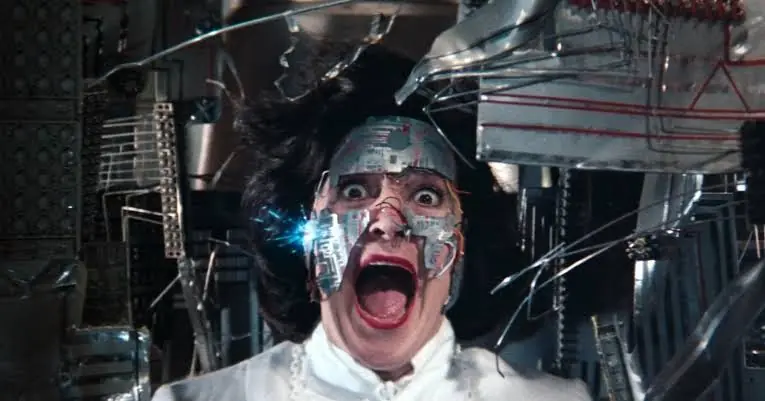
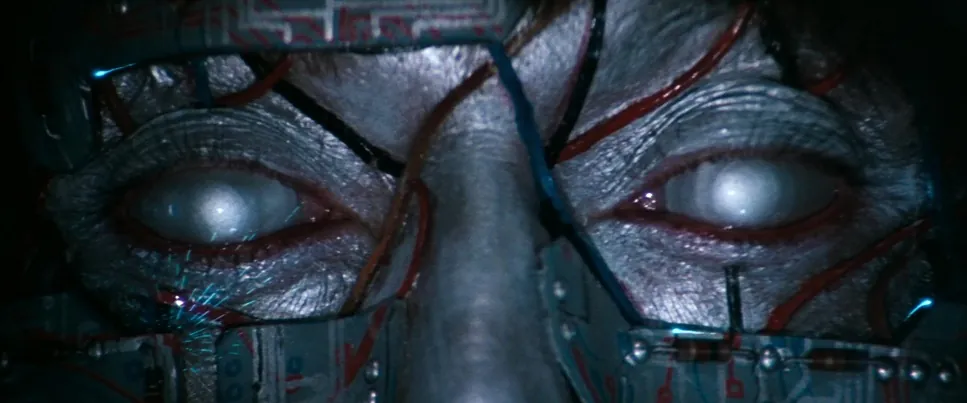
Annie Ross in SUPERMAN III. (Credit: Columbia-EMI-Warner Distributors) You had to have known this was gonna be top of the list. And if this is the first you’re hearing of it, chances are it may end up at the top of your list too. Now, to be fair, Superman III contains danger well before the robot-possession scene that was ground zero for my childhood trauma. This film pits Superman against a corrupted version of himself; by the way, asshole Superman is one of cinema’s greatest achievements.
But the film’s broad comedy and superhero adventure still do little to prepare me for the particular nightmare waiting inside the supercomputer Richard Pryor designed. Vera, Ross the boss Webster's sister, is pulled into that supercomputer. Mechanical components close around her. Metal covers her face. The transformation proceeds while she struggles against it, until the person we recognize is obscured by what the computer has made of her.
The resulting figure is frightening. But what makes this sequence truly horrifying is that we witness the entire process, and all the pain Vera endures, as this supercomputer seemingly strips away everything that makes her human. And, mind you, Vera isn’t a likable character by any means. In fact, for the entire film, we hope she’ll fail along with Ross the Boss. What adds to the fear is that this is someone who is always malicious, and now she’s taking on a demonic form thanks to super microprocessors.
A superhero movie often gives us bodily transformation as wish fulfillment: strength, flight, extraordinary abilities. This scene uses transformation to depict the loss of control. The thing that changes you also takes you away. That thought, along with the startling visuals, gives it impact.
There is a connection to Lampwick here too, but the fear has a different texture. Pinocchio frames the transformation as a fairy-tale punishment. Superman III stages it as mechanical assimilation. Both make us watch someone lose command of the body that makes action and resistance possible. And this happens in a movie with Superman.
The caped wonder’s presence may promise that the danger can eventually be defeated, but it cannot prevent us from seeing what the machine does to Vera. The hero’s ability to save the day does not erase the image.
My first memory is watching the 1978 Superman movie, and I credit it with making me fall in love with movies. So you can imagine my shock when seeing this for the first time. The scene feels like an ambush inside a familiar kind of entertainment. And honestly, it still does.
The movie ends. The image stays.

Mario Todisco in HOME ALONE 2: LOST IN NEW YORK. (Credit: 20th Century Studios) The beauty of stories is that they allow you to fully surrender to the world. But that same surrender mentality also leaves you vulnerable. You think you know what you’re watching, but suddenly you’re presented with an image that seems to belong in an entirely different movie. The discomfort comes partly from the image itself, and partly from the questions it creates: Wait. Can this movie do that? Is that allowed?
The scenes I mentioned above don’t need to compete with entire horror films to matter. Their power comes from how sharply they stand apart from what surrounds them.
Kevin’s freedom turns into vulnerability. Mrs. Brisby’s search for help takes her into a predator’s world. Lampwick’s playground becomes a trap. Cartoon elasticity becomes monstrous. A Superman adventure becomes a scene of bodily violation.

Christopher Lloyd in WHO FRAMED ROGER RABBIT. (Credit: Touchstone Pictures) And remember what I said about expectations? We don’t enter a movie empty-handed. We bring everything we’ve learned from other movies: what a cartoon looks like, what a superhero does, what a certain genre is supposed to entail. Those experiences help establish what we think we’re about to see. So when a movie suddenly goes somewhere outside those expectations, we have to reconsider what else it might be capable of.
Psychologists studying surprise describe a mismatch between an expected outcome and what actually happens as a prediction error.
That doesn’t mean an unexpected scare automatically beats one we see coming. An anticipatory scare can be just as terrifying if not more. But these scenes deliver a particular kind of shock: we’re reacting to what’s happening while also realizing we misjudged the movie.
Horror, by definition, is an intense, distressing feeling of fear, shock, or disgust. The popular saying is that comedy is subjective, but that principle applies to fear too. If someone says the scariest thing is trying to escape Leatherface in The Texas Chain Saw Massacre, they’re right. If someone else says the scariest thing is Preston Meyers not being able to tell Amanda Beckett how they feel in Can't Hardly Wait, they’re also right. (For the record, I still find this one of the all-time scariest moments.)

Annie Ross in SUPERMAN III. (Credit: Columbia-EMI-Warner Distributors) This also applies to feelings of sadness and the idea of something being funny. At the core of the movie-watching experience is getting emotionally invested in characters; you want some to succeed and others to fail. Part of the fear is when your hopes as a viewer don't line up.
Horror scares us by fulfilling a promise. Sometimes another kind of movie can scare us by breaking that promise. That is great news for us hardcore horror fans, because technically it means we can find a scare anywhere, no matter the genre!
There is something unmistakable about remembering the moment you realized a movie could go somewhere you hadn’t expected. And there’s something magical about that too. What is creativity if we’re not constantly being surprised?

Jon Lee Brody
Contributing Writer
Jon Lee Brody is an award winning Korean American actor/filmmaker. He hosts and produces the horror podcast “That Was Pretty Scary” on The Morbid Network/Sirius XM. Jon is a lifelong fan of all things cinema, especially horror movies.
See full bio