
Last Updated on August 24, 2026 by Amber T
Overall, Jane Schoenbrun’s Teenage Sex and Death at Camp Miasma (now in theaters from Mubi) is less a slasher film than a meditation on the themes and subtexts lurking beneath those movies’ surfaces. It focuses on what happens when a fan-turned-filmmaker (Hannah Einbinder) working on a reboot of the teen-kill franchise Camp Miasma encounters the original entry’s reclusive star (Gillian Anderson). Midway through the movie, however, Schoenbrun departs from their narrative to present a lengthy rampage by Camp Miasma’s killer, known as Little Death (Jack Haven).
While the Camp Miasma iconography seen to this point has been informed by ’80s flicks, particularly the Friday the 13th series, this set piece’s visual language is unlike anything in those earlier movies. Although, like scenes from many of those films, it’s seen from the murderer’s point of view, it’s done in one long, unbroken take.
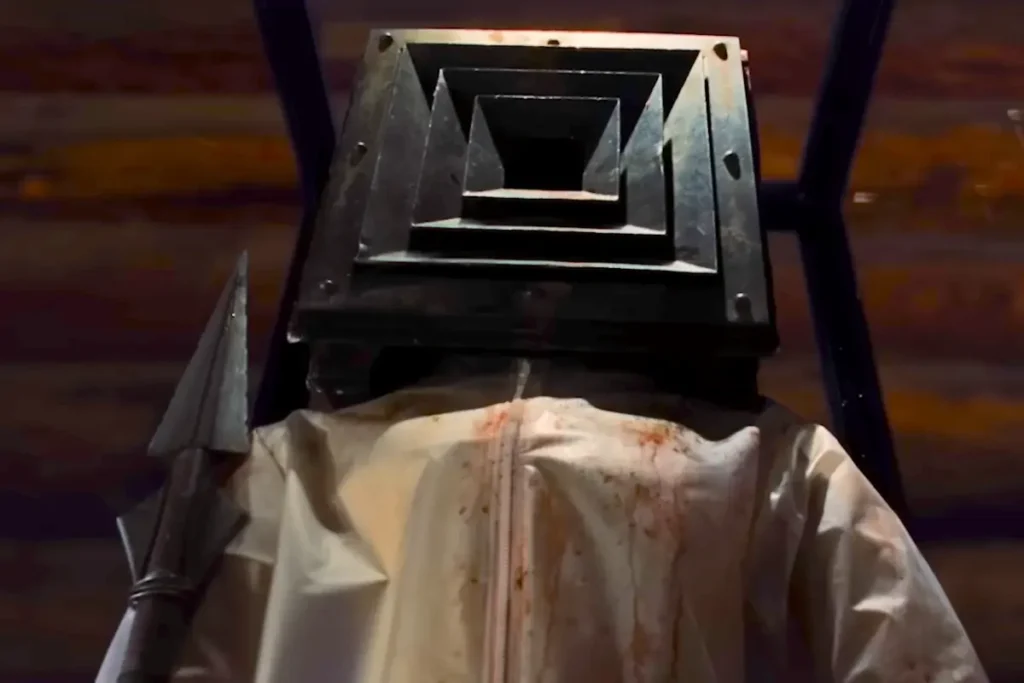
Little Death races from one victim to another, dispatching them with fountains of blood that the MPAA would never have allowed back in those days—and a song accompaniment from 1996. Below, Schoenbrun discusses the inspirations behind this highlight of their much-discussed film.
“It was by far the most ambitious thing I’ve endeavored to do cinematically to date,” Schoenbrun says. “It truly challenged my team, whom I’ve worked with multiple times now—a four-and-a-half-minute killing spree set to Counting Crows’ ‘Long December,’ with a body count in the dozens, was definitely unlike anything we had ever done before. Honestly, for that sequence alone, I’d say that hundreds of hours of technical prep went into pulling it off in exactly the way we did.
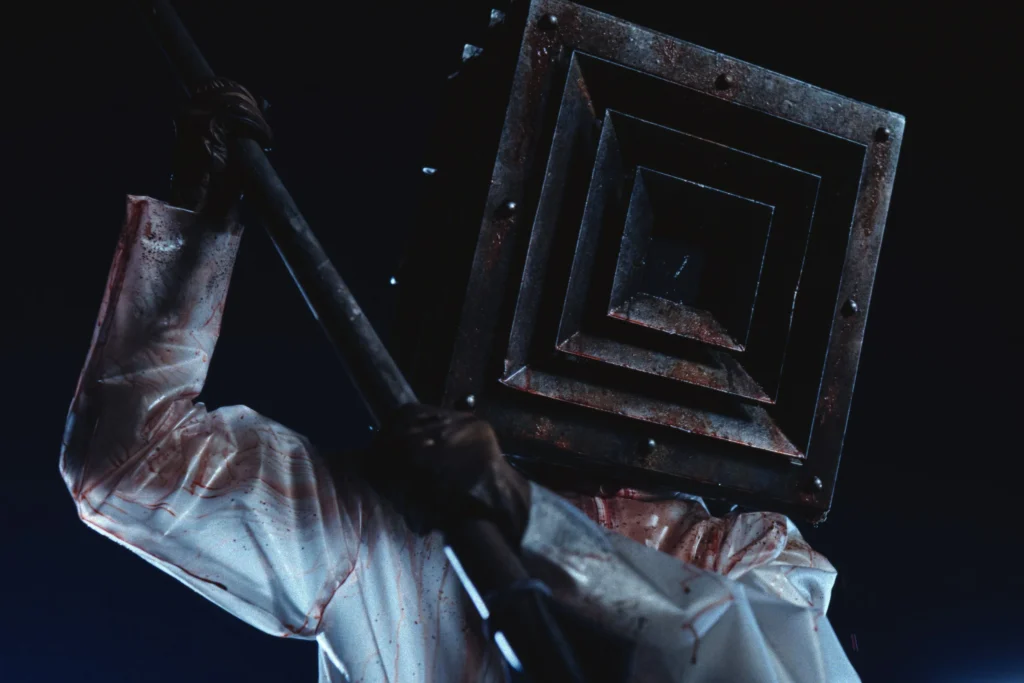
“It comes at the exact halfway mark of the film,” they continue. “Until then, we’ve heard people talk a lot about slasher movies and what they love about them, but we haven’t actually seen much slashing done on camera. And it comes at this moment in the movie where Kris [Einbinder] and Billy [Anderson] are watching this film, which has a lot of darker themes. There is almost a reclamation that happens right before that sequence begins, where Billy almost calls on Little Death, this spirit of vengeance, to come forth and go on this killing spree. It’s not meant to feel brutalizing, miserable, or horrifying. It’s supposed to be fun; if anything, it’s triumphant. I hope, while watching it, people cheer.
“Shooting it in the way we did, the way we see it, isn’t supposed to be the way that those [vintage slasher] movies actually looked. It’s more like the way watching them as a kid felt. The unifying idea was putting together a sequence that could be special enough to capture the adrenaline rush you got when you were 12 years old at a sleepover, watching the craziest shit you’ve ever seen and being like, ‘Oh my God, that’s thrilling!’ And there is also vengeance being enacted on the terms of these two women, who are unpacking their sexuality and sexual trauma together. They are, in that sequence, quite literally reclaiming the language of the slasher to work for them, rather than to leave them sort of assaulted.”
For more Schoenbrun on Teenage Sex and Death at Camp Miasma, pick up FANGORIA #32, and our special edition bookazine, FANGORIA Presents: Camp Slashers.

