
Last Updated on March 16, 2024 by Blu Gilliand
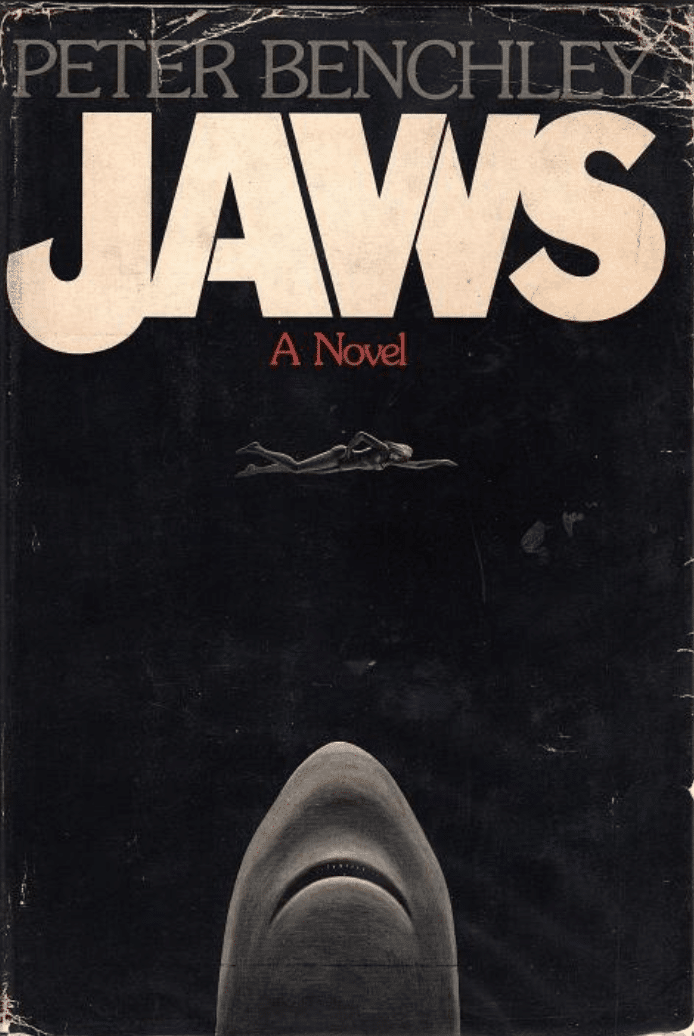
“The great fish moved silently through the night water, propelled by short sweeps of its crescent tail.”
Not exactly the introduction you’d expect for a horror icon, right? But that’s how Peter Benchley opened his 1974 novel Jaws, the book which (with an able assist the following year from director Steven Spielberg) transformed the public perception of sharks from “big fish that eat other fish” to the kind of silent, remorseless killer that would later be personified by characters like Michael Myers and Jason Voorhees; a killer that hides in the shadows, waiting for the opportunity to take innocent human lives in brutal, bloody fashion.
We know better now, of course. Decades of up-close-and-personal shark research (much of it conducted by people whose fascination with sharks was inspired by Jaws) has shown that sharks aren’t out to get us — usually, they’re just looking for a snack.
“Sharks don’t naturally attack humans,” said Christopher Golden, author (under the pseudonym “Chris Jameson”) of the loosely-connected shark fiction trio Shark Island, Devil Sharks, and Shark Beach (more on those later). “Typically, sharks who attack a human being have done so out of confusion. It’s only when they get a taste of us they realize that wasn’t seal skin…it was a wetsuit.”
Still, it’s hard to top the shark when authors like Golden are looking for a credible threat to pit against humans. What’s better at generating fear than a predator that you can’t see or hear until it’s too late? What’s more threatening than something larger and faster than you, something that inflicts maximum damage in minimal time, and does so without pity or remorse?

That’s the characterization popularized by Benchley and Spielberg, and it’s the characterization that has plagued sharks for decades — still does, somewhat, to this day. The tide is turning, though, thanks in large part to the popularity of the Discovery Channel’s massively popular “Shark Week” event, that annual parade of shark-friendly documentaries and specials with names like Air Jaws and Sharks Gone Wild. People now consider sharks with more fascination than fear, and maybe even a touch of compassion — at least, when considering them indirectly from the safety of their couch. The public at large now seems more invested in preventing the extinction of sharks than in cheering it on.
But when it comes to the entertainment industry…look, who can blame them? Those black, lifeless eyes; those rows of sharp, jagged teeth…it’s all too much for creators toiling in the horror genre to resist. You are probably familiar with the cinematic efforts that have followed in the decades since Jaws, an uneven slate of films like Deep Blue Sea and 47 Meters Down and The Shallows and Sharknado. But have you read a good shark book lately? Because I am here to tell you that they are out there….and some of them are really out there.
The proliferations of shark fiction is a relatively new thing. For a while, it seemed like Benchley had cornered the shark/ocean thriller market with Jaws, and the only author willing to follow it up was Benchley himself. In the years following his debut he churned out a variety of sea-related novels about divers and pirates and giant squids before moving on to other topics. He finally circled back to sharks in 1994 with White Shark, a book about a human/shark hybrid cooked up by Nazi scientists. The book received a chilly reception from fans and critics, but rather than killing off shark fiction for good, it set a course for the wave of shark fiction authors to follow.
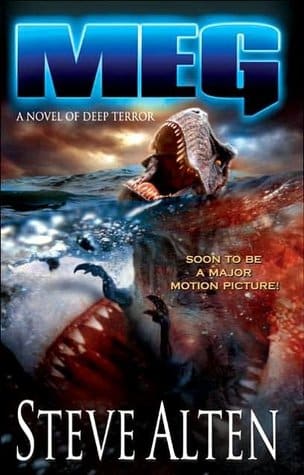
In 1997, Steve Alten introduced the world at large to the largest shark that ever lived: Carcharadon megalodon, a name that he shortened in attention-grabbing style to “Meg.” Alten’s prehistoric beast, capable of reaching 70 feet in length and weighing more than 50 tons, dwarfed the great white that bedeviled the characters in Jaws. The larger predator appealed greatly to Alten, who sought to use the “bigger is better approach” in all aspects of his debut novel Meg: A Novel of Deep Terror.
“When I read Jaws, I remember wanting more shark sequences,” Alten said in a 2018 interview with the website The Daily Jaws. “When I wrote Meg, I made sure the shark sequences dominated the pages. Nowadays, that’s what audiences want.”
Alten tapped into something with Meg, which was a hit with readers and has spawned five print sequels and one movie to date. Alten freshened up his series after a few books by introducing a bigger, nastier prehistoric sea creature called the Liopleurodon. Alten’s instincts told him that one big shark — even when it’s the biggest shark to ever swim the ocean — wouldn’t sustain the audience’s interest forever.
Soon, more horror writers began testing the waters, taking note of Alten’s approach. They discovered that, in addition to bigger sharks, there are also many different types of sharks; they also discovered that these different types of sharks, when mixed with other well-worn horror tropes, could make for some deliciously pulpy concoctions.
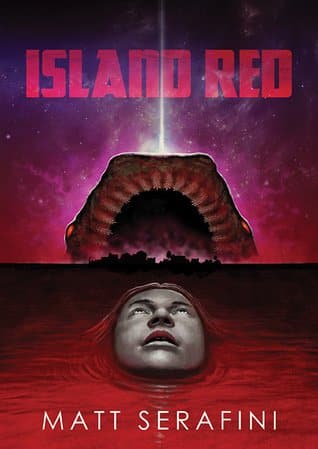
For example, in his 2016 novel Island Red, author Matt Serafini chose the frilled shark as his main antagonist. Frilled sharks are eel-like creatures, retaining only the mouthful of razor-sharp teeth as a commonality with their namesake, suggesting a rather nasty serpent/shark mash-up that nobody would want to encounter in open water. Serafini upped the ante by having a meteorite carrying an intelligent alien parasite land in the ocean near an isolated resort — and practically on top of a frilled shark. So now you have a shark that looks like a snake and is possessed by a ravenously hungry alien — an alien that is driving the shark mad by overriding its natural instincts.
“He felt the passenger wiggle inside his body, and each time that happened, another piece of his limited thought process fell away,” Serafini writes. “The evening’s kill was fresh in his stomach, but the need to eat again was coming back at his passenger’s demand.”
When the alien parasite that has burrowed into your body demands that you eat, well, you eat. The frilled shark obliges, leading to a bloodbath that is as wildly entertaining as it is wildly implausible.
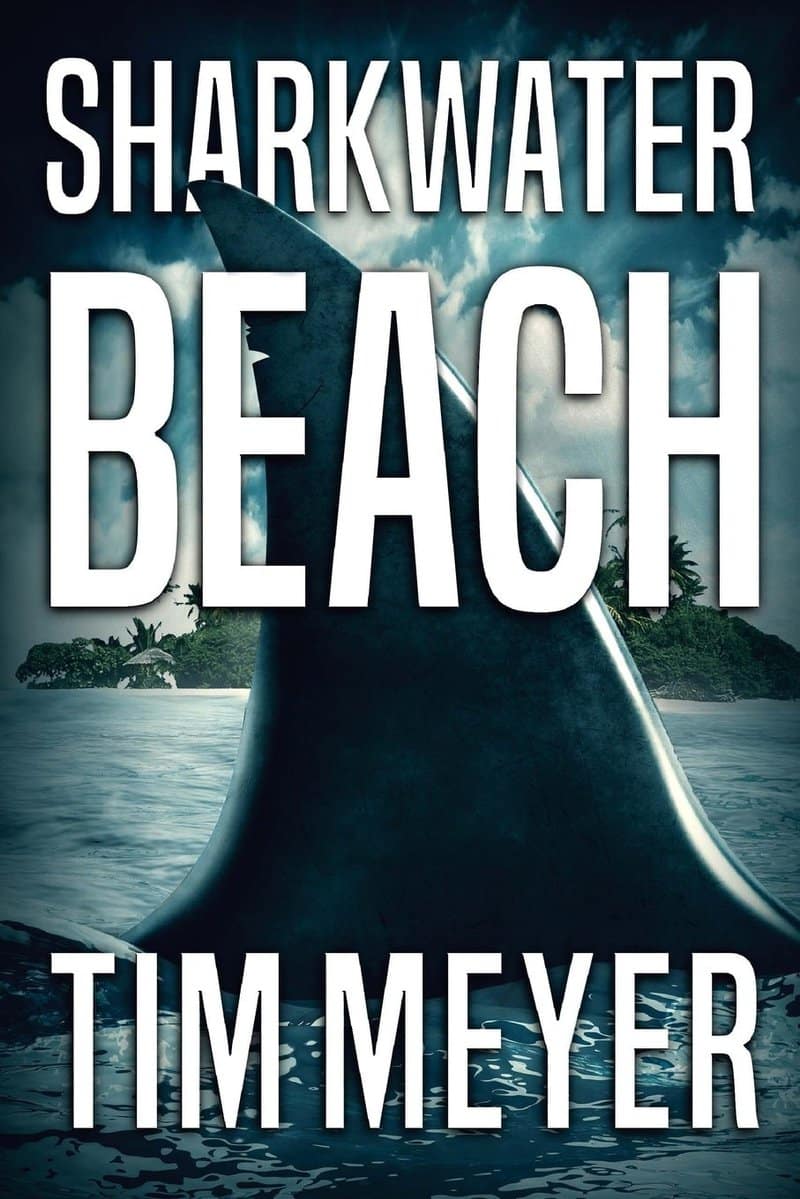
Tim Meyer took the shark/alien idea to new heights the following year with his novel Sharkwater Beach. Rather than have a shark possessed by an alien, Meyer’s shark is an alien. It’s an ancient creature that came to Earth eons ago as a kind of scout for its species, a race of aquatic creatures whose home is rapidly drying out. Captured (as often happens in these books) by humans and ruthlessly experimented on, the beast finally breaks free of its underwater prison and roams the open seas looking for food and revenge.
The book features a terrific early sequence in which a couple of fishermen happen upon the aftermath of the creature’s escape. As they are wrapping up their trip in the dying light of the day, the mangled torso of a man surfaces beside their boat. Naturally they begin to freak out — and continue freaking out when they hear a splash and see another mangled body bob to the surface. Within seconds, bodies and body parts are surfacing all around their boat, “red clouds exploding around them like some underwater firework show.” It’s easily the most chilling, effective sequence in this book — and maybe in all of shark fiction.
Sharkwater Beach has lots of surprises up its sleeve, so if you think I spoiled it with the reveal of the creature’s alien origins, think again. I didn’t say anything about the beast being pregnant, or about where she gives birth, and to what. Suffice to say, it starts out bonkers and zooms out of control from there.

Hunter Shea wins the award for “Title Most Likely to Birth a Maddening Earworm” with Megalodon in Paradise, the book that asks the question “What would you do if you won the lottery?” and answers it with “Inadvertently get a bunch of my old friends massacred by a giant sea predator.”
It goes like this: Guy wins the lottery, buys an island, and promises his friends their own sun-soaked utopia if they’ll just come and live there with him, rent-free and responsibility-free. Yeah, there are rumors about the place, and about some mysterious activities the United States military might have been up to on the island years ago, but it’s all easily brushed away by the whole sun-soaked utopia thing. His friends say yes, and we flash-forward to their arrival day. What’s the first thing they do? Head across the island to explore the old, crumbling facility the military left behind all those years ago. Is it empty? What do you think?
As a newly-freed and desperately hungry megalodon roams the nearby waters, our cast stumbles about the island, dealing with various personal issues that their sudden togetherness has brought to the surface; coming to grips with the idea that they’ve unleashed a monstrous creature into open waters; and trying to prepare for an incoming hurricane. Shea further seasons the stew with a backstory that’s equal parts mad scientist story and government cover-up, but the majority of the book focuses on the wanton destruction of his cast of characters.
“I wanted to do a kind of Frankenstein meets Jaws meets The Thing,” Shea said of his 2017 effort. “Since science has been outpacing our sense of ethics for decades, it was only natural to birth something that wanted to destroy its creator.”
If you eventually tire of genetically altered sharks and isolated tropical resorts and seas tinged red with human blood, worry not — there are options that will still supply that sweet shark fix without those oft-used elements. Take Brian Allan Carr’s Motherfucking Sharks, for example. It’s an Old West tale in which rain muddies the streets of frontier towns far from the ocean’s shore; rain which brings life for your crops and death from above in the shape of, you guessed it…motherfucking sharks. Or Steven Hall’s 2007 novel The Raw Shark Texts, which pits an amnesiac against a conceptual shark which feeds on human memories, and is perhaps best remembered for a several-pages-long sequence in which the text itself appears in the form of a shark that seems to be swimming, flipbook-animation style, directly at the reader.

We could go on with the gimmicks and the gore, but what’s really unique in the world of shark fiction is a cast of characters that you actually care enough about not to want to see them eaten in spectacularly gruesome fashion. This is where, as promised earlier, we circle back to Christopher Golden and his loosely-connected shark fiction trio Shark Island, Devil Sharks, and Shark Beach.
Shark Island centers around a young shark attack survivor named Naomi. Naomi lost her leg to a Great White, and she’s been struggling in the aftermath to hold on to her sense of identity and purpose. Determined to face her fears, she joins the crew of a research vessel that is experimenting with new technology they hope will lure seals (and their toothy predators) away from tourist spots, thus cutting down on violent incidents of shark/human interaction.
Of course, things don’t go as planned. Golden introduces a surrounding cast of scientists, disgruntled fishermen and adventuring families, plopping them all down on a rocky island that’s rapidly being swallowed by the rising waters of a fin-filled sea. Golden grounds the concept just enough to make it believable, and gives you a group of well-rounded characters you’ll root for and, in some cases, grieve for.
Golden carries that blueprint over to Shark Beach, which concerns itself with some escaped test subjects and an island shut down and cut off by a hurricane. These are familiar elements, certainly, but Golden’s book is once again elevated by his character work. Shark Beach belongs to the Scully family. Rick and Corinne have brought their family to this familiar vacation spot in a last-ditch effort to keep their marriage from imploding. Their relationship, already strained, is bombarded by one crisis after another, beginning with a shoving match with a young spring breaker and ending with, well, sharks and a hurricane. In less experienced hands, you’d be rooting for a shark to settle the matter; with Golden at the helm, it’s the family that you’re hoping will survive.
Devil Sharks brings a group of college friends together for a floating reunion of sorts, courtesy of classmate-done-good Harry Curtis. Curtis invites the crew aboard his private yacht for a week of sailing and indulgence, and seems genuinely interested in mending fences with Alex Simmons, with whom he had a falling out years ago. Golden does a great job of drawing out the tension between the two, giving us a realistic portrait of two men who seem to be fighting hard to overcome their differences.
Unfortunately, there’s more than an old beef standing in the way of this group and a week of paradise. The group sails into waters regularly used by some criminal types to dispose of “problems” or “disappointments” from within their organization. Apparently they have a lot of problems and disappointments, because the sharks in the area have developed quite the taste for human flesh. What follows is a truly harrowing standoff between the college pals, the criminals, and the sharks.
Golden may be the most accomplished writer to tackle this particular subgenre, evident in the way his books strike the perfect balance between razor-sharp characterization and razor-sharp teeth. He produces tightly-constructed, grounded scenarios without losing the boundary-busting sense of fun that all good shark novels require.
I wonder what Peter Benchley would think if he were still with us today. Would he look upon what he helped create — this insane landscape of alien-possessed sharks and sharks driven mad by human experimentation and sharks exploding from mud puddles and kiddie pools — and smile? Would he bust out his trusty typewriter and start the manuscript for White Shark 2? We’ll never know, but we can always be thankful for the work he did to make fictional sharks scary — and for the work he did later in his life to ensure that the real creatures could have the opportunity to stay safe from those who fear them.