
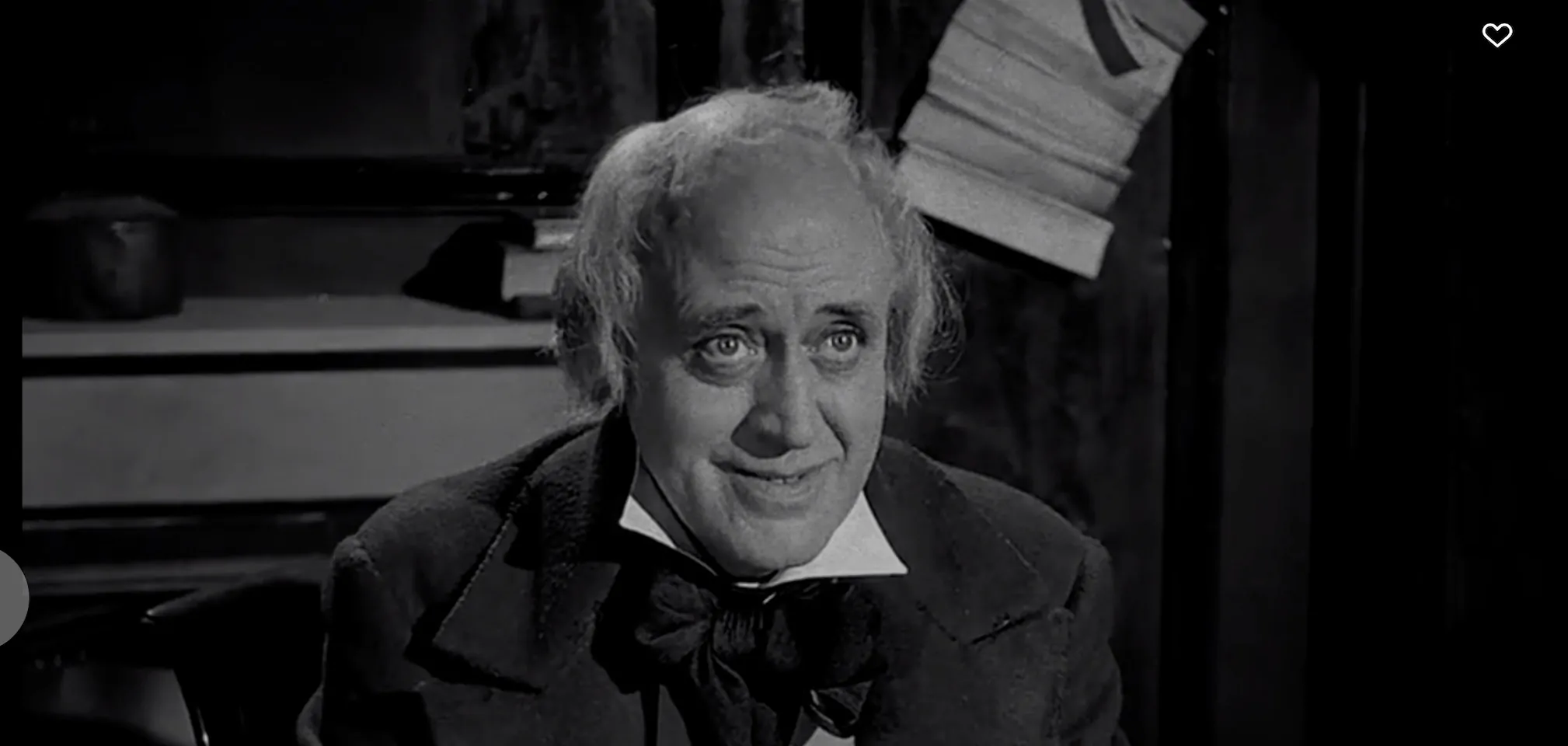
These are some of the last lines of Charles Dickens’ classic Yuletide ghost story, A Christmas Carol, concerning Ebenezer Scrooge:
“He became as good a friend, as good a master, and as good a man, as the good old city knew, or any other good old city, town, or borough, in the good old world…. and it was always said of him, that he knew how to keep Christmas well, if any man alive possessed the knowledge.”
That’s so nice! Except it’s bullshit. For as profound as Ebenezer Scrooge’s transformation was, today his name is essentially an epithet, something you hurl at miserly, joyless curmudgeons around the holidays. Isn’t that weird? Dickens’ story would be a rather empty and miserable tale without Scrooge’s soul-altering turn to good, but as a culture we tend to only invoke his name to describe someone horrible. (See also “Grinch,” a slur that is only ever used to describe someone vis-à-vis their shitty attitude toward Christmas, and never someone whose heart has tripled in size over a 24-hour period.)
I used to think Scrooge got kind of a raw deal on this point, on his name being trash even after his change of heart. (He even remarks on it in the story, responding to his ruined moniker with an affable “That is my name, and I fear it may not be pleasant to you.”) And I was thinking about his dilemma this week, probably due to news about Ti West’s upcoming film version of Dickens’ tale, but more thanks to the fallout from beloved director Rob Reiner’s tragic death last week. And I don’t necessarily mean the way Reiner’s death was cruelly pounced on by folks who’ve seemingly abandoned the idea of being remembered fondly, but rather seeing people who’ve been content to spew bile for the past couple decades and, only upon hearing indefensibly nasty remarks about a murdered man, have suddenly attempted some Scrooge-like, late period pivot toward decency.

(I support such pivots, to be clear; it’s better that you’re eventually moved toward grace than never. It’s a shame some folks’ humanity can only be roused from hibernation when their guy attacks someone they know personally but, hey, whatever works.)
I guess the time of year and especially the Charles Dickens of it all had me imagining: what if that moment of decency stuck? What if this glimmer of empathy somehow took root and really transformed someone into rethinking their entire life, and committing to spending their remaining days being a better person? Wouldn’t that be amazing? And then I thought again about the word “Scrooge” and how we use it in 2025, and I wondered if we (the cultural “we”) would let that kind of transformation happen. The narrative of A Christmas Carol presents a happy, best-case scenario, in which Scrooge’s name becomes, through his transformation, synonymous with Christmas cheer. But the way in which we deploy the name “Scrooge” in the real world suggests that one’s legacy is ultimately a summation of your overall impact, decided on by other people, and it’s worth pondering that maybe a few years of being chill at the end of a lifetime of being a jerkoff isn’t always enough to turn that tide.
It’s a fun thought experiment here but it’s also, for some, a real thing to think about: If you spent countless years stomping on oppressed people, spreading your own misery like herpes and generally being a dick, should a third-act pivot redeem your legacy? Or are you stuck with the albatross of your past self hanging around your neck forever? I don’t have the answer, though I suspect a lot of folks are much, much cooler with redemption arcs in fiction than they are in real life, and it wouldn’t surprise me to learn that such a climate makes attempts at personal growth less attractive.

Not that it should stop us from trying. How’s the song go? “So be good for goodness’ sake”? Let’s look at another passage from the end of Dickens’ book; even Scrooge himself knew it was about doing the work, and not so much about fixing his brand:
“Some people laughed to see the alteration in him, but he let them laugh, and little heeded them; for he was wise enough to know that nothing ever happened on this globe, for good, at which some people did not have their fill of laughter in the outset; and knowing that such as these would be blind anyway, he thought it quite as well that they should wrinkle up their eyes in grins, as have the malady in less attractive forms. His own heart laughed: and that was quite enough for him.”
Merry Christmas to you all.
Editor's note: an earlier version of this article originally appeared in the FANGORIA newsletter, The Terror Teletype.)