
Editor's Note: This was originally published for FANGORIA on October 1, 2009, and we're proud to share it as part of The Gingold Files.
It’s mentioned during the audio commentary on Sony Pictures’ DVD of Dark Country that the movie was originally set up at Lionsgate. And it’s something of a shame it didn’t stay there, because considering that company’s handling of the My Bloody Valentine remake, it probably would have issued Country on disc in the 3-D format in which it was shot.
Country’s production as a dimensional feature is the elephant in the room among the supplements accompanying the movie, which never made it to theaters and is presented on disc in 2-D only. No doubt a defining element of the production, the 3-D process is never brought up in the commentary or the behind-the-scenes featurette, except for one moment in the former when actor-turned-first-time-director Thomas Jane drops a reference to pickup shots lensed by a 3-D cameraman. Those viewers who are aware of the intended dimensionality will likely miss it while watching Dark Country, which contains numerous scenes of foregrounded stars Jane and Lauren German in their car (with a neat dash-mounted rearview mirror), traveling against greenscreened desert backgrounds, that would have been pretty striking with the added depth.
As they stand, these technical upgrades of old-fashioned rear-projection shots fit like a glove with Jane’s homage to old-fashioned film noir (though many modern viewers will probably relate them to the digitally stylized likes of Sin City and 300). The setup is pure early-to-mid-20th-century crime meller, as Jane’s hardboiled narration introduces us to his character Dick and his new wife Gina (German) in a cheap motel the morning after their quickie Vegas wedding. Both of them were down on their luck when they met, and they fell in love immediately and wed just as fast. Soon they’re setting out for a new life together in Dick’s ’61 Dodge Seneca, driving across the desert by dark.
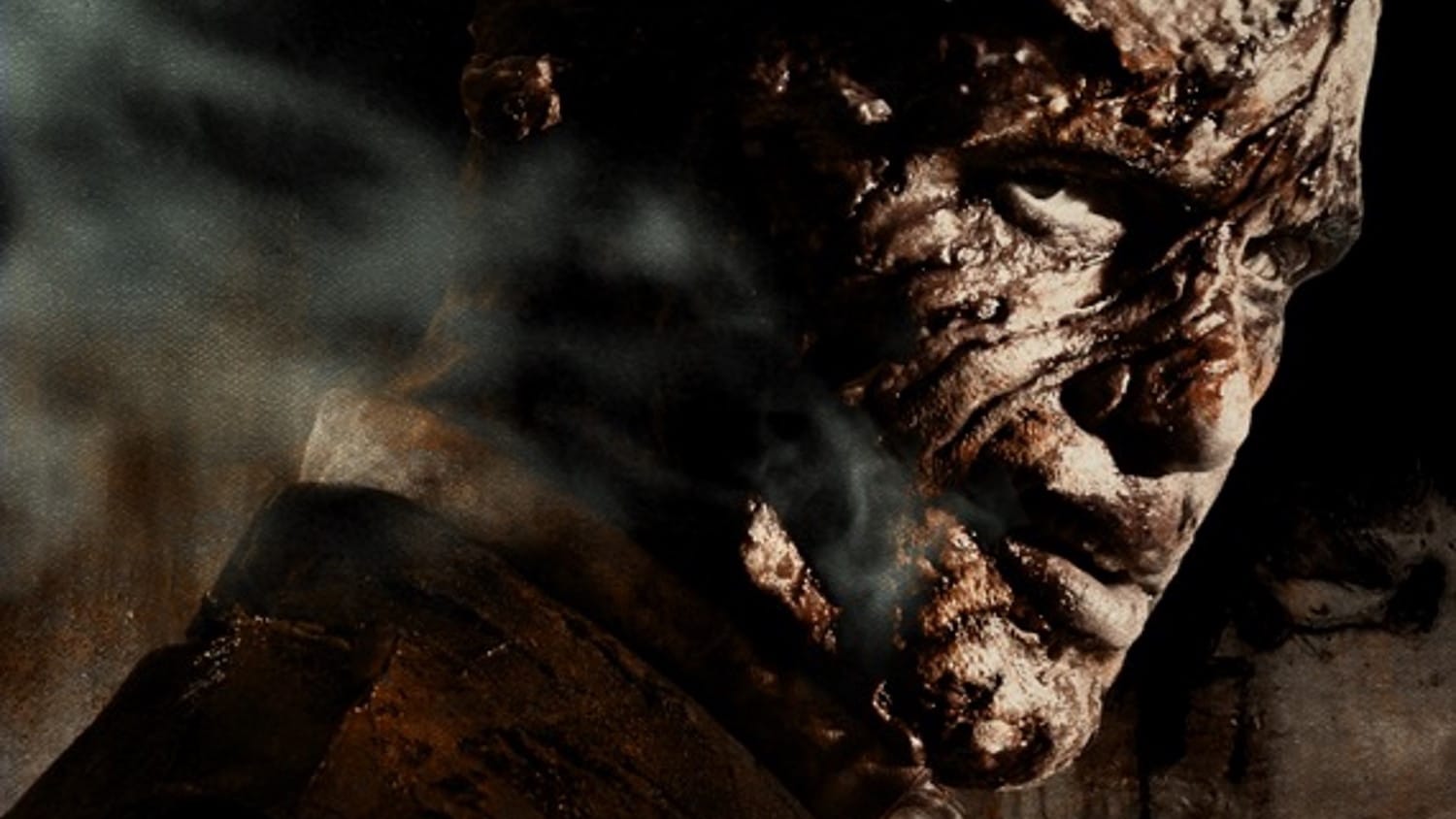
There’s a fine, unkitschy retro veneer to Dark Country’s opening scenes, all harsh lighting and meaningful shadows in the best noir tradition, with the bonus of vibrant colors, all well-captured by the DVD’s 1.85:1 transfer. Jane and German strike sparks together on screen; there’s genuine heat between them, especially when the night gets so sultry that Gina brings an ice cube into the equation. Their trip is rudely interrupted when they literally run across a badly mutilated road-accident victim (known in the credits as “Bloodyface”) and decide to load him into the back seat and take him to a hospital. Medical attention is not to be found, however, and their new passenger soon turns threatening, leading to a series of unpleasant events that test the new couple’s passion for each other.
The danger in making a feature-length genre homage is that using familiar ingredients can work against surprise and scares, and that occurs to some extent in Dark Country. The developments in Tab Murphy’s script are never quite as shocking to us as they are to Dick and Gina, and the story eventually builds the feeling of marking time on the way to its Twilight Zone-esque resolution (despite the welcome intrusion of Ron Perlman into the proceedings as a local lawman). Jane’s visual sense assures that the film is always a spooky pleasure to watch, though, and the interplay between him and German feels real, and keeps you involved enough to hope nothing too dire happens to Dick and Gina, even as you know they’re not destined for happily-ever-after.
Jane, Murphy and producer Patrick Aiello team up on the commentary, which offers plenty of detail and analysis of Dark Country’s production and end result. While they occasionally indulge in appreciation for their own work, that’s tempered by Jane’s admissions that there are certain scenes he wishes he could trim a little further, and second thoughts about the characterization he encouraged from Perlman. The final impression is of Jane as a very conscientious filmmaker, who sought advice from other actors-turned-directors like Mel Gibson and Clint Eastwood, allowed Murphy more involvement in the shoot than screenwriters usually get and is, not surprisingly, as attuned to performance as to the technical aspects. The “Journey to Dark Country” featurette, the disc’s only other extra, gives talking-head time to the trio along with several of their collaborators, most notably German and visual consultant/de facto production designer Tim Bradstreet, who notes the challenge of eliciting the desired style using existing locations. This brief piece augments the interview snippets with too many movie clips and not enough on-set footage.