Last Updated on March 16, 2026 by Angel Melanson
Every year, like clockwork, the same conversation crawls out of the grave:
Are the Oscars finally taking horror seriously?
And every year, the answer is usually some version of well… not really.
But this year feels different. Not because horror suddenly became viewed as “upmarket.” Not because the voting Academy had a change of heart. And definitely not because genre films stopped being genre films.
It feels different because this year has been filled with horror too powerful to ignore. Cinematically and beyond.
The big standout of the 2025 nominations is, of course, Ryan Coogler’s Sinners which has secured a record-breaking 16 nominations. The most nominations not just for a horror movie, but for any film in Oscars history.
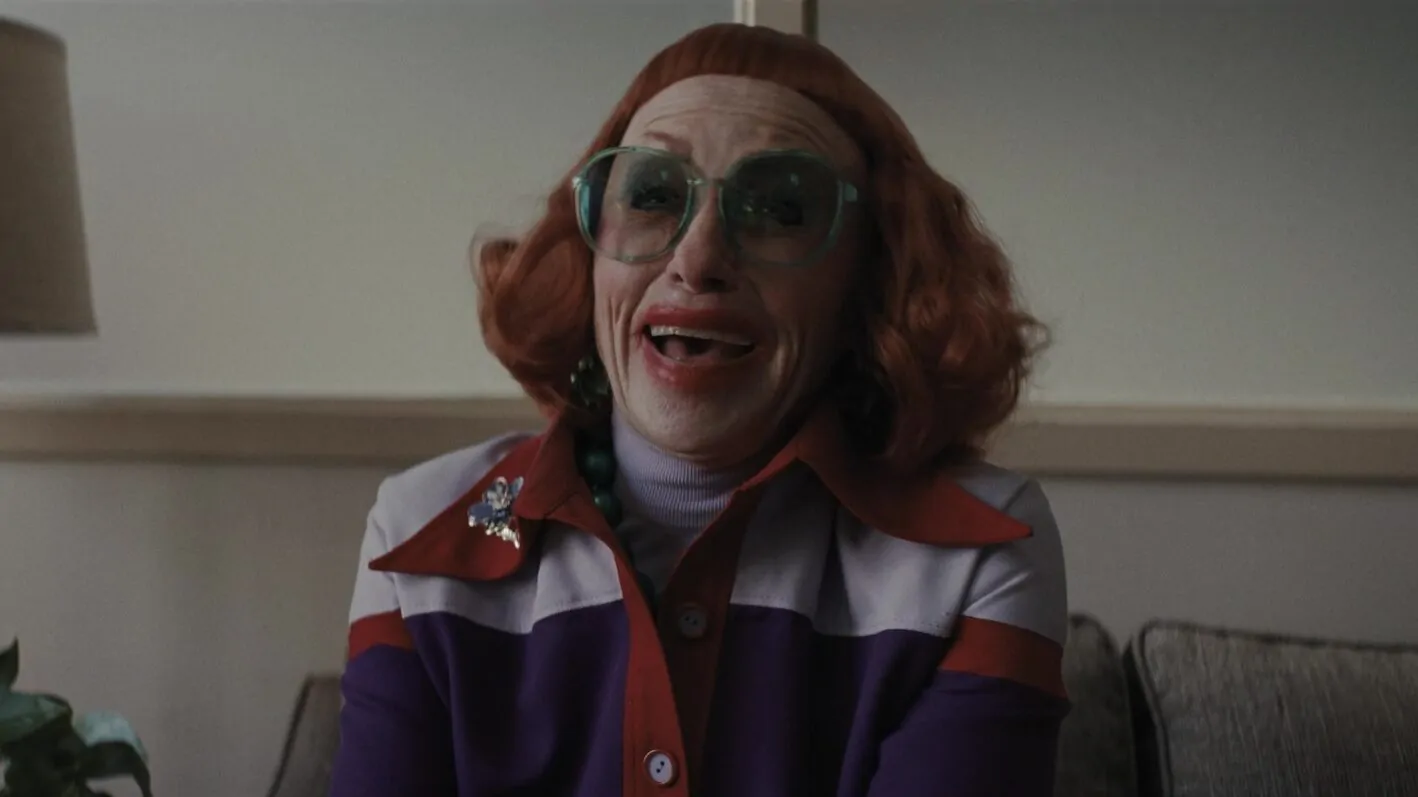
But this year also includes the most acting nominations for horror performances in a single ceremony. Five nominations: Michael B. Jordan, Wunmi Mosaku, and Delroy Lindo (Sinners), Amy Madigan (Weapons) and Jacob Elordi (Frankenstein).
To understand how wild that is, consider the previous record: three.
The first time that happened was all the way back in 1940 with Hitchcock’s Rebecca (if you count it as horror). If you don’t, then the benchmark shifts to The Exorcist (1973), when Linda Blair, Jason Miller, and Ellen Burstyn were all nominated. And the record has never been matched, let alone broken, until this year – over fifty years later.
Of course, every year there is usually at least some acknowledgement for horror in the make-up and visuals effects categories, and there have even been a handful of stand-out moments in other categories when lightning seemingly strikes. Kathy Bates receiving a Best Actress win for Rob Reiner’s Misery, Natalie Portman for Black Swan, Ruth Gordon winning Best Supporting Actress for Rosemary’s Baby, Jordan Peele’s Get Out winning Best Original Screenplay and The Silence of the Lambs sweeping the “big five,” as the first (and only) horror film to ever win Best Picture in 1991.

But these moments are remembered precisely because they’re rare. They’re treated less like milestones and more like anomalies- proof that if a horror film is “respectable” enough, restrained enough, or coded enough as something else, it might be allowed through the velvet ropes.
So why is this? A lot of the answer is structural.
In 1932, Rouben Mamoulian’s Dr. Jekyll and Mr. Hyde was widely considered an Academy favorite. But the Oscars were still a private industry banquet back then. No televised spectacle, no cultural pressure, no public accountability. Awards recognition functioned very differently; visibility mattered much less. And simultaneously came the Hays Code.
The Motion Picture Production Code didn’t just suggest moral guidelines – it imposed them, and dictated what could be shown onscreen. Horror, a genre built on agitation, was particularly vulnerable. Films were cut, softened, reshaped. James Whale’s Frankenstein was brutally trimmed to meet viewing standards in certain states. Entire thematic arcs were altered. Some were even lost. That kind of structural interference doesn’t just change endings, it changes perception.
The Code eventually evolved into the slightly less aggressive MPAA ratings system, but the logic remained: Horror must be contained. Marketable. It is not “safe enough” for broad exhibition.
Today, awards eligibility is still very tethered to those exhibition structures. To qualify for an Oscar, a film needs a seven-day theatrical run in Los Angeles, plus expansion into ten of the top 50 U.S. markets within 45 days. That requires distribution muscle and mainstream marketing confidence. Prestige dramas, starring household name talent, historically clear MPAA standards more easily than blood-soaked genre films, and often instill more confidence from investors.

We are nearly a century past the Hays Code, but the stigma it cemented hasn’t fully evaporated. Horror is still perceived as niche. As excessive. As commercially volatile… even when the numbers say otherwise.
Because here’s the contradiction: Horror fans show up.
We pack opening weekends. We fuel franchises. We turn modestly budgeted films into cultural phenomena. The genre consistently outperforms financial expectations. So the issue has never been audience appetite. It’s institutional comfort.
And luckily for the horror community, we’ve never shied away from things that make us uncomfortable.
The reality is that the Academy institution still reflects a certain point of view. As of 2024, Academy membership was estimated at roughly 70% male and 70% white, with a median age hovering around 60. Approximately 30% of voters identified as female, and about 25% as people of color. Estimates suggest around 10% may also identify as LGBTQ+, though AMPAS does not release official data on sexual orientation.
This is a slight shift from a decade ago, when #OscarsSoWhite revealed a voting body that was roughly 90% white, 75% male, with a median age of 65+, but it remains largely reflective of a specific lived experience and likely a preference for certain cinematic styles. Artistic preferences are always subjective, but any voting body will inevitably gravitate towards their own generational taste, aesthetic preference, ideas about what “serious” cinema looks like.
Still, as the horrors of the world become more deadly serious, so does horror cinema. And perhaps the most telling detail is that this year’s horror contenders weren’t really about monsters at all. They were about systems.
As we continue to witness the collapse (or at least visible cracking) of many of our social and political institutions, this year's horror Oscar contenders have responded in kind. Evil wasn’t framed as a singular villain lurking in the shadows. Again, the monsters were structural.
Sinners explored vampirism as a metaphor for racial capitalism. The historical extraction of Black labor, culture, and bodies, not as an isolated act but as an enduring system of violence.
In Frankenstein, the horror lied in technological hubris and the absence of accountability, echoing anxieties around AI, and innovation without responsibility.
Weapons addressed paranoia and the breakdown of communal trust, much like a post-mass shooting, post-pandemic reality where neighborly safety feels increasingly fragile.
The Ugly Stepsister turned beauty into social currency, exposing patriarchal violence and the brutal expectation that women must reshape themselves (often painfully) in order to be valued.
And Bugonia reflected our growing epistemic crisis: a world where distrust of corporations, governments, and technological elites leaves us unsure what is real and what is manipulation.
Across these films, social power manifested physically. Bodies exploited. Bodies engineered. Bodies controlled. Bodies transformed. Bodies surveilled.
These films understood that systems shape bodies. Human bodies, cultural bodies… and bodies of work. Which raises an uncomfortable possibility: Perhaps our awards institutions are simply another reflection of the very systems these films argue are failing us.
Another structure with its own biases, blind spots, and mechanisms. Another monster. But horror fans know that monsters never disappear just because we refuse to look at them. And many of these films didn’t end by “solving” the problem. They simply refused to look away.
This is where we must remain united as horror fans, this awards season, and in the world at large.
Regardless of what happens on Sunday, we must remember something: The win is already happening. We are not letting institutions look away. We will keep showing up. We will keep filling theaters. We will keep dragging the bloody, rancid flesh of truth into the light until everyone in the room has to see it. And as long as we keep doing that, we will be part of the victory.
This year, just like other years, horror didn’t evolve into something “awards-friendly.” It’s still angry, still violent, still political, still messy, still emotional, and uncomfortable as hell. The genre didn’t change to meet the Oscars.
The Oscars simply ran out of ways to pretend horror wasn’t already at the center of the conversation.
Read “15 Performances That Deserved An Oscar Nomination” here.