
Last Updated on May 13, 2026 by Kimberly Leszak
Lee Cronin’s The Mummy has no relation to Boris Karloff’s The Mummy, nor to any other film bearing the title. It is not a general admission horrorshow, in terms of taste or sensibilities. It is not elevated; there are no liminal spaces. It’s an all-out gorefest, and the film’s deeper meaning is actually very simple: We’d all like to know our families wouldn’t give up on us no matter what. For some, that may be the most challenging disbelief to suspend.
Young Katie Cannon (Emily Mitchell) is an adorable eight-year-old American who loves dolls, tea parties, and sweets. She lives in Cairo, Egypt with her TV reporter father Charlie (Jack Reynor), mother Larissa (Laia Costa), and slightly younger brother Sebastián (Shylo Molina). Larissa is fully pregnant with the family’s third child, while Charlie is under career stress trying to get his family back to the US with a job offer in New York City. That move is derailed when Katie is kidnapped from the end of the family garden by her secret friend Layla’s mother (Hayat Kamille).
Aerial shots and lush garden scenes of an imaginary Cairo (the film was shot in Almería, Spain) make for beautiful IMAX landscapes. The oasis is fleeting, though, as we enter the Cairo police headquarters, where a jaded missing persons detective (Husam Chadat) casts suspicion on the distraught parents, erasing any hope the couple might have had of trusting local authorities to find their child. We then jump eight years into the future where the Cannon family, made four again by the addition of now eight-year-old Maud (Billie Roy), is living in Albuquerque, New Mexico with Larissa’s mother Carmen (Veronica Falcón). The stress of Katie’s disappearance has ended Jack’s big city ambitions and left a lingering pain that clouds the family’s tender moments.

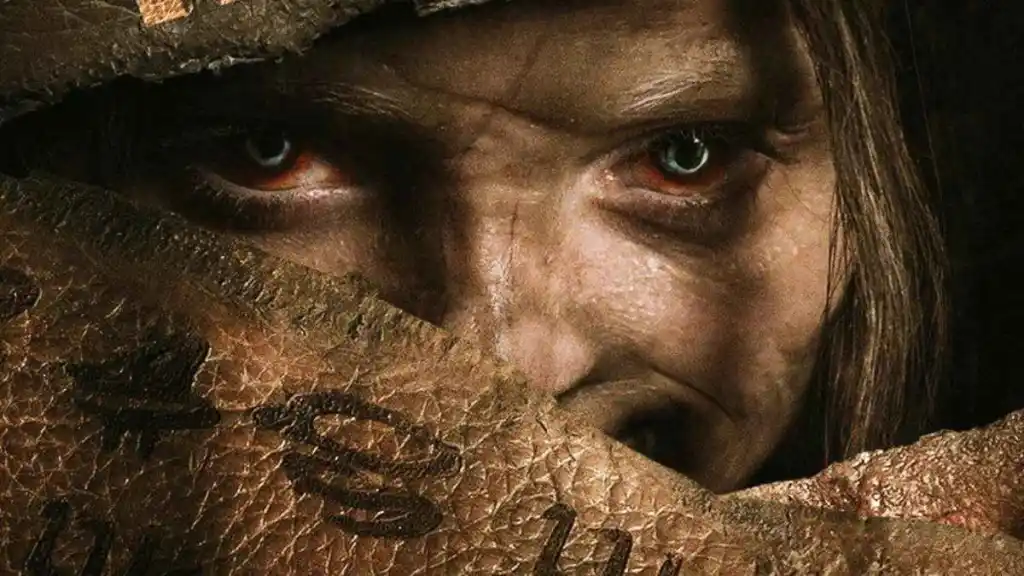
Amidst an attempt at family normalcy, the Cannons receive a call from Cairo Police Detective Dalia Zaki (May Calamawy): Katie has been found, and she is alive. The wreckage of small aircraft revealed a 3000-year-old sarcophagus with Katie inside. At an Egyptian hospital, Katie (now portrayed by newcomer Natalie Grace), is shown as a feral shell of a human. Her skin is translucent yellow and her bones are brittle. The investigators assure the Cannons that this is unsurprising in human trafficking cases and the doctors, after finding no vital sign or lab anomalies of note, tell the Cannons they can take Katie home.
Even with an already lengthy two-hour-plus runtime, the events of Katie’s return feel rushed. To see Katie is to know she isn’t ready for a family reunion even from a medical standpoint, but the panicked determination her parents feel to never let her out of their sight again is almost understandable. The audience is not privy to the 19-hour-plane ride from Cairo back to Albuquerque — Katie and maybe even her parents were likely to be heavily sedated — but it would be nice to know how that flight crew felt.
Everything after this lead-up is followed by delirious missteps that we must assume are grounded in Charlie and Larissa’s love and desperation, starting with the decision to drag Katie up the winding staircase of the home still seated in her wheelchair, only to be gingerly lifted into bed by Charlie. At this point in the film, we learn this is a possession film as much as it is a mummification story. Katie begins to unravel both psychologically and physically. Bandages that had melded with her skin slough off revealing ancient text that looks tattooed to her flesh. The investigation process is worth being left unspoiled, but the creativity required to connect each plot point is the work of a madman (complimentary).

And then there’s Maud. If Cronin has a defining skill outside of creative kills, it’s directing children. At times, the entire film’s watchability hinges on Billie Roy’s performance as Maud, and she nails it. All four actors portraying the Cannon children in this movie set it apart from other supernatural family films as memorable and warm despite the gristle; it’s even pleasantly reminiscent of Poltergeist and The Conjuring 2 dynamic. But the things this kid can do with teeth (both her own and others’) are going to be nightmare fuel for many.
The sound design is very Blumhouse if that’s your thing, but on the other side of the audio, the needle drops on otherwise devastating moments serve as their own source of comic relief. This may stand as the most original use of the ever-pervasive “The Weight” by The Band to date.
A raucous wake scene midway through the plot is the surprise and delight moment of the film, an absurd, queasy centerpiece that any fan of horror or plain old audacity should appreciate. The crescendo of the scene reaches a level of giddy depravity that left me gagging mid-laugh.
For those who can set aside their surprise at the film’s insistent deviation from other mummy stories, Lee Cronin’s The Mummy offers a mean-spirited and tarry-blooded tale that wraps up inspirations from Friedkin, Raimi, and Fulci and delivers something that will resonate with those who know their genre history — or who just want a gory, good time at the movies.